
How to Clean Algae off Pergola Posts and Nearby Pavers
Pergola care
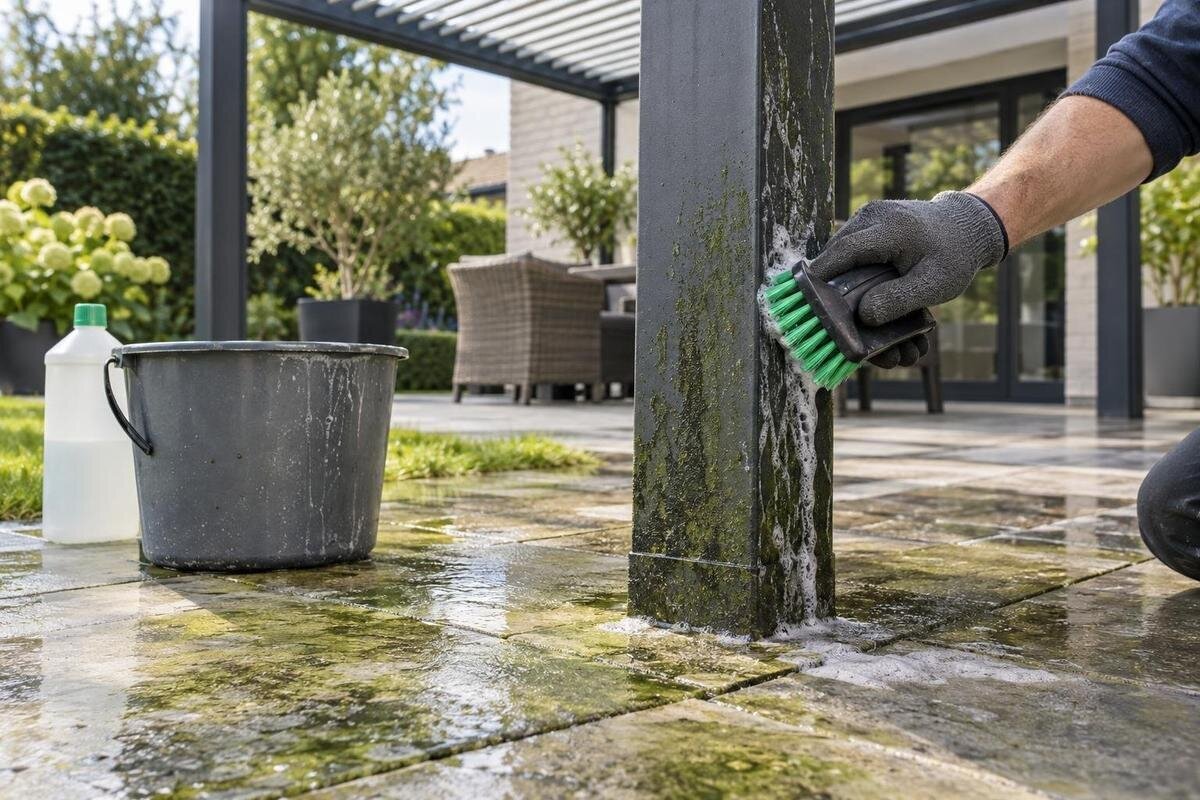
Green algae on a pergola post and the paving beneath it may look like one cleaning job, but the surfaces can tolerate very different products. Treat a coated post and nearby pavers separately: identify both materials, start with a gentle physical clean and check the exact care instructions before using a chemical. The main risks are scrubbing too aggressively or letting a paving cleaner and its runoff reach the post.

Before you begin 1
Identify the growth and both surfaces
Algae usually appears as a thin green film or slippery smear, particularly where water lingers. Moss tends to form raised tufts; lichen is often crust-like, while dirt, mineral deposits and changes to a coating can also leave marks. Colour alone is not a diagnosis. Photograph the dry area in daylight, then try a small wipe with a damp, soft cloth in an inconspicuous spot. If the mark does not lift with water and light pressure, do not move straight to a stronger chemical. First consider whether it is growth or a change in the surface; extra scrubbing can make a finish defect more visible without removing it.
Treat the post and the paving as two jobs. Identify the post material and finish from its original manual, invoice, model label or manufacturer. On the ground, find out whether the pavers are concrete, clay or natural stone, and whether they are sealed or have joints that need particular care. Record the pergola’s model name as well. The Bloomcabin Wall-Mounted Pergola listing can help you match a product name to your paperwork, but use the care instructions for your own unit to choose a cleaning method. Keep the paving information alongside those instructions rather than assuming that a product suitable for one surface will suit the other. Before starting, you should be able to identify which instructions apply to the post, which apply to the pavers and which areas need protection from splashes.
Treat coated aluminum as a separate cleaning job
Check the pergola’s cleaning instructions before putting any product on its posts. The coating is the exposed surface, and an abrasive tool or incompatible cleaner can dull, scratch or discolour it. Begin with clean water and a microfibre cloth or soft, non-metal brush. If the manual permits detergent, choose a mild, pH-neutral product and dilute it exactly as directed. Test it in a hidden spot, then let that area dry fully before judging its colour or sheen; wet surfaces can look different from dry ones.
Avoid scouring powders, wire brushes, steel wool, metal scrapers, paint thinners, strong degreasers, acids, alkalis and bleach unless the pergola’s own instructions specifically allow the product. A patio or algae cleaner is not automatically safe for coated aluminum. If you are considering the model on the Bloomcabin Pergola product page, ask about its cleaning requirements before choosing products for the surrounding patio. The useful question is which methods suit the exposed finish, not simply whether a cleaner removes algae. For an existing unit, follow its exact maintenance instructions or ask the supplier. If you cannot identify the finish, stay with water and a soft cloth. Keep the names of any products already used so that a later care enquiry describes the actual treatment rather than just the remaining mark.
Before you begin 2
Plan for splashes, footing and runoff
Choose a time when the surfaces can dry without freezing, and avoid cleaning in strong sun if it may cause a solution to dry faster than its label allows. Move cushions, furniture and other items that could be splashed. Keep people and pets away while cleaning products are in use, following the label’s precautions. Wet paving can be slippery, so plan a dry route through the area. Do not lean over a wet surface or use an unstable ladder; if you cannot reach safely from the ground, stop and arrange help.
Before wetting anything, note the slope, the nearest drain, planting beds, door thresholds and the pergola’s base. Trace where water would travel from the patch you intend to clean, including whether it would pass another post or cross your dry walking route. Use a shallow tray or absorbent cloth to catch drips only if it will not create a trip hazard, hold water against a post or block drainage. Apply a cleaner to a brush or cloth rather than spraying it broadly. Keep water away from controls and electrical components, and follow the pergola manual if any are nearby. When reviewing the Bloomcabin Bioclimatic Pergola listing for a planned patio, include access for cleaning and the route of rinse water in your questions. Those site details need separate consideration from the product choice; the listing is not a drainage plan.
Clean the pergola posts gently
Remove loose dust and leaves with a clean, soft cloth before adding water, so grit is less likely to scratch the coating. Dampen a microfibre cloth or soft nylon brush and work over the green film with light strokes, starting at an accessible upper area and moving down. Use a small amount of diluted detergent only if the manual permits it. Apply it to the cloth or brush, not by spraying the whole post, and rinse it off with clean water as directed before it dries. Work on a manageable area at a time rather than wetting the entire structure. Finish wiping and rinsing that area before moving farther down the post. This keeps the task controlled and lets you see what the gentle method has removed before repeating it elsewhere. Judge any remaining mark after the surface has dried, rather than while water is changing its appearance.
For corners and narrow recesses, use a soft brush without forcing it into seams, openings or moving parts. Do not remove caps, loosen fasteners or flood the base to reach hidden growth. Use a clean cloth to lift loosened residue and rinse the cloth often so you are not spreading it along the post. Keep the cloth used for the coating separate from the brush used on the paving. If a gentle pass leaves a mark, do not respond with more pressure or a harsher product. Photograph the spot and check the manual or ask the supplier before trying another method.

Before you begin 3
Choose a paver cleaner for the exact material
Pavers are not one uniform surface. Concrete, clay and natural stone can respond differently to acidic or alkaline products, and sealers and joint materials add another consideration. Read the paver maker’s instructions and the cleaner label for the exact material, finish and application. An acidic product, for example, can etch some stones or affect cement-based materials. Avoid relying on a general recommendation for patio algae when it does not name your type of paving.
If a cleaner is permitted, follow its stated dilution, application and contact time. Test an inconspicuous spot or spare paver, then wait until it is completely dry to check for colour or sheen changes. Compare the test area with an untreated area of the same paving, rather than judging the wet patch on its own. Do not use vinegar, bleach or another household product as a universal fix; suitability depends on the material and nearby surfaces. If you are considering the model on the Bloomcabin Pergola listing for a paved area, compare the pergola’s care requirements with those of your chosen paving. They may need different cleaning products and tools. Keep that distinction in your maintenance plan, and check both sets of instructions before buying a cleaner intended for use across the whole patio.
Remove algae from paving with controlled brushing
Start by sweeping away dry leaves, soil and other loose debris. Then use water and a suitable non-metal brush, beginning with light pressure. A softer brush is a cautious choice for natural stone or a sealed surface; a more textured paver may tolerate firmer brushing, but test first. Work in small sections so you can see whether the growth lifts and keep rinse water within the area you intend to clean. Choose a section you can brush and rinse without stepping across slippery paving or directing water at a post. Finish that section before extending the work, checking the joints as well as the paver face for disturbed material. Avoid digging into joints or scraping the paver surface to remove a stubborn patch.
If water and gentle brushing are not enough, apply only a cleaner labelled for your paving and keep it on the pavers. Use a controlled applicator, follow the label and rinse as directed. Do not use a pressure washer by default: a concentrated jet can wear the surface, disturb jointing material or drive water towards a post or wall. Consider pressure washing only if the instructions for the pavers and nearby pergola both permit it. If the result remains patchy after an approved, careful clean, stop and check whether the mark is a stain, deposit or surface change rather than algae.
Before you begin 4
Keep paver cleaner and runoff off the posts
A paving product may be unsuitable for the post even if it is approved for the pavers. Keep the tasks separate: finish cleaning the coated posts with their approved method, then work carefully on the paving. Apply paver cleaner close to the ground with a brush or cloth, not as a broad spray. Take particular care around the post base, where splashes can collect. If product reaches the coating, follow the label’s instructions for accidental contact with other surfaces; prompt rinsing with clean water is generally the cautious response unless the label says otherwise. Do not try to neutralize a spill with a second chemical.
Control where wash water goes. Work in small sections and avoid directing cleaner or concentrated runoff onto planting, towards a storm drain or into a waterway. Follow the product label and local directions for leftover solution or disposal. Do not let cleaner dry on the paving or the post unless its instructions specifically call for that. Check the route of the rinse water as you work, not only before starting, and pause if it is reaching a surface you meant to protect. If you are considering the product on the bioclimatic model listing, ask about cleaning around the base as well as care of the exposed finish. Plan the paving-cleaning method separately so that keeping the patio clean does not expose the posts to an incompatible product.
Stop if the mark looks like finish damage
Inspect the post after it has dried. A removable film is different from coating that looks chalky, blistered, peeling or scratched, or from exposed metal and corrosion. Do not try to remove those signs with a stronger algae cleaner, rust remover or abrasive pad. Take a clear close-up and a wider photo showing where the mark sits, and note what product, if any, you used. On paving, a pale haze or a rust-coloured mark may also be something other than algae; avoid reaching for an acid or stain remover until you have identified the surface and the mark.
Cleaning will not resolve a loose or moving post, a damaged base or a structural concern. Stop rather than pulling, tightening or taking components apart, and ask a qualified professional about the condition. Describe movement separately from the surface mark so that the enquiry does not present both as an algae problem. If finish damage leads you to research a replacement, the Wall-Mounted Pergola product page is a starting point for identifying a listed model, not confirming a match to the existing installation. Its dimensions, supports and fittings would need separate consideration. Do not assume a cleaning problem means the structure needs replacement. First establish whether the concern is removable growth, a change in the coating or movement at the base, then seek the relevant care or service guidance.

Before you begin 5
Reduce the moisture and debris that feed regrowth
Algae is more likely to return where dampness, shade and organic debris persist. Sweep leaves, soil and pollen from the paving and around the post base before they stay wet. Clear surface debris from joints gently without digging out jointing material or disturbing the base. Look for irrigation spray, drips, a nearby downspout or water that regularly sits on the paving. Address an obvious source where practical, but do not change the site’s grade or redirect water in a way that creates a new problem.
A light, manual-approved clean when growth is small can be easier on both surfaces than waiting until a thick layer builds up. Use a soft brush and the appropriate rinse, not a stronger chemical as routine prevention. Avoid applying a sealer, coating or treatment to either surface unless its manufacturer confirms compatibility. Pay attention to where the film returns: repeated growth beside a drip or beneath wet leaves gives you a specific area to address rather than a reason to treat the entire patio more aggressively. When considering the model on the Bloomcabin Pergola page, include routine access to the posts in your patio layout. Think about whether furniture will obstruct the areas you need to wipe and whether you can clean the surrounding paving without splashing the finish.
What to include in a cleaning support request
If gentle cleaning does not remove the mark, confirm that you have identified the material and followed the correct instructions before repeating the job. Do not keep trying new chemicals or increase the pressure. For a question about the finish, gather the model name or label details, a wide photo, close-ups and a note of the cleaner, dilution and area tested. This gives the supplier or service professional useful context without requiring you to take the post apart or alter its finish.
Ask for the exact manual or guidance for the surface in question, and explain whether the mark changed after the area dried. Include any visible change in colour or sheen rather than describing the result only as clean or dirty. If a post moves or appears damaged, consult a qualified professional rather than treating it as a cleaning issue. A link to Bloomcabin’s wall-mounted pergola page can identify the model you are asking about, but include your own label or order details rather than relying on a visual resemblance. Keep the request focused on the unresolved concern: a persistent film, a change in the coating or movement at the base. Each calls for different guidance, and none is a reason to keep escalating the cleaner or scrubbing pressure.
Frequently asked questions
Can I use the same cleaner on the pergola posts and the pavers?
Not unless both manufacturers confirm that it suits both surfaces. A cleaner made for paving can harm a coated post, while a gentle post cleaner may not remove algae from porous pavers. Treat each area separately and keep cleaner and rinse water off the other surface.
Is bleach safe for algae on pavers near a pergola?
Do not use bleach near coated posts unless the pergola’s instructions specifically allow it. Check the paver maker’s guidance and the cleaner label before using any stronger product on paving, and manage runoff carefully. Never mix bleach with another cleaner.
Can I pressure-wash algae off the posts or paving?
Do not assume a pressure washer is suitable. A concentrated jet may damage a coating, dislodge paver jointing material or force water into gaps. Use gentle brushing and a low-flow rinse unless the instructions for the exact surfaces permit pressure washing.
Why does algae return after cleaning?
It often grows back where moisture, shade and organic debris persist. Look for wet leaves, irrigation spray, dripping water or poor drainage around the paving. Clear debris and address the moisture source where practical, without digging around the pergola base or changing the site’s grade.
How can I tell algae from damage to the post’s finish?
A removable green film may lift with water and gentle brushing. Persistent dullness, chalking, peeling, blistering, exposed metal or corrosion may point to a finish problem instead. Stop before using a stronger cleaner, take photos and check the pergola’s care instructions.
A careful, separate clean gives you the best chance of removing algae without trading a green film for a damaged coating, stained paver or disturbed joint. Let both surfaces dry before judging the result, then address the dampness and debris that encourage regrowth. If a mark persists or the post’s finish or stability looks questionable, stop before escalating the chemistry or force.
