
Pergola Furniture in Aluminum, Wood or Wicker
Furniture buying guide
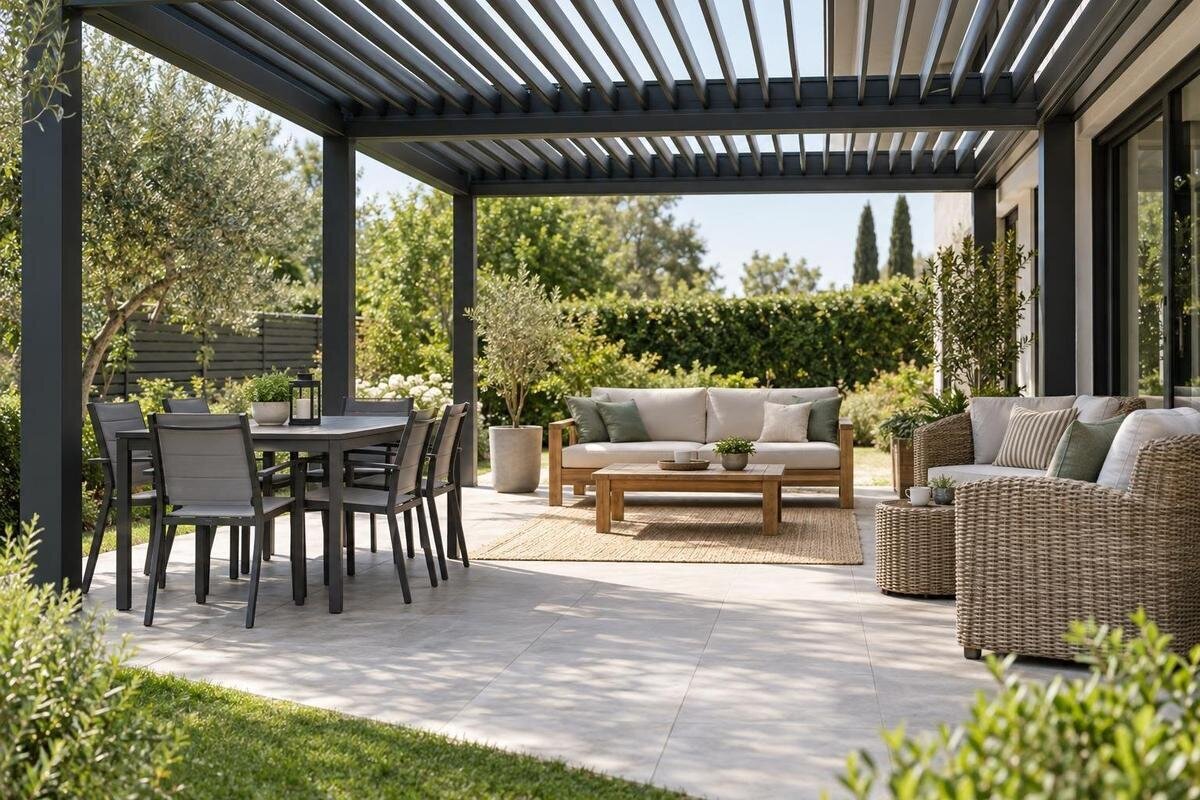
Choosing pergola furniture is less about finding a material that can tolerate every condition and more about matching its care requirements to the actual exposure and routine. A pergola may cut direct sun for part of the day, but rain, damp air, dust and shifting light can still reach an open seating area. Aluminum, wood and wicker each bring different trade-offs in cleaning, finish care, comfort and appearance. Compare complete pieces—not just the visible frame—and measure them with chairs pulled out and routes kept clear. That gives you a better basis for choosing than assuming the pergola makes any outdoor set weatherproof.

Before you buy 1
Sun, rain and debris in the seating area
Treat a pergola as an outdoor setting that may provide some shade, not as a closed room. Shade can shift with the time of day and the structure’s design, while open sides leave furniture exposed to wind, wind-driven rain, dew, airborne dust and leaf litter. Nearby paving can send up splashes after rain or while being washed. A dry-looking seat in the afternoon may be damp early in the morning; a table shaded at lunch may receive direct sun later. Observe the planned seating area at the times you expect to use it, and note where water, debris and sunlight actually reach.
Make a simple exposure note before comparing finishes: mark sun patches, the direction rain usually comes from, any sprinkler or hose splash, and where leaves collect. Also note whether cushions can be carried indoors easily. Those conditions affect how often surfaces need wiping and whether covers or seasonal storage make sense. If you are sketching the furniture area against a structure reference, the Regular pergola listing gives an area range of 9 to 24 m². Treat that as a pergola-area figure, not the free space left after furniture, movement and access are accounted for.
Measure chairs and tables in use
Measure each item, including arms, legs and any extension leaf you plan to use. For a dining set, a tabletop outline alone is not enough: mark the chair footprint with someone seated and pulled back for entry and exit, then add a route around the occupied chairs. For lounge furniture, include the space needed to recline, move a side table or reach a door. Painter’s tape or a paper template can make the arrangement visible on the patio before anything is purchased. Keep to one unit for all measurements, and record both the furniture footprint and the circulation space you want.
Allow for tasks that happen between uses as well as the final arrangement. Can one person sweep beneath the table, pull a chair out without moving another, carry cushions past the seating, or shift a piece to clean? If the site has a step, threshold, fixed planter or support, include it on the drawing; otherwise, a neat paper plan can overstate the usable area. The Bloomcabin Bioclimatic Pergola page lists an area range of 9 to 24 m². Compare the dimensions of your chosen configuration with the whole arrangement, including occupied chairs and walking routes, rather than measuring only the tabletop.
Before you buy 2
Aluminum: straightforward care, with comfort trade-offs
Aluminum is a practical candidate if you value a clean-lined look and would rather not maintain a wood finish. Many aluminum pieces are easy to wipe, but weight, cleaning needs and resistance to marks depend on the design, coating, hardware and any mixed materials. Ask what the surface finish is and which cleaners it permits; abrasive pads or an unsuitable product may damage a finish. Check that the seat, armrests, feet and joints are comfortable and tidy to maintain, rather than judging the table or chair by its frame alone. If the finish is scratched, follow its care guidance instead of improvising a repair. Look closely at places where dirt or water might collect, and ask whether wear parts can be replaced.
Metal can feel hot after strong sun and cool in shoulder-season weather, so try the actual seat and arm contact points if possible. Cushions or a textile sling can change comfort, but they add their own cleaning and storage needs. Lightweight pieces may be easier to reposition for sweeping; they may also need to be moved or secured according to the maker’s guidance in windy conditions. When reviewing the Bloomcabin Pergola product page, keep your furniture outline alongside the structure dimensions. Consider where you would move chairs for cleaning and whether the arrangement leaves room to do so. Easy handling is useful only if you have somewhere to put each piece temporarily.
Wood: natural variation and finish-specific upkeep
Wood brings visible grain and a varied look, but the word wood does not describe a single maintenance routine. Species, construction, factory treatment and any applied stain or oil all affect what care a piece needs. Ask whether the exact item is intended for outdoor use, which cleaning products are allowed, and whether its finish should be renewed. Sun can alter its appearance over time, while repeated dampness and drying can put stress on wood and its joints. Inspect the underside, slats and connection points as well as the surfaces you see first; those details matter when choosing furniture for outdoor use.
A pergola may reduce some direct exposure, yet wind-driven rain and damp conditions can still reach an open seating area. Do not choose wood solely because the set will sit under cover. Follow the maker’s instructions for cleaning, drying and finish renewal, and do not assume one oil or sealant suits every species or coating. If you are considering the Bloomcabin Wall-Mounted Pergola listing, use your exposure notes to compare possible furniture positions within the planned layout. Include access to the sides and ends of a wood table, not just the seats: you will need to reach those surfaces when cleaning or caring for the finish.

Before you buy 3
Wicker: check the weave as well as the frame
Wicker describes a woven look or construction, not a guarantee about fibre or weather performance. Ask whether the weave is natural plant fibre or a synthetic material, and get the exact material name and care directions. A natural weave may have different outdoor limits from a synthetic one; neither should be assumed to withstand every combination of sun and moisture. Check that the maker identifies the complete item as outdoor furniture, rather than relying on the fact that the weave looks like patio wicker. The backing, finish and frame can matter as much as the strands you see.
Texture gives woven furniture a softer, layered appearance, but gaps and edges can catch pollen, crumbs and leaves. Find out whether the weave can be brushed or washed, and whether pressure or a particular cleaner is discouraged. Inspect for loose strands, split sections, sharp ends and uneven tension, especially around arms and seat edges. Ask what supports the weave and whether that frame needs separate care. Dry the piece as the maker directs after cleaning or rain; do not leave cushions sitting on a damp surface. If routine brushing feels like a nuisance, a smooth surface may suit your habits better.
Frames, finishes and fasteners
Outdoor furniture is usually a combination of parts. A chair with a woven seat may have a metal frame; an aluminum dining chair can include wooden arms or a fabric sling; a wood table may use metal fasteners. Each part can have its own cleaning and wear requirements, so ask for the material and finish of the frame, hardware and secondary surfaces. Look under seats and tabletops for water traps, dirt-catching joints or surfaces that will be hard to reach. Check that feet protect the patio and can be inspected, and ask about replacement parts for wear items. The most visible material is not a complete care plan.
Compare the complete piece in person if possible: test the arm height, seat angle, back support and table edge, and ask whether the materials and cushions are sold together or separately. For woven furniture in particular, verify that the advertised weave, supporting frame and fasteners all match the conditions you have noted. In a layout based on the wall-mounted pergola page, consider how you will reach the back and underside of furniture positioned near the wall. A coordinated set can still combine parts with different care needs. Record those separately, especially if one cleaner is suitable for the frame but not for the arms, weave or fabric.
Before you buy 4
Plan separately for cushions and comfort
Furniture material does not settle whether a seat is comfortable. Sit in the chair if you can, paying attention to seat depth, back angle, arm position and how easy it is to stand. Cushions can soften a rigid frame, but check the cover fabric, filling, seams and care label rather than assuming every cushion is suitable for outdoor use. Ask whether covers come off, how they should be cleaned and whether the insert needs to be kept dry. A pergola does not guarantee that cushions will be shielded from rain or fading sun, so consider where they will go when not in use.
Think about carrying and storing cushions as part of the furniture layout: an indoor closet, dry storage area or chosen container may need a clear route from the seating. Include any container that will sit beneath the pergola in your floor plan, and check that it provides the dry storage the cushions require. While comparing the bioclimatic pergola listing with your planned seating area, mark where cushions will be kept and how you will carry them there. This makes storage part of the arrangement rather than an afterthought. Removable covers may be convenient, but follow their washing limits and drying directions; colourfastness also varies by fabric.
Cleaning and seasonal storage
Estimate care by task, not by a broad claim such as low maintenance. Write down what each shortlisted set needs: dusting or washing, brushing between woven strands, checking a finish, inspecting joints and bringing cushions inside. Compare how often the manufacturer recommends a task, what tools or cleaners it calls for, and whether you will realistically do it. A small routine may be easier to keep up with than a finish that needs a major refresh, but the actual instructions matter more than assumptions based on material. Ask whether the furniture should be covered, left uncovered or stored when it is not in use.
If the patio sits unused for part of the year, plan for off-season storage as well as everyday care. Check whether pieces can be stacked, moved through the door and stored without putting weight on a vulnerable surface. If you use a cover, follow its care guidance and let wet furniture dry as directed rather than trapping moisture. When comparing your layout with the regular pergola configuration, include room to reach and move each piece for cleaning. Consider the order in which you would clear the area: a set that fits comfortably during use should not require dismantling the whole arrangement just to reach one chair or table.

Before you buy 5
Choose a look that works with the whole patio
Material is only one part of the appearance. Aluminum can read as crisp and understated, wood brings visible grain, and woven furniture adds texture, but colour, shape and proportions often make a bigger difference beside existing decking, railings, planters or cushions. Compare the actual finish with nearby surfaces in daylight if you can; screen images can be misleading about colour and texture. Avoid choosing a very large table or bulky chair solely because the material feels right. A more restrained set may leave the patio’s routes and surrounding details less crowded.
Use swatches, finish samples or in-store comparisons when available, and view them in the light that reaches the seating area. Ask how a finish changes with normal outdoor use and how marks can be cleaned. If wood colour or woven texture is a major reason for choosing the set, compare samples of the exact finish rather than relying on a generic photograph. Mixing materials can work when a repeated colour or finish connects the pieces, but it means keeping track of more than one care routine. Keep the furniture plan beside the visual shortlist: the arrangement still needs room to enter, pull out a chair and pass.
Compare the materials against your priorities
Use a short scorecard with five points: exposure, cleaning effort, finish care, comfort and storage. Aluminum may move ahead if you want a simple wipe-down and easy repositioning, provided the design’s weight, finish and feel suit the site. Wood may be a better visual match if you value grain and accept care tied to its species and finish. Wicker may suit a textured look if you can confirm its exact material, outdoor guidance and frame upkeep. These are starting points, not universal rankings: designs, coatings, fabrics and workmanship vary within every category.
Before ordering, bring your measurements and care notes together in one final comparison. Put the shortlisted furniture on the floor plan, including chair movement, walking routes and any cushion storage that occupies patio space. Compare that arrangement with the dimensions of the selected structure; the Bloomcabin Bioclimatic Pergola is one option to review. Check that the order identifies the exact finish, weave, frame and cushion combination you assessed, rather than a similar-looking version with different care needs. Resolve any gaps in the product description before choosing. Keep the instructions with the furniture so they are easy to consult when it is time to clean or store it.
Frequently asked questions
Is aluminum outdoor furniture maintenance-free?
No. Aluminum itself does not need wood-style refinishing, but finishes and hardware still need care. Clean dust, food residue and marks as directed, and handle scratches or wear according to the maker’s instructions. Confirm the maintenance guidance for the exact piece.
Does a pergola keep wood furniture dry?
Not necessarily. A pergola may reduce some direct sun, but an open-sided area can still admit wind-driven rain, dew and damp air. Check that the exact furniture is intended for outdoor use and follow its cleaning, drying and finish-care directions; shade alone is not a maintenance plan.
Is all wicker suitable for outdoor use?
No. Wicker can refer to different woven materials, and the frame may be made from another material again. Confirm the exact weave and frame, outdoor-use guidance, cleaning method and seasonal storage instructions before leaving it exposed.
Will a pergola protect cushion fabric from fading?
Not necessarily. Shade shifts, and open sides leave fabric exposed to light. Check the cover’s outdoor-use and care information, follow washing and storage instructions, and put cushions away when exposure or weather exceeds the maker’s guidance.
Which material is best for a rainy patio?
There is no universal winner. Rain may reach furniture under an open pergola, so compare outdoor-use guidance for the full set, including its frame, weave or wood finish and cushions. Also consider how easily you can dry, cover or store each piece.
Aluminum, wood and wicker can all work under a pergola when the furniture is made for outdoor use and its care suits your routine. The deciding details are often the specific finish, weave or frame, the amount of sun and moisture that reaches the site, and how much space you have for everyday movement and storage. Measure pieces in use, confirm their instructions, and choose the material whose appearance and upkeep you will be glad to live with.
