
How to Estimate Heating Costs for Pergola Seating
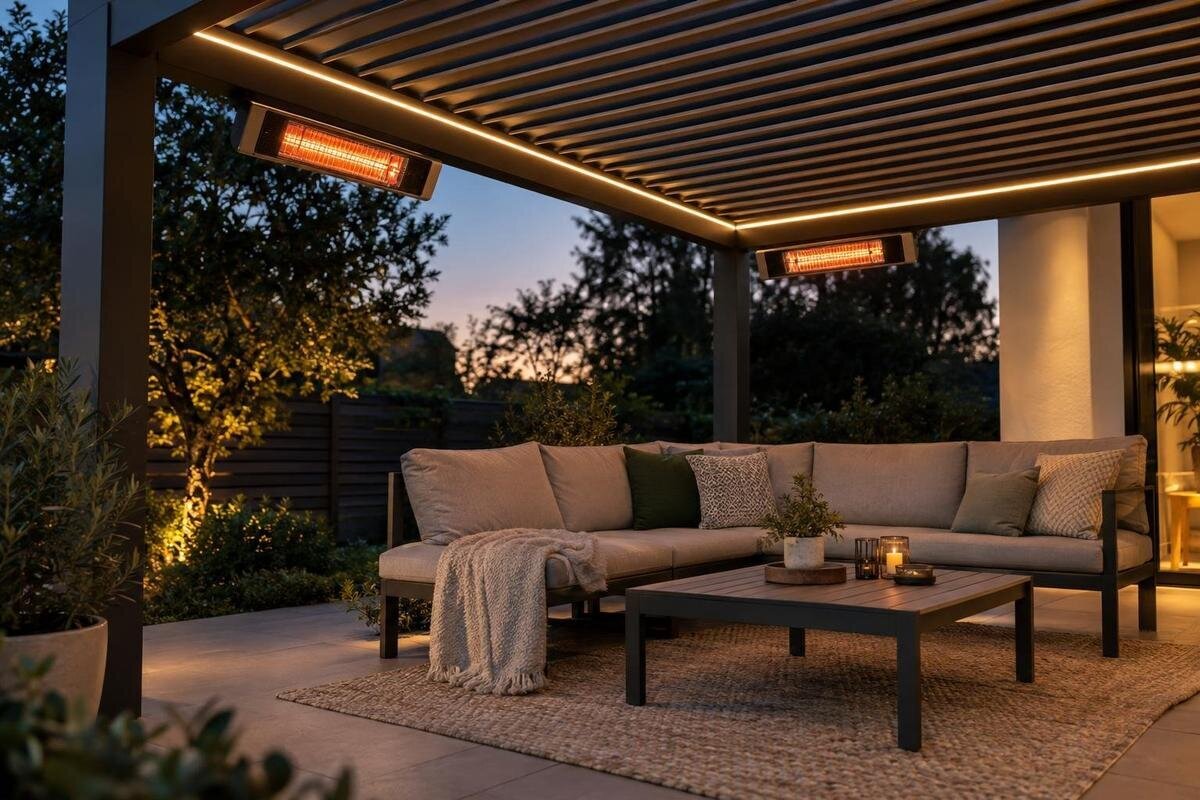
Pergola heating costs
Estimating the cost to heat pergola seating starts with the heater’s electricity use, not the pergola’s square footage. Convert the heater’s electrical input to kilowatts, multiply by the hours it will actually run, then multiply by the electricity price that applies at those times. That gives an energy-cost estimate. It does not predict comfort: radiant heat can warm people and nearby surfaces without raising the temperature of all the open air, while wind, seat position and exposure can change how long you choose to run the heater.
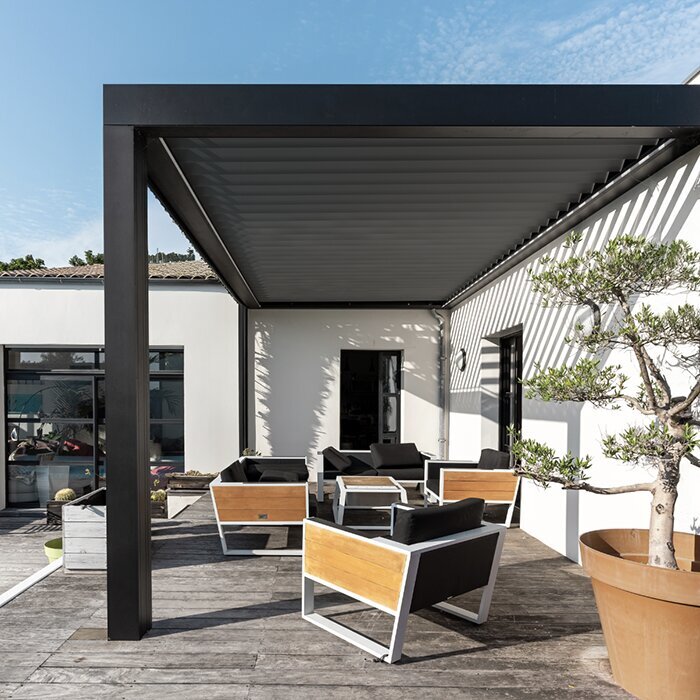
The basic calculation is power × time × rate
For an electric heater, multiply its electrical input in kilowatts (kW) by the hours it actually draws power to estimate energy use in kilowatt-hours (kWh). Multiply the resulting kWh by the applicable electricity price per kWh to estimate the energy cost. If the heater label gives watts, divide by 1,000 first: 1,500 W equals 1.5 kW. Keep units beside each number; watts multiplied directly by a price quoted per kWh is a unit mismatch. This result describes the heater’s use under your assumptions, not the full household bill or a guaranteed level of warmth.
Suppose, for illustration only, a 1.5 kW heater runs for three hours: 1.5 × 3 = 4.5 kWh. At an example rate of $0.20/kWh, that session costs $0.90 for energy; twelve identical sessions would use 54 kWh and cost $10.80 at the same rate. These figures are neither a Canadian average nor a heater specification. A full-project budget can list the Bloomcabin Pergola product page under the structure; use exact heater documentation for watts. If the rate changes, the dollar cost changes even though those operating hours still use 4.5 kWh.
Use the heater’s electrical input rating
Find the electrical input for the exact heater model and configuration in its data plate or manual. Use a figure in watts or kilowatts that describes electricity consumed, rather than a room-size suggestion or a heating-output claim in another unit. A figure for heat delivered is not automatically interchangeable with electrical draw. If the documentation lists several settings, record the input for each. If it gives a range, use the documented endpoints for a range estimate or ask the manufacturer which setting matches your intended operation instead of inventing a midpoint.
For more than one heater, calculate each unit using its own input and run time, then add the kWh. Two identical units operating together at full rated input draw twice as much as one; if they operate at different times, use each unit’s actual hours instead of doubling the whole session. For example, one 1.5 kW unit running for three hours uses 4.5 kWh, while a second running for just one hour adds 1.5 kWh. Together they use 6 kWh, not the 9 kWh that two units running for the full three hours would consume. Include only units that will run at the same time in a simultaneous-load estimate. Record the exact heater model, setting and quantity: the pergola’s catalogue name cannot identify the electrical draw of separate heating equipment.
Pergola floor area is not heater coverage
Pergola floor area is useful for planning furniture and counting seats, but it is not an input in the energy-cost formula. An open-sided seating area is not a sealed room, and its air does not behave like a room whose entire volume must be brought to one temperature. Avoid estimating cost by applying an assumed wattage per square metre. Even when a heater maker gives coverage guidance, that information is separate from the structure’s footprint. Distinguish the total pergola area from the heater’s stated coverage, if the manufacturer supplies one.
The Bloomcabin Pergola listing identifies configurations from 9 to 24 m²; those figures describe listed structure area, not a heater, a radiant heating zone or electricity consumption. A 24 m² pergola does not automatically use 24/9 times the energy of a 9 m² model. Heater input, number of units, operating schedule and the intended seating arrangement determine the estimate. Keep the structure’s area in the layout notes, then use equipment-specific data for the cost calculation rather than converting a product dimension into a performance claim.
Use the electricity rate that applies to your use
Check your current electricity bill or provider’s rate schedule for the price that applies during the hours you expect to use the heater. Some plans have different prices by time or usage tier. If your planned session crosses more than one rate period, calculate the energy used in each period separately and apply its rate. For illustration, a 1.5 kW heater running for one hour at $0.20/kWh and two hours at $0.25/kWh would cost $0.30 plus $0.75, or $1.05 for energy. Both rates are hypothetical. Also check whether the rate is written in dollars or cents: 20 cents per kWh is $0.20/kWh, not $20/kWh. Keep all rates in the same units before adding the costs. This gives a clearer estimate than applying one rate to hours charged at different prices.
Decide whether your estimate covers the energy charge alone or the variable charges and taxes you want to include in an all-in figure. Bill line items can be structured differently, so use the current terms for your account. Fixed monthly charges are part of the household bill but are not caused by one extra heating session. If a wider project budget includes the Bloomcabin Bioclimatic Pergola listing, keep structure, heater and any electrical work in separate cost lines from the per-kWh energy estimate.
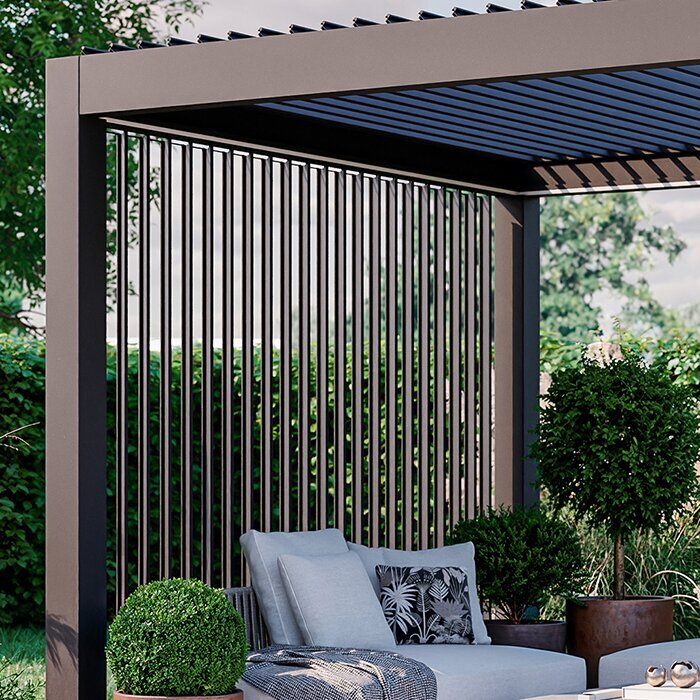
Estimate the hours you will actually use the heater
Estimate the time the heater will be on, not simply the length of an evening spent outside. Write down how often you expect to use the seats, the typical session length and whether the heater will run for the whole visit or only part of it. A planned meal, a short visit and a longer gathering can produce different run times. If use depends on the weather or your schedule, set out low, likely and high patterns rather than relying on one precise forecast.
When budgeting for the bioclimatic pergola option from Bloomcabin, describe your expected heating schedule separately from your choice of structure. For example, three evenings a week at two hours each is six operating hours a week. Over an assumed four-week period, that is 24 hours; a 1.5 kW heater would use 36 kWh before you apply a rate. State how many weeks your estimate covers. An annual total should reflect the months and sessions you actually expect, not twelve identical months unless that is realistic for your plans. You can group months by expected use, calculate each group and add the results. Keep occasional gatherings separate from regular weekly use so that one long event does not become the assumed length of every session. If you are unsure how often you will sit outside, leave the session count as an adjustable input rather than treating the annual total as a commitment.
Account for settings, controls and cycling
Settings affect how closely rated input represents average use. For a heater operating continuously at one documented setting, input in kW multiplied by hours is a clear full-power estimate. For a model with multiple settings, calculate each setting using its documented input and the time spent there. Do not assume a control dial set halfway produces exactly half the electrical consumption; that depends on the appliance design. A timer changes energy use when it reduces the time the heater draws power, not the draw during each powered hour.
Thermostatic cycling can also make actual energy use lower than a calculation that assumes continuous full power. Treat that calculation as a full-on scenario, not a precise forecast, if the heater switches off or varies its output. Use consumption information from the manufacturer if it is available; otherwise, show the full-on case alongside a lower-use scenario and state the assumptions. For illustration, if a manual specified 0.75 kW on low and 1.5 kW on high, two low-setting hours plus one high-setting hour would use 3 kWh. That compares with 4.5 kWh for three hours continuously at the higher setting. The difference comes from the documented input at each setting, not from an assumed percentage saving. Keep a note of the time assigned to each setting so you can revise the estimate without rebuilding it. Do not present an assumed cycling pattern as measured consumption.
Radiant warmth is different from warmer air
Radiant heat can warm people or nearby surfaces in its path while the surrounding outdoor air remains relatively cool. The entire space does not have to reach a room-like air temperature for a seated person to notice warmth. Conversely, a heater’s rated input does not promise that every seat will feel equally warm. Open sides allow air movement, and an air thermometer alone does not show how much radiant warmth reaches each chair. Cost estimates based only on square footage or a target air temperature can therefore be misleading.
Think about the intended seating zone rather than trying to calculate one temperature for the whole pergola. Orientation toward the source, distance, obstructions, wind and how long people stay seated can affect whether you switch the heater on, choose a different setting or run it longer. Those choices affect kWh through input and operating time; they do not change the calculation. The name Bloomcabin’s Bioclimatic Pergola does not quantify heat retention or radiant reach, so rely on documented details of the exact structure and heater rather than inferring comfort from a category name.
Plan the estimate around the seats in use
Sketch where the chairs, benches and table will actually go. Compare those positions with any coverage area, orientation guidance, clearances and operating limits in the heater’s instructions. A coverage figure is not a guarantee for every site, and obstructions or seats outside the intended zone can affect how useful one heater feels. A one-heater calculation describes one unit only. If the seating is split into separate groups, decide how many approved units might operate together before estimating total energy use.
If you are considering the Bloomcabin Wall-Mounted Pergola, its product identity helps name the structure, but does not say which seats a separate heater can reach or where it may be mounted. Put the proposed seating and appliance location on the same sketch, then compare that plan with the exact heater and pergola manuals. Include manufacturer-approved attachment requirements and clearances in the plan, not just the number of chairs that fit. This keeps a low running-cost estimate from depending on an unverified appliance position.

Verify mounting and electrical requirements
Check the exact heater manual for outdoor-use ratings, clearances, operating limits and permitted mounting methods. Also check the pergola manufacturer’s documentation for any approved attachment point for the equipment being considered. A beam that looks sturdy, or a general accessory description, does not confirm that a particular heater is approved for that location. The energy calculation can estimate electricity use; it cannot establish mounting approval or the structure’s capacity for added equipment.
Ask a qualified electrical professional to review the exact heater input, number of units, available supply, outdoor exposure, required protection and any proposed circuit, controls or wiring work. Share the manuals and intended location so the review relates to the equipment you are considering. In a project budget, record the Bloomcabin Wall-Mounted Pergola listing as the structure being considered, with the heater and electrical work on separate lines. This lets you distinguish the cost of preparing the seating area from the recurring cost of using it. Keep any installation costs separate from monthly energy use.
Compare low, likely and high cost estimates
Put the key inputs in one worksheet: exact heater model, input at each setting, number of units, hours per session, sessions per month, the rate used and any variable charges included. Calculate kWh for each unit, add them, then multiply by the selected rate. Create low, likely and high cases by changing one assumption at a time, such as session length, number of evenings or operating setting. First hold the heater and rate constant while comparing shorter and longer sessions. Then return to your likely schedule and compare the documented settings. Label each case with what changed, rather than just calling it cheaper or more expensive. If a final high-use case combines more evenings with longer sessions, record both changes so the total remains understandable. That makes it clear which assumptions drive the result instead of implying that the pergola model itself determines energy use.
Round the result when hours, cycling or rates are approximate; cents-level precision can make a rough forecast look more certain than it is. A later household bill can provide only a broad check because it includes other electricity use and may cover different rate periods. Keep Bloomcabin’s regular pergola option in the structure column, with heater and qualified electrical work recorded separately. An estimate remains useful when each number has a clear source or assumption and can be revised as the seating plan or expected use changes.
Frequently asked questions
How do I calculate the electricity cost of an outdoor heater?
Convert the heater’s electrical input from watts to kilowatts, if needed. Multiply kilowatts by the hours it runs to get kWh, then multiply by the applicable electricity rate per kWh. For example, 1.5 kW for three hours uses 4.5 kWh. The result is only as accurate as the input, run time and rate you use.
Can I estimate heating cost from the pergola’s square footage?
Not by itself. The pergola’s area describes the structure, while energy use depends on the heater’s electrical input, operating time and electricity rate. Any coverage information from a heater manufacturer is separate from the pergola footprint and does not guarantee uniform warmth at every seat.
Does radiant heat have to raise the air temperature to feel warm?
No. Radiant heat can warm people or nearby surfaces it reaches while the surrounding outdoor air stays cool. Wind, obstructions and seating position affect how much warmth reaches each chair, so an air-temperature reading alone may not reflect the comfort of the seating area.
Which electricity rate should I use?
Use the rate that applies during the hours you expect to run the heater. If your plan has different time periods or usage tiers, account for those where relevant. For an all-in estimate, include the applicable variable charges and taxes according to your bill or rate schedule, but keep fixed monthly charges separate from the cost of one session.
Does a pergola listing confirm that a heater can be mounted to it?
A pergola’s product name or listing does not, by itself, confirm an approved heater location. Check the exact pergola and heater documentation for permitted mounting, clearances and outdoor-use requirements. Have a qualified electrical professional review the proposed equipment and electrical supply.
A useful pergola heating estimate is a transparent calculation, not a promise to the cent. Keep the heater’s input, operating schedule and electricity rate visible, and separate the structure’s area and project costs from the heater’s energy use. With those distinctions in place, you can compare realistic sessions and revise the estimate when your seating plan or expected use changes.
