
Fixed Glass or Louvred Pergola Roof: Key Trade-Offs
Pergola roof guide
Choosing a fixed glass roof or a louvred pergola roof means choosing between a consistent overhead surface and a roof that can change its opening. Glass can preserve daylight, but a fixed panel cannot open to release air above the patio. Adjustable louvres can change shade and allow roof-level airflow, yet a closed position does not automatically make the roof watertight. The outcome depends on more than the roof label: glazing, blade movement, seals, drainage, side exposure, site orientation and winter limits all matter. Compare the way each system behaves during the hours you use the patio, then confirm those details for the exact model and installation.

01
What separates fixed glass from louvres?
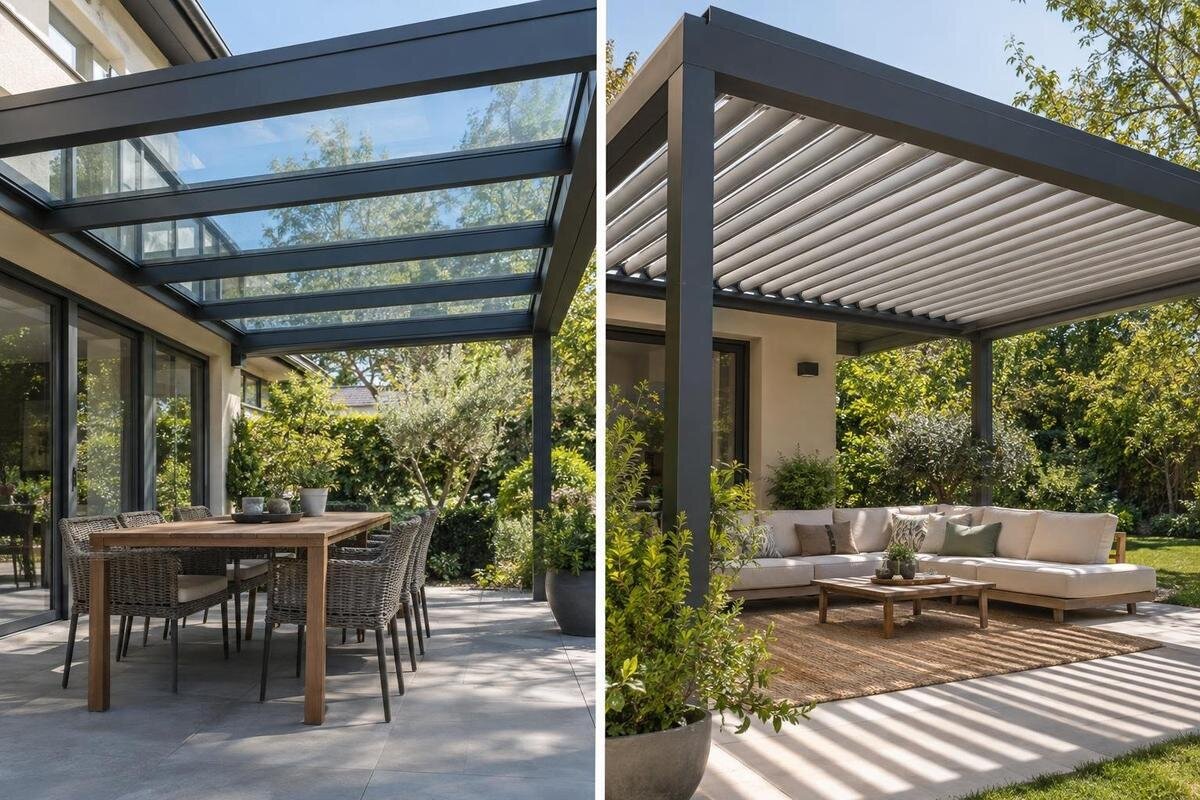
A fixed glass pergola roof is a non-opening glazed surface. It provides continuous overhead coverage and can admit daylight, but it cannot be tilted away or opened to expose the sky. In a product image, a transparent roof may look visually open even though it remains a solid barrier to airflow overhead. The glass may be clear, tinted or treated in another way, and framing can affect the view. Ask for the glazing description and its stated light and solar-performance information; appearance alone does not show how much daylight or heat it transmits. Water performance depends on joints and drainage, not just the glass.
A louvred roof uses blades that can be repositioned in systems designed for adjustment. Opening them changes the gaps and can create a path for air to move upward; bringing them toward a closed position increases shade and reduces that opening. You therefore have several roof positions and a mechanism to assess, rather than one fixed condition. The word louvred does not tell you whether operation is manual or powered, how wide the adjustment range is, or what weather limits apply. When comparing the Bloomcabin Pergola listing with other options, establish the roof configuration first. The regular pergola model name does not specify whether its roof is glass, adjustable or fixed.
Daylight under glass and louvres
With glass, the amount of daylight reaching the patio depends on tint or coatings, frame width, roof size, sun angle and shade from trees or neighbouring buildings. The roof remains in the same position throughout the day, so the sky is seen through glazing rather than exposed when you want more light. Consider the space during your usual outdoor hours, not only at noon; morning and late-afternoon sun can arrive from different directions. If the pergola is close to the house, note how each roof option affects light at nearby windows as well as at the seating area. When glare or solar heat matters, ask for performance data rather than relying on a clear-looking sample.
In an adjustable louvred system, blade angle can expose more of the sky or screen direct sun, but the light may fall in stripes rather than evenly across the patio. A partly open setting can still admit strong sun, and the effect changes as the sun moves. Ask for a diagram or demonstration of fully open, partly open and closed positions; a single photograph shows only one moment. The Bloomcabin Pergola catalogue page lists an area range from 9 to 24 m². Keep that size information separate from the daylight comparison: it does not describe the glazing or measured light transmission. Compare those details for the roof configuration you are considering.
02
Ventilation and heat below the roof
A fixed glass roof has no opening overhead through which air can escape. Any breeze must enter and leave through the sides or another route, which matters on a warm, still day or in a patio sheltered by walls. Side screens, doors and surrounding fences also affect how freely air can move, so assess the whole space rather than assuming a roof alone determines comfort. Glazing properties, orientation and the weather influence solar heat under the roof; transparency by itself cannot predict the result. If the pergola is beside the home, keep outdoor comfort separate from indoor ventilation: a patio roof does not replace the house's ventilation system.
Open louvres can provide an outlet at roof level for rising warm air and allow outside air to move through the opening, but they do not create a cooling breeze on their own. The effect depends on wind, blade position, surrounding walls, roof dimensions and side ventilation. When blades are closed, that overhead route is reduced. Ask whether the exact model offers intermediate settings and how those settings are operated. For the model on the Bloomcabin Bioclimatic Pergola page, focus your ventilation questions on blade travel and the available roof positions. The word bioclimatic alone does not establish a ventilation rate or explain how the roof operates.
Control over sun and shade
With fixed glass, the roof's shade pattern cannot be changed by opening it. If afternoon sun falls on a table or reaches a nearby window, the roof cannot respond in the moment. Consider when you use the patio and where sunlight lands then; high summer sun and lower shoulder-season sun can arrive at different angles. Existing trees, neighbouring buildings and house eaves may cast shade, but their effect depends on the site. If you might add a screen or separate shade later, check whether it is compatible with the roof and whether it is included in the quote; do not count an unpriced accessory as part of the glass option.
Louvres let you choose among a more open roof, partial shade and a more closed position when the particular mechanism supports those settings. That flexibility helps if the patio serves different activities, but somebody must make the adjustment, and a comfortable angle can change as the sun moves. Ask how fine the adjustment is, where the control can be reached and whether the supplier recommends specific positions in particular weather. Use the bioclimatic pergola listing to identify the model you want to discuss, then confirm which controls are included. Do not assume powered operation, sensors or automatic adjustment from the name. Consider whether you would use the available adjustments during a typical day.
03
Rain protection and drainage
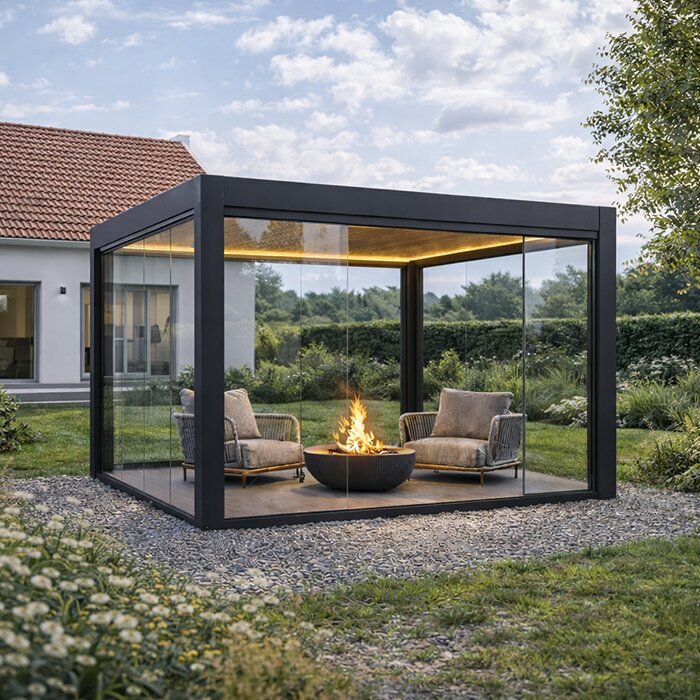
A fixed glass plane gives continuous overhead coverage, but rain performance belongs to the whole assembly: glazing joints, seals, perimeter details, roof pitch, gutters and downpipes all play a part. Even when water is directed away, wind can carry rain into an open-sided patio. Ask where water travels from the roof, where it exits and whether the route avoids a doorway, stairs or the usual walking line. Check whether the discharge could leave a wet patch where people walk. Request a drawing or written explanation of the drainage path. The phrase ‘glass roof’ is not a substitute for model-specific information about leakage, runoff or exposure.
A closed louvred roof may shed rain, but blade overlap, seals, channels and outlets determine how water is captured and carried away. Wind-driven rain can still pass through open edges. With the blades angled, gaps remain overhead, so decide whether you can close the roof when a shower starts and what happens if nobody is home. Ask what level of weather protection the supplier claims and under which conditions. For the model on the Bloomcabin Bioclimatic Pergola model page, request details of the closed-roof arrangement and drainage path. Confirm whether water-collecting channels are included or cost extra; the model name does not establish those features or their performance.
Snow, ice and wind limits
Depending on the site, snow, freezing rain and wind may be important parts of a Canadian pergola decision. A glass assembly and a louvred assembly use different roof components, but the category does not establish allowed loads or exposure. Request model-specific documents for the roof, frame and supports, and have a qualified professional confirm that the exact configuration suits the site. Do not infer winter capacity from a photograph, apparent glass thickness or another model in the same product family. Ask which site conditions are covered by the published limits and what assumptions the installation details rely on.
Moving louvres raise an additional cold-weather question: ask whether the manufacturer specifies positions for snow or ice and whether the blades may be moved under those conditions. Do not force a mechanism that is stiff or frozen; follow the model's manual and supplier instructions. Ice or debris can also affect drainage paths, so ask how they should be inspected and kept clear. Find out whether snow removal is expected and what instructions apply. For fixed glass, confirm how the particular roof assembly manages snow and runoff and who reviews its support requirements. Generic advice cannot replace site-specific assessment, and a pergola should not be assumed to be snow-rated by category alone.
04
Cleaning and maintenance
Glass needs cleaning if you want to keep the view clear; dust, pollen, leaves and water marks can show on the surface and frames. Before choosing, find out how the outside face can be reached safely, which cleaning methods are permitted and whether joints, gutters or downpipes need separate attention. Do not treat a roof as a walking surface unless the model documentation explicitly says it is designed for that use. If access is awkward, cleaning effort may be a practical drawback even when the roof otherwise meets your daylight needs. Where trees overhang the roof, include leaf clearing in your maintenance plan. Ask what the manual requires.
Louvres add surfaces and moving parts. Depending on the design, blades, pivots, seals and water channels may need inspection or cleaning, and access from below may differ from access to a glass roof. Ask what routine care involves, whether parts can be reached without dismantling the system and which tasks require a service professional. Do not assume that powered operation means maintenance-free operation or that all louvred roofs use the same parts. If the regular Bloomcabin pergola listing is on your shortlist, compare the care instructions for its exact roof configuration with those for the other option. The listing identifies the model, but does not establish its maintenance schedule.
How the roof fits the patio and house
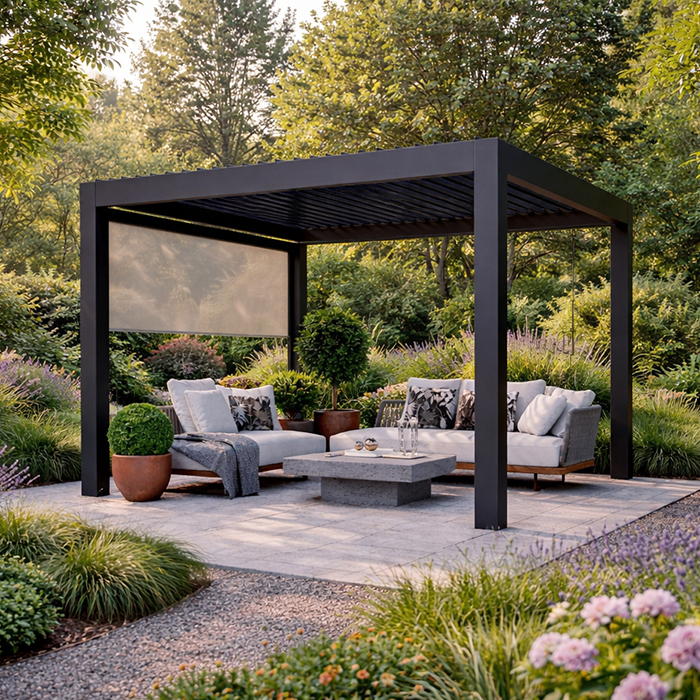
Placement can change which roof is more useful. A pergola near the house may sit beside a door, kitchen window or eave, while a freestanding one can be exposed on more sides. With fixed glass, consider where overhead light and runoff fall; with louvres, consider how an opening roof changes shade and whether the surrounding layout lets air move. Map the table, barbecue, doors and walking routes before settling the footprint, then check the layout at the hours you use the patio. Note the route water will take near the threshold and any drain. Roof choice, post positions and access around the structure need to work together.
For a wall-mounted design, verify how the specific unit meets the building and where roof water is routed at that connection. If you are considering the model on the Bloomcabin Wall-Mounted Pergola page, confirm its roof material, any blade mechanism and the attachment requirements; wall-mounted describes the layout, not those details. Have the exact drawings reviewed by an installer or another qualified professional, especially at the house connection. A freestanding layout also needs a clear plan for post positions, service access and furniture. Compare the site's sun, drainage and access needs; do not assume an attached or freestanding roof is automatically better for glass or louvres.
05
Documents to compare before you buy
Ask for the same information for both roof options so the comparison is fair: overall dimensions, exact roof configuration, glass specification or louvre movement range, stated light or solar data, drainage route, operating method and maintenance. Separate standard parts from optional accessories, and confirm whether controls, screens, gutters, downpipes and installation work are included. Terms such as closed, sealed and weather-protected can describe different outcomes; ask for written limits and a drawing of the roof in its closed position. Confirm the exact model name or code on the quote so you can match the stated details to the product being offered.
The Bloomcabin Wall-Mounted Pergola listing gives an area range from 9 to 24 m². That is a useful starting point for comparing size, but it does not establish the roof type or whether a particular configuration fits your patio. Match the quote to the exact model and drawing, keeping the proposed dimensions and roof configuration together rather than comparing size alone. If a supplier uses a broad term such as all-weather, ask what conditions it covers and which stated limits apply. A like-for-like comparison should include the components needed for the roof behaviour you expect, with standard equipment and optional additions clearly distinguished in each quote.
Which roof matches your routine?
Fixed glass is a strong candidate when you value daylight through a roof that stays in place, do not need to open it for airflow and prefer not to adjust it during the day. You still need to check glazing, drainage and sun exposure, and make sure air can move through the patio from the sides. If rain use is central, examine the seams, water route and wind exposure instead of treating glass as a guarantee. This choice is less suited to a routine built around quickly switching between open sky, direct sun and overhead shade.
Louvres are a better match when adjustable shade and an opening at roof level are important enough to justify a mechanism and active operation. Their practical value depends on the actual movement range, controls, weather limits and maintenance, not on the label alone. Picture an ordinary sunny afternoon, a passing shower and a period when the patio is unattended; decide what you would want the roof to do in each case. If you prefer not to adjust the roof or keep track of operating guidance, its flexibility may matter less than it first appears. Check the product documents for rain and winter use before treating flexibility as an advantage.
Frequently asked questions
Does a fixed glass roof block daylight?
Glass can admit daylight, but the amount depends on the glazing, frame, roof size, sun angle and surrounding shade. Ask for the light-transmission information for the exact model. A product photo cannot show how bright the patio will be at different times of day.
Will closed louvres keep the patio dry?
Not necessarily. Blade overlap, seals, water channels and outlets affect how rain is collected, while wind can still carry it through open sides. Ask for the system's written weather-performance limits and drainage details rather than relying on the word louvred.
Do louvres automatically make a patio cooler?
No. Open louvres can create an opening at roof level and adjustable shade, but the effect depends on wind, blade position, sun and airflow around the patio. They do not guarantee a cooling breeze or a particular temperature.
Can I leave a louvred roof open in winter?
That depends on the exact model and its operating limits. Check the manual for instructions about snow, ice and wind, including whether the blades may be moved in those conditions. Do not force a mechanism that is stiff or frozen.
Are louvred pergolas motorized?
Not by definition. Confirm whether the particular model is manually operated or powered, what controls are included and what operating guidance applies. Do not assume that a louvred roof includes a motor, sensors or automatic adjustment.
The choice comes down to how you want to use your patio: fixed glass provides a permanent glazed cover, while adjustable louvres let you change shade and create an opening overhead. If daylight through a fixed roof is the priority, focus on glazing and rainwater details. If adjustment is valuable, assess the usable roof positions, controls and operating limits. Choose the balance of light, airflow and rain protection that suits your routine, rather than relying on the roof's category name.
