
Garden Shed Doors That Stick: Seasonal Movement and Adjustment
Garden shed care
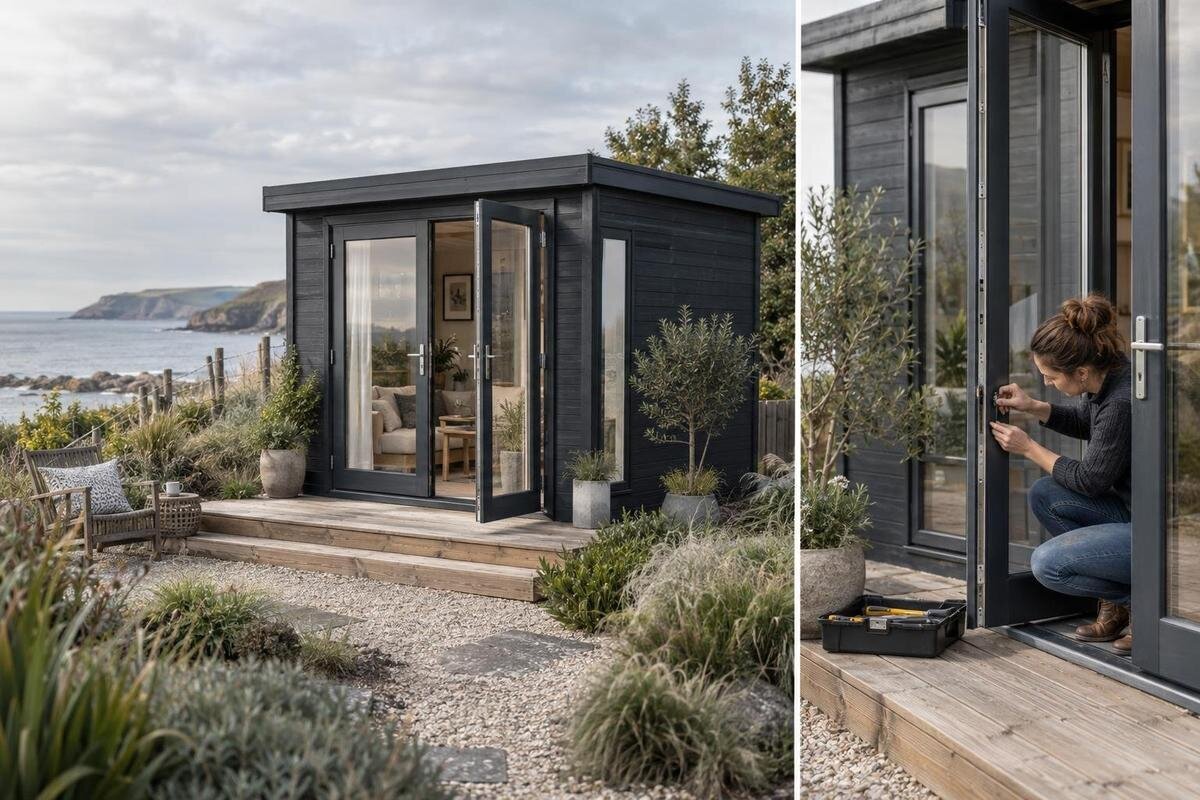
A garden shed door that sticks after rain, a damp spell or a change in temperature can be frustrating, but forcing it may turn a small fit problem into damage to a hinge, latch or frame. The same symptom can come from several places: the door edge, hinge fasteners, latch, frame or the support beneath the building. Seasonal timing is a useful clue, not a diagnosis. Note when the problem begins and where the door rubs before trying an adjustment. This guide explains what to inspect first, which limited hinge checks may help, when to stop, and what to verify if you are comparing or ordering a garden shed.
What a sticking door can tell you
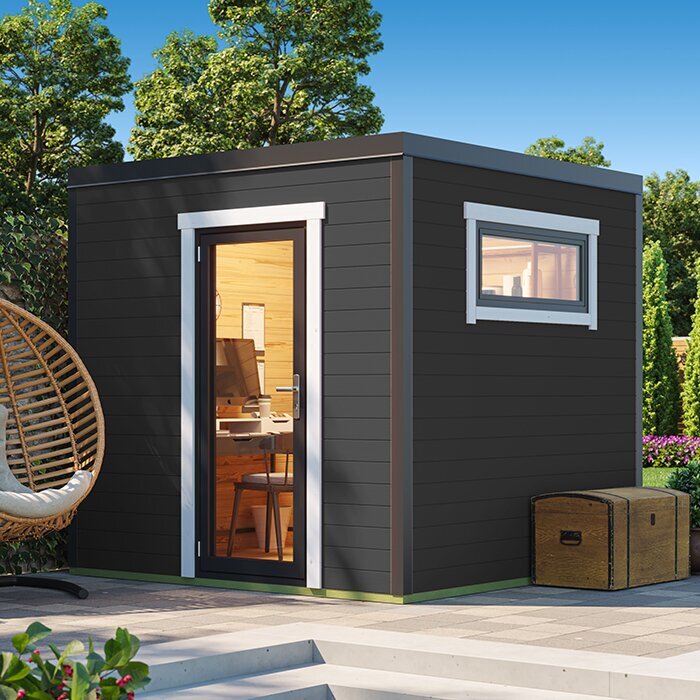
A sticking door is an effect rather than a diagnosis. Notice whether it resists as soon as it moves, catches only near the closed position, drags at the bottom, or needs lifting before the latch lines up. Identify the contact area—top, bottom, hinge side or latch side—without pushing through the resistance. Open and close it slowly, stopping if it binds hard. Repeatedly slamming, pulling or leaning on it can loosen hardware or damage the edge, and it makes the original symptom harder to judge. Keep your fingers clear of the closing edge; don’t pry at the door to make it move.
Record when the problem begins and what changed beforehand: rain, a damp spell, a temperature swing, a long period with the shed closed, or recent assembly or repair. Note whether it eases as conditions change, whether the latch alone misses, and whether the gap around the door looks different. A short written note and a photo from the same position on later checks can reveal a pattern more clearly than memory. These observations won’t identify the cause by themselves, but they can help you choose whether to inspect the hinges, latch or frame first—and give a supplier or carpenter useful detail if you need advice.
Why seasonal changes affect the door fit
Wood reacts to changes in moisture: wooden parts can swell or shrink as their moisture conditions shift, changing how closely a door fits its frame. That change can be temporary, or it can reveal a fit that already had little clearance. Temperature shifts may also affect parts of an assembly differently, but materials and construction vary, so the calendar cannot predict how much movement a particular door will have. A door that rubs after damp weather may be affected by moisture, yet loose hinges, fasteners, the latch or movement in the opening can create a similar symptom. Seasonal timing alone does not prove that the door has swollen.
If you’re choosing a garden shed, check what the listing and the model’s assembly or care documents actually say about door and frame materials, clearance and hardware. A product name or photograph isn’t enough to judge seasonal behaviour. The Verdana 1 garden house page can be one page to review for stated details; treat anything not specified as a question for the seller or manufacturer rather than filling in the gaps yourself. Before ordering, save the instructions and contact information for the exact model. Clear documentation can help you distinguish a seasonal fit change from a fastening or assembly issue later.
Find the point where the door catches
Look at the gap around the closed door before making changes. A gap that narrows at one corner, a fresh rub mark or an edge that contacts the jamb at one height gives you a location to investigate. Check the door in the same position each time; sunlight and viewing angle can make a small gap hard to compare. If it is safe, look from inside and outside, and compare the top, sides and bottom rather than judging one edge alone. Note whether the door swings freely while unlatched. Avoid removing trim, wedging the door open or scraping the edge just to expose the contact point; a visual inspection is usually enough to guide the next check.
A product page can help only if it provides measurements and installation information for that specific model. When reviewing the Verdana 2 garden-house listing, look for an explicit door or clear-opening measurement, which side the hinges sit on if specified, and assembly guidance; don’t estimate usable clearance from a photo. If those details are absent, ask before ordering, especially if the shed must fit beside a fence, wall or stored equipment. Keep any measurements you receive with the manual, because they give you a reference if a later seasonal change makes the opening feel different. The model name by itself does not confirm any of those dimensions.
Check for moisture around the opening
Moisture can affect the door edge or frame unevenly if water repeatedly reaches one part. Check whether rain splash, runoff, a wet item leaning against the wall, or water near the entrance coincides with the sticking. Look for clear signs of dampness or deterioration around the threshold and jamb, but don’t scrape the finish or probe soft wood. A swelling edge may feel tight in one spot; a change at the frame can produce a similar rub, so appearance alone isn’t conclusive. If the area remains wet, address the source of water exposure and follow the product’s care instructions before adjusting the door. Cutting material away while it is damp may leave too much clearance once it dries.
When comparing garden-shed listings, check whether the seller specifies the threshold, frame and any related care instructions; don’t assume a photograph proves a particular seal or level of water resistance. The Durano garden-house page is one listing to examine for whatever details are actually published, not a basis for assuming its construction. Ask how the door and frame should be cared for and what to do if their fit changes. For an existing shed, consult its instructions before applying sealants, coatings or other products near the opening, since a treatment could affect the finish or a moving part.
Inspect hinges before adjusting them
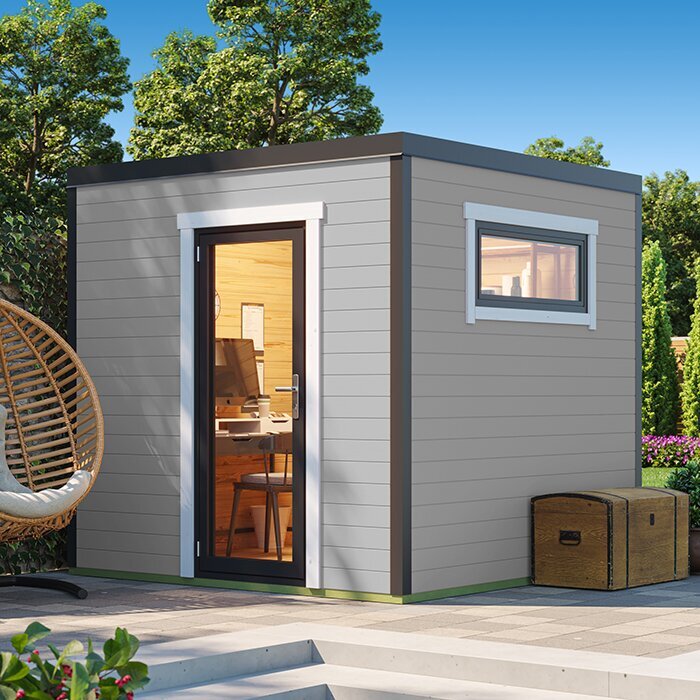
With the door closed, look at each hinge where it meets the door and frame. A hinge plate sitting away from its surface, a screw head that turns or stands proud, a loose pin, a bent hinge or cracked wood nearby deserves attention. Then open the door only as far as it moves freely and observe whether the hinge plates move relative to the wood. Don’t put your fingers between the hinge parts or try to straighten a bent hinge while the door is hanging. If the door is heavy, unstable or likely to fall, stop and arrange help; supporting it during hardware work is safer than relying on one remaining hinge.
If a screw is plainly loose and the surrounding wood and hinge are sound, support the door and use a correctly fitting screwdriver to snug the screw gently. Work on one fastener at a time and don’t overtighten. A screw that spins without gripping, a split jamb, a pulled-out hinge or a bent part needs a proper repair, not a harder turn or improvised hardware. Only adjust a hinge designed to be adjustable, and follow the instructions for the exact hinge or shed model in small increments, testing after each change. The Veltor 1 listing is a page to check for whatever hardware information it provides; its name alone does not establish the hinge type or adjustment options.
Rule out a latch or clearance problem
Sometimes the door swings without rubbing but won’t latch. Close it slowly and watch whether the latch tongue meets the strike plate or passes above, below or beside it. Check that a handle or latch isn’t visibly loose and that nothing stored inside is pressing against the door. A latch that is misaligned may reflect a slight change in door position, but it can also be the only issue; moving the strike plate before checking the hinges can hide the underlying cause. Don’t slam the door to make the latch catch. If you can’t tell where it meets, stop and consult the hardware or assembly instructions rather than changing parts at random.
Door operation matters when you buy a garden shed: consider the space in front of and beside the opening, the route for carrying tools through it, and whether the stated opening suits your plans. Compare the published description, drawings and clear-opening dimensions for the exact model instead of inferring an operating style from a name or image. The Orello garden-house page is one listing to review for the product information it actually provides. Confirm the latch and hinge details, required clearances and replacement-hardware options with the seller when they aren’t stated. A door that fits the site should also be usable once the surrounding area is in place.
When the frame or support may have shifted
Seasonal timing doesn’t rule out movement in the building’s frame or support. Look for changes beyond a tight edge: a new diagonal gap around the door, a frame that appears out of square, separated trim, fresh cracks near the opening, visible movement at hinge fasteners, or another opening that has also changed. Note any recent disturbance, such as an impact, water pooling or building assembly, but don’t try to prove a structural cause from appearance alone. A small seasonal change and a frame issue can overlap, and no single visual clue confirms what is happening. Avoid using the door as a lever to test whether the opening will move.
If the frame looks distorted, several fasteners are pulling out, or the door has changed markedly, pause before moving hinges or trimming the door. The leaf may not be the part that needs correction, and an adjustment can put more strain on hardware if the opening continues to move. Check the building’s instructions and ask the supplier or a qualified carpenter to assess the door, frame and support together. If you’re buying, review the exact model’s assembly and site-preparation guidance; the Modano 1 page is an example of a product page to consult, not proof of any particular base requirement. Confirm what the instructions say for that model before ordering or copying another shed’s setup.
Make small, reversible adjustments
Make the least invasive checks first: clear obstructions, observe where the latch meets, inspect the hinge fasteners and consult the model instructions before changing an adjustable hinge. Change one thing at a time so you can tell whether it helped. Use small adjustments only where the instructions describe them, then open and close the door gently through its normal path. Recheck the gap and latch after each change. If you alter several hinges or move the strike plate at once, you lose a clear baseline and may shift the problem rather than fix it. Keep hands clear of pinch points while testing, and stop if the door feels unstable.
Don’t sand, plane, cut or force the door as a first response to a seasonal bind. Removing wood or finish can make the fit worse when conditions change again, and it won’t correct a loose hinge or moving frame. Avoid forcing a shim into the opening or adjusting the building’s support without appropriate instructions and expertise. If the door opens normally once conditions change, note that pattern rather than making an irreversible alteration. If it continues to bind, worsens after a careful adjustment, or you aren’t sure which hinge is adjustable, stop and ask the maker or a qualified carpenter.

What to compare before ordering a garden shed
When replacing or buying a garden shed, treat door details as an important part of the order, not something to work out after delivery. Confirm external and clear-opening measurements separately, how the door is described as opening, which side the hinges are on if disclosed, what latch and hinge hardware is included, and whether the frame must be assembled in a particular way. Ask what parts can be replaced if a hinge or door is damaged, and whether fitting or adjustment guidance is available. These are model-specific facts; if a listing doesn’t say, request them before purchase. That makes it easier to judge fit for the actual site and the items you plan to store.
Compare a published layout with the access you need: leave room for the door’s stated opening path and for carrying in a mower, bins or other equipment, without assuming it will swing in a particular direction. The wooden garden shed M page can be one product page in that comparison; read its current specifications and included-parts information rather than extrapolating from a model label or photographs. Verify delivery and assembly arrangements, and whether instructions explain how to keep the frame aligned during assembly. A larger opening isn’t automatically better if it conflicts with a fence or walkway. Choose based on documented dimensions and access at the intended location.
When to repair, replace or call for help
A sticking door doesn’t automatically mean the garden shed needs replacing. If the frame appears sound and the issue is an identifiable loose fastener, obstruction or model-specific hinge adjustment, a limited repair may be enough. If the door has persistent damage, the frame is distorted, or the same bind returns despite following instructions, ask the manufacturer whether compatible parts or a service repair are available for the exact model. Don’t order a generic replacement door using approximate measurements: hinge positions, thickness, handing and opening dimensions can differ. Have a qualified carpenter assess the fit if those details aren’t clear.
If replacement is on the table, use a listing such as the wooden garden shed S listing as part of a fresh comparison, not as a match for the existing door. Confirm the published dimensions, door and frame details, included hardware, assembly requirements, and whether replacement components or instructions are available; ask the seller to clarify anything missing. The right choice depends on the site, access and documented specifications, not on a product name or a similar-looking image. For pronounced frame movement or damage, have the structure assessed before ordering or trying to correct the opening; a new door cannot be assumed to solve a problem in its support.
Frequently asked questions
Why does my shed door stick only after rain?
Damp conditions can change the fit of wooden parts, especially if water repeatedly reaches one edge or the frame. A tight door after rain may also be revealing a loose hinge or another alignment issue. Note where it rubs and whether the problem eases as conditions change; timing alone does not confirm the cause.
Should I plane or sand a swollen door edge?
Not as a first response. The tight fit may be temporary, or the actual issue may be a hinge, latch or frame. Removing wood or finish can leave too much clearance when conditions change again. Inspect the door and follow the model’s instructions before considering an irreversible alteration.
Can I tighten the hinge screws myself?
If a screw is clearly loose and the hinge and surrounding wood look sound, you can gently snug it with a correctly fitting screwdriver while supporting the door. Do not overtighten. If a screw spins, the wood is split or the door is unstable, stop and arrange a suitable repair.
How can I tell if the frame has moved?
A changed gap, separated trim or more than one opening becoming difficult to use can be reasons to look beyond the door edge. These signs do not prove that the frame or support has shifted. If the opening looks distorted or the change is substantial, have a qualified carpenter or building professional assess it.
Does a sticking door mean I need a new shed?
No. A local obstruction, loose fastener or adjustable hinge may be the issue, but the cause needs to be identified first. Ask the manufacturer about compatible parts for your exact model if a repair is needed. Consider replacement only after checking the door, frame and support, rather than assuming a new unit will solve the problem.
Treat seasonal timing as a clue, then look for the actual point of contact and check the latch, hinges and frame in that order. A small, reversible adjustment may help when the hardware is sound and the model’s instructions support it. Don’t compensate for a frame or support problem by forcing the door or removing material. If the opening looks distorted, the hardware is damaged or the cause remains unclear, pause and get advice from the maker or a qualified carpenter.
