
Garden Shed Foundations on Clay Soil: Questions for Your Installer
Garden shed planning
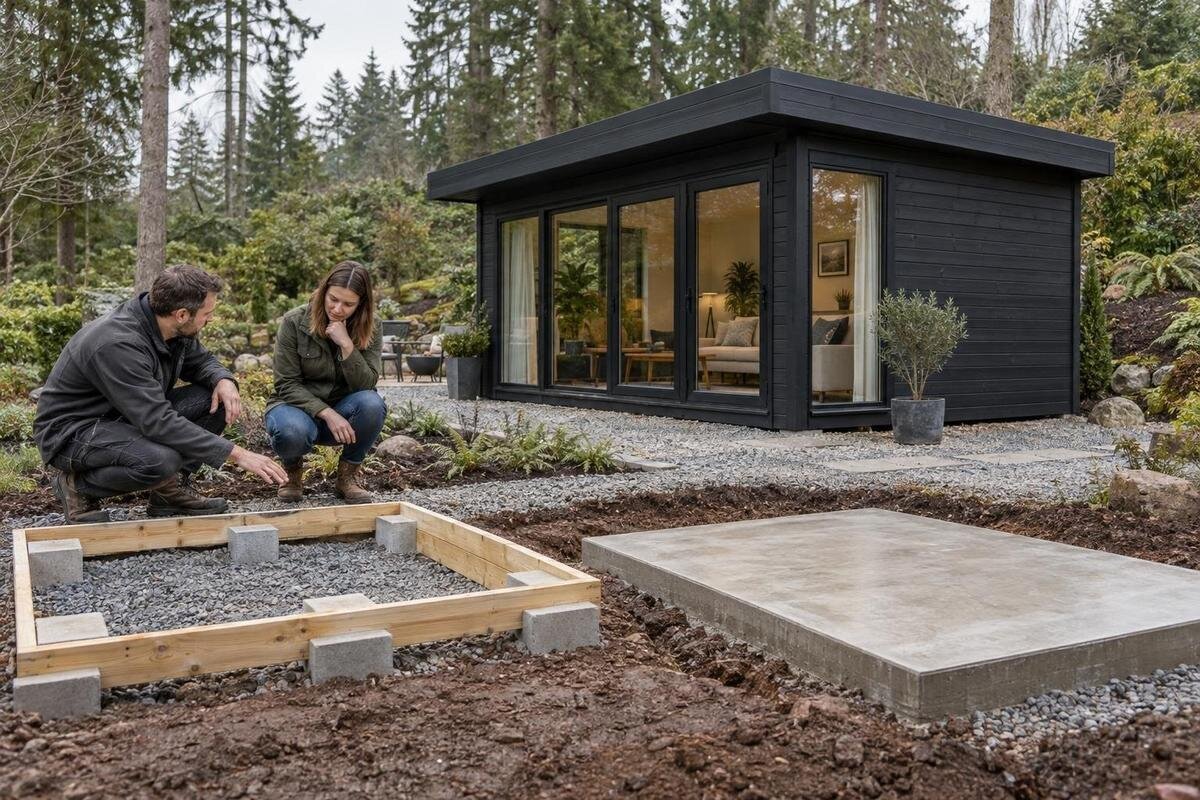
Planning a garden shed foundation on clay soil starts with the site, not a one-size-fits-all base. Use the questions below to understand what your installer has assessed, how the proposed foundation fits the exact shed, and what work and contingencies are included before you order.
Why clay soil calls for a site-specific plan
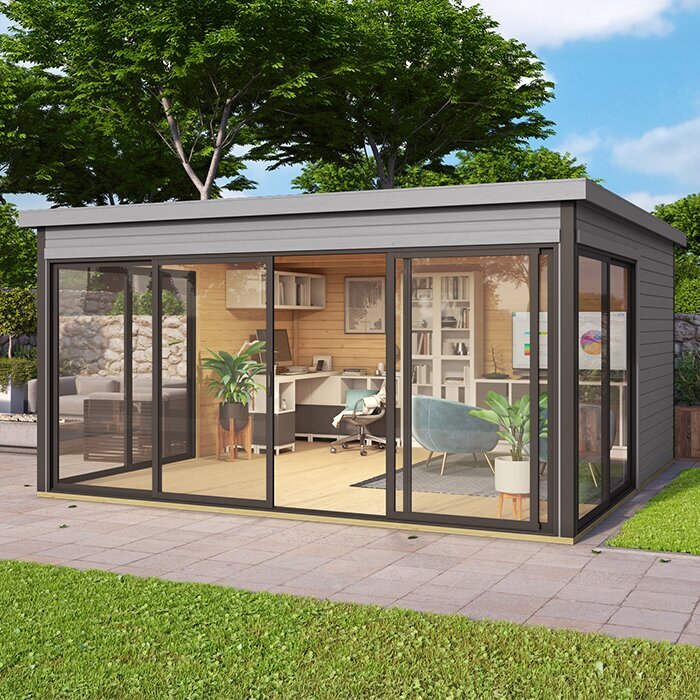
Clay soil is not one uniform foundation condition. One part of a yard may be firm while another contains recently placed fill, topsoil, buried debris or a wetter pocket. Many clay soils drain more slowly than coarse soils, but behaviour depends on composition, structure, moisture and past disturbance. Some clays also change volume as moisture shifts. The word clay, by itself, cannot tell an installer how to support a particular garden shed. Ask what will be assessed on your property before a foundation type is named, and whether the recommendation draws on a site visit, reliable site records or further investigation.
Soil conditions can differ over short distances, especially where landscaping or drainage has changed. A foundation that moves unevenly can affect how the shed sits and how openings operate; that is a planning risk, not a prediction about your yard. Tell the installer about areas that remain wet, soft spots, past grading, old foundations or paving, known fill, and seasonal changes you have noticed. These details do not diagnose the ground, but they can help focus the assessment. Dated site photos or records may also provide useful background, though they do not replace the installer’s evaluation.
Match the foundation plan to the exact shed
The foundation conversation should begin with the building you intend to buy, not a generic description such as a small shed. If Verdana 1 garden house is on your shortlist, give the installer that exact name and ask which current product documents they need to consult. The name identifies a model; it does not establish its footprint, floor arrangement or foundation requirements. Have the installer confirm the outside dimensions and support details they are actually using, and record the building orientation and doorway position. That gives everyone the same reference when comparing a foundation estimate with the product you plan to order.
Establish whether the manufacturer specifies a particular base, support points or anchoring approach, and who will obtain and interpret that information. Confirm how the proposed base dimensions relate to the shed’s actual footprint; a prepared area may not simply match an image or a listing name. If a floor or base frame is included, sold separately or optional, make clear which configuration the estimate assumes rather than guessing. Ask the installer to flag any missing instructions or mismatch before work begins. A foundation plan tied to the exact building is easier to review than a generic allowance for a shed.
Ask what site evidence supports the recommendation
Separate what the installer has observed from what remains an assumption. A site visit can identify surface water, disturbed areas, nearby structures and access, but appearances alone may not reveal what lies below. Ask what soil or site information the proposal relies on, where there is uncertainty, and how that uncertainty affects the design and estimate. If the installer refers to work on another property, ask why those conditions are comparable; a neighbour’s foundation is not automatically a template for yours. The goal is not for you to classify the soil, but to understand the evidence behind the recommendation.
If your shortlist includes garden house Verdana 2, make sure the assessment and estimate refer to that exact building as well as your intended location. Ask whether a soil investigation or geotechnical professional is appropriate, who decides, what the assessment will answer, and whether its cost is separate. If the foundation depends on information that is not yet available, have the installer mark that part as provisional and explain what could change the plan. Clarify who arranges utility locating and safe excavation before any test or foundation work; do not assume this responsibility is automatically included.
Compare foundation options by their rationale
An installer might discuss a compacted aggregate base, a concrete slab, individual concrete supports, or ground screws or helical piles. These are examples to compare, not a menu from which a buyer can choose by soil label alone. Each approach has different requirements for preparation, installation and connection to the shed. Ask why the proposed type suits the conditions observed and the manufacturer’s requirements, what alternatives were considered, and what might make them unsuitable. A statement such as this is what we always use on clay gives too little information unless it is supported by a site-specific explanation.
If Durano spacious garden house is among the options you are pricing, ask the installer to name the exact foundation system in the written proposal, rather than using a phrase such as base included. Ask which soil and building assumptions support it, how it accounts for expected ground behaviour, and whether the proposal depends on an inspection before excavation. Request practical comparisons that matter to you, such as work scope, maintenance, access, finished appearance and how the shed attaches. If two options are offered, compare their defined scope and exclusions as well as their price; no method is automatically best for every clay site.
Define excavation and base preparation
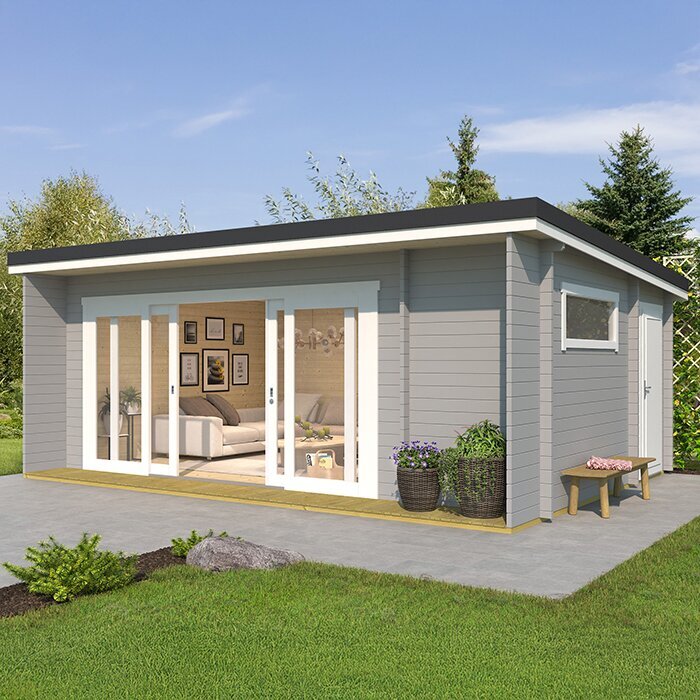
Use a plan or written scope to define the footprint of the work. Ask what vegetation, topsoil, old material or unsuitable ground will be removed, how the installer will decide whether more excavation is needed, and what material will replace it. Have the installer identify the base layer and explain how its placement or compaction will be checked, rather than trying to choose technical values yourself. Clarify the intended finished height and how the prepared area meets the shed’s support points. These details distinguish a defined foundation scope from a vague allowance for site preparation.
If Veltor 1 is on your shortlist, its model name does not tell you how much of your yard will be disturbed. Ask where excavation begins and ends, who removes and disposes of excess soil, whether imported material and equipment are included, and who restores the surrounding ground. Discuss access for machinery, spoil storage, existing paving or landscaping, and any known buried services before confirming the work. Find out what happens if the crew uncovers unexpected fill or soft ground: who pauses work, how you approve a revised scope, and how extra costs are recorded. Put that process in the estimate rather than relying on a verbal understanding.
Plan for water and changing moisture
Water and moisture deserve direct attention on clay. Walk the site with the installer and identify where surface water comes from, where it collects, and where it can go without creating a new problem. Mention roof runoff from nearby buildings, irrigation, downspouts, low areas and seasonal wetness you have observed. Ask whether the proposed foundation plan accounts for those conditions and what drainage or grading work is included. The answer should describe the route and responsibility, not simply promise to keep the shed dry. Do not assume that a drainage feature is needed—or that one feature will solve every moisture issue—without a site-specific explanation.
If Orello 1 is on your shortlist, do not infer water-management details from its name or photograph. Ask how the finished ground around the foundation will relate to the existing yard, where runoff from the shed and nearby surfaces is expected to go, and whether drains, channels or grading are part of the quoted work. If water is directed elsewhere, identify who checks that it will not create a problem at a house, fence or neighbouring property. Ask what maintenance the proposed drainage arrangement requires and what falls outside the installer’s scope. This also helps distinguish foundation work from wider yard drainage.
Confirm the footprint, support and anchoring
The drawing should show more than a rectangle labelled foundation. Ask for the shed’s orientation and footprint, the base outline, the support lines or points, and the relationship between the finished surface, floor and doorway. Have the installer check these against manufacturer information for the exact building. Find out how they will confirm that the foundation is positioned and prepared to the stated requirements before assembly. This is not a request for you to calculate loads or tolerances; it is a way to catch a mismatch between the building, its support layout and the installation plan while changes are still manageable.
Discuss anchoring separately from soil support. A level base and secure attachment are related parts of the installation, but one does not answer the other. If Modano 1 is being considered, ask the installer to identify the applicable manufacturer information for anchoring, explain how the proposed connection suits the foundation system, and say who supplies and installs each component. Ask whether site conditions or anchor details could change the foundation proposal, and how uncertainty will be resolved before assembly. Avoid accepting a one-size-fits-all anchor detail without an explanation of how it fits both the chosen shed and the site.
Make the written estimate specific
A written estimate should let you see what you are buying. Ask for separate descriptions of investigation or design, excavation, materials, foundation installation, equipment, disposal, grading, cleanup, anchoring and any work on the surrounding yard. Not every estimate will include every item, so exclusions matter as much as included tasks. Have the installer state whether the price is firm or depends on assumptions about the ground, and identify what is not yet known. Do not compare totals until the work covered by each estimate is clear.
Put the exact building name, its confirmed version or configuration, and the drawing used for the base in the same paperwork. If wooden garden shed M is your choice, the estimate should still state what site work is included; the product name alone does not define installation scope. Ask which party supplies materials, who schedules the work, and whether the shed purchase and foundation service are separate agreements. Include a written change process for unexpected soil, revised drawings or extra drainage, with your approval required before additional work proceeds. Ask what completion records you will receive and how workmanship concerns are handled under the installer’s terms.
Coordinate access, timing and changes
Ask how timing depends on actual ground conditions. Wet clay can affect access and excavation, while frozen or thawing ground may change what work is practical in some locations; the installer should explain their own limits rather than promise one method for every season. Confirm the expected order of site visit, any investigation, foundation construction and shed assembly. Ask what notice they need before delivery, how equipment will reach the work area, and whether gates, overhead obstructions or a narrow path change the plan. Clarify what happens if weather delays the work or site conditions differ from the initial visit.
If wooden garden shed S is the item you plan to order, keep its product identification and the foundation schedule in one written plan. Ask who confirms that the prepared base is ready for assembly and how a missed requirement will be corrected before the building arrives or work proceeds. Agree on a contact for changes, who can authorize them, and how revised dates or costs are recorded. If materials or a shed will be stored on site, ask who is responsible for suitable storage and access. Do not treat a delivery estimate as proof that the foundation will be ready; confirm each hand-off with the relevant party.
Choose an installer who explains the plan
When comparing installers, consider the explanation as well as the total. Ask who assessed the site, who is responsible for foundation design, who performs excavation and construction, and when a qualified geotechnical or structural professional should be involved. Request examples of comparable clay-soil projects and ask what made those sites comparable, rather than relying on a general claim of experience. Check that the written scope identifies the accountable business and the work it will perform. If approvals or local requirements may apply, verify them with the relevant local authority; do not assume the shed seller or installer has confirmed them for your property.
Before placing the order, make sure the same exact shed, site, base drawing and scope appear throughout the paperwork. Resolve open questions about soil evidence, water routing, anchoring, excavation, exclusions and change costs; mark anything still conditional instead of treating it as settled. A useful installer’s answer should be specific enough that you can explain why the system was chosen and who will do each task. It need not promise that ground conditions can never change. It should make the assumptions visible, provide a sensible way to handle discoveries, and let you compare the purchase and installation on a like-for-like basis.
Frequently asked questions
Does clay soil always need a concrete foundation?
No. Clay soil alone does not determine the right foundation. The choice depends on the ground at the intended location, water conditions, the shed’s requirements and the installer’s assessment. Ask for a site-specific reason for the proposed system rather than assuming one material is best.
Can an installer assess the soil just by looking at the yard?
A site visit can reveal surface conditions such as standing water, disturbed ground or visible grading, but appearance does not establish what lies below. Ask what the installer can conclude from the visit and whether further investigation is needed.
Should I choose a shed before asking about its foundation?
You can shortlist sheds early, but share the exact product name and relevant manufacturer information before finalizing the foundation plan. Confirm that the proposed base matches the building’s requirements and that the estimate covers the same model and location you intend to use.
What should a foundation estimate include?
It should describe the proposed foundation and site preparation, what excavation and materials are included, who handles disposal and anchoring, and which work is excluded. Ask what assumptions the price depends on and how unexpected soil conditions or extra work will be approved and recorded.
Is a gravel or aggregate base automatically suitable for clay?
No. The material name does not establish that the base is appropriate for your site. Ask how the installer will prepare it, what site evidence supports the proposal, and how it meets the shed’s requirements.
Clay makes a generic foundation promise less useful, not impossible to plan. The practical choice depends on the exact shed, the ground and water evidence at its intended location, and a written explanation of how the proposed base supports and connects to that building. Before ordering, make sure the installer’s assumptions, included work and response to unexpected ground conditions are clear. That gives you a useful basis for comparing proposals and coordinating the purchase with site preparation.
