
Heating a Garden Shed for Occasional Use: Options to Consider
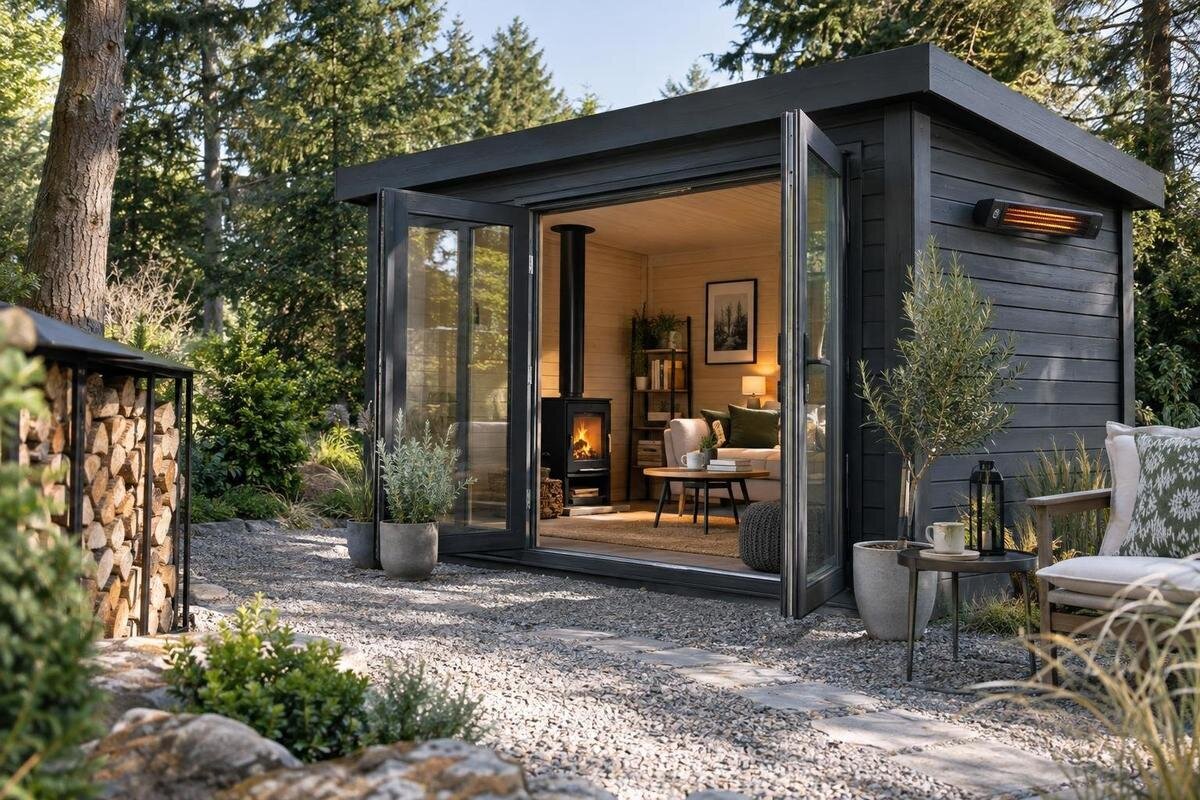
Garden house planning
Heating a garden shed for occasional use starts with the reason you need heat, not a heater model. A building warmed only while someone is working inside has a different brief from one expected to protect stored contents between visits. Insulation, drafts, available power and time on site all affect comfort and safe operation. Compare the shed and heating system together, and decide whether you need whole-room warmth, spot heat or a more consistent temperature before ordering either.
Before you order 1
Define the heating goal before shopping
Write down how the garden house will be used, how many people will occupy it, how long a normal visit lasts, and whether they need warmth throughout the interior or only at one work area. A quick trip to collect tools differs from an afternoon of potting, repairs or hobbies. Note whether visits are planned or spontaneous, whether the door opens often, and how long you can wait for warmth. Think about whether the first minutes matter most or whether steady comfort over a full session is the priority; those goals can favour different equipment and controls. Also note whether you move between tasks or remain in one spot, since that changes how useful focused heat will feel.
Separate comfort during a visit from protection of stored items. If the aim is personal comfort, heating only when someone is present may be enough; if contents must remain within their own storage conditions while the shed is empty, you may need steady monitoring and a different plan. Read labels or manufacturer directions for anything sensitive rather than guessing at a temperature, and record which items stay in the building through cold weather. This distinction helps you avoid specifying a system for the wrong job. A candidate such as the Verdana 1 garden house listing is a building to assess, not evidence of insulation or heater compatibility; confirm its documented construction and intended use before you buy.
Assess insulation and air leakage first
Heat demand depends as much on the shell as on the heater. Check the documented construction of the walls, roof and floor, and details of doors and glazing, where present. Ask whether insulation is included, optional or absent, and whether gaps, unfinished surfaces or a cold floor are part of the planned build. A model name or attractive photograph cannot show how quickly the interior will lose heat. Look for actual assembly information and dimensions, then consider how often the door will be opened and whether the structure will be exposed to wind. Include joints and unfinished areas in your questions, not just the largest wall surfaces.
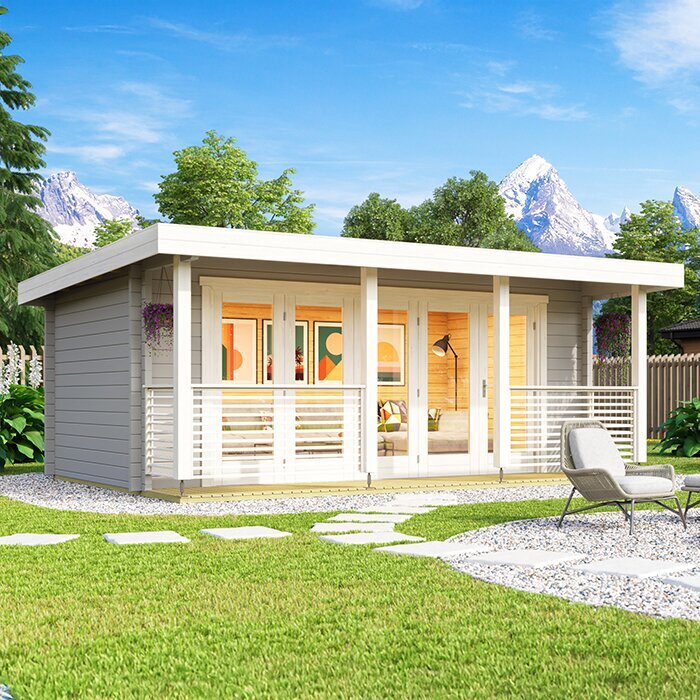
For example, the Garden House Verdana 2 page should be assessed from its actual specifications, not assumptions based on appearance. If you expect to add insulation after purchase, consult a builder about moisture control, ventilation and compatible finishes before changing the wall, roof or floor assembly. Ask what moisture-control layers and ventilation openings are intended to remain, and whether an insulation change needs revised detailing. Insulation can help retain warmth, but an improvised retrofit may change how moisture moves through the building. Plan the completed envelope first: a heater chosen for a drafty shell may be the wrong fit after upgrades, or vice versa. Also verify who is responsible for finishing any area left open.
Before you order 2
Match the heater to visits and heated area
Consider the portion of the shed that needs to feel comfortable. An occasional user stationed at one bench has a different need from someone moving between storage, a sink and a work surface. Door openings, ceiling height, interior volume and materials all influence how quickly the space warms and cools. There is no reliable one-size-fits-all heater choice from floor area alone. Use the maker’s sizing guidance for a specific device, and ask an HVAC professional to size equipment if whole-room heating or protection of contents is important. Include the time needed to reach a comfortable feel in the visit plan.
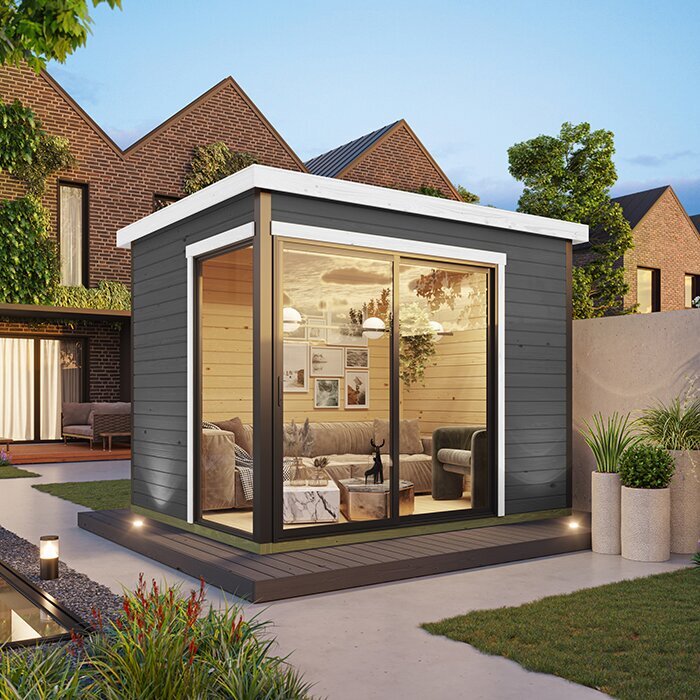
Use dimensions documented for a building such as the Durano garden house listing; do not infer usable floor area or heat retention from a model name or photograph. If a floor plan is supplied, mark the work zone, possible heater position and walking route on a simple sketch. Note where the door swings and where storage might be placed, so the selected equipment does not compete with circulation space. Ask whether stated measurements describe interior or exterior dimensions. A plan that leaves a heater near stored supplies or an exit needs revision or professional input before you order equipment; a product image alone cannot settle those questions.
Check electrical capacity before choosing a plug-in heater
Portable plug-in electric heaters can be appealing for occasional occupancy because they can be brought into the heated area only when needed. Fan-forced and convection designs warm air; radiant designs direct warmth differently, so comfort depends on where you sit or work. Check each unit’s instructions for approved locations, operating limits and whether it is designed for a detached outbuilding, rather than assuming any household heater suits a garden shed. The convenience is conditional: the electrical supply must be suitable for the heater’s demand. An existing outdoor receptacle, light or nearby outlet does not by itself show that the circuit can support the intended use. Lighting, tools or other appliances operating at the same time also belong in that assessment.
Before ordering a shed or heater, ask a licensed electrician to assess the planned connection, circuit capacity, outdoor-to-building wiring and any permanent equipment. Do not select a heater solely by its plug or advertised room coverage, and follow the appliance maker’s instructions for use. If the chosen structure is the Veltor 1 garden house listing, use the listing as a model identifier while discussing electrical service; it does not establish that a particular outlet or heater can be used safely. Include electrical work in the overall project plan, and settle any required work before you rely on the shed for regular visits.
Before you order 3
When radiant heat may suit a short visit
Radiant heaters may suit a visit when you will remain at one bench or chair and want warmth focused on that occupied area. They direct heat toward people or surfaces instead of relying only on warming all the air, so the effect depends on the position and orientation permitted by the particular appliance. This can be useful when you move directly into a task, but less satisfying if you move around or expect every corner and stored item to reach the same temperature. Treat it as local comfort, not as a substitute for a plan to protect the whole building’s contents. Think through whether your routine keeps you in the unit’s intended area: a spot heater will not automatically warm the doorway or an adjacent work zone.
Placement is a safety decision as well as a comfort decision. Check the manufacturer’s required clearances, mounting method and restrictions for nearby wood, fabric, paper, fuels or other combustibles; do not improvise a mounting surface or obstruct access. Consider shelves, future storage and door movement when deciding where equipment could go, since the layout may change once the shed is in use. If the heater is fixed, have a qualified installer confirm that the structure and electrical connection suit it. A listing such as the Orello garden house page identifies a building to compare, but its name alone says nothing about safe heater locations or installation options.
Consider fixed electric heating or a heat pump
If visits are longer, frequent or planned well in advance, a fixed electric heater or heat pump may be worth evaluating alongside portable equipment. A fixed unit can be planned around room use and controls, while a heat pump requires assessment of the building, electrical service and outdoor equipment location. Either option brings more planning than carrying in a portable appliance, and the system must match the enclosure rather than compensate for uncontrolled heat loss. A small or poorly insulated structure may not suit the same equipment as a finished room, so have a qualified heating professional evaluate the actual building and intended use instead of choosing by headline efficiency claims.
Discuss winter operating conditions, equipment limits, controls, servicing and any required changes to the structure before committing. Ask whether the system can meet the intended comfort goal during the conditions when you will actually visit, and how it should be managed while the shed is unused. Do not assume performance from a product photo or a building description. The Modano 1 listing can be included in a building shortlist, but it does not establish compatibility with a heat pump or fixed heater. Get the proposed building and heating arrangement assessed together, including the scope of electrical work, professional installation and service access.
Before you order 4
Treat fuel-burning heaters as a specialist project
Propane, kerosene, natural-gas or solid-fuel heaters are sometimes considered when electrical capacity is limited, but an enclosed garden shed is not simply an outdoor work area. Combustion produces exhaust and can involve carbon-monoxide, fire, fuel-storage and ventilation hazards. The need for a suitable exhaust route and safe fuel handling can also limit where equipment may go. A portable unit’s size or convenience does not establish that it is safe for an occupied enclosed space. Do not treat a fuel-burning appliance as a casual plug-in alternative or infer indoor suitability from outdoor marketing.
Before considering one, check the exact appliance’s permitted use with its manufacturer and have a qualified professional review combustion air, exhaust or venting, clearances, placement and local requirements. Ask that person to confirm what alarms or other safeguards apply to the specific arrangement. Do not adapt a garden house or cut openings to suit a device without appropriate advice; modifications can affect the building and the heater’s operation. If the intended appliance is not clearly approved for occupied indoor use, do not use it in the shed. The wooden garden shed M listing identifies a building model only and says nothing about fuel-appliance compatibility.
Confirm heating-related details before ordering
Ask for the building’s complete specification before you commit: interior dimensions if provided, wall, roof and floor assembly, glazing and door details, ventilation provisions, finish state and any insulation options. Clarify which components arrive ready to use and which need separate work; the heating plan can change if flooring, insulation or glazing is left to the owner. Do not read warmth or winter suitability into words such as “premium,” “solid” or “modern.” If information is missing, ask the seller to confirm it in writing rather than filling gaps with assumptions. Confirm that the exact model version and chosen options are reflected in the paperwork.
Check proposed service routes and heater locations with the electrician, builder and building supplier before the shed is ordered or installed, especially if a later modification could affect the enclosure. Ask what changes are allowed, whether the seller has installation guidance, and whether alterations affect the terms of sale or product support. For example, use the wooden garden shed S page as a reference for the exact model, then confirm the specifications and permitted modifications for the version you plan to buy. Keep written answers with the order, and coordinate professional work with the building’s delivery and assembly schedule.
Before you order 5
Plan safe operation between visits
Occasional use makes controls and supervision important. A timer, thermostat or phone app may offer convenience, but automation does not prove that a heater is suitable to run while the shed is empty. Check the manufacturer’s instructions for unattended operation and ask a qualified professional to review any planned remote or scheduled use. If the device is intended only for occupied rooms or attended use, follow that limit. A portable heater should not be left operating during an absence unless its instructions specifically allow the arrangement and the setup has been assessed. Make this rule clear to everyone who uses the shed.
Make the first-use routine simple: keep the operating manual accessible, show other users how the equipment is controlled, and make sure they know whom to contact if it behaves unexpectedly. Keep heater areas clear in line with the manufacturer’s directions, and do not use damaged equipment or modify its controls. If the shed is used by children, guests or anyone unfamiliar with the layout, make sure the heater cannot be accidentally switched on or obstructed. Revisit the arrangement when furniture, shelves or storage change; a location that was once clear can become crowded, and cables or controls may be affected.
Account for moisture and stored items
Intermittent heating raises moisture questions as well as warmth questions. People, wet clothing, snow-covered tools, damp materials and leaks can add moisture; when a cold shed is warmed, moisture may settle on cooler surfaces if conditions allow. Heating alone does not guarantee that the structure dries out. Keep ventilation in view, follow the heater’s requirements and do not block openings simply to retain heat. If you plan to insulate or seal the building, get advice on how its layers and ventilation should work together. Persistent dampness or condensation deserves attention before you add more heat.
Choose where to store temperature-sensitive products only after checking their own instructions, and keep wet gear from becoming a hidden source of dampness. For a comfort-focused visit, a small occupied zone and a short warm-up may be enough; for contents that require controlled conditions, seek a system and monitoring plan designed for that purpose. If the shed remains cold between visits, do not assume that a quick burst of heat will protect every stored item. Moisture management, the building envelope and the chosen heating method belong in one plan, even if the space is used only now and then.
Frequently asked questions
Is a plug-in heater practical for a garden shed used occasionally?
It can be, if the electrical supply is suitable and the manufacturer’s instructions permit use in that setting. First consider how quickly the shed loses heat and how long you stay; focused warmth may suit a short task better than heating the whole room. Ask an electrician to confirm the available capacity.
Can I use an existing outdoor outlet for a shed heater?
An outlet alone does not confirm that the circuit can support the heater, especially if lights or tools will run at the same time. Ask a licensed electrician to assess the proposed connection and follow the heater manufacturer’s instructions.
Should I keep the shed warm between visits?
Only if you have a defined reason, such as protecting items that have specific storage requirements. That calls for a different plan from heating the shed while you are there. Check the items’ instructions and have any continuous-heating system assessed for the building and intended use.
Will insulation make the shed easy to heat?
Insulation can help retain warmth, but the result also depends on the roof, floor, doors, glazing and air leakage. Any retrofit should account for moisture and ventilation as well as heat loss. Ask a builder how the completed assembly is intended to work before making changes.
Can I use a propane or other fuel-burning heater in a garden shed?
Do not assume that a portable appliance is suitable for an occupied enclosed space. Confirm its permitted use with the manufacturer, then ask a qualified professional to assess ventilation, exhaust, clearances and other safeguards for the specific building and appliance.
For an occasional garden shed, the sensible target is warmth suited to the task, not a heater chosen in isolation. Define what needs heat and for how long, assess the building envelope and available power, then compare systems against that plan. When equipment is fixed or fuel-burning, involve qualified professionals before committing. A good choice reflects the shed’s actual construction and use, rather than assumptions drawn from a name, photo or brief cold-weather visit.
