
Positioning a Garden Shed Near Trees: Roots, Branches and Debris
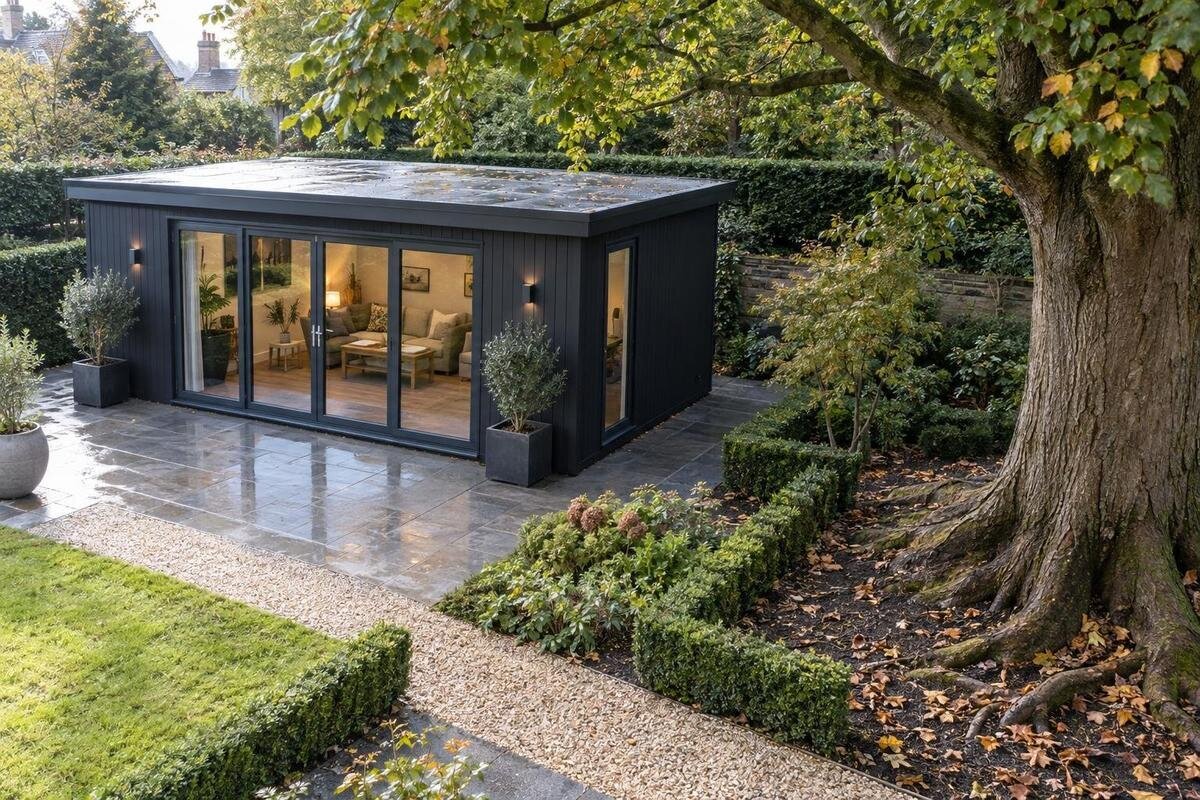
Garden shed site planning
Placing a garden shed near trees can work, but the best location is not determined by whether the building fits on the lawn. Roots can complicate ground preparation; branches can affect overhead clearance and future upkeep; leaves, needles, seeds and fruit can collect on the roof or beside the walls. Those conditions matter before you choose a model, not only after installation. A useful site plan records what is visible now, allows for likely tree growth and identifies questions for an arborist, installer or supplier. This guide focuses on tree-related site risks and purchase checks, so you can compare garden sheds with the actual yard rather than guess from a product name.
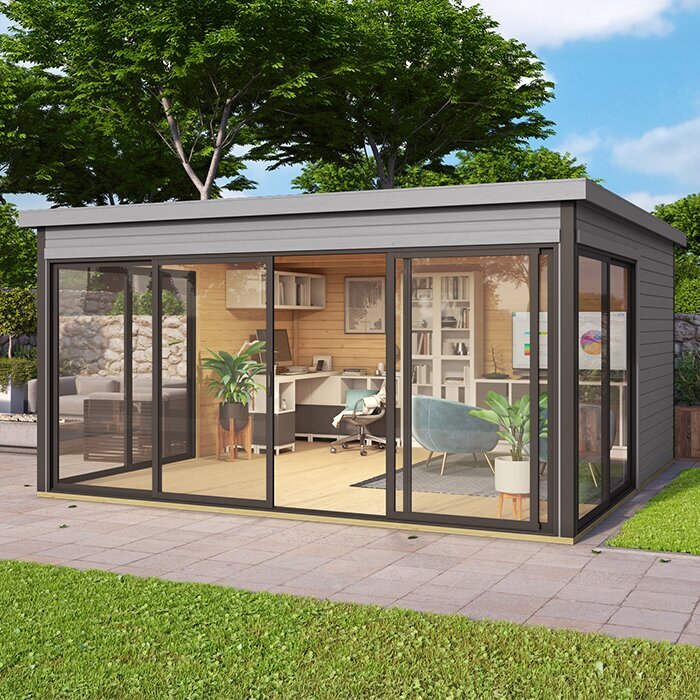
Map the trees as well as the shed
Draw the proposed building area on a simple site sketch, then mark nearby trunks and the outer edge of each canopy as it appears from several sides. Note visible surface roots, raised ground, branches above the proposed roof area and places where leaves or other material tend to collect. If practical, check the area in more than one season: a bare or recently pruned tree can hide patterns that become obvious later. The aim is not to map every root, which cannot be done from a surface view, but to make likely conflicts visible before you choose a shed.
Do not use the canopy edge as a precise boundary for roots. Roots may extend beyond the visible crown, and their location varies with the tree and site; there is no dependable surface rule for identifying a root-free rectangle. When you shortlist a model, plot its actual outside dimensions and any roof projection using the product information, rather than relying on a catalogue photo or nominal size. That comparison helps show whether the whole building, its entrance and the space needed for tree-related upkeep can coexist with the site.
Treat roots as a foundation question
Roots matter wherever ground preparation, a base or installation work could affect them. Established roots may cross a proposed footprint even when the grass looks level, while a visible root may be part of a larger system rather than a loose obstruction. Digging, cutting roots, compacting soil or changing ground levels can affect a tree. If roots are lifting nearby paving, exposed at the surface or running through the planned base area, mark the spot and pause instead of removing them on guesswork. Distance from the trunk alone cannot confirm that excavation will be clear.
Before ordering, compare the selected shed’s installation instructions and base requirements with the ground conditions. Ask a qualified arborist to assess a site where roots may be affected, and have the installer or an appropriate foundation professional review the proposed base. A narrower model is not automatically a better choice if it would still put the base over roots. For example, the Verdana 1 garden house listing can be one model to compare, but its name does not tell you whether its intended position or base arrangement will work in your yard. Get the relevant details for the exact product before deciding.
Notice changes in the ground and water flow
Look at how the proposed area behaves rather than assuming the ground beneath a tree is uniform. Note where water stands after rain, where it runs towards a low spot, where soil has been filled or disturbed, and whether roots have lifted an existing path or paved area. Roots, moisture and past landscaping can all affect what an installer encounters, but the pattern cannot be reliably inferred from a lawn’s appearance or distance from the trunk. If the area is uneven, soft, visibly altered or crossed by roots, record those conditions for professional review instead of levelling it by guesswork.
When discussing the site with an installer, describe what you have observed and ask what preparation the selected model requires. Clarify who will assess whether that work can be done without affecting roots, and whether a different position would avoid the issue. Raising or changing the ground around a tree as a quick fix can affect roots and water movement. If drainage is a concern, have a qualified site professional assess it rather than assuming a smaller or differently named shed will solve it. Clear answers may rule out a location before you pay or arrange delivery.
Check branches above the full roof area
Assess branches at the full height of the shed, not just whether its walls would sit clear of trunks. Include the roof area and any projection once you have the model’s measurements, as well as the tree’s current reach and likely growth. A branch that clears the site today may grow into the planned space, scrape a surface or drop material onto the building. If a limb looks damaged or unstable, have an arborist assess it; do not try to judge its safety from a ladder. A product photo is not enough to establish the exact height or outline of a model.
Ask for the selected model’s verified overall height and external roof dimensions, then compare them with the branches above the proposed position. A site sketch can help an arborist consider whether another spot, professional pruning or a different model makes more sense. If you are comparing the Verdana 2 garden house listing, use the specifications for the exact product and installation version; the listing name does not establish branch clearance. If the location would depend on substantial or frequent pruning, include that ongoing work in the decision rather than treating it as a one-time installation detail.
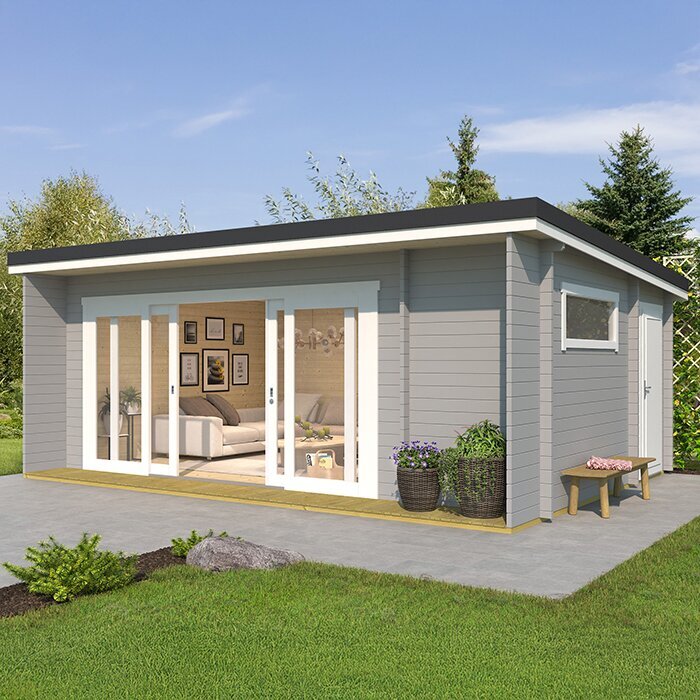
Plan for debris on the roof and near the entrance
Depending on the tree, debris may include leaves, needles, blossoms, seeds, cones, small twigs, fruit or sap. Notice where it lands after ordinary shedding and windy weather: on the roof, in any gutters or drainage features, at the entrance and along the walls. A clear day gives an incomplete picture of the cleaning a position may require over the year. Ask what maintenance the selected model needs and whether features such as roof drainage are included. Do not assume that a photograph or product name confirms what comes with the shed.
Plan where debris can be collected and carried away without repeatedly reaching over the roof or working below questionable branches. Consider whether the chosen position would make routine cleaning awkward or allow litter to collect against the exterior. If material would build up somewhere it cannot be safely removed, a different position may be more practical. When reviewing the Durano garden house page, treat it as one model to compare and confirm its maintenance guidance and supplied features directly; the product name is not a substitute for those details.
Allow for tree growth and future maintenance
The trees around a shed will not necessarily remain the same size or shape. A young tree may develop a wider crown, while an established tree can change as branches grow, die back or are professionally pruned. Think about how those changes could affect overhead clearance, debris and access over the time you expect to use the building. A photograph of the yard today cannot show every future condition. If you are unsure how a tree may develop, ask an arborist for site-specific guidance instead of using the canopy’s current size as a long-term limit.
Consider who will manage branches that could eventually affect the shed, and whether the location would depend on regular pruning to remain workable. If a future pruning decision involves someone else, clarify that arrangement before committing to a position that relies on it. Compare the likely tree-management needs with the model’s verified dimensions and maintenance guidance. For example, the Veltor 1 garden house page can be included in a product comparison, but the name alone says nothing about how it will fit alongside growing trees. Base the decision on actual product information and the tree’s likely needs.
Keep debris from collecting around the base
Fallen leaves, needles, seeds and twigs can blow into a narrow space between a shed and nearby trees, then collect along the base or near an entrance. In wet conditions, organic material held against an exterior can slow drying; the significance depends on the product’s materials and care requirements. Think about whether you will be able to inspect and clean the ground-level area, rather than treating the open space around the building as leftover yard. Avoid planning landscaping or edging in a way that traps material where it will be difficult to reach.
Ground-level upkeep is separate from clearing debris off a roof: it depends on how the building sits in relation to the tree and the route you would use to clean around it. Check the selected model’s maintenance instructions before assuming what its exterior needs. If the shed’s position would leave a tight pocket that is hard to inspect or tidy, consider changing the layout. The Orello 1 garden house listing can be another item in a comparison, but confirm the exact model’s material and care information before deciding how much debris-facing maintenance suits the site.
Compare models using their actual site requirements
Once a location has passed an initial tree check, compare models using product information rather than names, labels or images. Record the outside dimensions, roof projection, overall height and entrance arrangement, then plot them against the site sketch. Check the base and installation instructions, any stated clearance requirements, and the care guidance for the model’s exterior. A nominal footprint may not show the full area occupied by the roof, and a product photo cannot confirm dimensions. Ask for any missing information before treating a model as a fit.
A useful comparison records both what the shed needs and what the location near the tree can offer: room for the verified outline, a workable base plan, overhead clearance, debris upkeep and an installation route. Keep those points beside the product details so a name suggesting a smaller size or an attractive image does not substitute for measured information. If you are considering the Modano 1 garden house page, verify the exact model’s dimensions and installation guidance as you would for any other option. Choose only after those requirements have been compared with the site, not from the listing name.
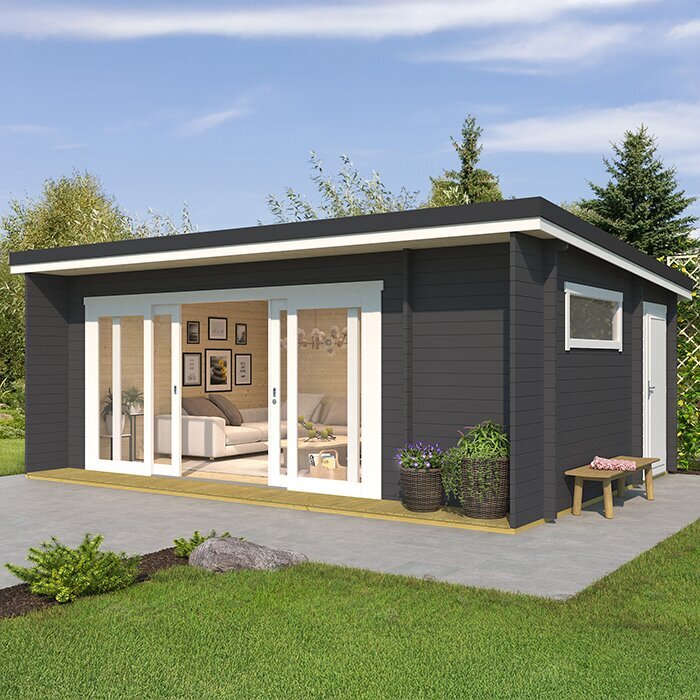
Confirm the delivery and installation route
A shed can fit in its final position and still be difficult to get there. Trace the route from the delivery point to the proposed site, noting low branches, exposed roots, narrow passages and places where materials or equipment may need to turn or be set down. Ask the supplier or installer what access they require and how the product will arrive; do not assume that every model is delivered or assembled in the same way. Confirm who is responsible for identifying and managing any branches that obstruct the route.
Vehicles and installation equipment may affect soil and roots, so ask the installer to review the route as well as the final base location. Do not assume that an access path over roots is harmless, or that cutting back branches is automatically part of the service. Confirm the delivery and installation arrangements before placing an order, especially if the route passes close to a tree. When considering the wooden garden shed M listing, use the supplier’s information for that exact product to ask about access and installation needs; the model label does not answer those questions.
Bring the tree checks together before ordering
Update the site sketch with the selected model’s verified outline, roof dimensions and entrance location. Add the visible roots, trunks, overhead branches, likely debris collection points and delivery route, then review the plan at the site. Use non-invasive markers to show the proposed position rather than driving markers into ground where roots may be present. If the tree is bare during one visit, use your notes or observations from another season to avoid relying on a single view.
Before confirming an order, make sure the base plan has been reviewed where roots are a concern, branch questions have been referred to an arborist, and debris and access can be managed safely. Confirm outstanding product details and installation arrangements rather than filling gaps with assumptions. If any essential answer depends on cutting an uncertain root, relying on an unassessed branch or making an unconfirmed change to the ground, pause and reconsider the location. The wooden garden shed S listing can be included in that comparison, but suitability still depends on its verified information and the conditions at your site.
Frequently asked questions
Can I place a garden shed beneath a tree canopy?
Possibly, but the canopy alone does not establish whether the spot is suitable. Check overhead branches and future growth, account for debris, and remember that roots may extend beyond the crown. Have a qualified professional assess concerns about roots, branches or the proposed base before you commit.
Do tree roots stop at the edge of the canopy?
No reliable line can be drawn from the canopy edge to show where roots end. Roots may extend beyond it, and their spread depends on the tree and site. A surface view cannot confirm that an area is root-free; ask an arborist to assess a potential conflict.
Can I cut a surface root to make room for a shed?
Do not assume that a visible root is safe to remove. Cutting roots or changing the ground around them can affect a tree, and the consequences depend on the site. Pause the plan and ask a qualified arborist and installer to review the proposed position and base.
What should I check about branches over a shed?
Compare the full height and roof outline of the selected model with branches overhead, allowing for future growth. If a limb looks damaged or unstable, have an arborist assess it rather than trying to judge its safety yourself. Include any likely ongoing pruning in your location decision.
Which kinds of tree debris should I plan for?
Depending on the tree, debris may include leaves, needles, blossoms, seeds, cones, twigs, fruit or sap. Notice where it collects on the roof, near the entrance and along the base. Check the selected model’s maintenance guidance and whether any drainage features are included.
A workable spot near trees accounts for more than the shed’s footprint. Roots may affect the base, branches can change the overhead space, and debris adds ongoing maintenance. Considering those factors before choosing a model or arranging delivery can help you avoid a position that fits only on paper. A clear site sketch and answers from the appropriate professionals can show whether the proposed location is practical or whether another spot would make more sense. The strongest choice is one that does not depend on guessed root boundaries, uncertain branch safety or difficult routine clean-up.
