
Hedges or Pergola Screens: Privacy, Space and Timing
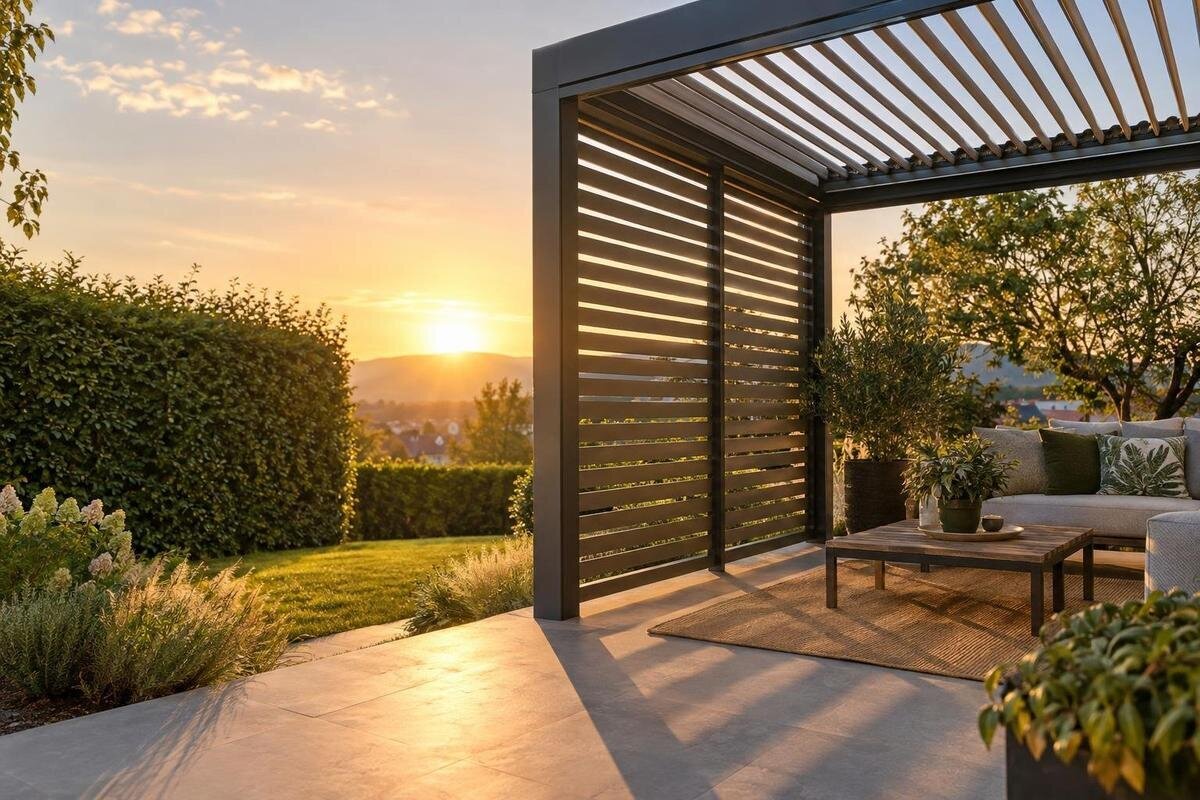
Pergola privacy guide
Privacy around a pergola can be created with a living hedge or a screen, but the two options use space differently and work on different timelines. A hedge occupies a strip of ground and gradually grows into a boundary; its coverage depends on plant choice, site conditions and time to establish. A pergola screen is a targeted barrier that can cover a selected side once installed, provided it is the right size and compatible with the structure. The useful comparison is how much space you can spare, which sightline needs attention, what seasonal coverage matters and how much upkeep you want.

What to confirm before choosing 1
Hedges and pergola screens cover different areas
A hedge and a pergola screen solve different parts of an outdoor layout. A hedge follows a planting line and can eventually soften a longer stretch of boundary, but it needs usable soil, room for mature growth and time to establish. Its density also varies with plant choice and season. A screen is a defined panel on one side of a pergola; once installed, it can block a selected view across the span it covers. It does not automatically shield the ends, the space above it or other angles. The choice is about where the view comes from, how broad a boundary you want covered and how soon coverage is needed.
Think about the result, not only the material. If neighbours can see most of the patio along a side boundary, a hedge may address more than the seating footprint once it fills in. If the exposed point is a dining area on one pergola edge, a screen may address that specific angle without planting a full boundary. Neither option guarantees privacy from every direction, and a visual barrier should not be treated as a sound barrier. When considering the Bloomcabin Bioclimatic Pergola, identify which side faces the unwanted view before comparing screening options. That gives you a specific area to assess rather than treating privacy as a reason to enclose every side.
Map the sightlines you want to block
Draw a simple plan of the pergola, patio, property boundaries, doors, paths and the nearest places people might look from. Mark likely viewing points, such as a neighbour’s patio, a walkway or a raised deck, and the places where privacy matters, including the dining chairs and the route people use through the patio. Then draw the direct sightlines between them. Check diagonal views from both ends of the yard as well as the obvious head-on view. A screen placed for one line can leave an opening at the side; a hedge may need to run farther than the seating area to close the same angle. This keeps the decision tied to actual exposure rather than a general wish for more privacy.
Note whether a view arrives at seated height, standing height or from a higher window or deck. A barrier that conceals a seated conversation may leave a view over its top from an elevated position; changing its location can also change what it hides. Recheck from the places you actually use, not only from the yard entrance, and consider everyday activities such as standing by a barbecue or carrying dishes. If you are considering the Wall-Mounted Pergola model, include the adjoining wall and nearby doors in the sketch so you can assess the exposed sides in relation to the house. Don’t choose a screen height from a generic rule when you haven’t checked the important sightline.
What to confirm before choosing 2
Allow for a hedge’s mature width
A hedge needs a continuous strip of usable ground, not only the narrow line where stems will be planted. The mature width of the chosen plants determines how much patio, lawn or walkway the hedge may take up; a small nursery plant can eventually spread beyond its current pot and canopy. Check the plant label or ask a local nursery about mature width and recommended spacing, then leave room for pruning and access where possible. If the bed is next to paving, a gate or a pergola support, include those clearances in the drawing. Planning for the established hedge avoids a row that fits on planting day but later crowds the route or seating.
Site conditions matter as much as the outline. Sun exposure, soil, drainage and available water affect which plants are suitable, so choose for the actual spot rather than for a photograph of a full hedge. Keep routes to doors, storage and utility areas usable, and make sure the intended trimming side can be reached without relying on access from another property. Before digging, use the appropriate local utility-locating service so buried services can be identified; do not infer a safe planting line from what is visible above ground. If the yard is narrow, mark the proposed mature width with a hose, chalk or temporary markers and walk the route before committing. That test can show whether the planting bed would pinch an everyday path.
Hedge establishment takes time
Living coverage does not arrive on the same schedule as a fitted panel. A hedge has to establish and fill the gaps between plants; the pace depends on species, starting size, planting conditions and care. There is no reliable universal number of seasons that applies to every yard, so avoid basing a privacy deadline on a catalogue photograph or a growth-rate promise detached from your site. Ask a local nursery how candidate plants perform in comparable conditions and what spacing creates a dense screen without crowding them. A newly planted row may leave clear sightlines for a while, so assess the interim view from the areas you actually occupy.
Separate the day you want privacy from the day you can plant. If the patio needs screening for an upcoming season, a young hedge is a long-term choice rather than an immediate fix; consider a separate temporary measure only after checking where it can stand and whether it suits that location. Establishment also takes recurring attention: watering while plants settle, managing competing weeds and replacing a plant that fails can affect how even the line becomes. Care varies by plant and conditions, so use local horticultural advice rather than applying one schedule to every hedge. Include that early work in the decision alongside the bed’s permanent footprint and seasonal appearance.

What to confirm before choosing 3
A pergola screen only covers its installed span
A pergola screen can provide a more immediate answer when the exposed view is concentrated along one side. It covers the section it is designed and installed to cover, so check its actual span, height, position and any gaps against the sightline sketch. A panel does not block a neighbouring window at an angle simply because it is attached to the pergola, and it will not screen areas beyond its edges. Confirm the approved configuration for the chosen pergola and whether the screen is included, optional or supplied separately. Third-party products should not be treated as included features or assumed compatible without confirmation. This is a focused solution, not an automatic enclosure of the patio.
Privacy level and openness involve a trade-off. A more opaque surface can block more of a direct view but may reduce daylight and the feeling of openness at the seating edge; mesh or an open pattern may preserve some outlook and airflow while allowing more to be seen through. The result depends on the material, angle and lighting, so review product information and, if available, a sample from both sides of the intended view. If the Bioclimatic Pergola product details are part of your comparison, assess any confirmed screen option against both goals: concealing the unwanted view and retaining the outlook you enjoy from the seating area.
Compare privacy across the seasons
Seasonal foliage is a major difference between hedge choices. Evergreen plants can keep more visual cover through leaf-off months, while deciduous plants lose their leaves and may expose views in winter. Neither label alone guarantees a dense screen: suitability, local conditions, spacing and plant health still matter. Ask a nursery which options are appropriate for the site’s climate and exposure, and look at mature plants during the season when privacy matters most. If you mainly use the patio in summer, a deciduous hedge may fit that pattern; if outdoor views matter year-round, account for what the hedge looks like without foliage. Check the whole year, not just a garden-centre display.
A fixed pergola screen does not need time to grow, but its coverage depends on being in place and on the side it occupies. It can also change the amount of sun and sky visible from the patio. Trace the sun’s direction at the hours you use the space and consider what the panel would shade, including nearby planting that needs light. When evaluating the Bloomcabin Wall-Mounted Pergola, consider the outlook from adjacent rooms as well as from the patio chairs. Assess the proposed side configuration at your site rather than judging it only from an outdoor viewpoint. This helps avoid trading an exposed view for an unexpectedly enclosed corner.
What to confirm before choosing 4
Compare upkeep, not just installation
A hedge is a continuing garden task. Depending on species and desired shape, it may need pruning, watering during establishment, removal of weeds around its base and occasional replacement of plants that do not thrive. Letting it grow naturally may reduce shaping but does not remove the need to check its width, health and clearance from paths. Consider who will trim it and where clippings can be handled, especially if both sides need access. The practical comparison is whether that maintenance fits your routine and whether the hedge can be kept within the space you allocated. Ask what mature maintenance looks like before selecting a species.
A screen avoids trimming and plant care, but it is not maintenance-free. Dust, pollen and debris can collect on a surface; cleaning and inspection should follow the product’s care guidance. Ask what routine access the chosen design requires instead of assuming all screens behave alike. For a layout based on the Bloomcabin Pergola, consider access to the panel alongside access to pergola posts, adjacent doors and nearby planting. Check whether you could reach the screen for routine cleaning with the furniture in its usual position, or whether chairs and the table would need to be moved. Choose by the maintenance you will actually accept, not simply by the absence of pruning.
Space-saving choices for narrow patios
On a narrow patio, the hedge’s mature footprint has a direct opportunity cost: a planting bed can take away usable width, while too little space may narrow the path or reduce seating clearance. Measure the strip at expected mature width, not only at the stem line, and include room to reach it for care. A pergola screen uses a vertical plane instead of a continuous planting bed, but its supports, any hardware, door swing and circulation around the structure still matter. A targeted section can be enough when one viewing angle is the problem; covering every side by default can make a compact area feel more enclosed than intended. Leave the main walking route clear in every sketch.
Try more than one outline on the ground. Mark the future hedge edge and proposed screen plane, then move chairs and walk the route with the table in its usual position. Look for the remaining diagonal view and check that entry, storage access and movement around the seating area remain practical. If the Bloomcabin Pergola model page is on your shortlist, compare the model’s confirmed dimensions and approved side options with that marked layout. Include the space needed to pull chairs out, not just the area they occupy when tucked under the table. This test may point to screening only the exposed edge and keeping the rest visually open.

What to confirm before choosing 5
When a hedge and screen work together
A mixed approach can make sense when privacy needs occur at two scales. A hedge can shape the boundary and add greenery over time, while a screen on the pergola can address a direct view toward the dining or lounge area before plants fill in. This works best when each element has a distinct job: avoid reserving a wide planting bed for the same sightline a panel already blocks, unless the boundary planting has another purpose. Also leave room for the hedge to mature and be maintained; do not assume plants can be crowded against the screen or structure. If the hedge later grows denser, reassess whether the panel is still useful for its original angle.
Plan the relationship between them on the same sketch. Show the hedge at mature width, pergola supports, openings, access paths and the panel’s exact edge; then trace both current and future views. Check that the plants will receive suitable light and that furniture or a barrier will not obstruct access for pruning. If you are planning around the Bioclimatic Pergola model, show the proposed screen and planting bed separately so their respective footprints remain clear. Keeping the screen and planting line as separate decisions makes it easier to adjust one without compromising the other. Do not count on the hedge filling a panel gap by a particular date.
What to confirm before you choose
Write down four conditions: when coverage is needed, which view must be blocked, how much ground can be reserved for a mature hedge and whether privacy is needed through the leaf-off season. Add the maintenance you can realistically do and the amount of openness you want to keep. Compare the one-time work of installing a screen with the recurring care a hedge may require. If timing is the main concern and the view is limited to one pergola side, a compatible installed screen may meet that need sooner. If privacy follows a longer boundary and you can give plants room to establish, a hedge may be the better landscape choice. If the answers differ by area, consider a targeted combination.
Then confirm the details that can change the choice: screen dimensions and approved orientation, what is included with the selected model, any separate accessory requirements, and clearances needed for doors, posts and movement. For the Wall-Mounted Pergola product listing, or any other model on your shortlist, distinguish the pergola itself from the side accessories in the proposed quote. Ask for model-specific information rather than relying on a generic image or assuming all pergolas accept the same panels. For hedge planning, ask a local nursery about mature width, suitable spacing and seasonal coverage at the actual site. Use the same sightline sketch for both options so the comparison addresses the view you want to block.
Frequently asked questions
Which option provides privacy sooner?
A screen can provide targeted coverage once it is installed across the relevant sightline. A hedge needs time to establish and fill in, and there is no single timeline that fits every site. If the need is immediate, count on a screen only after confirming its size and configuration.
How much room does a hedge need?
Plan for the plants’ mature width, not their size at purchase. Reserve the planting bed and enough room to maintain the hedge without narrowing paths or crowding the patio. Ask a local nursery about suitable species, spacing and mature dimensions for your site.
Will a hedge provide privacy in winter?
It depends on the plants. Evergreen choices can retain more foliage through winter; deciduous choices lose their leaves and may reveal sightlines. Confirm that an evergreen option suits local conditions, and look at mature plants in the season when you need privacy. No plant label alone guarantees a dense screen.
Do pergola side screens come with the pergola?
Not necessarily. A pergola model name does not establish that a privacy screen is included or compatible. Confirm the exact side option for the selected model and ask whether it is supplied with the pergola or sold separately. Do not assume an unrelated third-party panel will fit.
Can a side screen block a view from an upper-floor window?
Not automatically. A view from above may pass over a side panel even when it blocks views at patio level. Check the sightline from the actual window or deck to the seating area. Do not assume a screen intended for ground-level views will cover an elevated one.
Hedges and pergola screens are best compared by the job each has to do: longer boundary coverage over time, or targeted coverage on a particular side once installed. If you can spare mature planting width and wait for growth, a hedge may suit; if a current sightline is the priority, a compatible screen may address it sooner. Let the sketch, seasonal use and maintenance plan show whether one option is enough or both have separate roles. The best fit provides the coverage you need while preserving room to move and the views you want to keep.
