
How Many People Do You Need to Assemble a Garden Shed?
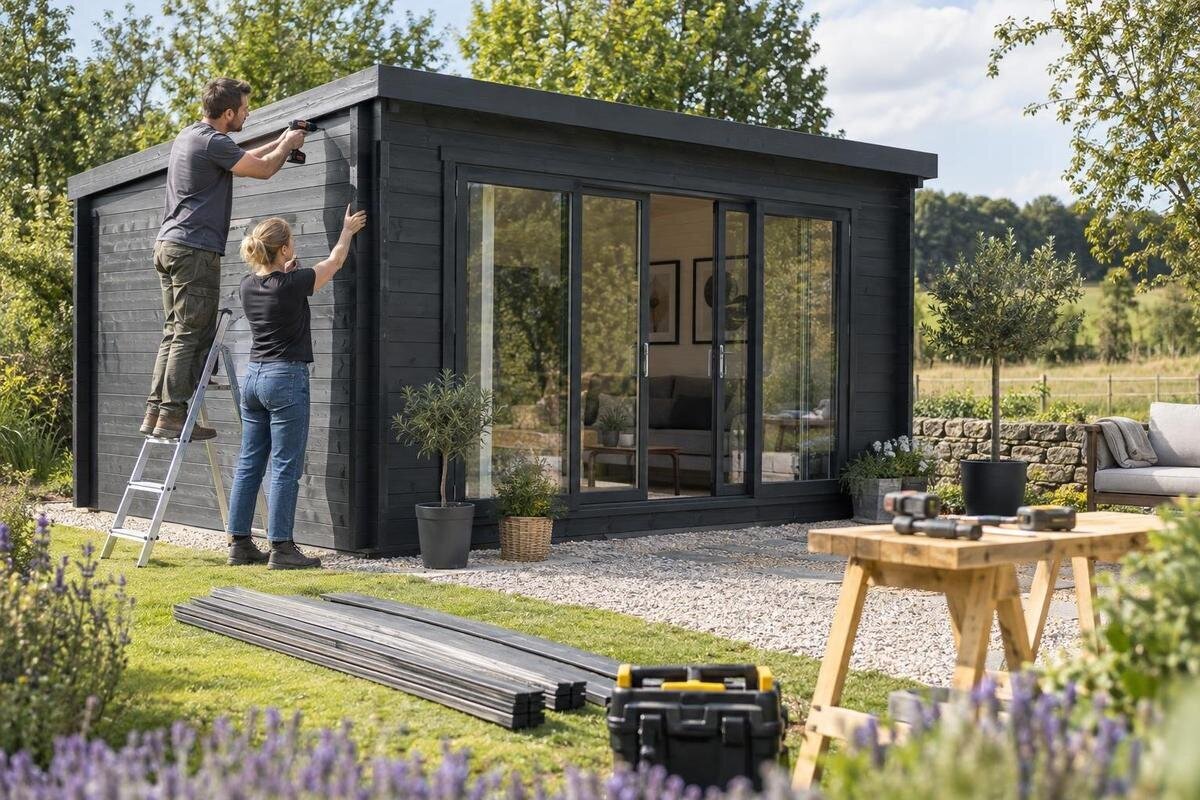
Garden shed assembly planning
The number of people needed to assemble a garden shed does not have one answer for every model. Crew size depends on what the instructions require, how parts must be handled, the site and the experience of the people helping. For many kit builds, two capable adults are a reasonable planning baseline, but that is not a product specification or a guarantee. Use the chosen model’s assembly guide, confirm unclear staffing requirements with the seller, and book help for the steps that call for it. That way, you can plan a team that is large enough to work safely without filling the work area with people who have no clear task.
01
A sensible starting point is two people
For a garden shed kit, two capable adults are a sensible provisional crew for many projects. Treat that as a scheduling starting point, not a universal specification: the chosen model’s instructions take priority, and the most demanding step may need more help than routine stages. If you’re considering the Verdana 1 garden house listing, request its current assembly information and follow any stated crew requirement rather than judging workload from a name, picture or general category. If staffing is not stated, ask the seller or manufacturer before choosing a date.
Two people can divide attention as well as handling: one follows the sequence and identifies the next component, while the other helps position parts as directed. Both should understand the relevant step and agree before moving anything; the person reading should not have to guess what the other is doing. Plan for both helpers to be available together during coordinated tasks, not simply to arrive at different times. If you’re considering doing the work alone, find out in advance which steps the instructions allow one person to complete. Don’t rely on an unplanned last-minute call for help if a part proves awkward.
Some assembly steps need extra hands
Count helpers by the hardest handling step, not only by the average. Broad, awkward or hard-to-align components may need coordinated support while they are positioned or fastened; the exact requirement depends on the design and the instructions. A helper may be needed briefly rather than throughout the build. Read the sequence in advance, note every step that explicitly calls for two or more people, and arrange those people before starting. Component count by itself is a poor guide: a few large parts can present different handling demands from many small ones. Follow the manual rather than estimating safe handling by eye.
An additional person can help with a defined task, but a larger crew is not automatically faster. People need room to move and a clear view of the work; crowding around a narrow assembly area can make communication harder. If the instructions for the Verdana 2 garden house listing call for help beyond your available team, arrange suitable assistance or wait until you can. Don’t ask one person to hold a component in an awkward position as a substitute for specified help. If someone joins partway through, brief them on the current stage and planned movements before they take part.
02
Shed design affects handling and workload
Dimensions matter, but they do not convert neatly into a head count. A larger footprint may mean more sections or longer pieces to handle, while even a compact design can have steps where parts must stay aligned. The assembly sequence, the way components are divided, access around the base and the instructions’ stated crew requirements are more useful than a general small-or-large label. Use the manual for the exact option and avoid estimating workload from a product photo, title or another shed that looks similar.
Design details also affect when help is needed. Doors, windows, glazing, partitions or optional components can add stages and require work in a particular order, but they do not automatically call for an extra person. Before comparing models, ask for the assembly guide and check whether it covers the configuration you plan to order. If you’re reviewing the Durano garden house listing, treat any assembly information you obtain as specific to that model; don’t assume the same crew size or sequence applies to a different listing. A guide for a base configuration may not answer questions about separately selected options, so confirm the exact combination.
Experience and physical capacity matter
Two helpers with different levels of experience may need a different schedule from two practiced assemblers. Reading a step correctly, recognizing components and communicating before movements all take attention, especially when the manual is unfamiliar. A new DIY team may benefit from more time and from having someone available to follow the instructions carefully, but an extra person does not automatically replace relevant skill. Before ordering, consider whether anyone has assembled a similar kit. Be realistic about everyone’s comfort with the tasks described, including overhead work or precise fitting; seek professional help if the instructions call for work your group cannot manage.
Physical capacity, availability and communication matter as much as the head count. Ask helpers what they’re comfortable doing, and don’t pressure anyone to lift or hold a part they cannot manage. A capable person who arrives late or leaves before a coordinated step does not solve the staffing problem. For the Veltor 1 listing, as with any option, use model-specific instructions to decide whether your team’s experience matches the required tasks. Ask the seller to clarify ambiguous steps before purchase, and build in pauses rather than treating the planned schedule as a deadline.
03
Assign clear roles before assembly
Before work begins, agree on who will follow the instructions and how the team will confirm each step. One person can identify what comes next; another can check which component is needed and help position parts as directed. These are flexible roles, not permanent assignments. Pause at a clear point before switching, so the new reader can pick up the sequence without skipping a step. Confirm which part is being moved and when the team is ready. Clear communication helps prevent stop-start confusion and keeps helpers from acting on different interpretations of the same instruction.
Don’t invent a task for every volunteer. Too many people handling components can block access, distract the instruction reader or create mixed directions. Keep only the people needed for the current step in the work area; others can stay clear and join when their help is required. Review the instructions for the Orello 1 garden house listing before assigning roles, and note whether any stage calls for extra assistance. Anyone should be able to call a pause if a component moves unexpectedly or the directions are unclear. Resolve the uncertainty together instead of having helpers guess at separate versions of the next step.
Site access and weather affect the plan
The work area can limit how many people can contribute effectively. Check the route from the delivery or staging area to the assembly site, the space available around the shed, and whether the base is ready as required by the instructions. A narrow route, uneven access or obstacles around the site can make it difficult to position parts; adding people won’t create more working room. Think through where components will be staged and where helpers will stand before setting the date. If the site needs preparation, complete it separately rather than expecting the assembly team to solve it as they go.
Weather and light can change the handling conditions. Wind can make broad components harder to control, while rain, slippery ground or poor visibility can make careful work more difficult. Check conditions before assembly and be willing to reschedule if the team cannot work comfortably and safely. For the Modano 1 listing, check the exact model documentation for site and access requirements before deciding where people can work; a name or image does not establish how much room you’ll need. More helpers cannot compensate for an unsuitable setup or conditions that make the planned task difficult.
04
Decide between DIY and professional assembly
DIY is a reasonable choice when the instructions, available crew, site and schedule fit together. A two-person team may be enough for one build and insufficient for another; if the manual specifies more help or particular expertise, plan for it rather than treating it as optional. A professional installer may be worth considering when components are difficult for your group to manage, no one has relevant experience, or site access makes the work more demanding. Check whether the seller or manufacturer offers assembly separately, or look for an installer with relevant experience. Don’t assume the product price includes labour.
Before booking an installer, ask what the service covers: assembly of the chosen model, site readiness, moving packages, finishing work, disposal and any extra work identified on arrival. Clarify whether the installer expects you to provide helpers or have someone present, and compare the proposed scope with the model’s instructions. For the garden shed M listing, confirm directly whether an assembly service is available and what it covers; the listing name alone does not establish that labour is included. A written scope helps you decide whether professional assembly suits your needs and what preparation remains your responsibility.
Get a model-specific estimate before ordering
Ask for current, model-specific assembly information before committing to an order or crew date. Confirm that the guide matches the exact model and configuration you plan to buy. Ask how many people are recommended or required, whether extra help is needed only for certain stages, and what the time estimate assumes. Find out whether it covers assembly alone or also assumes a prepared base and other work. A general estimate is not a guarantee: team experience, access and conditions can all affect how the work proceeds.
When comparing an option such as the garden shed S listing, ask the seller for any unavailable details rather than inferring them from the name or product image. Check whether the estimate assumes an experienced installer, a particular crew size or a fully prepared site, and what tasks are excluded. If the answer is simply that assembly is easy, ask what that means for staffing. Also confirm that the guide and parts list correspond to the version you intend to order. Getting these answers early helps you compare options according to the work your team can realistically do.
05
Schedule helpers around the work plan
Once the crew requirements are clear, match the date to the steps that need people working together. Use the model’s time estimate as a planning aid, not a promise, and allow room for reading instructions, checking progress and taking breaks. Don’t invent a completion time based on another shed or a neighbour’s experience. Ask whether each helper can stay for the stages they’re needed for, and identify a backup in case someone becomes unavailable. If an extra person is needed only briefly, arrange their attendance for a confirmed stage rather than relying on a last-minute arrival.
Give helpers the same basic plan in advance: where to meet, who is leading the sequence, what their role is and how you’ll handle a pause or schedule change. Keep the access route and work area clear of household traffic so people can move without being interrupted. Check the forecast and available daylight, and choose a date that leaves room to stop if conditions change. If a helper can attend only part of the day, make sure their departure won’t leave a step unfinished that the instructions require the full crew to complete.
Pause if the planned crew is not enough
At the start, compare the people available, the delivered configuration and the site with the plan you made from the instructions. If fewer helpers arrive than expected, identify which steps can proceed with the crew you have and which require more people. Don’t turn a coordinated task into a solo lift or ask someone to take an unsafe position simply to keep the schedule. Wait for the required help, arrange an installer or postpone that stage. An incomplete build is not a reason to ignore a stated staffing requirement.
Give everyone permission to call a pause if a component shifts, the weather changes, fatigue affects concentration or the next instruction is unclear. Stop and check the manual or ask the seller, manufacturer or installer for guidance before improvising. Resume only when the team, site and instructions are aligned again. If you must stop partway through, follow the model’s directions for leaving the work at that stage; don’t assume an unfinished assembly can be left in any condition. Planning a realistic stopping point is part of choosing a crew, not a failure to finish.
Frequently asked questions
Can one person assemble a garden shed?
Only if the instructions allow one person to complete every step and the work is manageable for that person. Don’t improvise support when the guide calls for another helper or specific equipment. Check the steps that require coordinated handling before opening the kit, and arrange help or an installer if needed.
Are two people usually enough?
Two capable adults are a practical starting point for many kit builds, but that does not guarantee they are enough for your chosen model. Follow its assembly instructions, especially where they specify additional help. The site, component handling and your team’s experience can also affect the plan.
Does a larger shed always need more people?
No. Size can affect the parts and handling involved, but it does not translate directly into a crew size. The assembly sequence and instructions are more useful guides. Ask for model-specific staffing information instead of assuming that two sheds with similar dimensions need the same number of helpers.
Do all the helpers need to be there for the entire assembly?
Not necessarily; some stages may need coordinated help while others do not. Use the assembly guide to identify when extra people are required, and make sure they can attend those stages. Brief anyone who joins later so they understand the current step and planned movements before taking part.
What should I ask before ordering?
Request the current assembly guide and ask how many people it calls for, whether any steps need extra help, and what assumptions underlie its time estimate. Confirm whether the estimate includes site preparation or other work, and ask whether assembly service is available separately. Don’t treat a general description such as easy assembly as a crew estimate.
A reliable crew estimate comes from the chosen shed’s instructions and the step that needs the most coordination. Use two capable adults only as a provisional starting point; add help or arrange professional assembly when the guide, site or team’s experience calls for it. Confirm staffing and timing before setting a date, then give everyone a clear role. If conditions or attendance change, pause and adjust the plan rather than forcing the work with too few people.
