
Inspecting a Garden Shed After Strong Winds or Heavy Snow
Garden shed care
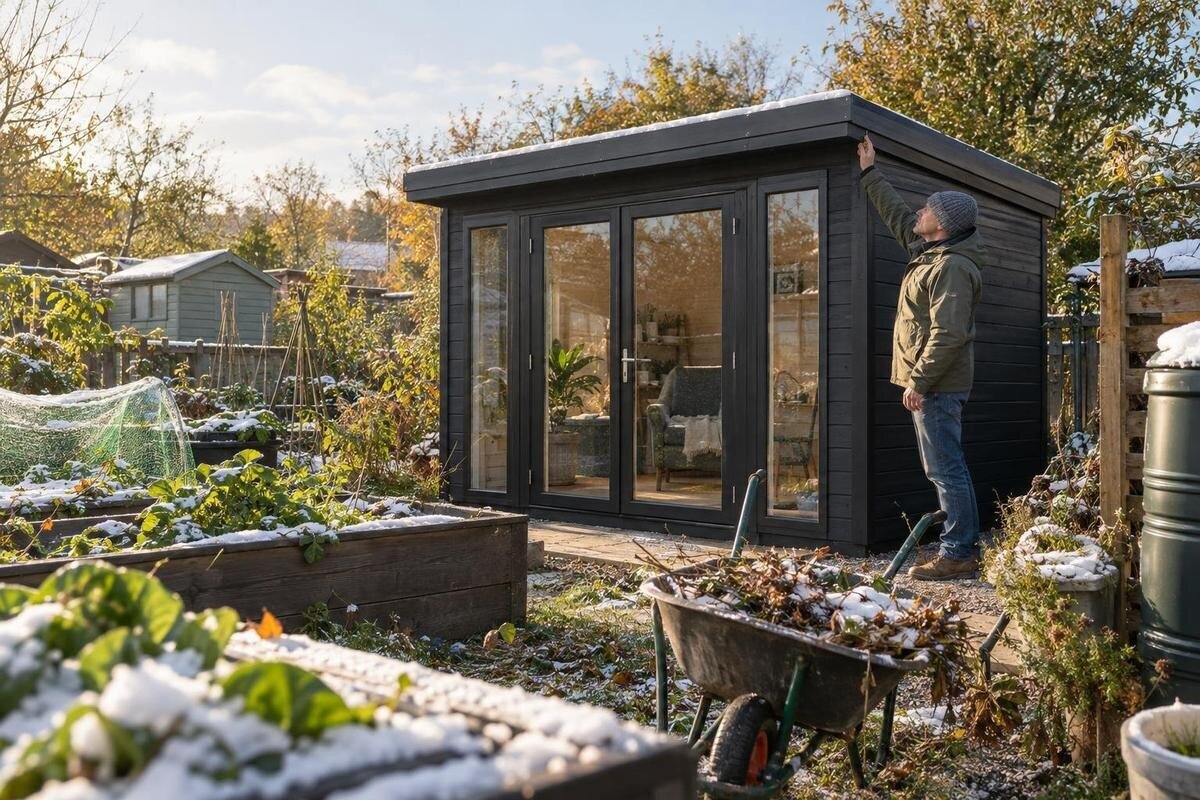
After strong winds or heavy snow, a garden shed inspection should begin with safety, not a test of whether the building still feels solid. A shed can remain upright while its roof, wall panels or supports have shifted, and some changes are easy to miss until you compare them with an earlier view. Keep people clear if anything looks unstable, inspect from the ground first, and record new damage before deciding whether the shed can return to normal use.
01
Make sure the site is safe to approach
Wait until the storm has passed and wind, falling debris, ice or drifting snow no longer make the approach hazardous. Start from a distance, viewing the shed from several sides if the route is safe. Look for a lean, a changed roofline, hanging pieces, a wall that appears bowed, or anything that has fallen against the building. Do not stand below an eave with snow or ice overhead, or squeeze between the shed and a fence to get a better look. The first pass is only to decide whether closer inspection is reasonable; it cannot certify the structure as safe. Note hazards outside the shed too, such as slippery ground or branches that could shift while you are looking.
Do not climb onto the roof, set a ladder against a shed that may have shifted, or go inside when the roof sags, a wall has moved, a large panel is loose, or the base appears displaced. Avoid pushing parts back into place or adding a prop before the structure has been assessed; an improvised fix can hide the movement you need to report. If an electrical line is down or exposed nearby, keep away and contact the appropriate qualified service. When the extent of damage is unclear, keep people out and arrange a professional assessment before use.
Compare the shed with its pre-storm condition
Once it is safe to look closely, compare the shed with what you know from before the storm. Check the same sides, corners and roof edges shown in older photos; note whether a door gap has changed or the building now sits differently on its base. Photos taken during assembly or regular use can show what was already uneven, weathered or stained, so avoid treating every old mark as new damage. If you have no earlier images, write down what you see now without guessing when each change began. A clear record of uncertainty is more useful than a confident but unsupported diagnosis.
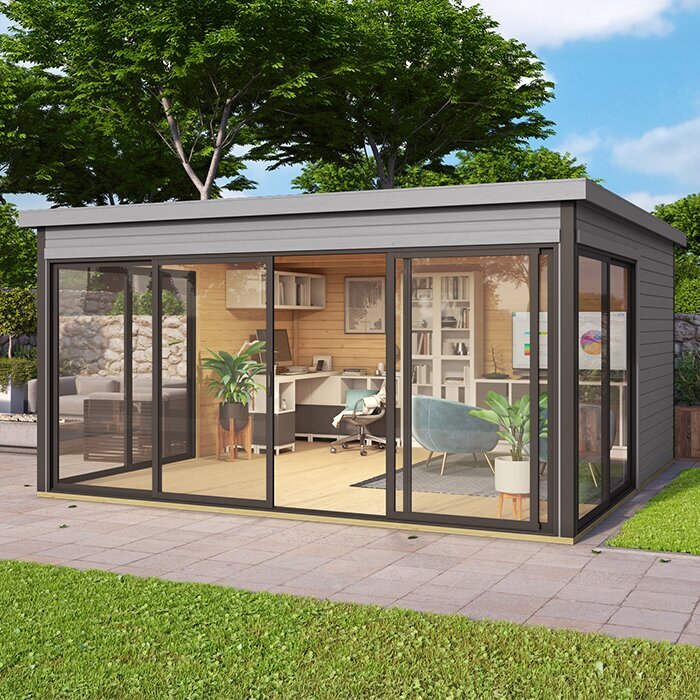
Keep the invoice, model name, assembly instructions and any manufacturer guidance together; the exact construction and inspection points differ between sheds. If you are considering a replacement, the Verdana 1 garden house page is a model reference, not evidence of dimensions, site fit or wind and snow performance. Use current product documentation for details that are actually stated, and ask the manufacturer about limits or repair parts that are unclear. Mark each observation as new, known from before, or uncertain. That distinction can help a supplier or qualified builder focus on storm-related movement rather than pre-existing wear.
02
Check the roof from the ground
Inspect the roof outline from more than one safe viewing point. A changed ridge, uneven eave, visible dip, lifted edge, displaced roofing piece or loose component may indicate a problem; wind can disturb exposed parts, while snow may conceal a depression until it melts. Look for gaps where the roof meets the walls and for debris that appears to have come from the roof. Do not step under a damaged edge or assume that an intact-looking covering means the framing beneath it is sound. If snow still obscures the surface, note that the inspection is incomplete and look again when visibility improves.
Pay attention to shape and connections, not only to whether shingles, panels or another roof covering appear present. A new sag or separation should be treated cautiously even if there is no visible leak; an apparently straight roof also does not prove it can carry another snow event. If the Verdana 2 garden house is on your comparison list, look for explicit roof and weather documentation for that exact option, and ask the manufacturer if it is not clear. Its name and image alone establish no snow capacity. If this shed’s roofline has changed, keep it out of use until someone qualified can assess it.
Look for movement in walls and corner joints
Walk around the exterior without pulling at loose parts. Look where wall sections meet at corners, where walls meet the roof, and around visible joints or trim. A new gap, a panel that sits out of line with its neighbours, a wall leaning relative to the floor, or fittings separated from their previous position can suggest movement. Check for impact damage from branches or other debris, but distinguish a surface mark from a part that has shifted or detached. If a panel is hanging, split through or sharp-edged, keep clear rather than pressing it flat. Photograph the whole wall first, then take a closer view from a safe distance.
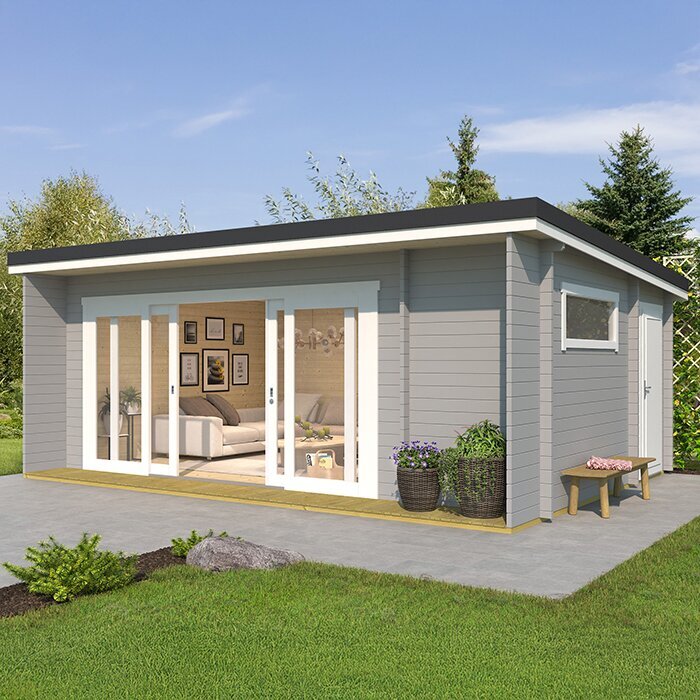
Wall movement can affect how the roof and openings meet, and it may allow wind-driven rain or melting snow to enter. Do not judge from one small area alone; compare adjoining corners, upper and lower edges, and the shed’s alignment with its base. A product image cannot show how another building’s wall panels are joined. If researching a replacement, treat the Durano garden house as a model to investigate, then check the written wall construction, connection details and assembly instructions. Do not infer strength or storm resistance from a photograph.
03
Check doors and windows for new misalignment
Inspect doors and windows for changes in alignment: an uneven gap around a frame, a door that rubs where it did not before, a latch that no longer lines up, damaged glazing, or a frame that appears twisted. Wind pressure or building movement can affect an opening, but a stiff door by itself does not identify the cause. Compare with older photos or remembered operation, and look at the surrounding wall before deciding that the hardware alone is at fault. Note debris caught against a door or track, but do not pull at it if the frame or nearby panel seems unstable.
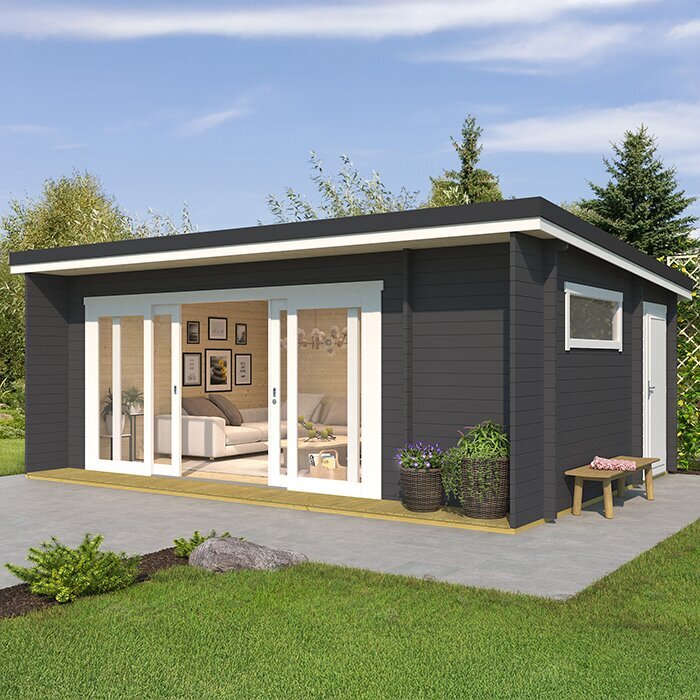
Only try a gentle opening or closing after the exterior inspection gives no reason to avoid the area. Stop if the door binds, the frame shifts, glass is damaged or the latch requires force; do not pry it open just to restore access. A working latch is not a structural test. If an opening has been damaged and you plan to replace the shed, verify the actual door arrangement, clearances and dimensions for the Veltor 1 garden house in its product information. Ask the manufacturer to confirm details that are not stated rather than assuming them from a photo.
Inspect the base and visible supports
Check the perimeter and visible supports from outside. Look for a gap that was not there before, a support or anchoring component that seems displaced, a floor line that has shifted, a corner lifted from its former position, or soil washed or pressed away nearby. After snow melts, pooled water or softened ground can reveal changes that were hidden during the storm. Compare all corners rather than judging the base from the doorway, and note any uneven contact between the shed and its support. These are observations, not a measure of foundation stability; some bases are partly hidden, and an apparently level floor does not settle the question of anchoring.
Do not crawl under the shed, jack it up, wedge supports into place or try to re-level it after movement. The required base and anchoring depend on the specific design and site, so follow the manufacturer’s documented requirements and use a qualified professional if supports have shifted or the ground has changed. If replacing the shed, make the base requirement part of the comparison before ordering. A page for the Orello 1 garden house alone cannot establish what foundation it needs; verify the exact product and installation documents, and confirm that the proposed location can meet those requirements.
04
Look inside for water and signs of movement
Go inside only after the exterior check gives no sign of instability and the entrance can be used without force. Look for fresh water trails, damp patches, debris or fragments on the floor, a new gap at the wall-to-roof junction, and contents that have shifted. A wet mark may come from wind-driven precipitation or snowmelt, but an old stain can look similar; compare it with previous photos and note whether it is wet now. Do not step on a soft or visibly altered floor, move heavy objects below a sagging area, or handle loose building parts. If the interior cannot be checked safely, record that limitation.
Interior observations can help show where water entered and whether movement is visible on both sides of a wall, but they do not replace an assessment of the structure. Move belongings away from an active leak only if you can do so without entering a questionable area; photograph displaced contents first if their position matters. When planning a future shed, list what you need to store and the space or access it requires. Check stated dimensions for the Modano 1 garden house rather than judging capacity from a photograph, and treat the model as an option to research, not a claim about its layout or suitability.
Decide whether to keep the shed out of use
Keep the shed out of regular use if you see a new lean, roof sag, wall separation, hanging panel, shifted support, damaged glazing, or another change that could affect safe access. Do not use a jammed door as a reason to push harder, and do not store items under an area that appears to have moved. A change limited to a loose fitting may be different from structural movement, but do not make that distinction from a quick glance. Mark the entrance and keep others away while you seek advice from the manufacturer or a qualified building professional. Return to normal use only when the concerns have been resolved.
A careful visual check can leave questions rather than a definite answer, especially if snow or debris hid part of the shed. Share dated photos of each side and the visible base with the manufacturer or a qualified repair professional, and ask what can be assessed from them. Avoid improvised fixes that conceal a gap or force a frame back into line. If replacement becomes likely, compare a candidate such as garden shed M against the actual site and documented requirements; do not assume a different model will tolerate the same exposure. Damage to the existing shed does not establish the performance of another design.
05
Verify requirements before ordering a replacement
An order should follow a clear understanding of why the old shed was damaged and what the site requires. Confirm overall dimensions and usable layout, access for delivery and assembly, door clearance, base preparation, and which components or accessories are included. For weather exposure, ask for written, model-specific guidance on wind and snow limits and the conditions needed for those limits to apply. Do not treat a broad marketing phrase, a product image or a neighbour’s experience as proof. If site exposure or the base is uncertain, ask a qualified local professional before choosing; appearance alone cannot establish that a shed suits a location.
Before confirming an order, keep the product description and assembly documents for the exact option, and check what is included, what must be prepared separately, and which instructions apply to your intended base. Use a listing such as garden shed S only as a product identity to investigate, not as evidence of a particular rating. Ask the seller or manufacturer to clarify missing dimensions, roof or wall details, installation conditions, and replacement-part support in writing. Compare those answers with your requirements rather than choosing by name or image. Save the response and order paperwork as a reference if delivered components or instructions differ from what you expected.
Record findings for follow-up
Make a dated record of the storm, what you saw, where it appeared, and whether the area was still covered in snow or wet. Take wide photos that show the whole shed and closer images of changes, using safe, repeatable viewpoints where possible. Include the roofline, each wall, openings and visible base; photograph the interior only if access is safe. Add a note for anything you could not inspect, such as a roof surface hidden by snow. Do not label an unseen area as undamaged. This record makes it easier to compare after the snow melts, ask for useful advice and avoid relying on memory.
Keep notes of conversations with the manufacturer or contractor, recommendations received and work completed alongside the dated photos and assembly records. If the shed returns to use, record which concerns were resolved and any observations that remain open; normal operation after a storm does not prove that every hidden component was examined. Follow up on areas that were obscured or could not be viewed safely, rather than treating this storm check as a complete annual maintenance routine. A focused follow-up helps close gaps in the inspection without confusing it with routine upkeep.
Frequently asked questions
When is it safe to inspect a shed after a storm?
Wait until the storm has passed and you can approach without wind, falling debris, ice or other hazards. Begin with a ground-level view. If snow hides part of the roof or base, record that the view is incomplete and check again when visibility improves. Do not enter a shed that appears shifted or sagging.
Should I climb onto the roof or remove snow before checking it?
No. A damaged or snow-loaded roof can be unsafe, and a ladder against a shed that may have shifted adds risk. Inspect from a safe position at ground level; do not walk on the roof or knock snow off from below. Ask the manufacturer or a qualified professional what to do if the roof sags or snow remains a concern.
Does a door that still opens mean the shed is undamaged?
No. A door that works is only one observation; the roof, walls or base could still have shifted. A stiff door can also result from hardware or debris and does not identify the cause by itself. Compare its operation with what you remember, inspect the surrounding frame, and stop if it needs force.
Which signs mean I should keep the shed out of use?
A new lean, visible roof sag, separated joints, hanging panels, shifted supports, broken glass or an altered floor all warrant caution. Keep people out and do not force parts back into place. If the cause or extent of the change is uncertain, arrange a qualified assessment before returning the shed to regular use.
What information should I share with a professional?
Provide dated photos of each side, the roofline and visible base, plus close-ups of new changes. Note what you could not inspect, whether snow still covered an area, and which marks were present before the storm. Include the shed’s model details and assembly instructions if available.
After severe wind or snow, the most useful inspection is cautious and comparative: note what changed, stay out when the roof or supports appear unstable, and check the roof, walls, openings and base without forcing parts. Photos and model-specific instructions help separate storm damage from older conditions. Get a qualified assessment when movement or structural integrity is uncertain, and return the shed to regular use only once the concerns have been resolved—not simply because it is still standing or a door opens.
