
What a Power Outage Means for a Motorized Pergola
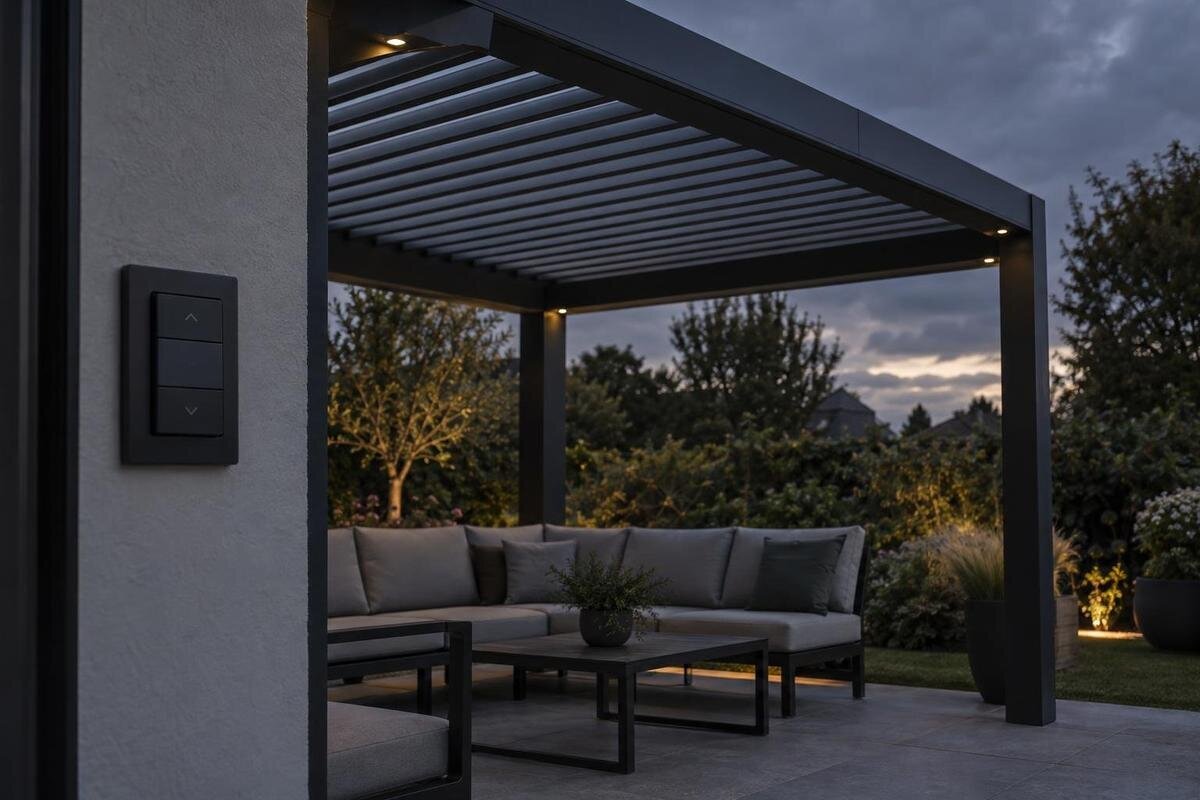
Pergola operation guide
A motorized pergola can stop responding during an outage, but the roof’s position and what you can do next depend on the exact motor and control system. No universal rule says every roof will hold, close or accept hand operation. Check the manual for the supplied configuration, including its instructions for an interrupted movement and the return of power. This guide explains what to verify before buying and how to avoid turning a power problem into a mechanical one.

How roof position depends on the system
An outage is an interruption to electrical supply, not a built-in command to open, close or lock a roof. It may interrupt power to the motor, the controller or both, depending on the system; without documentation for that exact setup, you cannot safely infer the result. The drive may stop receiving commands, but that does not prove the roof remains exactly where it was, that a brake holds it there, or that stored energy is absent. “Motorized pergola” describes an operating category, not a standardized emergency behaviour. Two products that look similar can have different controls and instructions.
Timing matters: the outage may begin while the roof is stationary or partway through its travel. Do not assume it will finish moving, reverse, or stop at the nearest preset. A specific manual may document one of these responses or an approved backup sequence, but that information applies only to the stated model and configuration. A remote or display going dark, if fitted, does not tell you how the roof is mechanically held. Photos, a category label or another owner’s experience cannot confirm how your system behaves. Until you have matched the manual, treat the roof’s position and available controls as uncertain.
Roof style does not determine outage behaviour
Roof style and motor behaviour are separate questions. A louvred roof may turn panels, while a retractable roof may move a covering along tracks; those descriptions alone reveal neither the actuator nor the control logic, available stop positions or outage response. The label “bioclimatic” does not say whether a particular roof is powered or what happens when electrical supply is lost. Ask which component actually moves and whether other moving parts, such as a screen, have a separate drive and instructions. One component’s manual may not cover the rest of the system.
Mounting style is separate, too: a wall-mounted or freestanding frame does not establish the motor or emergency method. If you are considering the Bloomcabin Wall-Mounted Pergola, identify the precise roof and drive configuration being offered rather than treating the model name as a specification for powered operation. Keep the structural choice and operating questions separate in your comparison: where the pergola will stand is one decision; how its roof responds without electricity is another. Advice for a pergola that merely looks similar may not apply. Its controls and approved procedures could differ even if the roof layout seems familiar, so ask which instructions belong to the configuration on your quote.
Find the manual for the exact configuration
Locate the operating manual for the exact model and selected options before purchase if possible, and keep a copy where household members can reach it without relying on the pergola’s controls. Record the model designation and any stated motor, controller, sensor, remote or accessory references. A guide for the frame alone may not explain a separately powered component. Check the manual’s issue or revision so an old leaflet, general care sheet and instructions for the installed controls are not mistaken for the same setup. If you have several documents, label them by component and configuration. Make a short index of the pages covering interrupted movement, manual operation and restarting. Keep those page references alongside the model details so you can find the full procedure without searching through unrelated assembly or care instructions during an outage.
Search for headings such as power failure, emergency operation, manual operation, backup supply, restart, initialization, fault indication and obstruction. Look for direct answers: what happens if the roof is moving when power fails, whether an approved user operation exists without power, what to do when electricity returns, and when an installer must take over. When comparing the Bloomcabin Pergola, ask the seller to identify the instructions that apply to the offered configuration. Note whether each answer covers a stationary roof, an interrupted movement or both. If a passage describes ordinary operation but says nothing about loss of power, leave that question open rather than extending the instructions to a situation they do not address.
Treat an open or partly moved roof cautiously
An outage may leave less cover overhead if the roof is open or only partly moved, but rain or wind performance in that position cannot be inferred from its normal closed position. A roof that closes in ordinary operation may not have the same drainage, overlap, shade or weather behaviour mid-travel. The term “bioclimatic” does not specify what an interrupted position can withstand. Check the model’s stated operating limits and weather guidance; do not use one roof’s appearance or instructions as a rating for another design. If the manual is unclear, treat exposure as uncertain.
If you cannot confirm that the roof position is suitable for changing weather, do not rely on the pergola as shelter for people or weather-sensitive belongings. Move people indoors or to another known shelter and bring vulnerable items in rather than climbing up, reaching into the mechanism or trying to push the roof. If the Bloomcabin Bioclimatic Pergola is on your shortlist, include the guidance for an interrupted roof position in your assessment of how you intend to use the covered area. Separate two questions: whether the roof can be moved during an outage, and whether its current position provides the cover you need. An answer to one does not settle the other. Follow the instructions for the exact configuration rather than judging protection by appearance.

Manual operation must be documented
Manual operation is available only if the manufacturer documents it for the exact system. A model might offer a user-operated method, require a specific supplied control or tool, or reserve recovery for service; those possibilities are not interchangeable. A hand crank, emergency release, battery or manual override should not be assumed because another pergola has one. Ask whether the procedure is approved during an outage, which roof movement it applies to, and whether it is for a homeowner or a service technician. Confirm the answer in the manual before an outage, not when the roof is stuck.
Follow the stated sequence exactly, including any conditions on roof position, access or stopping. Do not push louvres, pull a fabric roof, release a drive, remove a cover or substitute a drill or other tool unless the instructions for that exact model explicitly permit it. Resistance is a reason to stop, not to add force. When reviewing the wall-mounted pergola option, ask whether any approved manual procedure is intended for the homeowner or reserved for service. If user operation is documented, identify the specified tool and where it will be kept before you need it. Being able to locate a tool is not permission to use it: the procedure must also apply to the roof’s current condition. If the document directs you to service, do not improvise.
Remotes, sensors and apps are not proof of backup
A remote, wall switch or phone app is an interface for commands; it does not, by itself, provide energy to move a roof. A small battery in a remote may keep the remote powered while the actuator or controller still needs another supply. Similarly, a sensor’s ability to detect a condition does not prove it can move the roof during an outage. If a system has backup power, its manual must say what the backup supplies and under what conditions. Do not infer a backup function from a display, wireless control or the word “smart.”
Ask which components depend on the home’s electrical supply, whether a local control can operate without internet or a hub, and whether any documented backup powers the motor rather than only a sensor or controller. Keep loss of electricity and loss of connectivity separate in these questions. A statement about using a control without internet does not answer whether the roof can move without electrical power. When considering the Bloomcabin Pergola model, list the controls and accessories actually included in the proposed configuration, then check their respective instructions. A rain or wind sensor, if fitted, should not be assumed to reposition the roof during an outage; automation is not a guarantee of a safe position. Ask what remains available under each type of interruption rather than accepting a general assurance that the controls work wirelessly.
Check the instructions when power returns
When power returns, do not assume the roof will restart, re-home, complete an interrupted movement or be ready for another command. The manual may specify a wait, reset or status check; another setup may require service. Do not press several controls repeatedly or start a calibration sequence based on instructions for a different motor. Check what the manufacturer says about recovery after an outage and whether the roof should be visually inspected before normal operation. This matters especially if it stopped between positions or displayed an alert.
Where the manual explains status indicators or error messages, note what appears before trying a user-level action; do not clear an alert without understanding the stated procedure. When reviewing operating instructions for the bioclimatic pergola model, distinguish the normal startup instructions from recovery after power fails during movement. Do not assume they are the same sequence. Once the instructions say operation is permitted, stand clear of the moving area and use only the approved control. If the roof jerks, makes an unfamiliar noise, shows visible damage or fails to respond as described, stop using it and contact the supplier or installer. Record what happened when power returned so you can explain the sequence without repeatedly operating the roof to reproduce the problem.
Questions to settle before ordering
Ask the seller to describe in writing what happens if electrical power fails while the roof is stationary and while it is moving. Ask whether any backup exists, which component it powers, whether it can complete a full movement or supports only a limited action, and whether its power source needs separate maintenance. Confirm whether an approved manual procedure is included, what tools it requires, and who may use it. Ask how the manufacturer says to handle a roof stopped between positions and what steps are approved when power returns.
Use the exact roof, motor and control options on the quote or order record when checking each answer; a brand family or display model may not match the supplied configuration. For the wall-mounted model under consideration, keep the seller’s answers alongside the selected options so you can see which arrangement they describe. Ask where to get the relevant manual, who handles troubleshooting, and whether a backup or accessory is included or specified only for another setup. If an option changes before ordering, revisit the answers that depended on it rather than carrying them over automatically. This keeps the outage discussion tied to what you intend to buy. If answers remain vague, factor that uncertainty into your decision rather than treating an undocumented fallback as part of the purchase.

Patio plans when the roof cannot move
Plan for the pergola being unavailable for repositioning, especially if its roof is partway through travel or the manual calls for service. Keep the model number, manual, and installer or supplier contact somewhere accessible indoors, not only in an app that may depend on internet service. Let household members know not to force the roof or remove covers, and show them where the official instructions are. If the roof’s position or weather suitability is uncertain, move people and sensitive items to an indoor or otherwise suitable shelter; a pergola should not be treated as an emergency refuge.
Consider how much your patio use depends on changing the roof position at short notice. If that matters for a meal or gathering, have a separate plan for shade or rain protection instead of relying on a last-minute motor command during an outage. Use the pergola product page to identify the model you are comparing, then assess its documented operating arrangements against those plans. Think about which activities could continue with the roof left in place and which would need to move elsewhere. This is different from choosing a preferred roof position for everyday use: it is a practical check on how disruptive unavailable movement would be. A backup matters to your purchase only if its documented function addresses that need; the label alone is not enough.
Know when to contact a professional
An unresponsive roof after an outage may reflect an interruption in power, a control issue or a mechanical problem; a general article cannot diagnose which. Use only simple checks the manual identifies as user-level, such as replacing a remote battery if it is designed to be user-replaceable or reading a status message when the manufacturer explains it. Do not open the motor or control housing, bypass a safety feature, connect an improvised battery or repeatedly command the roof to move. If instructions are unclear or anything looks damaged, leave the mechanism alone and seek qualified help.
When contacting support, provide the model and configuration, manual revision if available, approximate outage time, roof position, control used, and any message, sound or visible issue. This helps the installer or supplier distinguish an operating question from a fault without you having to dismantle anything. If the issue appears to involve the building’s electrical supply, have a qualified electrician assess it; if roof movement or the drive is involved, contact the pergola supplier or installer. Follow emergency advice in the manual and keep people clear if movement is unpredictable.
Frequently asked questions
Will a motorized pergola automatically close during a power outage?
Only if the exact motor-and-control system documents that behaviour and has the means to perform it. Do not infer automatic closing from a rain sensor, app or powered roof. Check what the manual says about an outage both when the roof is stationary and while it is moving.
Can I move the roof by hand without power?
Only if the manual gives an approved procedure for that model and says who may use it. It may specify a tool, conditions or service-only recovery. Do not pull, push, release or drill the mechanism based on instructions for another pergola.
Will the roof stay exactly where it stopped?
There is no universal answer. The result depends on the particular drive, controls and any documented backup function. Treat a roof stopped during travel as being in an uncertain position until you check the model-specific instructions.
Will the pergola move when power returns?
Do not assume it will restart, finish a movement or be ready for another command. Check the manual for the stated recovery sequence. If the roof moves unexpectedly, makes an unfamiliar noise or does not respond as described, stop using it and contact the supplier or installer.
What should I ask before buying a motorized pergola?
Ask what happens during an outage at rest and mid-travel, whether a documented backup or manual procedure is included, who may use it, and what to do when power returns. Request instructions for the exact roof, motor and control configuration being offered.
Treat a power outage as an uncertain operating state until the documentation for the exact pergola says otherwise. The important details are not just whether a roof has a motor, but what its chosen motor-and-control configuration does when power disappears, whether any manual operation is approved, and how operation resumes. Keep the instructions accessible and follow only procedures written for that model. With those answers confirmed, you can judge whether the operating arrangement suits your patio without relying on an unverified backup feature.
