
Paint, stain or clear finish for a garden shed?
Garden shed finish guide
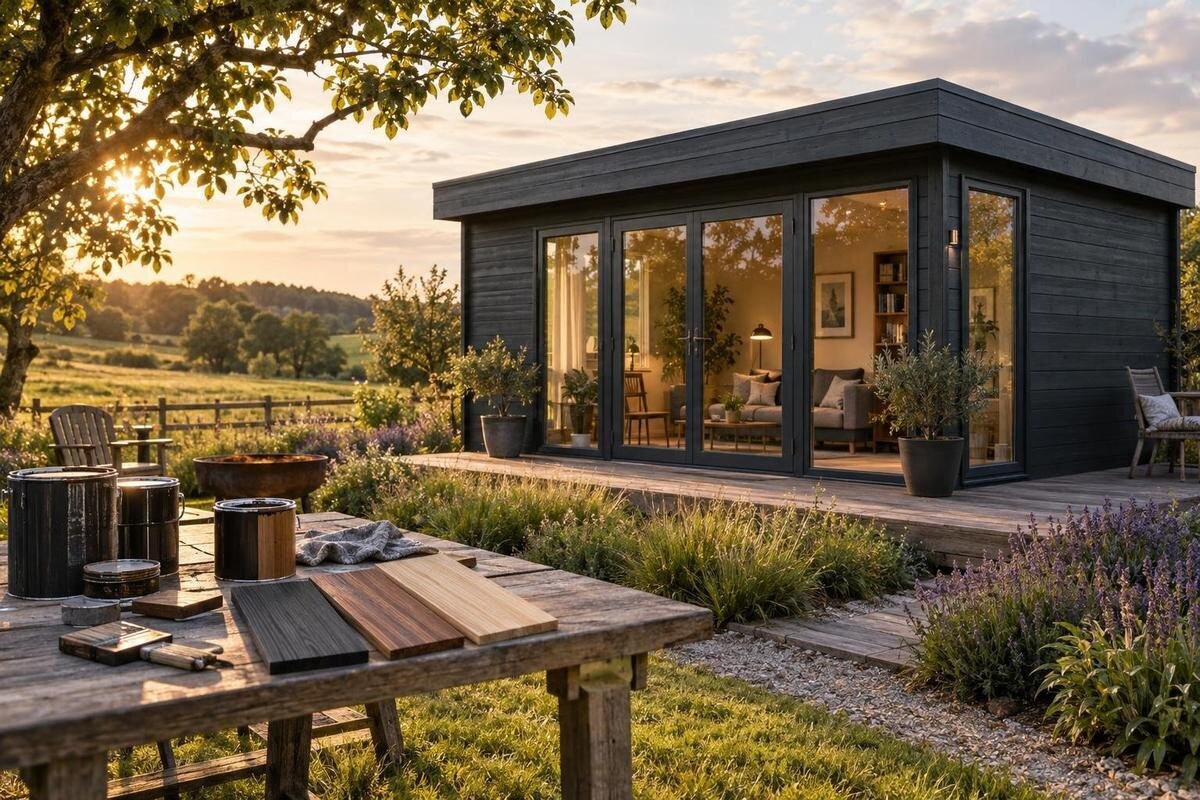
Choosing a finish for a wooden garden shed is about more than picking a colour. Paint creates an opaque surface, stain ranges from grain-revealing to solid-colour, and a clear finish keeps the wood visible. Each can change the shed's character, but the right choice also depends on what is already on the timber and how much care you are prepared to give it. Compare appearance, exterior-use instructions and future upkeep before adding a finish to your order.
How the finishes change the look of wood
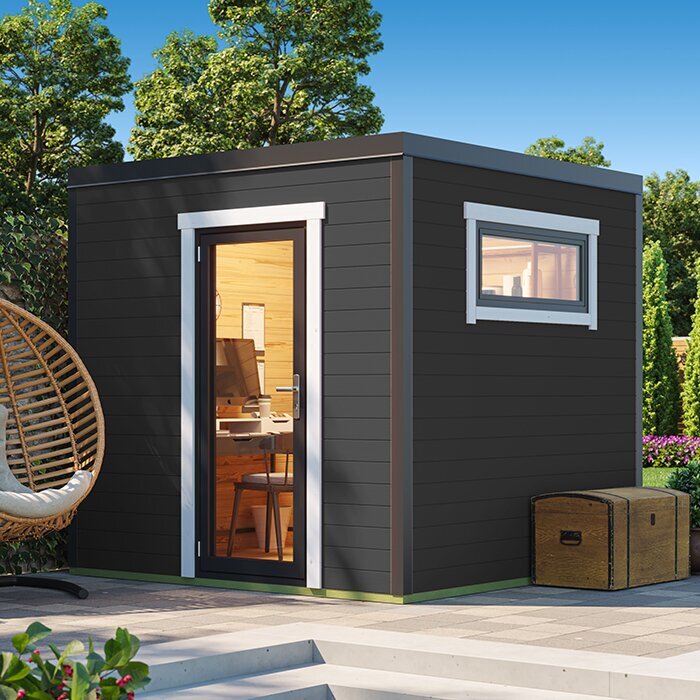
Paint, stain and clear finish differ first in how much of the wood you see. Exterior paint gives an opaque colour, so the grain is largely hidden even though the board's texture may remain visible. Stain covers a wider range: transparent and semi-transparent products add tone while showing some grain, whereas solid-colour stains cover more of it. A clear finish leaves the wood pattern visible, but its sheen or slight tint can still change the look. Read the product description carefully: the category word does not tell you every detail about appearance, formulation or maintenance. Two products both called stain can produce very different results.
Set a priority before comparing brands: a uniform colour, visible grain with added tone, or a natural wood appearance. Then check what surface you are buying. A listing such as the Verdana 1 garden house identifies a model, but the name alone does not tell you the wood species or any treatment already applied. Confirm those details with the product information or seller. That answer affects whether another coating is needed and whether your chosen finish can be used over the supplied surface. It can also affect how a colour sample will look, so make this check before settling on a shade.
Paint for a uniform, opaque colour
Paint suits a shed when you want the finish itself to supply the main colour. An opaque coat can make boards with different natural tones look more consistent and gives you room to coordinate with the house, trim or fence. In exchange, it largely conceals the grain, so paint is a poor match if the timber's pattern is the feature you most want to see. It can cover colour variation, but it will not make uneven or rough boards smooth, and it should not be treated as a way to hide a surface problem. Consider whether a solid colour will still appeal to you after the shed is in its setting.
Think about upkeep as care for a coating, not just as a choice of shade. Exterior paint can fade or show wear through changes such as chalking, cracking or peeling; later repairs need a compatible repainting system. Performance depends on the product, the wood and exposure, so avoid promises based on the word paint alone. If the Verdana 2 garden house is on your shortlist, check its supplied-surface details before selecting paint. Then compare the label for exterior wood suitability, any primer requirement and the stated number of coats. Keep the colour name and product details for future touch-ups.
Stain ranges from transparent to solid colour
Stain is not one appearance. Transparent and semi-transparent options leave more grain visible while changing the timber's tone; a solid-colour stain can obscure much of the grain while leaving surface texture apparent. Look for the transparency level on the label rather than relying on the word stain or a product name. Knots, board-to-board differences and the wood's original tone may remain visible, so a colour chip is only a starting point. If you are comparing shades, check whether the maker provides guidance on viewing a sample on the same kind of wood as the shed.
Choose transparency as carefully as hue. If you want the grain to remain a feature, a solid stain may not give the effect you expect; if you prefer a more uniform colour, compare solid stain with paint rather than assuming every stain is transparent. Maintenance varies too: some stains penetrate the wood, while others form a surface film, and their renewal instructions are not interchangeable. For a listing such as the Durano garden house, confirm the timber and any existing finish before relying on a sample or ordering a topcoat. Follow the label's directions for compatible surfaces and future recoating.
What a clear finish can and cannot do
A clear finish is for a look in which the timber's colour and grain remain prominent. That makes the wood itself part of the finished appearance: a clear product will not provide an opaque screen for mismatched boards, marks or natural colour differences. Some products are colourless, while others add a slight tint; the sheen can also make the surface look different. If you want the wood to look exactly as it does untreated, do not assume that clear means invisible. Check the maker's description and test the product as directed before committing to the full shed.
Look for a product explicitly labelled for exterior wood, and read what it says about weather and UV exposure if preserving the wood's appearance matters. Clear describes how a finish looks, not a single formula or level of protection. Different clear treatments can have different care instructions, and a transparent finish may make weathering or colour changes more noticeable than a pigmented one. When reviewing the Veltor garden house, confirm what surface is supplied and whether the finish maker approves your proposed product for it. A model name cannot answer either question.
The shed's exposure affects upkeep
A finish faces the conditions in your yard, not one standard setting. Sun may be stronger on one wall; wind-driven rain, melting snow or splashback can affect another. A sheltered side may stay drier, while shade from nearby trees can limit direct sun but also slow drying if foliage is close. These conditions can change how often the surface needs attention, and an exposed wall may look different from a protected one. Before choosing paint, stain or clear finish, consider where the shed will sit and which sides will receive the most sun and moisture.
Use the finish maker's inspection and recoating guidance for the product you select, then watch for changes such as fading, loss of sheen, cracking or peeling. No category has one dependable maintenance interval across all formulations and yards. Choose a system whose upkeep you can reasonably sustain, including if some walls are awkward to reach. For the Orello garden house or any other model you consider, site exposure is separate from the model name; assess it against your planned placement and the finish instructions. A visual check during routine yard care can help you notice changes before they become more extensive.
Confirm the existing surface before buying a coating
Find out whether the shed wood is bare, factory treated, primed, painted or stained. Do not infer this from a product photo or from the word wooden. Different existing surfaces can call for different exterior systems; a new coat that is not compatible may not bond as intended or may change the appearance. Ask the seller or manufacturer for the wood type, the treatment name and any coating guidance, then keep that information with your purchase details. This is not just a minor technicality: it determines which finish options are genuinely available and whether an additional coat is needed.
Read the finish label for its permitted substrate and any restrictions on applying it over other coatings. A product intended for bare timber may not be approved over a factory finish; paint may require a specified primer, and a stain may need an absorbent surface. These are product-specific requirements, not rules to guess from the category. When comparing the Modano garden house, use confirmed product details to ask which finish systems are compatible. If the existing surface cannot be established, pause before ordering a topcoat rather than layering products at random.
Choose colour in the context of your yard
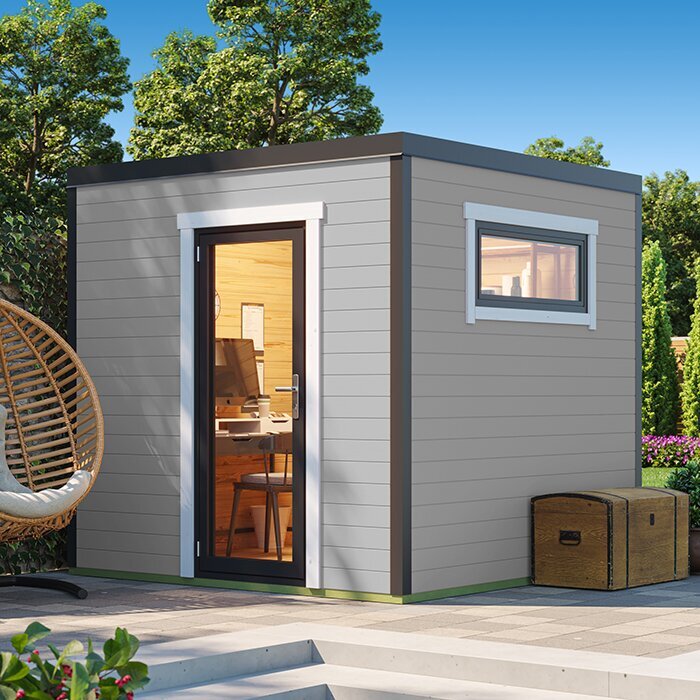
Consider the shed alongside the house, fence, paving and planting rather than choosing a colour from a screen alone. A painted shade can create contrast or tie into existing trim, while a stain lets more of the wood's own tone contribute to the result. Clear finishes leave that natural variation most visible. Think about whether the shed should blend into its surroundings or stand out, and whether you want the same colour on every visible wooden part. There is no need to match the house exactly; the useful test is whether the chosen finish works with the nearby colours and materials.
Use a sample on comparable timber where the product maker allows it, and view it in the yard in different light. A small printed chip or online image may not show how a stain will interact with the wood's colour, and sheen can also affect the impression. When looking at the Wooden Garden Shed M listing, separate the product image from the confirmed description of the supplied surface; rely on that information when planning a colour. If the maker gives a recommended sampling method, follow it so the test reflects the finish you intend to order.
Compare the work involved before choosing
The finish with your favourite appearance may not be the one with the simplest application instructions. Compare whether the product system calls for a primer, a particular number of coats, a specified recoat period or a limited range of application conditions. Those details affect the time and supplies involved, and they differ by formulation. Check the label and the shed manufacturer's guidance rather than applying assumptions about paint, stain or clear products. If you will be doing the work yourself, consider whether you can follow the full instructions on the surfaces that need coating, not just whether you like the final colour.
Confirm which parts of the shed the finish is meant for. The exterior walls, doors and exposed wooden trim may have different instructions from a floor, interior surface or non-wood component; do not extend a coating to them unless its label allows it. For the Wooden Garden Shed S listing, use confirmed product information to ask which surfaces are intended to be finished and what dimensions or materials are specified. A model name or photograph is not enough to decide where a particular exterior coating belongs.
Estimate supplies from the product instructions
Once you have a finish type and colour in mind, use the maker's coverage guidance and confirmed shed dimensions to check how much product is needed for the stated number of coats. Do not estimate from a model name or image. The product's coverage information is a guide, and actual use can depend on the wood and its surface; read any notes about those conditions before ordering. Include every surface the shed manufacturer says may be coated, while leaving out roofing or other materials unless the finish instructions specifically permit them. This makes the quantity estimate more useful than a guess based on the shed's footprint.
Keep the product name, colour reference and any primer or compatible topcoat details together. If you may need more later, those records make it easier to identify the same finish rather than relying on memory. Also confirm whether the shed arrives with a treatment that affects your plan, and whether the shed and finish makers specify an order for coating and assembly. Do not assume that every surface can be reached equally before or after assembly; use the relevant instructions. Settling these questions before ordering reduces the chance of choosing a colour or coating system that does not fit the actual surface.
Put appearance, compatibility and upkeep side by side
A useful comparison has three parts. First, decide how much grain you want to see: paint is opaque, stain spans several levels of transparency, and clear finish keeps the wood most visible. Second, verify that the product is approved for the shed's actual surface and exterior use. Third, compare the work and maintenance described on the label. A preference for less upkeep does not by itself point to one category, because products and exposure vary. This check helps you rule out finishes that look appealing but are not suitable for the coating already on the wood.
Before placing an order, write down the look you want, the confirmed existing treatment, the compatible product system and its care instructions. If you are torn between two shades or levels of transparency, compare samples on similar wood rather than choosing from a product name alone. Keep the manufacturer information and colour details with your purchase record for future care. The best fit is the finish whose appearance you will enjoy and whose instructions suit both the shed's surface and the attention you are prepared to give it.
Frequently asked questions
Can I paint over an existing stain?
Sometimes, but only if the stain and its condition are compatible with the exterior paint system. Transparent and solid-colour stains can leave different surfaces, so do not assume paint will adhere to every one. Check both manufacturers' instructions for an approved primer or coating sequence, and confirm the shed's existing treatment first.
Is stain always easier to maintain than paint?
No. Stains vary: some penetrate the wood, while others form a surface film, and their renewal instructions differ. Paint also varies by product and exposure. Compare the specific label instructions and consider how much maintenance the finish will need in your yard rather than relying on a general rule about either category.
Will a clear finish keep the wood its current colour?
Not necessarily. A clear product can add sheen or a slight tint, and it will not hide natural differences between boards. Sun and weather can also change the wood's appearance over time. Read the product information for exterior use and UV protection, and follow its sample-testing guidance if preserving the colour matters to you.
Does a garden shed need primer before painting?
That depends on the paint system and the surface being coated. Some products require a specified primer; others may have different instructions for bare or previously coated wood. Check the paint label and the shed manufacturer's guidance before buying. Do not skip a required primer or add one unless the product instructions allow it.
Can one exterior wood finish be used on every part of a shed?
Not always. The label may specify which wood surfaces the product is suitable for, and a shed can include materials or treatments that need different care. Confirm which parts are intended to be coated and whether the finish is compatible with them. Do not assume a product for exterior wood is suitable for non-wood surfaces.
Paint, stain and clear finish are not a ranking from strongest to weakest; they are different ways to manage colour, grain and ongoing care. Choose the look you want, verify that the shed's supplied surface accepts the product, then select an exterior system whose instructions fit your plans. Keep the product and colour details for future touch-ups so the finish you choose remains a considered part of owning the shed.
