
Pergola Flooring: Porcelain, Wood or Natural Stone?
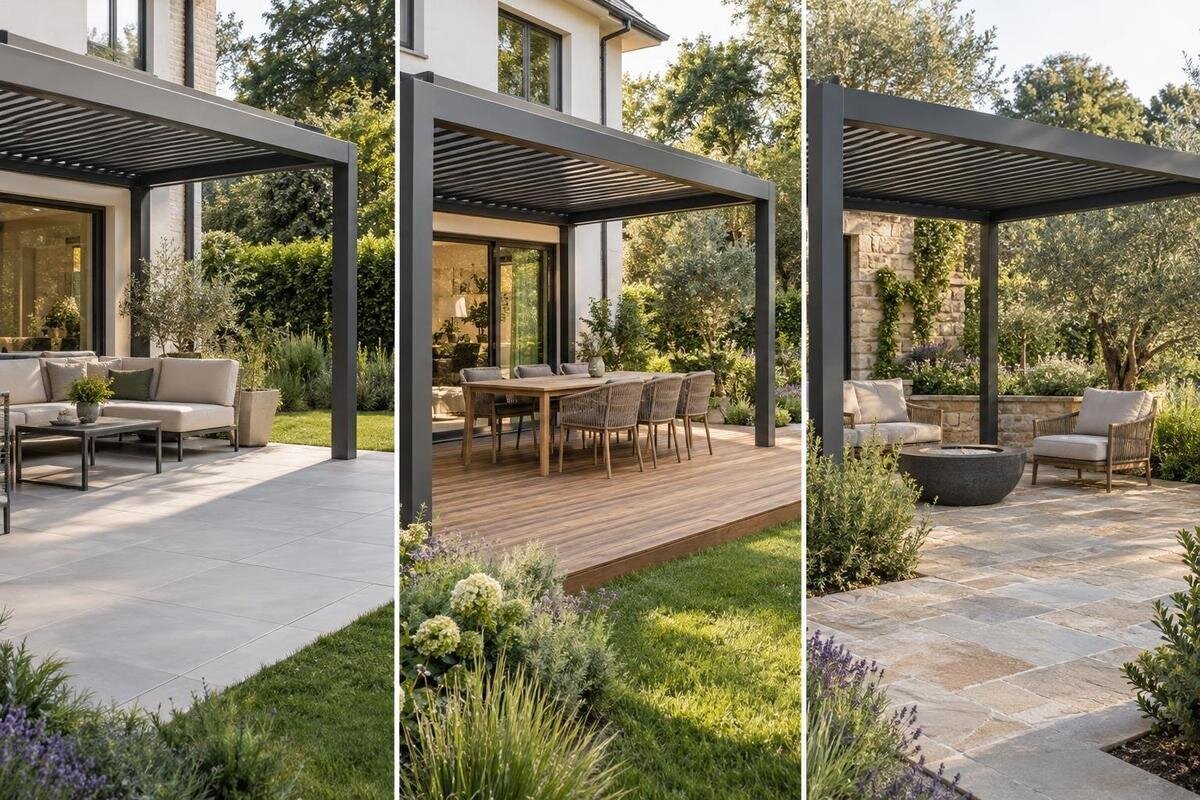
Pergola flooring guide
The floor below a pergola does more than complete the look. It shapes how the seating area feels underfoot, how warm it becomes in the sun, and what cleaning and seasonal care are required. Porcelain, wood and natural stone offer different finishes, but no material name guarantees the same grip, temperature or maintenance across every product. Compare the specific exterior-grade surfaces you are considering with the way the area is used, the exposure it receives and the water-management details planned for the site.

Plan the finished area around how you use it
Before comparing samples, sketch the area people will actually use. Mark the table with its chairs pulled out, the route from the house, and any space needed to carry dishes or move outdoor furniture. Decide whether the finished surface should stop at the pergola's outline or extend far enough to keep every chair on a level, continuous area. The overhead footprint and the useful patio are related, but they are not necessarily the same. Include the edge people will walk across, not just the zone visible from inside, and note where a path or lawn begins. This quickly shows whether a small seating pad or a larger entertaining area makes sense.
For a wall-mounted pergola, mark the wall, door thresholds and door swing before choosing where a deck border or paving edge will land. The product page lists model areas from 9 to 24 m²; that range is a scale reference, not a flooring quantity or a finished patio plan. Use the selected layout's actual dimensions on a measured sketch, then account for furniture, circulation and the path to the yard. Also decide whether the finish meets the house or connects to an existing step or patio. A clear drawing gives the installer a defined boundary and helps avoid ordering surface material to match only the overhead footprint.
Compare the character of the three surfaces
Porcelain, wood and stone answer different visual and practical priorities. Porcelain is manufactured, so colour and format can look more consistent across a batch; wood reads in long boards with grain and a linear rhythm; natural stone brings its own markings and shade variation. Those patterns affect how large or busy a patio feels. Board direction can lead the eye along or across the house, while paver joints form a grid that stays visible. Stone's variation is part of its appeal, but decide how much difference in colour and markings you welcome before selecting a blend. The right surface should complement the house and furniture without making the area feel fragmented.
Compare real samples together in daylight, not only on a small screen. Look at each one dry and damp, beside the pergola finish, house exterior, outdoor furniture and any adjoining path. If you're considering the Bloomcabin Pergola, include it in the same visual comparison rather than choosing the floor and frame separately. Look at whether their colours and patterns complement each other without competing for attention. A larger sample or several pieces is especially useful for natural stone or strongly textured products, where a single photograph can hide the range of grain, colour and surface relief.
Choose porcelain pavers intended for outdoor use
Porcelain pavers are worth considering when a consistent pattern is a priority, but the word “porcelain” does not describe every product's suitability for a patio. Choose pavers specifically intended for exterior ground use; indoor tiles are not an automatic substitute. Check the supplier's guidance for exposure to water and freezing, the recommended jointing system, suitable cleaning products and whether the format works with the layout. A large-format paver can mean fewer visible joints, while also making alignment and cut locations more noticeable. Ask what is included in the product information and assess more than a single tile before deciding how the whole area will look.
When choosing flooring for an area with a bioclimatic pergola, assess the pavers independently: the pergola category does not establish a paver's exterior suitability. Ask for information about the selected paver's intended use, wet-surface traction and cold-weather exposure. Pronounced texture may feel different under shoes and can hold fine dirt differently from a smoother finish, so handle samples and check their cleaning guidance. If you use salt or de-icer in winter, confirm compatibility for both the surface and its joints rather than assuming every exterior product can tolerate the same routine.
Wood decking brings grain and ongoing care
Wood decking suits a design that benefits from visible grain and the long, parallel lines of boards. Species, grade, colour and applied finish all change the appearance, so two products described broadly as wood may not age alike. Sun, moisture and regular use can alter colour and surface condition over time. Consider whether you are comfortable with a weathered appearance or would rather maintain a particular finish. Look at board ends, gaps and edge detailing as part of the finished look. If barefoot use matters, inspect the actual surface and ask how it should be maintained instead of assuming every wood deck will feel smooth.
Routine care is part of the choice. Wood may need periodic cleaning and, depending on the product and finish, renewal of a protective coating; follow the supplier's guidance for the specific boards. Plan to clear leaves and soil and to inspect the surface from time to time. If the deck approaches a wall-mounted model, show the wall, threshold and deck edge together on the plan. That connection affects where cuts and borders appear, and it is easier to resolve before the finished floor is installed. Ask what upkeep the selected product requires and whether its appearance changes as it weathers.

Natural stone varies by type and finish
Natural stone is a family of surfaces rather than one predictable finish. Granite, limestone, slate and sandstone differ in colour, markings, texture and response to cleaning; pieces from the same selection can vary as well. Ask to see several pieces from the proposed supply and agree how much variation is acceptable, particularly for a large patio where one sample may not represent the full range. A split or riven texture reads differently from a honed one, and edges and thickness affect the finished look. Choose by the named stone and finish, not by a broad claim that all stone is durable or low maintenance.
Care is product-specific. Some stones are more absorbent or sensitive to particular cleaners than others, so confirm whether sealing is recommended, which cleaners are suitable and how to deal with spills or organic staining. Do not assume a treatment is permanent or that a sealed surface needs no upkeep. If you're considering the Bloomcabin pergola listing, sketch the stone layout around the intended seating area, including the route to the house, space around furniture and any border or cuts. Decide where the varied pieces will be most visible and whether the border should continue that variation or provide a more consistent edge.
Sun exposure affects underfoot temperature
Surface temperature depends on actual conditions, not just whether the material is porcelain, wood or stone. Direct sun, exposure time, colour, texture and reflected light from nearby walls all matter, as do the characteristics of the specific product. A shaded patch can become sunny as the day moves, and a pergola does not guarantee uniform shade or a dry floor. If you use the patio in the afternoon, assess the likely afternoon exposure; a morning inspection alone may not answer the question. Darker surfaces can run warmer than lighter ones in sunlight, but that rule of thumb is no substitute for judging a sample at the site.
For a bioclimatic model, read the documentation for the particular configuration instead of inferring floor conditions from its category name. In any case, compare samples in the parts of the patio that receive the strongest sun and in areas that stay shaded. Consider whether sun reaches the seating zone at your usual time, whether a nearby wall reflects light and how much of the floor is exposed beyond the pergola. If possible, view the samples outdoors during the time you expect to use the area. A surface chosen from a mood board can feel different once it is installed in the site's actual conditions.
Check texture, wet grip and transitions
Texture has both a practical and a sensory role. A smooth finish may be simple to wipe in some settings, but that alone does not tell you how it performs when wet. A strongly textured surface may feel different underfoot and can take longer to brush clean. Compare the manufacturer's information for the exact finish and intended wet use, especially where rain, tracked-in water or leaves are common. Try standing on a sample in the shoes you wear outdoors; if barefoot use matters, assess a sample safely with bare feet. Do not judge grip from colour or material label alone.
Notice joints, board gaps, edges and level changes as carefully as the face of the material. They can catch chair feet, collect grit or make a route feel uneven. For a wall-mounted option, draw the door threshold and the route between the house and seating area clearly on the plan. Consider the furniture you plan to use: small chair feet, casters and furniture glides can behave differently across joints and board gaps. If the patio meets another surface, ask the installer how the finished transition will be handled and view that junction as part of the overall design.
Set a realistic cleaning routine
Dust, pollen, leaves and food spills can reach the floor beneath a pergola; where they collect depends on the site's exposure and layout. Porcelain often has a straightforward surface-cleaning routine, though joints can hold debris and textured products may need more brushing. Wood can call for routine washing and renewal of finishes, depending on the material and supplier's guidance. Stone may require a compatible cleaner or treatment. For any choice, ask what an ordinary clean involves, what stains need prompt attention and whether particular detergents or cleaning methods are discouraged. Do not assume a forceful cleaning method suits every finish.
Think about access as well as cleaning products. If chairs, planters or other furniture crowd a narrow edge, debris is harder to remove; include room to move items and reach the full perimeter. Plot the selected Bloomcabin Pergola model with the flooring boundary and furniture so you can see which corners and edges will be difficult to reach. Consider what you would need to move for an ordinary sweep and what would need to be cleared for a more thorough seasonal clean. Choose a routine that is realistic for the time you want to spend, rather than expecting any surface to stay immaculate without regular attention.

Plan for water, winter and adjoining surfaces
Water management matters for all three finishes. Rain and meltwater need a planned route away from low spots and places where water can collect against the house; joints and surface type are only part of the installation. A pergola changes the area's exposure to some degree, but do not assume it provides complete weather protection without product-specific documentation. Leaves and fine debris can collect at edges or outlets, so allow access for clearing them. How a patio drains depends on finished levels, the existing site and installation details. Have an experienced patio installer assess those conditions rather than guessing from the selected tile or stone.
Where temperatures cross freezing, ask how the proposed surface, joints and installation are suited to repeated wetting and freezing; the material name alone cannot answer that. Discuss snow clearing and any salt or de-icer you use, since a cleaner or treatment suitable for one finish may not suit another. Consider how the patio meets grass, gravel, existing concrete or a door threshold. A clearly planned transition helps the surfaces read as one composition. Ask a qualified patio installer to confirm the site-specific drainage and finished-level details; this guide compares walking surfaces, not foundations or structural design.
Coordinate samples with a measured layout
Bring the samples, furniture plan and pergola outline together before fixing a border or ordering material. Check how the floor colour relates to the house and frame, whether board or paver lines point towards a door or garden, and where a contrasting edge would fall. The floor can be visually calm beside a more prominent frame, or carry more natural variation, but repeated colours and patterns should look deliberate. Include any area outside the overhead footprint where people will walk, dine or move chairs. A dimensioned landscape plan records these decisions more clearly than a mood board alone.
Use the final comparison to identify which compromises you are willing to accept. A consistent porcelain pattern may appeal more than natural variation; wood's grain may be worth the care needed to maintain your preferred finish; varied stone may suit the design even if it requires particular cleaners or treatments. Record the care requirements beside each sample so a favourite colour does not obscure the work involved. If two options remain close, consider which one better accommodates the furniture, edge details and adjoining surfaces already shown on the plan. The choice should resolve the whole patio, rather than leave its practical details to be worked out after ordering.
Frequently asked questions
Which pergola flooring is easiest to maintain?
There is no answer that applies to every product. Porcelain often has a straightforward surface-cleaning routine, but joints and textured finishes can collect debris. Wood may need periodic care or a renewed finish, while natural stone can require specific cleaners or treatments. Compare the maintenance instructions for the exact surface and its joints.
Will a pergola keep the floor cool and dry?
Not necessarily. The amount of shade and rain reaching the surface depends on the pergola, its configuration and the site's exposure. Sun can also reach the area at different times of day or reflect from nearby walls. Assess the floor where and when you expect to use it rather than assuming the pergola provides uniform shade or complete weather protection.
Can indoor porcelain tile be used outside?
Do not assume that an indoor tile is suitable for a patio. Choose a product specifically intended for exterior ground use, then check its guidance for wet conditions, freezing, surface texture, joints and cleaning. The word “porcelain” alone does not confirm that a particular tile is appropriate for the planned setting.
Is natural stone slippery when wet?
There is no single answer for all stone. The type of stone and its finish affect the surface, and water, leaves or other debris can change how it feels underfoot. Check product information for the particular finish and assess a sample in wet conditions. Ask the supplier or installer about care and traction for the intended use.
Should the flooring end exactly at the pergola's footprint?
Not always. The surface may need to extend beyond the overhead area so pulled-out chairs and walking routes stay on a continuous finish. In another layout, a smaller seating pad may be enough. Draw the furniture, doorways, paths and intended flooring boundary together before deciding how much material to order.
The best pergola flooring is the surface whose finish, outdoor suitability and upkeep fit the way you use the patio. Porcelain offers a consistent manufactured look, wood brings visible grain and the lines of deck boards, and natural stone adds variation from piece to piece. Choose the balance of appearance, underfoot comfort and seasonal care that suits your household, with the whole walking area—not just the pergola's footprint—in mind.
