
Pergola Insect Protection: Screens, Curtains and Limits
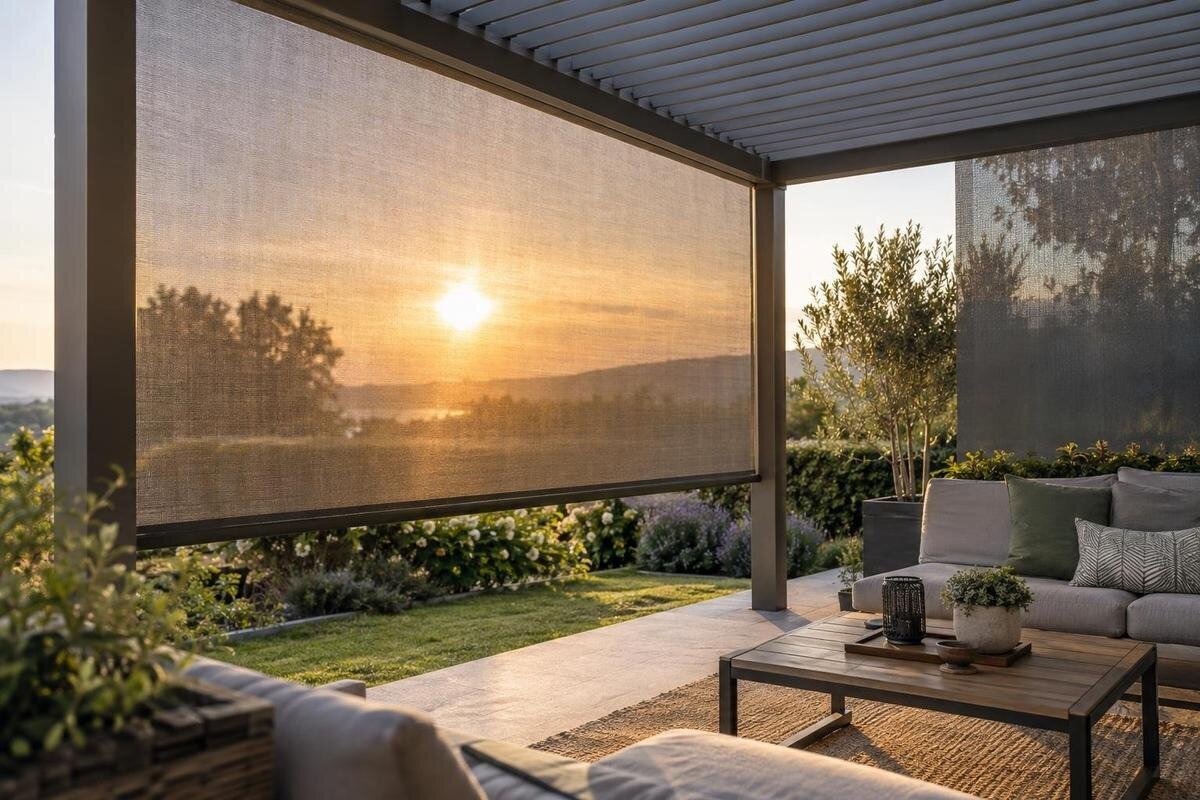
Pergola insect protection
Side screens or curtains can make pergola seating more comfortable when insects are active, but they do not automatically turn an open structure into a sealed enclosure. The result depends on the material, how it meets the roof and posts, the ground-level edge, and how people enter and leave. Suitable mesh may reduce insect nuisance where it forms a well-fitted barrier; an ordinary curtain may offer shade or privacy without stopping insects. This guide explains where gaps persist, what to ask about compatible accessories, and how to set realistic expectations before choosing a configuration.

What insect screens can realistically do
A pergola remains an outdoor structure, not a sealed room. Properly selected mesh can block insects larger than its openings where it covers the route and its edges meet the surrounding frame closely. That can reduce the number reaching a dining or lounge area while the panels are closed, but the result depends on the mesh, its condition and how people use it. It cannot prevent entry through a doorway, roof opening, corner or unmeshed side, and it cannot remove insects already inside. Treat a screen as a way to reduce nuisance under particular conditions, not as a guarantee of an insect-free evening.
Before comparing options, define the area you want to protect. If the goal is a table where people sit for an hour, a barrier along the most exposed side may help even while other sides stay open. If you expect a nearly enclosed dining zone, each boundary needs attention: the roof edge, ground line, side junctions and route to the house. Partial screening can still be useful, but a continuous gap can leave an easy route even when a large panel looks closed. The path from the house can matter more than the longest screened side. Use the wall-mounted design page to identify the model when asking which side accessories are approved; the listing alone does not confirm that a screen is included or compatible.
Where gaps can remain around a pergola
Sketch a simple plan before choosing panel positions. Mark every post, wall connection, roof edge, opening and nearby door, then show where people cross the boundary. Include roof openings, if present, rather than assuming a side panel closes the space above. Note changes in patio level, a step, drain or uneven paving along the lower edge, because these affect where a screen could meet the ground. A bird’s-eye drawing can miss vertical junctions, so add a side view for the roof-to-screen and ground-to-screen meeting points. Do not rely on one generic acceptable-gap measurement; use the plan to see where a continuous edge must be designed.
Inspect the perimeter from both sides, including corners and places where the pergola meets the house. A panel that stops short of a post, meets a wall at an angle or hangs above the paving may leave a route; so can a join between adjoining panels. Mark each junction and ask how that exact edge is closed. Note how panels move, too: a screen may leave a gap while sliding, rolling or being parked open, depending on its design. The regular pergola model page can identify the structure in a compatibility enquiry; ask for a side-specific drawing rather than treating the page as confirmation of a screen package or sealed perimeter.
How mesh screens differ from outdoor curtains
An insect screen is mesh intended to act as a barrier; an outdoor curtain may instead be a woven or solid fabric chosen for shade or privacy. The descriptions are not interchangeable. A visually dense curtain can still have wide gaps at its top, sides, bottom or overlap, while some screen arrangements are designed to cover edges more continuously. A mesh curtain can serve as insect screening, but the material’s opening size, condition and edge fit—not the word “curtain”—answer that question. Ask the supplier to identify the material and its intended use, and to show how it meets each side of the opening. An outdoor or privacy label alone does not establish mesh size or closure detail.
Operation matters as much as material. A fixed panel may occupy a passage, whereas retractable or sliding options may provide access when open. Hanging curtains may part or overlap, but wind or frequent movement can reopen their edges. Tracks, closures and attachment details vary by system, so treat them as questions rather than assumed features. Consider whether people can close a panel after each passage; an easy-to-open screen can still leave a route while it is open. When reviewing the bioclimatic pergola listing, ask which manufacturer-approved side products, if any, apply to that exact model and whether each proposed panel is insect mesh or curtain fabric.
Mesh size, airflow and visibility
Mesh choice starts with the insects you want to keep out. Openings that stop larger flies may not suit smaller insects, so ask for the actual mesh opening size or a stated insect-screen purpose rather than accepting a broad label. A supplier should identify the material specification; a product photograph is not enough to tell how small the openings are. If the nuisance is unclear, note when it happens and where insects enter before selecting a material. A local screen supplier may help match mesh to the intended use, but no generic screen label means every species will be excluded. The relevant comparison is the mesh as installed, with its edges closed, not a loose sample alone.
Finer or denser mesh can affect how much air passes through and how open the view feels; the exact effect depends on the material and the area covered. Compare a sample from the seat where you will use it rather than judging only from a close-up. Check whether the weave changes the garden view, feels restrictive on a still day or alters privacy at night. These comfort questions are separate from insect performance: a fabric that looks opaque from one angle may still have openings, while mesh that blocks a target insect may remain see-through. When considering a wall-mounted pergola, request the available screen specification for the exact opening and exposure you mapped. Use the sample to assess the view and finish, and the specification to assess its intended insect protection.
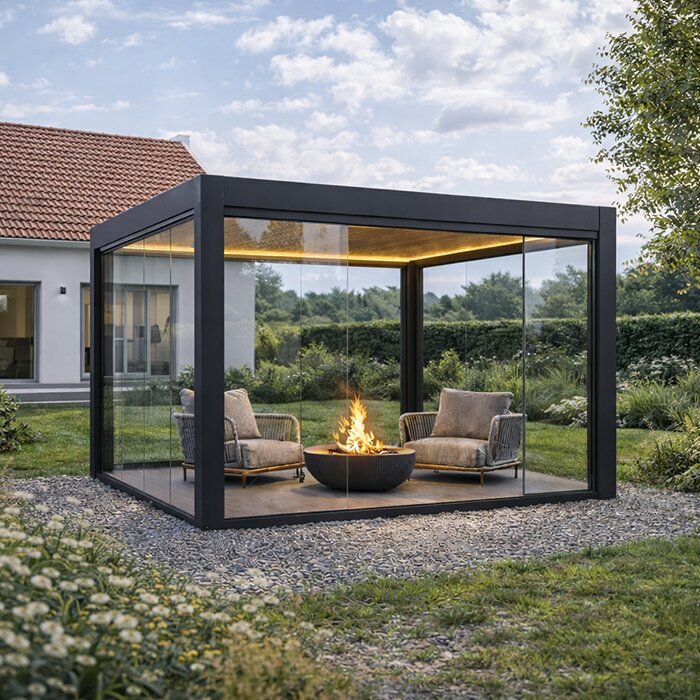
The entrance is part of the barrier
Every time someone walks through a screened entrance, the barrier opens. A screen around three sides can still reduce exposure, but a broad doorway left open may become the easiest route in. Decide where people will enter before arranging furniture. A path that requires moving a chair, stepping around a table or squeezing past a post can encourage people to leave the panel open. Draw the ordinary route from the house or garden, including carrying food, pulling out chairs and moving between seats. Also consider whether everyone using the patio can recognize and close the entrance without a complicated routine; a diagram of closed panels will not show that.
Ask whether the proposed system offers a closable entrance and how it closes at the sides and lower edge. An overlap, zipper, track or self-closing detail may be available on some systems, but none should be assumed for a particular pergola. Check the clear walking route and threshold, and ask whether a door panel interferes with adjoining screens or needs to be held open. The Bloomcabin Pergola product page can identify the model in that discussion; request confirmation of the actual side-and-entry accessories, whether they are included or optional, and how they fit your layout. A convenient entrance may help people close panels consistently; a poorly positioned one creates repeated openings.
Check screen compatibility with the roof and frame
Compatibility is model-specific. A panel may appear to fit between two posts yet rely on tracks or fastening points that are not part of the pergola, or conflict with a door, wall return or moving element. Before choosing an accessory, ask whether it is approved for the exact model and the particular side you want to screen. Confirm whether the screen is supplied with the structure, offered as an approved add-on or proposed by a third party; these are different situations. A similar-looking frame or a similar product name is not proof of compatibility. Ask the supplier or a qualified installer to explain the attachment and any operating limits in writing.
Check the top edge as carefully as the side rails. If there is an open space in the roof, a side screen cannot close it; where an overhead surface meets the screen, ask whether the junction is designed to fit closely. Request a drawing that shows the roof-to-screen meeting point, corners, wall connection and lower edge—not just a general view of a completed pergola. The Bloomcabin Bioclimatic Pergola page identifies the model for a precise accessory enquiry; it does not establish a particular roof seal or included screen. Where a panel could interact with a moving roof component or existing door, ask the supplier or a qualified installer to confirm clearance and permitted operation.
Wind, weather and upkeep affect screen use
Side panels also change how the space is exposed to weather. Even a breathable screen presents material across an opening, so do not assume any fabric, attachment or improvised fixing is suitable simply because it fits the span. Ask the manufacturer or a qualified installer about wind limits, attachment requirements and whether panels need to be opened, secured or removed in particular conditions. Follow guidance for the exact screen and structure; a neighbour’s setup or a generic rule for outdoor curtains is not a substitute. Avoid drilling, clamping or tying a panel to the frame until its compatibility and approved attachment method have been confirmed.
Outdoor exposure can wear mesh, seams and moving parts. Before a season of use, inspect for tears, loose edges, damaged closures or debris that stops a panel meeting its track or frame. A tear or pulled corner can undermine the intended barrier even if the mesh looks intact from the seating area. Clean and store materials only as directed for the selected product; fabrics and screen assemblies may have different care needs. Plan where panels go when not in use and whether the stored position leaves the passage clear. Refer to the Wall-Mounted Pergola listing to identify the structure when asking about panel care and weather limits, rather than treating the listing as operating instructions.
Match expectations to the insects and setting
Expectations should match the insects and conditions at your site. Insects vary in size and behaviour, and nuisance can change with the season, time of day, nearby planting, water or weather. A mesh intended for one type may not keep out a smaller one, while a screen that covers the perimeter can still be opened long enough for insects to enter. Note which side they approach from and whether the problem occurs with the panels closed or only during access. A brief observation at the time you usually sit can help distinguish a mesh issue from a route that is being left open. Where activity comes from several directions, screening one side may have a modest effect even when that panel fits well.
A screen manages entry through its covered area; it does not remove insects already inside the pergola or around the patio. Close the intended entrance after use, check that the mesh has not been pulled away at a corner, and avoid leaving food scraps or open waste beside the seating. These habits do not replace a correctly specified screen, but they avoid adding easy attractants in the area you want to enjoy. If insects appear after panels are closed, consider whether they may have entered beforehand rather than assuming they passed through the mesh. If nuisance persists, revisit the opening map and identify the likely route; not every problem comes through the fabric itself.
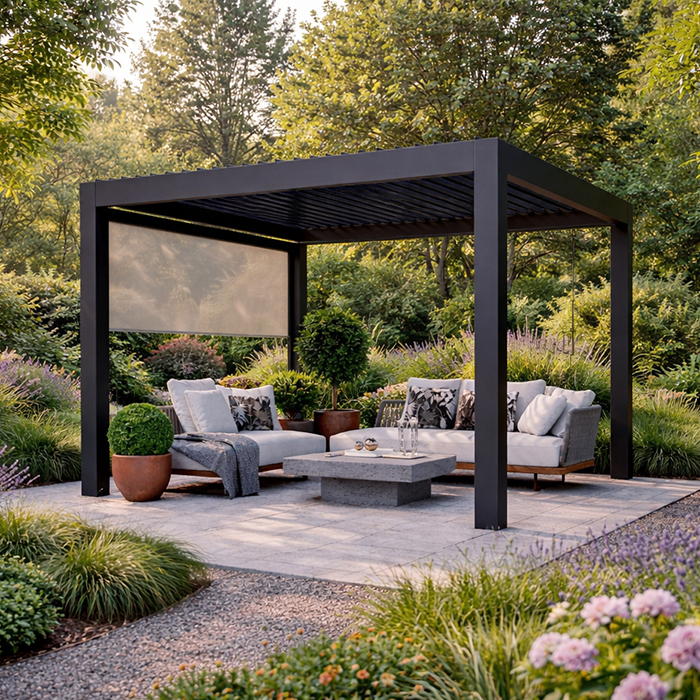
Test the layout around real seating and access
A scale sketch makes it easier to compare an enclosure drawing with everyday use. Include the house door, posts, seating, table, garden route and any panel that must slide, roll or hang open. Show one version with screens closed and another with the usual entrance open. That makes it clearer whether chairs block access, whether a walking route crosses the barrier repeatedly and which areas are actually protected. Measurements should describe the real opening and furniture positions, not just the pergola’s outside dimensions. Do not assume a screen’s nominal width includes its tracks, overlaps or edge closures; confirm the finished coverage. Note where a retracted panel is parked and whether it leaves the seating area exposed when only part of the system is open.
Mark where the screen meets every post, wall, roof edge and ground surface, then label each seam that needs a closure. Put the supplier’s drawing beside your sketch and compare the entrance, gaps and panel travel. Ask for a revised view if a track or corner detail remains uncertain, especially where two separate sides meet. The Bloomcabin Pergola listing is a product reference for that enquiry, not a substitute for a side-configuration plan specific to your site. Think through a full evening—from carrying dishes to leaving the patio—to reveal how often the enclosure will be opened and whether the proposed entrance is in a convenient position.
Questions to settle before choosing a side configuration
Before selecting a configuration, bring the answers together in one written description tied to your sketch. It should distinguish what the proposed package includes from optional items and details still to be resolved. For example, confirmation that a side accepts a screen is not the same as confirmation of how that screen closes at the roofline or ground. Keep any unanswered questions attached to the relevant opening so a general assurance does not obscure a specific gap. If the seller cannot clarify a detail, ask who can—a manufacturer, approved supplier or qualified installer. This gives you a clear basis for comparing configurations without assuming that similar descriptions cover the same components.
Compare the proposed configurations against the level of protection you actually want. Reduced nuisance along one side is a different goal from a more continuous boundary around the seating area. For each option, identify which edges can close, which remain open and what must be moved for access. Compare approved alternatives in the same annotated plan rather than weighing a generic curtain against mesh in isolation. A configuration with more coverage may still be inconvenient if it obstructs the route you use most often. If gaps remain at the roof or entrance, decide whether another arrangement better suits your goal or whether partial screening offers a useful improvement without enclosing the whole space.
Frequently asked questions
Can I make a pergola completely insect-proof?
Do not assume that side screens will. The roof, ground edge, corners and entrance all need compatible closures, and every opening can admit insects. Even a carefully fitted arrangement is better described as reducing nuisance than guaranteeing a sealed, insect-free space.
Will an outdoor curtain keep mosquitoes out?
Only if the curtain is made and installed as an insect screen for the insects you want to exclude. Ordinary shade or privacy fabric can leave gaps at its sides, hem and overlap. Ask for mesh details and edge closures.
Which gaps should I check first?
Trace the whole boundary: roof-to-screen meeting point, corners, posts, wall connection, lower edge, joins between panels and the entrance. Check the screen both closed and in its usual partly open position; the access route is often overlooked.
Does finer mesh always provide better protection?
Not necessarily. Mesh opening size should suit the insects you are trying to exclude, while the material can also affect visibility and airflow. Ask for the specified opening and compare a sample; no general label guarantees exclusion of every insect.
Can I add a third-party screen to any pergola?
Do not assume it will fit or be suitable. Confirm approval, attachment details and operating limits for the exact model and side with the manufacturer or a qualified installer before choosing an accessory. A span that appears to fit does not prove compatibility.
A useful screen arrangement combines suitable mesh with edge closures, a roof junction and an entrance that work with the pergola you have in mind. Screens can reduce insect nuisance when closed and properly fitted, but gaps, everyday openings and insect activity at your site set the limits. Considering those details together helps you choose a practical arrangement without expecting an open pergola to behave like a sealed room.
