
Pergola Outlets: Planning Power for Everyday Use
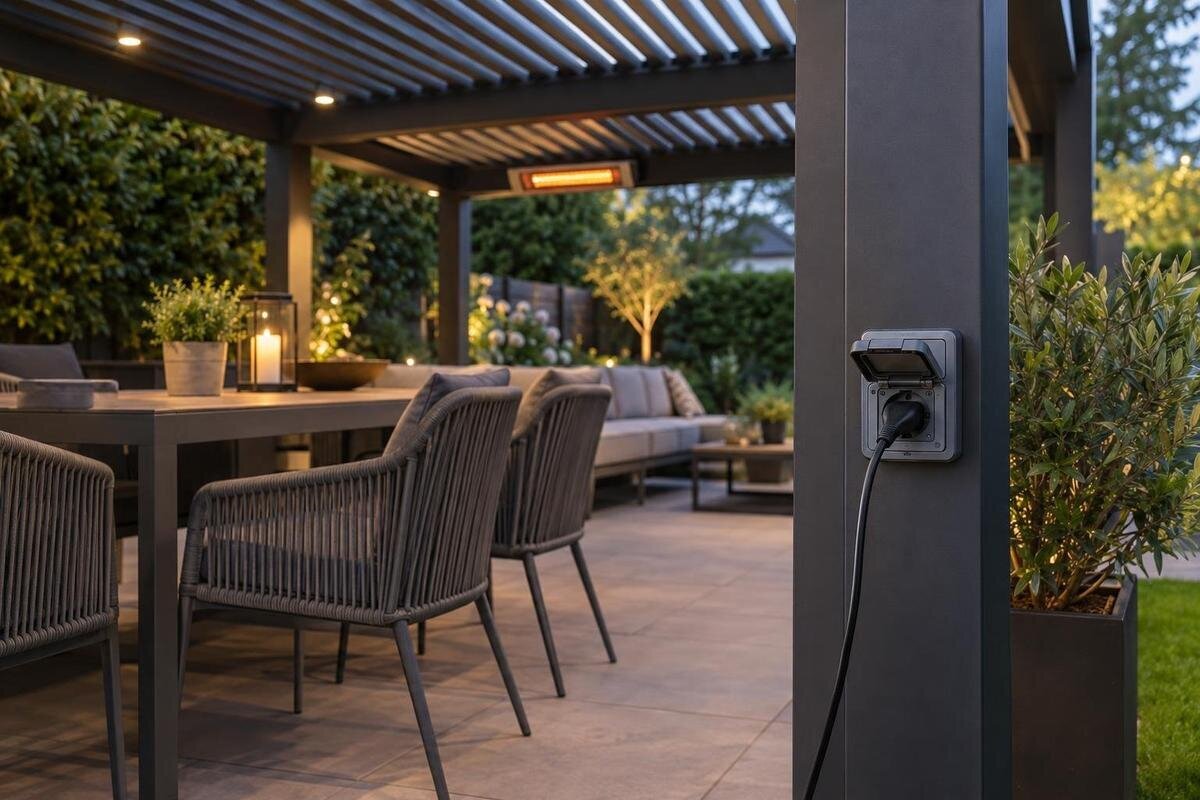
Pergola electrical planning
Planning electrical outlets under a pergola starts with what you will plug in, not with a guess at the number of receptacles. Record where each activity happens, which appliances may run together and how exposed the locations are to rain, wind, irrigation and seasonal conditions. That gives a qualified electrician a useful brief for assessing equipment, protective devices and approved mounting options for the exact structure.

Questions for your electrician 1
List the appliances and how they will be used
Begin with activities rather than choosing an outlet count in isolation. List the devices you realistically expect to use: phone or tablet chargers, a portable speaker, a laptop, task lighting, seasonal decorations and any cooking appliance. Add a heater only when you can identify the actual product or at least its type, since appliances can differ widely in electrical demand. Beside each item, note its usual location—dining table, lounge area, serving surface or occasional work spot—and whether it is a regular need or an occasional one. This makes the brief specific enough to review without assuming all devices need the same supply. If an appliance changes, update the list rather than asking the electrician to infer a substitute.
Record which items may operate together and for roughly how long. Lighting, charging and an outdoor cooking appliance may overlap during a meal; seasonal lights may be used longer than a one-off task. Note whether each item is plug-in or intended as a fixed fixture, and whether you want a switch, dimming or another control. Photograph each rating label and keep the exact manufacturer’s manual. The electrician can assess the actual ratings and combined use; the number of socket openings does not establish available capacity. Avoid treating an extension cord as a permanent solution to a poorly placed outlet. Separate convenience outlets from fixed connections that may need their own review.
Map the pergola, furniture and activity zones
Draw a simple overhead sketch of the patio or deck, showing the pergola outline, doors, steps, table, lounge furniture, serving area and the routes people use while carrying food or moving chairs. Add movable planters, storage and any likely future furniture arrangement, plus a note about access back to the house. The drawing need not be an electrical plan; its job is to make activities and obstructions visible. If a wall-mounted option is being considered, identify the exact model, such as Bloomcabin Wall-Mounted Pergola, and mark its proposed position on the sketch. This keeps the structure being discussed clear while leaving electrical routing to the electrician. Show how doors open, not just where walls or posts appear.
Use the sketch to separate activity zones from traffic routes. Mark where portable equipment will be used and how its cord would reach a proposed outlet. Show whether a cord would cross a doorway, step or main walkway, and whether an open door or gate changes the route. Include the space people need to pull out chairs or move around a serving trolley, rather than drawing furniture only in its stored position. Ask the electrician to mark proposed receptacles on the site plan so you can review these conflicts together. The aim is to locate power near the activity without creating a cord route through the space people need to move.
Questions for your electrician 2
Assess the weather exposure at each outlet
An overhead cover may reduce direct precipitation, but it does not turn an outdoor area into an indoor room. Wind can drive rain beneath a roof; water may also reach an outlet through splashing, irrigation or condensation. Sun exposure, temperature changes, snow and ice can matter depending on where the receptacle sits and when the pergola is used. Open sides make a sheltered-looking point less predictable, and conditions can differ between two sides of the same structure. Describe the actual exposure at each proposed outlet rather than calling the whole area dry. Share the selected structure’s instructions and drawings with the electrician, and note any nearby irrigation or routine water use.
Ask which receptacle, enclosure and cover are suitable for the expected exposure, including whether the combination remains appropriate when a cord is plugged in. A cover’s appearance—or the fact that an outlet is below a roof—is not enough to establish its rating. Check the exact manufacturer’s instructions against the conditions at the site. If Bloomcabin Bioclimatic Pergola is under consideration, include its installation documents in this discussion so the electrician can review the proposed outlet locations in context. The model name does not establish electrical ratings or weather protection. Ask the electrician to explain how the selected equipment’s rating relates to each location and to its intended use with or without a plug connected.
Choose locations that remain easy to reach
Review reach and access separately from cord routes. Walk through a normal day on the sketch: where a phone is charged, where a lamp would plug in, and where temporary equipment is brought out. Consider both seated and standing use. Check whether someone would need to stretch across a table, reach behind furniture or move a heavy planter to connect a plug. Chairs, cushions and a serving trolley should not block access in their usual positions. These observations help the electrician discuss locations; they do not establish an installation height or a suitable point on the pergola frame. Include the people who will use the space regularly, rather than judging every position from one person’s reach.
Keep the proposed position clear of routine washing or watering unless the electrician confirms that the location and equipment suit those conditions. Do not assume a post, beam or wall is an approved mounting surface just because it is close to the seating area. If Bloomcabin Pergola is the selected model, include its exact drawings and ask which attachment details are documented as acceptable. Review these mounting options alongside the access requirements: a structurally acceptable position still needs to be usable with the furniture in place. Resolve the proposed locations before hardscaping or other finishes make changes more difficult, and check them again against the final furniture arrangement.

Questions for your electrician 3
Give the electrician exact appliance information
Collect the information printed on each intended appliance: model number, electrical input, voltage, plug or connection requirements, and installation instructions. For something not yet selected, write down a clear category and provide its manual once you choose a product; guessing from a photo or a broad label is not enough. Include any device with a heating element, motor or electronic controls if it is part of the plan, since the electrician needs the actual product’s information rather than a casual description such as small or powerful. Do not size a circuit from an online rule of thumb; give the ratings and intended use to the professional. Include separate power supplies if the product manual specifies them.
Tell the electrician which devices are likely to run at the same time, including the busiest combination you expect in ordinary use. A heater, cooking appliance, lighting and chargers in one area could change the plan compared with occasional low-demand use, but the answer depends on the exact ratings and the existing supply. Ask whether each proposed outlet and circuit can serve the stated use, and whether any appliance needs a separate circuit or connection; leave the assessment and circuit selection to the electrician. Keep appliance data separate from structure information in your brief. For example, the wall-mounted pergola listing belongs with the model details, while appliance labels and manuals belong with the electrical-use list.
Ask how outlets and circuits will be protected
Protection is more than choosing a cover. Ask the electrician to explain which combination of ground-fault circuit interrupter (GFCI) protection, overcurrent protection and receptacles or enclosures intended for outdoor exposure applies to the proposed layout. Do not assume the same device or arrangement suits every outlet, and do not treat GFCI protection as a substitute for weather suitability or vice versa. The professional should identify any limits on using outlets in wet or exposed locations and explain how the selected equipment matches those conditions. A sealed-looking cover, a roof above the outlet or a general outdoor-use label does not by itself resolve every site-specific question. Ask where each protective measure will be provided.
Ask where the protective device is located, what indication to expect if it trips, and how testing or resetting should be handled under its manufacturer’s directions. A repeated trip calls for investigation, not repeated resetting or moving the appliance to an improvised arrangement. Clarify how occupants can reach any switch or reset point without moving heavy furniture or opening an enclosure. If equipment will be plugged in while the area is exposed, say so; the receptacle and cover arrangement must suit the intended use with the cord connected. Leave device selection, installation and troubleshooting to a qualified electrician, and keep the instructions with household records.
Questions for your electrician 4
Check lighting, heaters and controls against their manuals
Separate ordinary plug-in appliances from equipment intended to be installed as part of the pergola. For any proposed light or heater, obtain the exact make and model, manual, electrical input, outdoor-use rating and documented approval for its mounting method. Do not treat a broad product category, a photograph or a casual suggestion as proof that a fixture is compatible with the structure. If no specific accessory has been documented, list it as a possible future item rather than asking the electrician to plan around an assumed product. This is also the point to disclose whether an accessory has a separate driver, controller or other component that needs a location and service access. Ask how that equipment will be inspected or replaced.
Set out how you would like lighting controlled: one switch for all fixtures, separate groups, dimming or a control near a particular entrance. These preferences make the brief more useful, but the exact fixture manual and electrician determine what can be provided. If you are considering the bioclimatic pergola listing, request manuals and written mounting approval for any proposed lighting or heater option; the catalogue title alone does not establish that an accessory is available or compatible. Keep this check distinct from outlet placement so a general-purpose receptacle is not mistakenly counted as a completed fixed-lighting provision. Mention if you want lighting controls to operate separately from plug-in appliances.
Coordinate electrical work with the pergola build
Coordinate electrical work before the patio, pergola and surrounding finishes are treated as final. Give the electrician the structure model and configuration, site photos, information about access to the existing supply, and details of doors, walls, drainage and landscaping. Ask which cable routes, penetrations, junction points and mounting surfaces are approved for the exact build, and who will confirm each one. A route that looks convenient on a sketch may conflict with drainage, moving parts, service access or the manufacturer’s instructions. The electrician and pergola supplier should resolve those details together rather than relying on the appearance of a frame member. Raise the questions before paving or other work conceals access.
For a wall-attached project, the wall and pergola documentation both matter; in any arrangement, the exact supporting structure and site conditions still need review. If Bloomcabin’s wall-mounted model is the candidate, record its precise name and configuration in the project scope so the electrician and supplier are working from the same information. Confirm who supplies brackets, covers or control components, if any are specified, and whether each item is included. Also record who is responsible for resolving a mounting or routing question before finishes are completed. Clear responsibilities help prevent an unresolved detail from being passed between trades or a required component from being left out.

Questions for your electrician 5
Plan for seasonal use and future changes
Think beyond opening day without inventing loads you may never use. Note whether seasonal lights, occasional charging or a future selected appliance could change where a plug is useful. If you plan to use decorative lighting, confirm that the exact product is intended for its setting and follow its instructions; an available outlet does not make indoor-only equipment suitable outside. Distinguish an occasional device from equipment you expect to leave in regular use, and include its likely operating period in the brief. A spare receptacle may be convenient, but having an unused socket does not prove that the electrical supply has spare capacity for another appliance. Identify likely additions rather than requesting unspecified extra capacity.
Record the seasons and conditions in which you expect to use the area, then identify which parts of the proposal are intended to accommodate that use now. If the Bloomcabin Pergola listing identifies the model being compared, keep it with the structure details and distinguish any proposed seasonal-light attachments from approved work. For future equipment that has not been selected, record the idea as provisional rather than assigning it an outlet or treating its electrical needs as settled. Ask what can be included in the current design and what would require a new assessment later. This separates a useful allowance for a likely change from an assumption that every future appliance will be covered.
Bring a clear, site-specific brief to the electrician
Organize the information into a one-page brief with supporting manuals and photos, rather than relying on a verbal estimate. Use the marked site sketch as the main reference and match each intended appliance to its activity zone. Keep model numbers, ratings and likely simultaneous use together, with exposure notes and lighting-control preferences alongside the proposed locations. If you are still comparing structures, identify the regular Bloomcabin Pergola option as a candidate. Date the brief and clearly label confirmed choices, provisional choices and unanswered questions. This gives the electrician a concise overview without burying important details in separate messages or asking them to infer which version of the layout is current.
Ask for a written response showing proposed receptacle locations, what each point is meant to serve, how circuit capacity and protective devices will be assessed, and what outdoor ratings and mounting approvals must be confirmed. Clarify whether fixtures, controls, covers and structure-specific components are included in the proposed work. Record any outstanding decisions and who will resolve them, so the scope is clear before work begins. If furniture or appliances change after the site review, update the brief and identify the changes rather than silently replacing the earlier version. Keep the returned plan with the relevant manuals, approvals and service records so the household has a clear reference for the completed arrangement.
Frequently asked questions
How many outlets should a pergola have?
There is no universal count. Mark each place where a device will be used, then check that outlets remain reachable with furniture in place and cords can avoid steps and walkways. Give the electrician your appliance list and the items that may run together; receptacle count alone does not establish circuit capacity.
Does a pergola roof protect outdoor outlets from rain?
Not necessarily. A cover may reduce direct exposure, but wind-driven rain, splashing, irrigation, condensation, snow and sun can still affect equipment, depending on its location. Ask the electrician to select receptacles, enclosures and covers for the actual conditions, including when a plug is connected. Do not assume the roof provides an outdoor rating.
Should outlets under a pergola have GFCI protection?
Ask a qualified electrician to confirm which GFCI protection and other protective devices are required and suitable for the exact site and intended use. A weather-resistant receptacle or cover addresses different concerns and should not be treated as a substitute. Follow the device manufacturer’s instructions for testing and resetting.
Can a heater and cooking appliance use the same outlet?
Do not decide based on whether both appliances can be plugged in. Give the electrician the exact models, ratings and likely simultaneous use so they can assess the available supply and whether separate provision is needed. Do not use an extension cord or power bar as a permanent workaround for an inadequate layout.
Can an outlet be attached to any pergola post?
Not automatically. The mounting point, product instructions, exposure, enclosure and electrical route all need to be approved for the exact structure. A convenient-looking post or a product listing that names a pergola does not confirm permitted mounting. Have a qualified electrician and the pergola supplier confirm the documented details before installation.
A useful pergola outlet plan connects each intended appliance with a practical location and the conditions it will face. The homeowner’s brief describes everyday use; the electrician assesses the supply, protective devices, mounting options and routing. Keep confirmed choices separate from future ideas so an unused outlet is not mistaken for approval to add any appliance later. With these decisions recorded before the layout is finished, charging, lighting and occasional equipment can be accommodated without relying on awkward cord routes or improvised connections.
