
Protecting the Base of a Wooden Garden Shed from Ground Moisture
Garden shed care
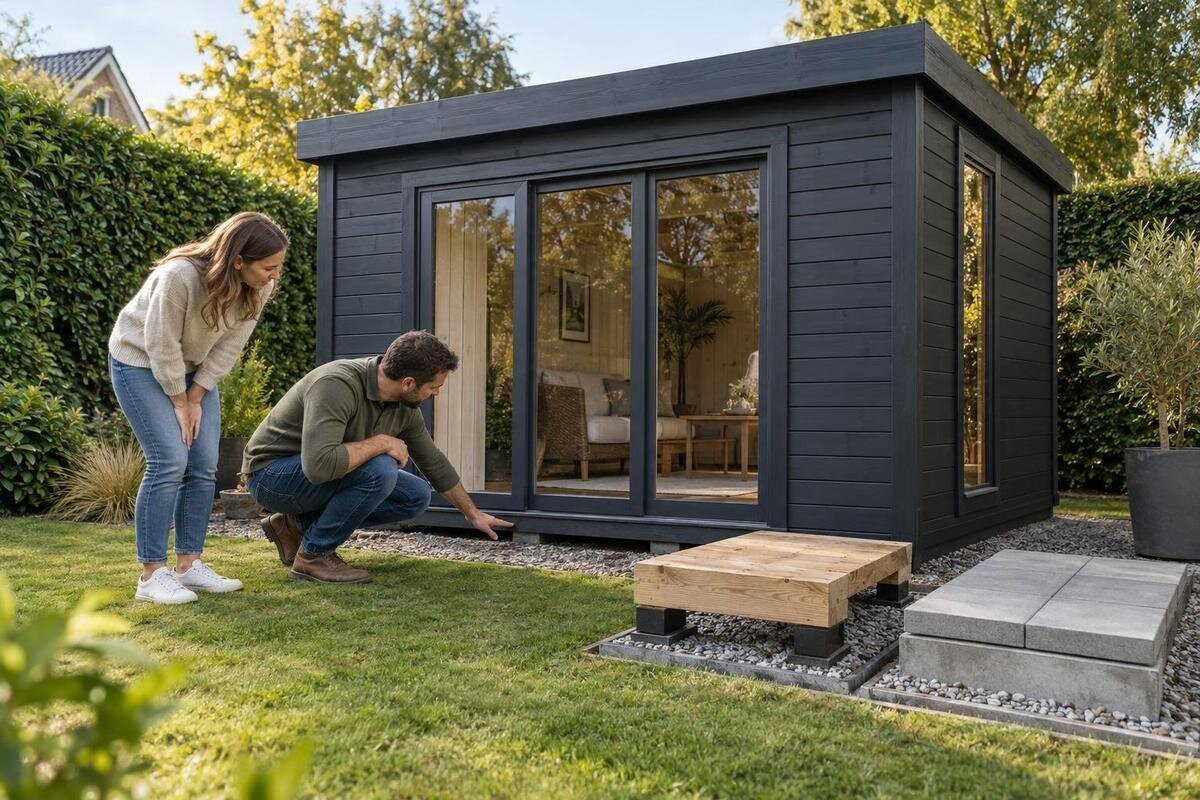
Wood can look sound above ground while its lowest boards stay damp. The vulnerable area is often where the shed’s base meets the support below: moisture can remain there, and timber close to soil may dry slowly. Protecting a wooden garden shed is not just a matter of coating its bottom edge. The support, any moisture-control detail, the intended assembly and regular inspection all need consideration. This guide focuses on the ground-to-base interface, with practical questions to resolve before purchase and during ownership.

01
How ground moisture reaches the lowest timber
Ground moisture does not require a visible puddle. Soil can retain water after rain or snowmelt, and timber in contact with damp ground or a persistently damp support can absorb it. The lowest wooden rails, floor edges and exposed end grain are easy to overlook because they sit close to the ground and may be partly hidden. If they remain damp between wet periods, they have less opportunity to dry than exposed upper boards. A shed can therefore look sound above the floor while its base is experiencing a different moisture pattern. Inspect the wood-to-support interface as part of the structure, not as an afterthought.
It helps to distinguish the shed’s wooden base from the support beneath it. Moisture can reach timber through direct contact with damp material, but splashback, a leak or indoor condensation can wet the same area from another direction. Those causes may look similar while needing different responses. A coating on the outside will not correct persistent wood-to-ground contact, and changing the support will not fix a leak higher on the structure. Before choosing a barrier or treatment, consider where the dampness appears and how it relates to the ground, joints and interior surfaces.
Inspect the base before choosing a remedy
Look along the lower exterior and, where safely accessible, at the floor edge and inside corners. Note localized darkening, persistent dampness, swelling, softened wood, a finish that lifts or peels, and a musty odour. These are clues rather than a definitive diagnosis: discoloration can have more than one cause, and a fresh coat may hide an issue without resolving it. Record where a mark begins and ends. A repeated line along the underside suggests a different pattern from one isolated patch below a joint, but neither observation alone proves where the moisture is coming from.
Compare the same area at different times rather than relying on one inspection. Note whether it changes after dry weather, rain or snowmelt; whether the inside or outside face is affected; and whether leaves or stored items are holding damp against the lower wall. A brief written note or photo can help show whether a condition is spreading. Do not dismantle supports, pry boards apart or crawl beneath the shed to investigate. If timber feels soft, damage is growing, or the source remains unclear, ask a shed installer or qualified building professional to assess it before covering or repairing the area.
02
Keep base timber separate from damp soil
A key question is whether wooden parts will touch soil or another surface that stays damp. A moisture-separating detail may reduce direct transfer, but it needs to fit the shed’s specified support arrangement. Improvising a layer or changing the height can affect how the structure bears. The aim is not to raise every shed by an arbitrary amount; it is to use a suitable support that keeps the wooden members out of persistent ground contact while supporting the assembly as its maker intends. A barrier should not be expected to compensate for a support that is unsuitable or unstable.
When comparing named models, the Verdana 1 garden house page identifies the product, but a name or image does not establish how its underside is designed. Ask for the current assembly instructions and required base detail: which parts rest on the support, what separation is permitted, and whether the supplier specifies a particular arrangement. Check that the answer applies to the exact version you plan to order. If the ground is consistently wet or you are unsure what support is appropriate, consult a qualified person rather than adding improvised blocks or shims.
Confirm what the shed floor and base include
The word floor can mean different things in a product description. Flooring, floor framing, base rails or protective components may be supplied separately, depending on the exact package. Do not infer what is included from a product photo or from the general term garden shed. Before checkout, list the supplied parts, anything sold separately, and which surfaces will contact the support. Ask how the floor and lower frame fit together and whether the assembly documents specify a space or material between them. These details affect where moisture might collect and which parts you will be able to inspect later.
Use the Verdana 2 garden house as an exact model reference while requesting those details, not as evidence that a floor or moisture barrier is included. Compare the product information and assembly documents with the order summary, including any separate floor kit or base-related components. If the support instructions are not available before purchase, ask the seller to confirm how the shed is intended to sit and what preparation is the owner’s responsibility. Keep the answer with your order paperwork; it can help when the structure is assembled and when you need to resolve a maintenance question.

03
Use barriers and coatings only where specified
Membranes, flashing and surface coatings serve different purposes, and the right choice depends on where the shed’s instructions place them. A layer between two materials may interrupt direct contact when the base design calls for it; a coating may protect a specified wooden surface. Neither automatically addresses every route by which moisture reaches the base. An unsuitable layer can hold moisture against the wood, interfere with drying or be damaged at the contact point. Do not lay a random sheet beneath the frame, wrap the base or seal every face simply because a material is described as waterproof. The detail needs to preserve the intended support and drying conditions.
Ask which product and surfaces the manufacturer accepts, and whether exposed cuts, edges or preparation require separate attention. Confirm whether a barrier is part of the supplied system or something the owner must source, and whether it needs inspection or replacement. The Durano spacious garden house listing can identify the model you are reviewing; the current manual or written seller guidance should answer questions about barriers. If instructions appear to conflict, resolve that before applying a product. Covering timber that is already damp can conceal the visible problem without making the assembly dry.
Check the wood treatment and care instructions
Before ordering, ask what treatment or finish, if any, has been applied to the wooden parts, which surfaces it covers and what care is expected after assembly. The underside and cut ends may have different exposure from the outer wall, so a general statement such as treated wood is less useful than instructions that identify the relevant components. Do not assume a particular species, factory treatment or long-term protection from a model name, product image or the fact that a shed is made of wood. Request the product documentation and keep it where you can refer to it during maintenance.
Useful care instructions identify compatible products or explain what to look for, which surfaces need attention and what signs mean that a finish should be renewed or a part assessed. Avoid applying a familiar deck stain or sealant to the base without checking compatibility; a product intended for one surface may not suit another. The Veltor 1 garden house page identifies a specific model, but only its current product information can establish treatment and care requirements. Include those requirements in your comparison, since base protection may depend on owner maintenance as well as the original construction.
04
Preserve drying space around the base
Even when timber is separated from soil, the lower edge needs an opportunity to dry. Check whether the design relies on an open space or a ventilation detail, and keep it clear of leaves, mulch, stored materials and other debris that can hold damp against the frame. Do not pile soil or garden waste against the wooden edge to hide a gap. Equally, do not close an intentional opening with trim or sealant unless the manufacturer directs you to do so. A small gap is not a universal solution: airflow is useful only when the base is designed for it and the support remains appropriate.
If you are considering the Orello 1 garden house, ask the supplier what clearance or access the instructions call for around the lower frame and whether parts are meant to cover that area. Do not infer a base gap from a wall description or photograph, and do not cut, lift or modify components to create one. Around an existing shed, remove loose debris without disturbing the support, then check whether vegetation or stored objects are blocking access for inspection. Keeping the area visible can help you notice a change early, but it will not replace a specified barrier or correct persistent moisture.
Inspect the lower frame during ownership
Make the lower edge part of routine maintenance, especially after a prolonged wet spell or seasonal snowmelt where relevant. Look for new staining, a lifting finish, soft spots, swelling, separation at joints or a damp patch that does not dry as surrounding areas do. Pay attention to corners, floor edges and places that become hard to see once equipment is stored inside. You do not need to dismantle the shed to monitor it; inspect only where safely accessible, and follow the maker’s instructions for any access panels or removable parts. A brief record of dates and photos can show whether a mark is recurring.
Do not treat repeated wetness as a reason to repaint immediately. First consider whether the wood is touching a damp support, a moisture-control detail has changed, or water is arriving from another direction. If a board is persistently soft or damaged, avoid probing it or altering structural parts yourself; get advice on the repair and whether the cause has been addressed. If the Modano 1 garden house is on your shortlist, ask what owners should inspect at the base after assembly and how to access those areas safely. Model-specific care guidance is more useful than guessing from an image.

05
Compare maintenance requirements before buying
Compare ownership requirements as carefully as the product description. A base that needs separate preparation, compatible protective material, periodic finishing or occasional part replacement comes with a different care commitment from one with a documented maintenance plan. Neither arrangement is automatically better without considering the site and the time you can give to upkeep. Ask which items are included, which are the buyer’s responsibility, what care is recommended for the lower frame, and whether repairs can be made without dismantling the whole shed. These are practical cost-of-ownership questions, even when the exact cost depends on the work and materials required.
Keep answers specific to the exact model and in writing. For the wooden garden shed M, use the listing to identify the product, then request its current instructions and any stated maintenance conditions instead of treating the product name as a specification. If warranty information is offered, read the actual terms and ask whether moisture at the base, the chosen support, surface treatments or missed maintenance affect coverage. Do not assume that any warranty includes ground-related damage. Resolve unclear wording before placing an order, and keep the manual, finish details and supplier responses together.
Resolve base details before placing the order
Before finalizing an order, match the product name and any variant on the quote to its documentation. Confirm the required support, whether a floor and base components are included, what treatment or barrier is specified, and who is responsible for supplying and maintaining each item. Ask for the written assembly and care instructions if you do not already have them. A photo or short description rarely answers questions about hidden underside details. Clear records reduce the risk of expecting an included component or assuming that a protective layer is acceptable when the assembly instructions call for something else.
Use the wooden garden shed S page to confirm which named model you mean, then verify its base requirements against current documentation. Do not infer suitability for a particular site from a title or appearance. If you are replacing an old shed over an existing support, ask whether that support meets the new model’s instructions rather than assuming the previous structure proves it is appropriate. Persistent damp, soft or decayed base timber, or an uncertain support detail warrants advice from the supplier or a qualified building professional before assembly. Addressing the cause early is more useful than disguising its visible effects.
Frequently asked questions
Can a wooden garden shed sit directly on soil?
A dry-looking surface does not show that the soil will stay dry. Timber in contact with damp ground can absorb moisture, so follow the support instructions for the exact shed model. Do not assume direct soil contact is acceptable unless the manufacturer’s guidance explicitly says so.
Will paint or sealant protect the bottom of a shed?
Not by itself. A coating may be appropriate for specified wooden surfaces, but it does not separate the base from damp ground or correct a moisture problem. Check which products and surfaces the manufacturer approves, and deal with recurring dampness before covering the wood.
Does every garden shed need a moisture barrier?
There is no universal placement or material that suits every shed. A barrier can help when it is part of a compatible base detail, but an unsuitable layer may interfere with drying or support. Check the model’s instructions before adding one.
How often should I inspect a shed base?
Follow the manufacturer’s care instructions and include the lower frame in routine maintenance. Check it after prolonged wet conditions or seasonal snowmelt, where relevant, and before renewing a finish. If you have had recurring dampness, inspect more closely until the cause is resolved.
What should I verify before ordering?
Confirm the required support, which floor and base parts are included, any specified moisture-control details, and the wood-care instructions. Ask for the current assembly documents and check whether warranty terms, if offered, have conditions related to the base or maintenance.
Protecting a shed’s base depends on keeping the wooden parts away from persistent damp, using only compatible details and making the lower frame accessible for inspection. Make the support requirements and care instructions part of the model comparison, then keep those documents with the order. A dry-looking exterior or a fresh coat of finish cannot substitute for checking what is happening at the ground-to-wood interface.
