
Planning a Quiet Reading Corner Under a Pergola
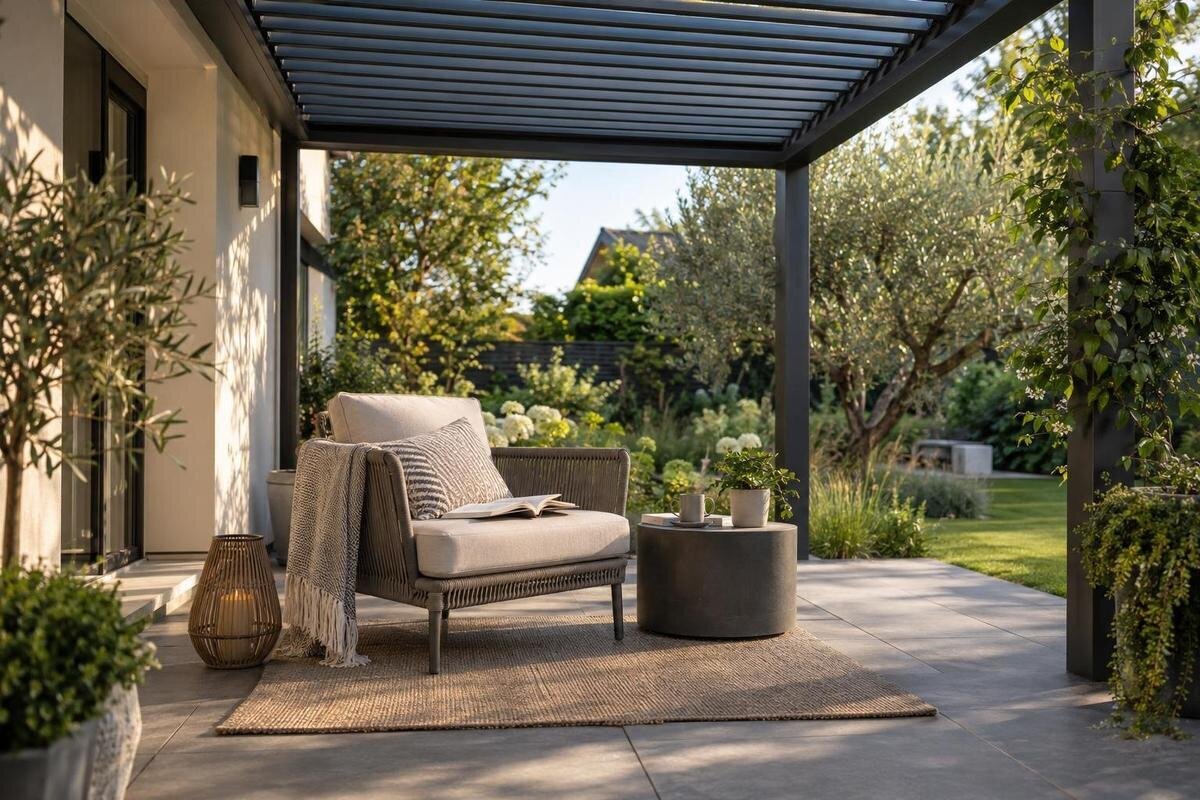
Pergola planning guide
An outdoor reading corner under a pergola is more than a chair in a patch of shade. It needs room to sit and get up, light that reaches the page without distracting glare, a quieter position away from everyday traffic, and a plan for bringing books and devices back inside. Because shade shifts and open-sided spaces do not behave like indoor rooms, the useful layout is the one tested at your actual reading times. Start with the routine and furniture you already use; then compare the site, light and footprint before committing to a configuration.

Define the reading routine before choosing a corner
Define what “quiet reading” means for everyone who will use the spot. One person with a paperback has different needs from two people reading together or someone switching between a print book and an e-reader. Note the usual reading time, how long you tend to sit, whether you like your feet supported, and what needs to be within reach: glasses, a drink, a bookmark or a side table. These details guide chair and accessory choices before pergola size enters the discussion. They also keep the plan grounded in real habits rather than a styled arrangement that looks comfortable but does not suit the way you actually read.
Decide how often the corner will be used and what counts as quiet: a shaded spot for a chapter after work, an unhurried weekend morning, or a place for two readers. Record which household activities continue nearby at those hours, and whether the chair must move for another use. A single-seat retreat may need little furniture, but it still needs a route and somewhere for a book. Write down what is essential and what can be carried outside each time so optional accessories do not crowd the main purpose. If you compare models now, the Bloomcabin Bioclimatic Pergola page lists options from 9 to 24 m²; treat that area range as a shortlist reference, not a complete reading layout.
Measure the chair and the route around it
Measure the chair in the position you actually use it, not only its folded or showroom footprint. Include its arms, the space it needs to recline or rock, and a footrest pulled into place. If you are still shopping, measure a similar seat or mark a realistic footprint on the patio before settling on a size. Record the side table, book basket and any other furniture separately. Note how far the chair moves when someone sits down or stands up; a static outline can miss that movement. A labelled sketch with actual dimensions is more dependable than judging an empty floor area from a product photo.
Then mark the route from the nearest door or path to the seat, plus the space needed to sit down, stand and reach the table. Use painter’s tape or removable markers on the ground and test the arrangement with everyone who will read there. Walk through carrying a book and drink; try the chair at its preferred angle and open the nearby door. If someone uses a mobility aid, test the approach and turning space with their usual equipment rather than assuming a generic clearance. The Bloomcabin Wall-Mounted Pergola identifies a wall-mounted model, but you still need the selected option’s exact dimensions and professional confirmation of site suitability before basing a plan on it.
Observe daylight at your usual reading times
Look for daylight at the hours you expect to read, not just when you first view the patio. Visit the proposed seat during the morning or late afternoon that matters to you, and note whether direct sun falls on the reader, the page, the side table or an e-reader screen. Repeat at another time; the sun’s position and nearby shadows change over a day and through the year. Trees, fences and adjacent buildings can shift the pattern as well. Make a brief record—time, seat position, direct sun or shade, and glare—so later comparisons rely on observations, not memory. A cloudy visit may help you judge general brightness, but it is not a clear-day test.
Use your observations to choose a seat angle as well as a location. You might find that turning the chair slightly keeps the brightest view out of your line of sight, or that moving the side table changes where your book catches light. Test with the actual book or device rather than assuming a photo represents the experience. Where possible, make notes on more than one day; a photograph from the same position can help compare shifts, but records only that moment. The Bloomcabin Pergola catalogue lists options from 9 to 24 m². That area alone cannot show where shade will fall at your preferred time, so verify the selected configuration and assess the site’s real conditions.
Plan for shade that shifts during the day
Treat shade as something that moves across the seating area, not as a fixed patch. A pergola’s overhead structure may shade the spot from above, while lower-angle sun can still reach the reader or light a page unevenly. The pattern depends on the site, time of day and selected design. Separate the requirements: shade over the chair, less direct light on the book, and comfortable conditions at a particular hour are not automatically the same thing. Nor should sitting underneath be taken as proof of complete sun or rain protection. Decide which effect matters most, then test that effect from the seated position.
If the pergola is already in place, mark the chair and table and watch where the shadow edge falls during a typical reading period. A small change in angle or position may help, but check that it does not block the route. If the structure is not there yet, label your proposed seating arrangement as a concept and record which parts of the shade pattern remain uncertain. When considering the Bioclimatic Pergola, compare the selected configuration details with your site observations. Keep more than one chair position in the plan until you can assess the shade where you will actually sit.

Place the seat away from everyday noise
Choose a quieter edge by listening at the same times you expect to read. Patio doors, a frequently used walkway, conversations, mechanical equipment or nearby activity can make one corner less restful than another, and the pattern may change from weekdays to weekends. Sit temporarily in each candidate spot while household routines are operating normally. A visit when nobody is outside may not represent an ordinary afternoon. Note recurring sounds and whether the chair can be turned away from them without facing direct sun or interrupting access. This is more useful than assuming the farthest corner will automatically be quiet.
A pergola does not create a soundproof room, so treat quiet as a matter of positioning and routine, not a promise of the structure. Keep the reading chair out of the busiest circulation line, agree on a quiet period if several people share the yard, and leave a clear path for everyone else. Soft cushions may make a seat more comfortable, but should not be treated as acoustic insulation. Avoid adding screens or panels as a sound solution unless the product instructions and a qualified professional confirm that the proposed addition is suitable for the structure.
Lighting the page after dusk
Plan separate light for the page rather than expecting general patio lighting to do every job. At dusk, sit in the chair and check whether the book is readable, whether the lamp is visible as a bright point, and whether the page is shaded by your hand or arm. Try the light from the side, then shift it relative to your preferred hand and table position; reading posture changes where a useful beam lands. A portable lamp designed for outdoor use can be easier to reposition than a fixed layout, but follow its maker’s instructions and store it as directed.
Plan where the light will rest, how you will switch it on from the seat, and where it will go after reading. Keep its base and any cable out of the walking route; do not assume an indoor lamp or extension cord is appropriate for an exposed setting. If the plan calls for a permanently wired fixture or mounting to the pergola, have a qualified electrician and the relevant product professional confirm the fixture, installation and mounting details. Do not attach lighting to a structure just because a convenient beam or bracket is available.
Keep books and devices protected between sessions
Paper books and electronic readers should not be treated as weatherproof simply because the seat is under a pergola. Rain can blow in from the sides; dew, wind, dust and direct sun may also affect items left outside. An open seating area is not an indoor shelf, and a pergola does not by itself make it dry or suitable for permanent book storage. The most dependable routine is to bring books, e-readers and chargers indoors when the reading session ends, unless the item’s instructions explicitly support the conditions where it will be kept.
If you want a book close at hand, choose storage for the actual exposure and check the maker’s instructions rather than assuming a lidded box is sealed. Measure its footprint and the space needed to open its lid; a container can fit beside a chair on paper but block the route or collide with a reclined seat in use. When comparing options on the wall-mounted model listing, include the storage box in your furniture layout rather than allocating space for it afterwards. Check that you can reach it from the chair and open it without moving the table. Bring valuables indoors when conditions may change.
Size the pergola around the complete layout
Size the plan from the complete reading arrangement, not from the chair alone. Plot the seat in use, footrest, table, book storage and route to the entrance on the same sketch. Leave room for a person to sit, stand and move a chair without shifting every other item; do not treat every square metre beneath a pergola as furniture space. Once you know the selected configuration, add any support or attachment locations shown in its documentation. Those fixed points can limit furniture placement. A total area is useful for an initial comparison, but it cannot tell you the clear width and depth of a particular option.
The Wall-Mounted Pergola listing states a range from 9 to 24 m². Use that figure only as a first filter: compare the exact dimensions of the configuration you are considering with your measured outline, including the entry route and furniture movement. Do not infer a square or rectangular footprint from the area alone. If the plan feels tight, remove optional pieces or test a smaller table, then redraw the route. If the patio adjoins a door, check its full opening and the space needed to pass through. Choosing a larger area without revisiting the layout may simply leave the same awkward circulation in a bigger space.

Testing a concept layout at full size
Draw a concept plan before choosing details. Mark the pergola outline, access points and fixed features on paper, then add the chair, table, footrest, storage and route using the measurements you took. Note the quietest observed position and the direction of direct light at the time you read. As a concept arrangement, place one chair at the quieter edge, set a side table within seated reach and leave an unobstructed route to the entrance. Label the sketch as a concept, not an installation drawing. Turn the chair or move the table if your observations show glare or household traffic; the tested site should determine the final position.
Test the sketch at full size with tape or removable markers and real furniture, or use cardboard shapes cut to the measured footprints. Sit down, stand up, open nearby doors, reach for the book and lamp, then repeat at the intended reading time. If shade or noise is uncertain, compare a second chair position before calling the plan finished. Use the Bloomcabin Pergola listing to identify the option you are considering, then compare its exact dimensions with the marked layout. Record any changes on the sketch so the furniture positions and access route stay consistent. If you cannot test the finished location, leave those parts of the plan provisional.
Confirm the selected configuration against the site
Before choosing, separate confirmed details from open questions: overall and usable dimensions, site and attachment requirements, the shade pattern you have observed or need to verify, and any limits on lighting or storage. Match those answers to your concept plan. For an option from the Bioclimatic Pergola product page, record the specific configuration beside the drawing so you know which dimensions and requirements the layout uses. Note any changes still needed to the furniture arrangement and identify what remains provisional. This gives you a clear basis for comparing the selected option with the reading space you have tested.
If the plan involves a building connection, uncertain support locations, permanent wiring or exposure questions, ask a qualified professional before treating the drawing as final. Request dimensions and configuration details that apply to the option being reviewed. Then check the things that matter in use: the chair fits and moves, the route stays clear, the page is usable at the chosen hour, nearby noise is acceptable, and books have a sensible routine between sessions. The corner is ready when those everyday requirements work together, not when every possible accessory has been added.
Frequently asked questions
How much room does a pergola reading corner need?
There isn’t a universal footprint. Measure the chair in use, its movement, any footrest and table, storage, and the route you need to keep clear. Mark those shapes at full size, then compare them with the selected pergola’s usable dimensions—not just its total area.
Which way should I point the chair?
There’s no fixed compass direction. At the hours you read, check for direct sun or glare on the page and listen for everyday noise. Turn or shift the chair until the page is comfortable to use and the route remains clear, then check again as the light changes.
Will a pergola keep direct sun off my book?
Not automatically. Shade depends on the site, time of day and selected configuration, and lower-angle light can reach the seat from the side. Observe the page from a seated position at the time you plan to read; don’t use a catalogue image as proof of coverage.
What lighting should I use for evening reading?
Choose a light designed for the outdoor conditions where it will be used, and test it from the seat so it reaches the page without shining directly into view. Keep portable lights and cables out of the route and follow the manufacturer’s instructions. Have fixed wiring or mounting assessed by a qualified professional.
Can I leave books under a pergola?
A pergola should not be treated as an enclosed, weatherproof bookcase. Wind-blown rain, dew, dust and sunlight can reach an open seating area. Bring books and electronics indoors after reading, or use storage whose manufacturer confirms it suits the actual exposure; a lid alone is not a guarantee.
Build the corner around a chair you have measured, a route you have walked, and the light and noise you have observed at your own reading time. Keep the plan flexible until the exact pergola configuration is known, and make books and devices part of the between-session routine. That small test separates a pleasant-looking arrangement from a quiet spot you will genuinely use.
