
Review Window and Door Estimates One Opening at a Time

Plan a fair window and door estimate review
2 estimates may appear to cover the same renovation while defining quite different jobs. One might bundle everything under “complete windows,” while the other separates the units, perimeter connections, disposal and interior finishing—or leaves some of them out. The total in the stated currency is therefore the result of the scope, not the place to begin comparing. Put both estimates beside a schedule of your openings and trace every item to a room. Confirm the dimensions, opening direction, included components and work that will be completed on site. This is especially valuable when a project combines windows, patio doors and entrance doors, since an inexpensive line can otherwise hide an omitted task. What matters is a clearly bounded scope that you can follow before ordering and installation.
01 / Build the project record
Give every opening its own reference
Begin with the building rather than the prices. Assign each opening a reference from the plan or site measure, such as MF-W01 for a main-floor kitchen window or L2-D02 for a balcony door. Add the room, quantity, width, height, intended use and relevant conditions, including wall returns, roller shutters, sills and nearby furniture. Match every estimate line to that reference. A grouped entry such as “main-floor windows” is useful only if an attachment identifies each opening. If no breakdown is supplied, request one. The schedule will reveal whether a supplier priced 3 units while another priced 4, or treated fixed glazing as an operable window.
Use the same columns for the 2 estimates: item number, quantity, dimensions, construction, opening type, glass, finish, hardware, accessories, removal, installation and pricing basis. Mark each statement as confirmed, assumed or unresolved. A 1-leaf inward-opening window is not equivalent to a line simply called a “casement window” when the direction has not been specified. That remains true even if the dimensions look similar. The checking sheet is not a technical design; it turns quotations into decisions that can be reviewed. Let suppliers retain their own item numbers and add your reference beside them. This keeps questions, revisions and later order confirmations traceable without mix-ups.
Know what each dimension refers to
With dimensions, the number matters only when you know what it measures. Ask whether width and height refer to the rough opening, outside frame size, order size, clear passage size or another reference. A quote stating “1000 × 1200 mm” is incomplete without that context. Check the notation as well: width by height, millimetres or metres, and dimensions before or after allowance for joints. Where several windows are identical, the quantity should appear directly with the dimensions. If dimensions are marked “approximately,” establish whether a binding final measure is still required and which items may be adjusted afterwards.
Handle dimensional special cases separately. A fixed triangular or angled window needs an understandable shape sketch or an unambiguous drawing reference as well as external dimensions. For doors, outside frame size, usable passage width and the threshold area should not be combined in one vague description. Check the building elevation too: a dimension may be accurate but assigned to the wrong room. Your own measurements should not replace professional planning for an order. Instead, confirm who is responsible for the final site measure, when it will occur, and which completed work—such as wall finishes, floor build-up or waterproofing—the measurement assumes.
02 / Align the proposed units
Spell out unit type, operation and handing
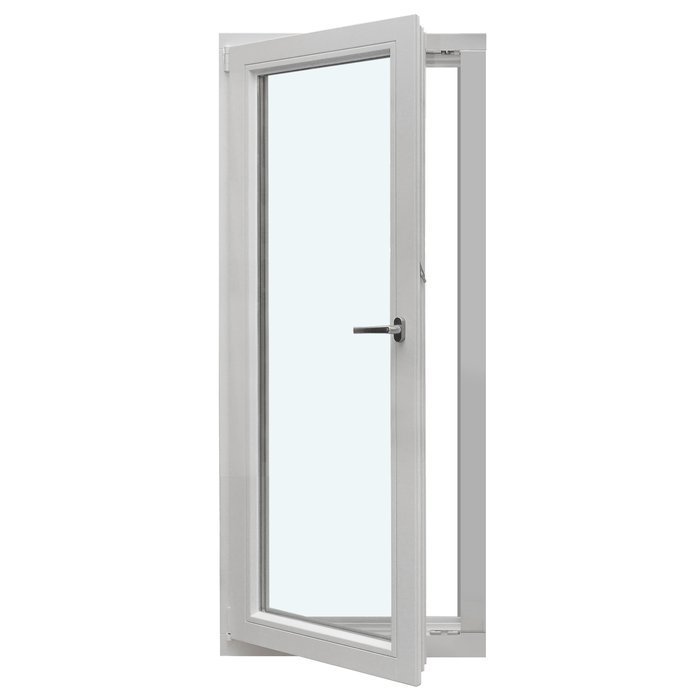
“Window” alone does not define either construction or use. Record whether each item is fixed, 1-leaf or 2-leaf and state exactly how it opens. Inward and outward operation require different clearance in a room, on a patio or on a balcony, and they change how the unit is used. If the drawing shows a direction that the written estimate omits, ask the supplier to confirm it in writing. Left or right handing must also use an agreed viewing position. A supplier code such as “left-hand” is not sufficiently clear unless the corresponding view is identified.
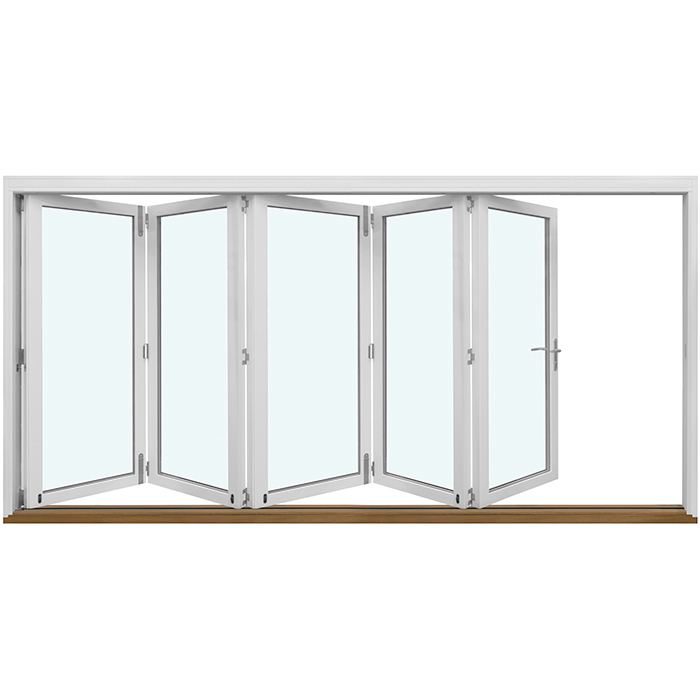
For large openings, intended use is often more important than the price of one line. A Patio Life lift-and-slide door uses a different operating concept from a hinged door, so glass area alone is not a useful comparison. Confirm which panels move, how people will pass through the opening each day, and whether the drawing works with the furniture, circulation route and outdoor space. For a 2-leaf door, identify the leaf intended for regular use. A proposed alternative should have its own description and price instead of quietly replacing another construction. That distinction shows whether the lower amount reflects a real saving or a different way of using the opening.
Check glazing performance and appearance separately
Do not let the glazing disappear inside a broad product description. For each item, identify the intended glass type, visible characteristics and any needs arising from the design or use of the room. Performance values are comparable only when they use the same basis: a glazing-only value does not automatically match a value for the complete window or door. Confirm whether every unit receives the same glazing or whether bathrooms, stairwells, main-floor rooms and roof areas use different versions. An unresolved glass specification affects appearance, daylight, privacy and cost.
Decorative bars need a second look. Record whether bars are surface-applied or glass-dividing; the terms do not describe the same construction. “Without decorative bars” should also be written down where an existing image or rendering creates an expectation. A fixed window can create a calm, broad glazed area, but it does not provide ventilation. Do not therefore assess a proposal by the number of large glass panes alone; consider the operable units in the same room. Where elevations are available, ask for item numbers on them. You can then check whether divisions, sashes and decorative bars in the quote match the façade being discussed.
03 / Pin down day-to-day details
List the hardware you will actually use
Everyday contact points often create more disagreement than the frame itself. Record the handles, colour and position, opening restrictors, lockable versions, ventilation positions and any other requested operating features for each item. “Standard hardware” does not explain what the quoted amount includes. Confirm which window sashes operate and how they are meant to be used. High-level openings also need a practical operating method. The final choice should suit the room and its users rather than relying only on a product name or showroom sample.
An top-hung outward-opening window may provide a different ventilation and operating arrangement from a side-hung unit. Check that this choice is clearly described in the quote and correctly shown on the elevation. For doors, lever handles, pull bars, lock side, closers and other visible fittings should likewise be included in the line or in a clearly referenced attachment. Do not compare a detailed specification with a lump sum that omits those details. Ask who makes the selection if hardware is to be decided later. Without a documented selection basis, it is impossible to know whether both totals cover the same visible and functional finish.
Define the complete door assembly
An exterior or patio-door item includes more than the moving leaf. Check the frame, threshold area, sidelights, transoms, opening direction, handle side and, where relevant, links to adjacent windows. An outward-opening panelled entrance door should be compared as exactly that configuration; the title alone does not establish further features. The interface with the finished floor is particularly important: ask which height assumptions are included in the price and who confirms them before ordering. If a sidelight is shown but not named as a separate or clearly included item, its inclusion remains uncertain. Also decide which drawing takes priority where documents conflict. If exterior view, interior view and quote text do not agree, the intended version must not be guessed from the cheapest or most detailed document. Have the affected item drawing corrected and reconfirmed.
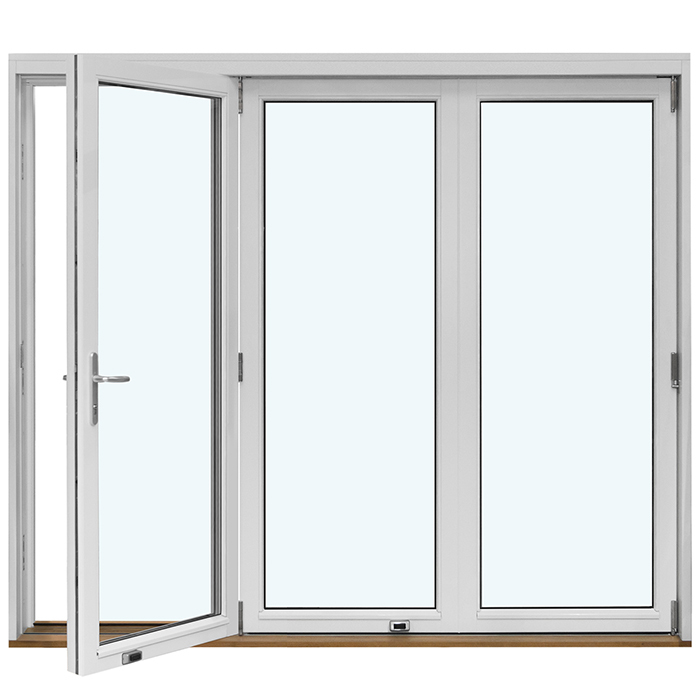
Patio doors also need to work with the route outdoors. A 1-leaf inward-opening patio door may take up room indoors, while an outward-opening version needs clear swing space outside. Compare the handing with furnishings, curtains, railings and paving without inferring more from a sketch than it shows. Where several units are joined, the quote should make the coupling and arrangement clear. Do not write only “confirm door details”; ask specific questions: “Is the sidelight included?”, “Which elevation governs?”, “Is the threshold included in this item?” Precise questions lead to more dependable revisions than a broad request for a complete package.
04 / Draw clear installation boundaries
Turn “installation” into a task list
A supplied unit and a completed installation are not the same scope. Separate delivery, removal of existing units, preparation of the opening, placement, fixing, connection to the building, sealing, trim, and interior and exterior finishing. An estimate that says “installation” may cover only fitting the new unit, while another includes several surrounding tasks. The better fit depends on your construction sequence, not on which list is longer. For any lump sum, request a short plain-language description showing what the installation team will do and what must be ready or completed by others.
Check interfaces with other trades early. Who removes the existing interior window sills? Who repairs damaged wall returns? Who coordinates the connections with insulation, plaster or façade work? Who ensures that later finishing is compatible with the installed unit? A modest installation amount may be reasonable when preparatory or finishing work has deliberately been assigned elsewhere, but it is not directly comparable with a broader proposal. Record access conditions as well: floor level, carrying route, floor protection and required clear space can all affect the work. Resolve these points in writing before ordering rather than treating them as assumptions at delivery.
Bring extras and exclusions into the open
Incidental work often explains the difference between 2 totals. Check packaging, transport, unloading, site protection, disposal, scaffolding, lifting equipment, coverings and cleaning. Finding a word in the estimate is not enough; its extent and the responsible party must also be clear. “Disposal included” might cover old units but exclude damaged wall finishes or other construction material. A lump sum may also contain small tasks that another supplier prices separately. Add an “included,” “excluded” or “unclear” column to the schedule, then note the practical result of every unresolved item: another contract, work you will arrange, scheduling coordination or an unknown cost. Missing cleaning and unassigned lifting equipment do not carry the same project risk.
Special constructions should not disappear within a general window item. A pivot roof window involves a different installation situation from a vertical façade window; compare related work only where it is genuinely described in the same way. The same applies to unusual formats, hard-to-reach openings or alterations to existing construction. For exclusions, always ask about the practical result: must another firm be hired, is the work by others, or will it be charged by time and materials? Do not demand an invented lump sum where conditions can be seen only after removal. A clearer approach is to agree how unexpected findings will be documented, discussed and commissioned only after approval. That protects both sides from unclear expectations.
05 / Approve one coordinated version
Keep base scope, options and discounts separate
Options cannot be mixed with committed work if the totals are to mean anything. Classify every line as included, alternative, optional or not offered. A removable option should not sit inside the same comparison amount as firmly ordered work. First calculate a like-for-like base containing only items supplied in the same configuration by the 2 suppliers, then add wanted options separately. Quantity discounts, promotional adjustments and early-payment discounts may change the amount due, but they do not prove that the scopes match. Also verify whether each figure is shown before or after tax and that tax treatment is presented consistently.
Review the calculation and its validity. Do unit prices multiplied by quantity match subtotals and the final amount? Is a discount assigned to particular products or applied only at the end? Could it disappear if an item changes? Ask which assumptions about final measurement, selections or site conditions have not yet been priced. A quote with transparent qualifications is not inferior to one without them; it at least identifies what remains to be decided. Bloomcabin provides a 5-year warranty for windows and doors. Estimated delivery is 4–6 weeks, subject to order confirmation. Neither point replaces checking the dates, services and conditions that apply to your own quote and order confirmation.
Control revisions from site measure to order
A careful estimate review can unravel if later changes are communicated only by phone or conversation. Maintain a revision log with the date, item reference, reason, previous description, revised description and approval status. Use it when the final site measure changes a dimension, reverses the handing or alters the glazing. Before ordering, confirm which documents form the order package. The estimate, drawings, measurement sheet, colour selection and accessory list should cross-reference one another. Recheck the confirmation against your schedule, since a reassigned item can be hard to spot among nearly identical units. Review more than the changed amount: a revision can also affect a coupling, sidelight or installation task. Request a complete updated package and clearly mark superseded versions as unapproved.
For example, an outward-opening folding-door system should not be confirmed merely as a “large door assembly.” Record the leaf arrangement, opening side, drawing revision and associated building opening. The same principle applies to every standard window. Agree who will answer open questions, by when, and at which point changes may affect price or timing. If a matter has not been decided, “still open” is better than an assumption made in conversation. Approve only when the product description and site assumptions align. That makes the order confirmation a controlled continuation of the quote, rather than a document first revisited at delivery.
Questions to ask
Is it enough if the 2 estimates show the same window count?
No. The count is only a cross-check. For every opening, compare the measurement basis, unit type, opening direction, glazing, hardware and installation work. 2 estimates for 10 windows may use different sash arrangements, fixed glazing or removal scopes. An itemized schedule shows whether the same 10 openings have actually been priced.
What should I do with a lump-sum installation item?
Ask for a written breakdown of the scope. In particular, clarify removal, fixing, connection work, sealing, trim, protection measures and disposal. The aim is not to price every site uncertainty in advance, but to understand included services, exclusions and the process for additional findings clearly.
Are different product names automatically incomparable?
Not automatically, but they call for review. Compare the configuration and use actually described, not just the heading. For different names, request details of opening type, number of leaves, glazing, fittings and drawings. An alternative should be shown separately so its price difference remains understandable.
Should I resolve open points before or after the final measure?
Resolve in advance all decisions affecting construction, use or the pricing basis. Final dimensions may be confirmed only at the agreed measurement survey. Document what may still change, who will be informed and when you approve the adjusted item. This keeps measurement-related revisions traceable.
How do I compare quotes with different overall scopes?
First create a common base total from identical, clearly described items. Then list additional work, options and exclusions separately. Decide whether to divide work deliberately or prefer a more comprehensive package. A lower total is not a saving when required work is missing from it.
Put it into practice
A dependable window or door estimate makes the same matters clear for every opening: the supplied unit, its location and operation, the installation work and anything still unresolved. Work through the opening references rather than comparing headings. Check completeness and correct allocation first, then practical use and perimeter work, and finally the like-for-like total in the currency stated on the estimate. An open question is manageable when it remains visible and is settled before approval. Bring the schedule to the order-confirmation review and the final site measure so the price comparison becomes a coordinated purchasing record for the entire project.
