
Setting Up a Garden Shed Art Studio: Light, Surfaces and Ventilation
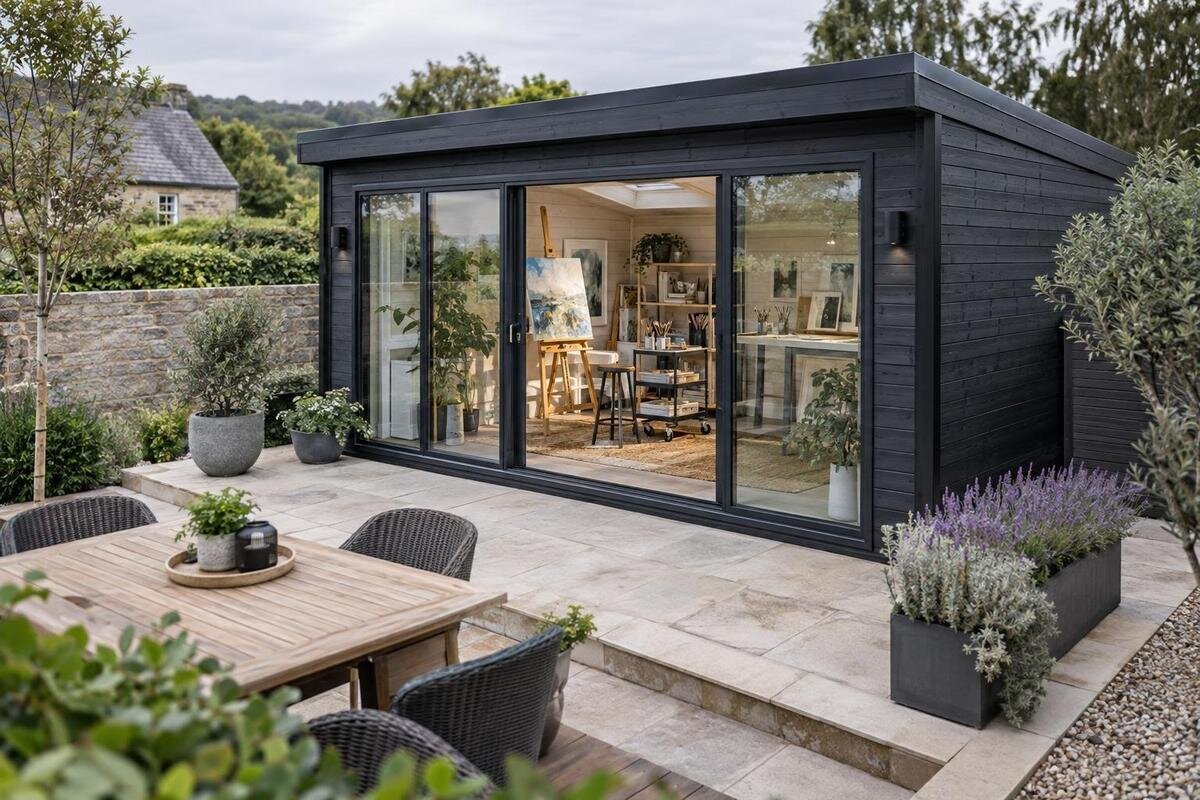
Garden shed planning
Setting up a garden shed art studio starts with the work you want to do, then turns that work into a buying brief. Natural light, cleanable surfaces and material-specific ventilation affect the building you choose as much as the table and easel inside it. Map the layout, test the site and confirm product details before ordering; a shed’s name or photographs alone cannot tell you whether its interior will suit your practice.
Before you order 1
Define the work the studio must support
Start by listing the kinds of art you plan to make, the largest piece you expect to handle and whether you usually sit, stand, use an easel or spread materials across a table. Choose two typical projects and one demanding exception; note the stages from setup through drying and cleanup. Drawing and painting may need a clear vertical work face, while printmaking, collage or model-making can depend more on a stable horizontal surface. These choices affect where task lighting, outlets, walkways and a drying area can fit. Note whether your processes create splashes, dust or odours, so the studio brief reflects your actual practice.
Separate permanent stations from occasional equipment. A large easel, paper cutter or drying rack can occupy room even when it is not in use; items that need to stay accessible should not take over the main tabletop. Decide whether finished work will be stored in the shed or carried elsewhere, and allow a clear route to the exit. Group frequently used supplies by the activity they support, so setup does not require repeatedly crossing the room with wet or sharp materials. Review the product page for Verdana 1 only against details it actually confirms. A model name or styled image cannot establish a workable layout, so request missing measurements or opening positions before treating the shed as a fit. If your practice may expand into spraying or substantial sanding, include that in your plans because it can change ventilation needs.
Size the interior around full-scale work
Draw the shed’s usable interior to scale, then place the worktable or easel before adding shelves. Include the space needed to pull out a chair, turn a canvas, open drawers and walk between the station and the door. Compare interior measurements with the listed outside footprint: exterior dimensions do not necessarily show the clear space left after walls, posts or sloped areas are accounted for. Measure furniture you already own, including its working depth with a chair pulled back. If you alternate between seated and standing work, mark both positions rather than assuming one arrangement will serve every task.
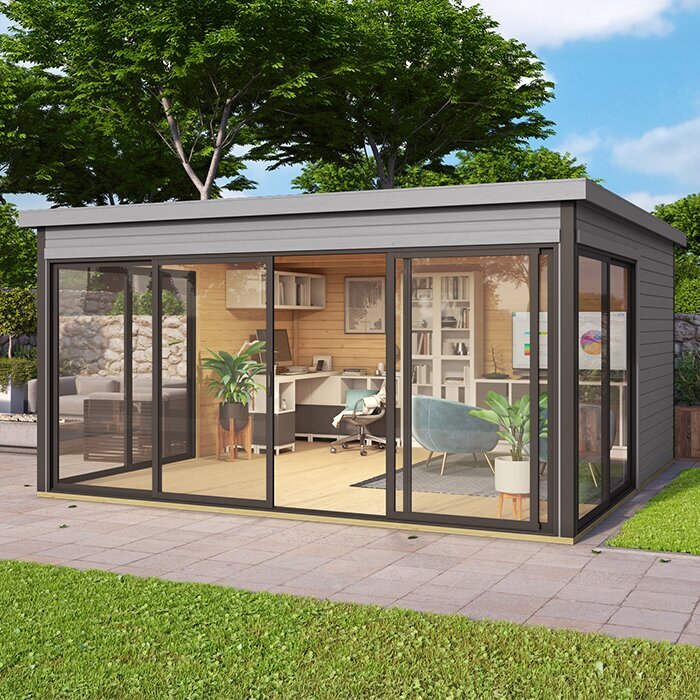
Draw doors and windows in their stated positions, including the space needed for a swinging or sliding door; an opening is not automatically usable wall space. Check that a canvas, paper roll or boxed material can pass through the entrance. If you need to carry large work inside, consider the full route from the yard as well as the doorway. Also allow for the clearance needed to set an item down safely once it is inside, rather than measuring only the narrowest point. Use the Verdana 2 product listing only after comparing its stated measurements with your drawing. If interior dimensions or opening locations are unclear, ask for a floor plan or written confirmation instead of estimating from a photo.
Before you order 2
Test natural light at the proposed site
Daylight depends on the shed’s openings and its surroundings. Observe the proposed site at different times of day and, if possible, in more than one season; nearby buildings, fences and trees can change how much light reaches a window. A position that seems bright in the morning may be shaded later. Note both the strongest direct sun and the dullest conditions in which you expect to work. Mark where the easel or table would sit while observing: a bright opening is useful only if it lights the work face without pushing the station into a walkway.
For a purchase comparison, note opening locations and orientation from details stated on the product page or confirmed by the seller. The Durano garden-house page belongs on the same checklist as any other candidate: use confirmed information about glazing and dimensions to assess where daylight could reach the work area, and ask if it is not stated. Record obstructions such as a fence, mature planting or a neighbouring structure, since their effect may be more important than the general compass direction. A simple site sketch showing the building position, nearby shade and main work station makes the comparison more specific. It can also reveal whether the wall with the most useful light is one you can actually use.
Control glare and plan task lighting
Test the proposed work position with a blank sheet, a colour sample and a finished piece at the angle you normally use. Check for bright patches, reflections and shadows that make details hard to see, and repeat the test at the times you expect to work. Try the check from seated and standing positions if you use both. If moving the table changes the result, put both possibilities on the plan before ordering. Glazing, exterior shade and interior coverings affect light differently, so do not assume that one bright window will light every station evenly.
Plan task lighting for overcast days and evening work, with the light directed at the work rather than reflected into your eyes or onto a screen. If you make colour-sensitive work, compare materials under the light you will use when judging finished pieces; daylight and electric light can make colours appear different. Think about where a portable lamp could stand without crowding the bench or creating a cable across a walking route. Check published information for any fixture you are considering, and have a qualified electrician assess new wiring or fixed lighting. The Veltor 1 listing can also be compared on paper, but any judgement about glare depends on confirmed opening details and your own light test.
Before you order 3
Choose work surfaces for your materials
Choose a tabletop for the marks and cleanup it will need to handle, not just its appearance in a photograph. Paints, inks, clay, cutting work and adhesives have different cleanup requirements. A porous top may retain stains, while a harder one can still be scratched or damaged by an incompatible cleaner. Check care guidance for both the surface and the materials you use. A removable cutting mat, palette or tray can protect a worktop for particular tasks; test a cleaner on an inconspicuous sample before using it across a larger area.
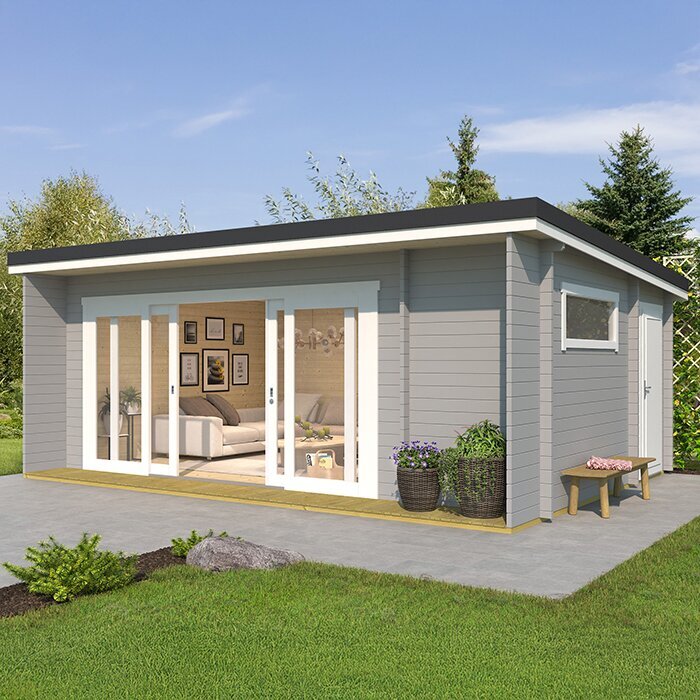
Decide whether the shed’s floor or interior finish, if any, is suitable as supplied or needs a protective covering. The word wooden in a model name does not mean a surface is sealed, washable or ready for studio use. Consider where spills, wet work or cleanup are most likely, so protection is placed where it will be useful rather than added after damage occurs. Ask what is included and what finishes are compatible with your planned materials. For the Orello 1 product page, look for explicit information about floor and wall finishes, and request clarification on anything omitted. Do not assume that a photograph shows the surfaces or accessories included with an order.
Arrange tables, easels and wall-mounted tools
A studio may need more than one work position. Plan a main bench for routine tasks, an easel or drawing board if needed, and a separate place where a piece can remain untouched. Think through the order of each activity: supplies should be reachable from the active station, while a drying area should not turn into a passageway. A movable or folding table can preserve flexibility, but only if it is stable for the work and can be stored without blocking access. Add the actual sizes of your equipment to the same drawing.
Wall space can hold tools, paper or reference material, but fixed fittings take up usable area and need suitable support. Do not assume a garden-shed wall is designed to hold every item; confirm suitable fixing points with the seller or a qualified installer before attaching anything heavy. Leave enough clear wall area to lean a canvas temporarily or move a piece from the bench without knocking stored tools. Include the height and reach of your largest work as well as the table footprint. When assessing the Modano 1 listing, compare confirmed interior dimensions and opening positions with your plan, and ask about any details you cannot find. The model name alone cannot show whether a station will fit.
Before you order 4
Match ventilation to art materials
Ventilation needs depend on the materials and processes you use. Read labels and Safety Data Sheets for paints, adhesives, cleaners and other products, and note any stated ventilation or dust-control requirements before deciding how the shed will be used. A space used for occasional drawing has different demands from one where you sand or apply coatings. Do not treat a window or door as proof that the air exchange is suitable for every medium; the material guidance and the actual room setup both matter.
If you expect to use solvents, sprays or resin, or to do substantial sanding, seek advice from a qualified ventilation professional before ordering or outfitting the space. They can assess your planned work and suitable equipment rather than relying on guesswork; avoid improvised fans or generic rules about opening size. Keep product containers and cleanup materials organized so you can follow their label directions consistently and avoid using the studio as general storage for incompatible supplies. The Wooden Garden Shed M page is another listing to assess against the opening details it states. If those details are missing, ask the seller and compare the answer with the requirements for your materials.
Plan for seasonal use, moisture and power
Decide whether you will use the studio only in milder weather or through changing seasons. A garden shed is not automatically a conditioned workspace, so check stated information about insulation, glazing, flooring and weather protection rather than assuming year-round comfort from its appearance. If your work or stored materials need more stable conditions, ask how the specified construction responds to temperature and moisture changes and whether additional work may be needed. A building professional can advise on the site and intended use; do not rely on an unverified assumption that a small heater will resolve every issue.
Plan lighting and power before the shed arrives. List the lamps and equipment you intend to use, then ask a qualified electrician whether the proposed supply and installation suit your needs; do not improvise wiring. Include where switches, outlets and charging equipment would be convenient for the planned layout, while keeping work surfaces and movement routes clear. Consider how an unheated interior or outdoor exposure could affect electronics and stored materials, following the manufacturers’ instructions. Assess the Wooden Garden Shed S listing alongside other candidates by checking exactly what its page states about construction and included features, then asking about details that matter for seasonal use.
Before you order 5
Compare specifications and ordering details
Compare each candidate using the same record: confirmed interior and exterior dimensions; door size and opening type; window positions; floor and wall finish; materials; stated maintenance; included components; and any available drawings. Keep seller-confirmed information separate from assumptions based on photographs. For an art studio, check whether a large canvas, workbench or finished piece can pass through the entrance, and whether the work area remains usable when doors or windows are open. Mark missing details as unanswered rather than filling gaps with a guess.
Before ordering, ask what site preparation, assembly and anchoring requirements are specified, and whether those tasks are included or arranged separately. Have a qualified professional review site-specific foundation or building questions. Confirm the delivery method, unloading responsibility and access route to the chosen location; ask about package dimensions if they affect that route. Check whether gates, turns, overhead branches or ground conditions could prevent materials from reaching the prepared site. Check any location-specific requirements with the appropriate authority. Keep important answers in writing so you can compare candidates on the same basis and know which arrangements still need to be made.
Budget for the complete studio setup
Include more than the shed in your project budget: consider site preparation, assembly, any required foundation work, a bench or easel, surface protection, window coverings, task lighting and any ventilation work advised for your materials. Costs and inclusions vary, so get relevant seller or contractor quotes rather than assigning assumed amounts. Ask whether each item or service is included, separate or your responsibility. A photograph of a furnished space does not establish that equipment comes with the building.
Allow for unresolved items such as a professional assessment, changes to the route into the site or material-specific additions. Set aside a modest contingency for details that cannot be priced until the selected building, site and studio use are confirmed, rather than borrowing from the budget for essential safety-related work. Compare shortlisted garden sheds by total setup cost alongside confirmed interior dimensions, openings, surfaces and seasonal requirements. If a quote omits something important, mark it as pending instead of treating the candidate as less expensive. Resolve the essentials before ordering, so your budget reflects the studio you intend to use rather than only the building shown in a listing.
Frequently asked questions
Which window orientation is best for a garden shed art studio?
There is no universal best orientation. The result depends on nearby shade, the position of the openings and when you work. Observe the proposed site at those times and test where a table or easel could sit. Use opening details stated by the seller rather than relying on a general rule or a single photograph.
Can natural light replace studio lighting?
Daylight changes with the weather and time of year, so plan task lighting for cloudy conditions and evening work. Check how the lamp presents colours alongside the materials and finished pieces you use. If colour accuracy matters, assess your work under the lighting you will rely on rather than assuming a bright window provides a constant reference.
What kind of work surface should I choose?
Choose a surface based on what it will contact and how you clean it. Check its resistance to stains and scratches, along with compatibility guidance for your art materials and cleaners. A removable mat or tray can protect a bench during cutting or painting, but it does not replace checking the finish underneath.
Is opening a window enough for ventilation?
Not necessarily. Ventilation needs depend on the products, processes and actual room setup. Follow product labels and Safety Data Sheets; for solvents, sprays, resin or substantial sanding, get advice from a qualified ventilation professional before setting up. An open door or window is not a universal substitute for the ventilation a material requires.
What should I confirm before ordering a garden shed for art?
Check usable interior dimensions, entry size, door and window positions, included floors or finishes, and stated assembly or site requirements. Confirm delivery access and which preparation or professional work is separate. Ask the seller to clarify missing details in writing, and consult local authorities or qualified professionals where site rules or technical requirements apply.
A useful garden shed art studio is one whose confirmed dimensions, openings and site requirements match the work you intend to do. A scaled layout, a daylight check and surface and ventilation decisions based on your materials make product comparisons more reliable. Resolve missing details before ordering, and include the work area and any necessary professional input in the budget. The result is a purchase shaped around how you make art, rather than a space that needs rethinking once it is in place.
