
Can Screens or Lighting Be Added to a Pergola Later?
Pergola ownership and upgrades
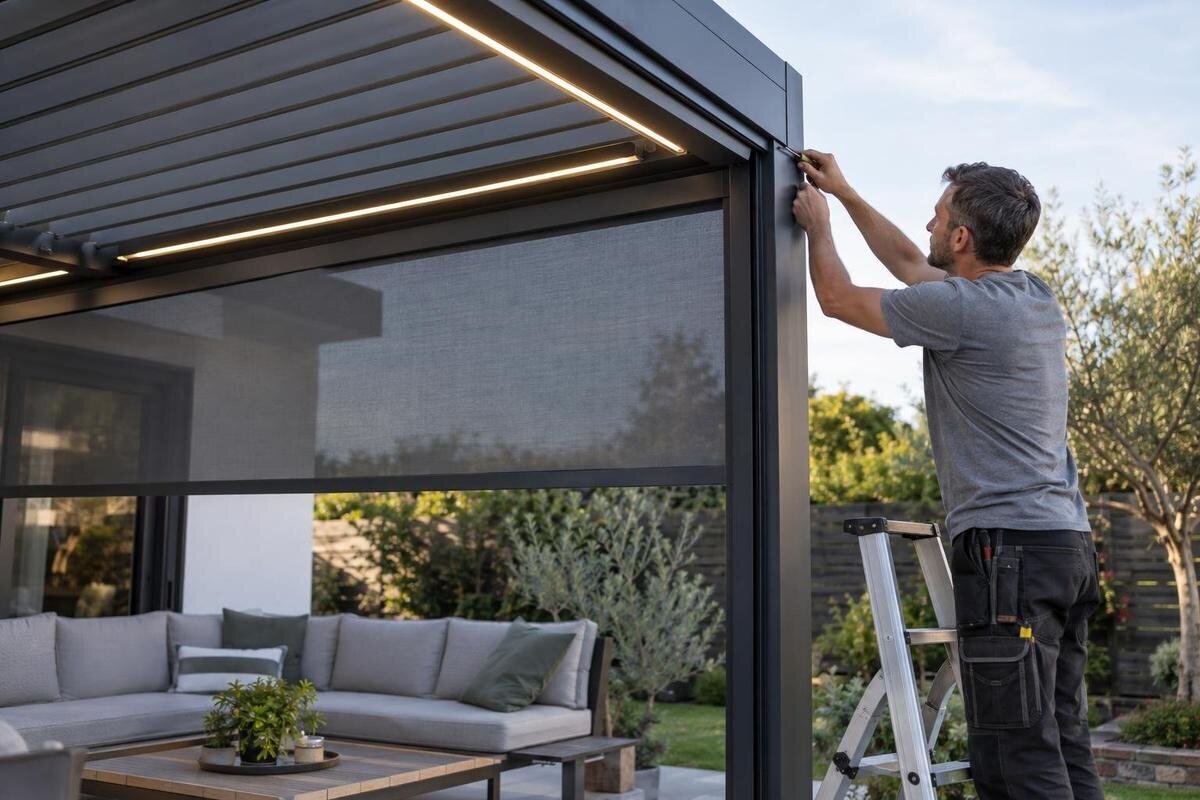
Adding screens or lighting after a pergola has been installed may be possible, but appearance alone cannot tell you whether the frame, fixing points, cable route or controls will accept them. A retrofit has to suit the exact model and revision, the structure as installed and the accessory proposed. Screens affect openings and supports; fixed lighting adds a separate electrical and control question. Treat this as a compatibility check before buying parts, not as a matter of choosing a fitting and attaching it.
Is a pergola retrofit always possible?
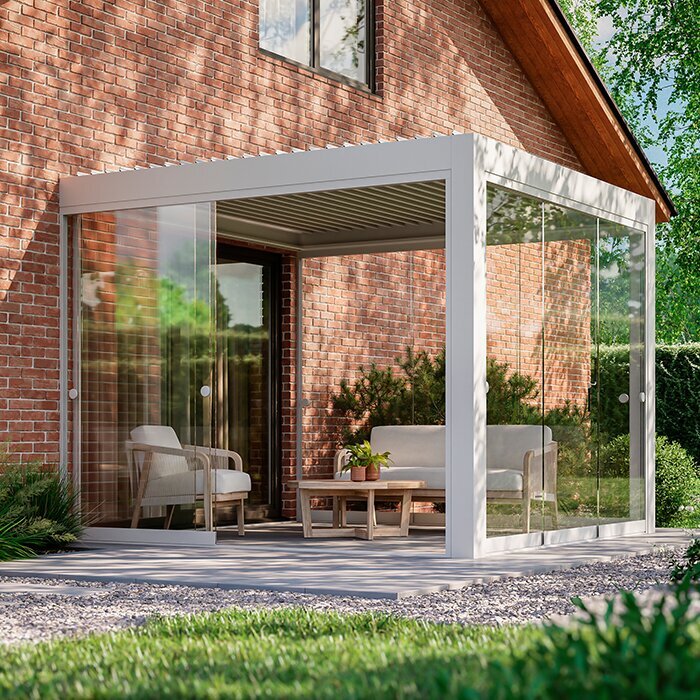
No, a retrofit is not always possible. Some systems are designed to accept named side screens, lighting kits or other accessories, while others may lack the necessary fixing points, clearances, wiring provision or controls. Even when an accessory was offered at the time of purchase, it may suit only certain sizes or revisions, and matching components may no longer be available. A similar-looking frame, or a product sold under the same brand, is not proof of compatibility. The answer depends on the exact model, version, accessory and the way the structure was installed. Treat a later addition as a product-specific upgrade, not a generic fitting.
Check screens and lighting separately, even if you want both. A screen needs a permitted way to attach, clear space to travel and suitable support; fixed lighting needs an appropriate fitting, cable route, supply and control arrangement. Combining them can introduce another clearance or operating question, especially where the systems share an area or control. A removable battery lamp may avoid permanent wiring, but it still needs to suit outdoor use and stay clear of moving parts. Ask what the manufacturer approves for this exact structure, and what the installer must confirm on site. Some upgrades may need a complete kit with matched components rather than separate parts. Approval for one accessory does not automatically extend to another.
Identify the exact pergola model and version
Gather the order confirmation, invoice, model name, product code, installation date and any serial or revision reference shown in the paperwork or on an accessible label. Keep the assembly manual, parts list, technical drawing and later service records together. If your paperwork identifies Bloomcabin Pergola, include that name in the enquiry; the product page helps distinguish the named product family, but cannot identify the version fitted at your home or confirm that an accessory fits it. Do not dismantle a post or electrical cover to look for a label. If the installer left a handover pack, check it before relying on a current online image. A clear photo of an accessible label can also be useful.
The version matters because product ranges and accessory details can change over time, and a current manual may show a different arrangement from an older installation. Match the documentation to the purchase record rather than relying on a similar-looking photograph. If a code is missing, ask the original seller or manufacturer to identify the right manual using the information you do have. Note any replacement parts, repairs or later modifications, as these may affect what is present now. A model name alone is only a starting point; ask for confirmation against the actual unit and its installation date. If the date is approximate, say so rather than guessing.
Check the screen fixing points
Read the model-specific installation and accessory documents for an expressly named screen kit, designated attachment points, guide channels or stated frame provision. The key evidence is an approved interface for the exact model and size, not simply that a rail can be held against a beam. Do not assume a hollow section, trim piece or decorative cover is a fixing point; drilling or adding arbitrary brackets can affect the frame and the accessory's operation. A screen also changes how an open side is exposed to wind, so its attachment and permitted use need to be confirmed for the structure. Look for an explicit accessory reference, not just a general drawing.
Ask the manufacturer or approved service provider to identify the fixing location and all required brackets, reinforcement and clearances from the relevant drawings. If the instructions do not mention screens, treat that as an unresolved question, not proof that any generic screen will work or that retrofit is impossible. For an enquiry about a Bloomcabin Bioclimatic Pergola, include the complete model and version and ask the provider to identify the relevant accessory drawing. For a pergola already erected, have a qualified installer review the actual frame and attachment before ordering a kit.
Specify the screen type and opening
Be specific about the screen. A roll-down blind, a guided side screen and a fixed privacy panel have different mounting and clearance needs; they are not interchangeable just because each covers an opening. Decide which side or sides you want covered, whether the screen should move, and whether manual or powered operation is being considered. Note nearby doors, steps, taps, lights and furniture that may restrict access or the screen's travel. If the pergola has moving roof components, the screen must not obstruct their movement or maintenance access; check the instructions for the exact model rather than assuming the openings are standard. State the intended use as well as the product type.
Measure the proposed opening using the supplier's method and record posts, beams and anything that projects into the space; the overall footprint is not the size of a side opening. Ask the supplier to confirm usable width and drop, guide and cassette positions, and acceptable tolerances for the installed structure before you buy. The listing for the regular Bloomcabin Pergola identifies a model family, not a dimensioned screen-fitting drawing, so use the matching manual or an approved measurement visit for those details. A screen that is too narrow, too long or fixed in the wrong place can leave gaps, restrict access or interfere with other fittings. Provide measurements for verification rather than cutting parts to suit.
Lighting options and cable routes
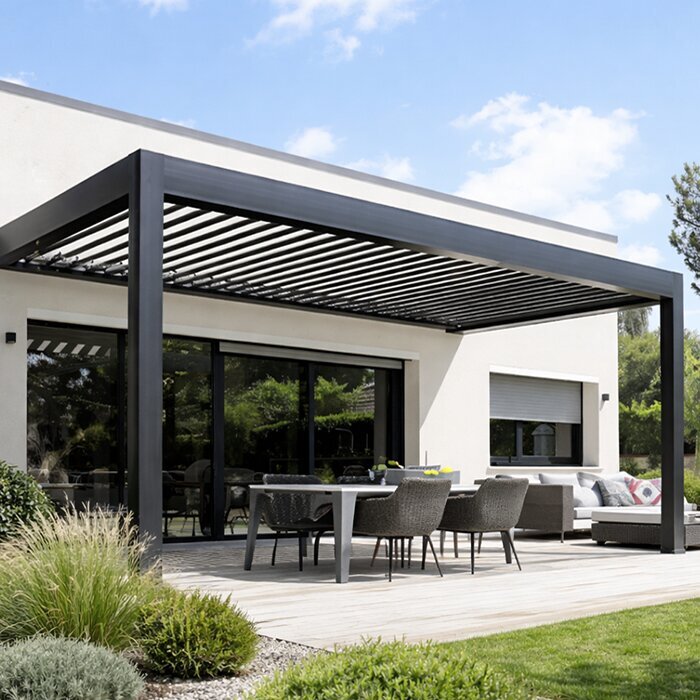
Lighting has a separate electrical compatibility question. Decide whether you want a removable lamp, a plug-in fitting or a fixed lighting system, because the amount of alteration and the control requirements differ. A nearby power point does not prove that the pergola has an approved cable route, provision for the proposed system or a compatible controller. Outdoor exposure also matters: equipment and connections must be selected for where they will be used. Do not choose a fitting on appearance alone or assume a hollow-looking beam is intended to carry a cable. If you are comparing options, describe the intended position and how you expect to switch the lights on.
For fixed wiring, ask the manufacturer or approved service contact for the permitted route and connection details, then have the electrical work assessed and completed by a qualified electrician under the service requirements for the system. Do not drill a post, open a housing or feed a cable through the frame on guesswork. If the original electrical arrangement cannot be identified, pause until the route and proposed equipment are confirmed. When enquiring about a Bloomcabin Wall-Mounted Pergola, include its version and details of any existing lighting. Ask who is responsible for checking the structure and wiring before work begins.
Check controls and moving parts
Ask how each accessory will be operated. A screen may be manual or motorised; a light may have its own switch or be intended to work with a separate controller. Do not assume an existing remote, wall switch, motor or control unit can operate a new accessory, even when the manufacturer is the same. Ask whether the proposed kit needs a dedicated power supply or control, whether it can operate independently, and which parts must be supplied together. If you want one control for several functions, say so at the enquiry stage and request a written compatibility answer. Establish whether the accessories can be operated separately when another system is being serviced. Do not try to pair or rewire devices by trial and error.
Check how proposed items relate to any moving parts. A fitting or cable route must not interfere with a retracting screen, adjustable roof, access panel or routine maintenance. Verify clearances and operating sequence in the manual for the precise model, and ask an installer to confirm the arrangement on site. If your order identifies the product shown on the bioclimatic pergola model page, specify which existing functions and controls you want to retain when adding the accessory. Keep each accessory's own instructions with the pergola records so later servicing does not rely on memory. If the controls are separate, record which device operates each function.
Assess the pergola as it is installed
Documentation describes the intended build; a retrofit must also suit what is actually on site. Confirm that posts and beams have not been altered, that previous fittings have not occupied proposed fixing points and that the installed supports match the manual. If the pergola is attached to a building, its existing attachment and supporting surface are part of the assessment; do not treat cladding or a decorative wall finish as a structural fixing. A freestanding arrangement has its own post and frame details. The installer should establish the permitted fixing method and whether the site needs further professional assessment before a screen or lighting bracket is added. Note any changes or previous repairs for them.
Arrange an on-site review if drawings cannot establish the connection, the frame has been modified, or a screen would attach to a part not named in the instructions. Do not make structural calculations from a photograph or copy a fixing pattern from a different model. The wall-mounted pergola product page is a useful product identifier if that is the name on your order, but it cannot establish the condition of the supporting wall or fixings at your home. A qualified installer or service team needs to review the actual installation and specify any approved work. If no accepted mounting method is documented, wait for that assessment before buying hardware.
Find matching parts before ordering
Compatibility depends on component availability as well as on the frame. A screen cassette, guide, bracket, fabric, motor, light fitting, connector or controller may be specific to a product generation; a part that looks similar can have different interfaces. Ask for exact part numbers and confirm that the proposed set is approved for your model, size and revision. Do not buy a generic rail or substitute a motor because its dimensions appear close. If your paperwork identifies the model shown in the regular pergola product listing, include the full order details with the enquiry. Ask about parts for that version rather than assuming that a current listing means older components remain available.
Ask whether all matching pieces are still supplied, whether an adapter or additional component is required, and whether a discontinued item has an approved replacement. Confirm the finish and complete parts set before paying for an incomplete kit; one unavailable bracket can prevent the planned installation. If the original accessory is no longer supported, request an approved replacement or upgrade assessment instead of combining old and new parts by trial and error. Ask, too, whether the proposed change affects the terms of any guarantee and who is qualified to install or service it. Keep the answer with your product records, since a later repair may depend on the same reference.
Prepare a useful compatibility enquiry
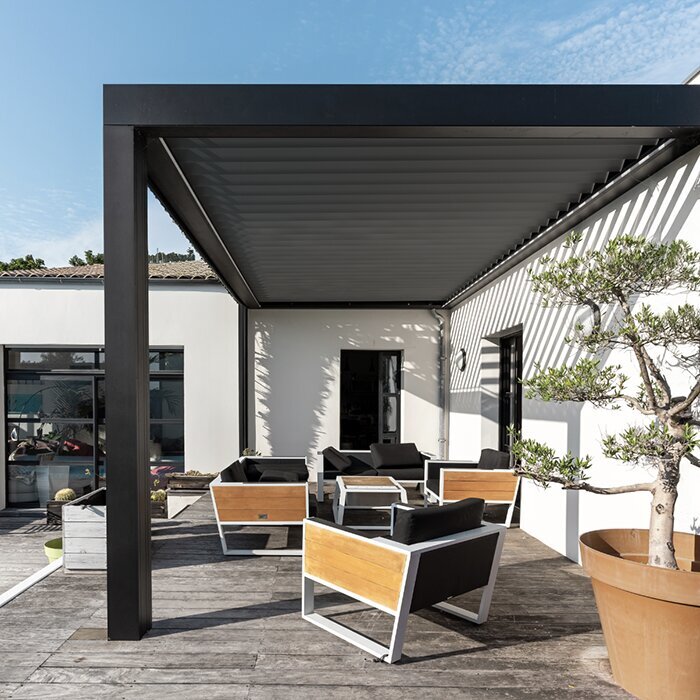
Send a focused enquiry rather than a single photograph. Include the model and any product or revision code, purchase or installation date if known, relevant manual pages, and a clear description of the screen or light you want. Add ground-level photos of the whole pergola, each proposed side, the relevant beam or post and any existing controls or cable access already visible. Include opening measurements taken using the supplier's method and note previous changes. Do not climb, remove covers or expose wiring to obtain a better image; if a label cannot be reached safely, say so. A simple sketch marking the proposed accessory can remove ambiguity.
Ask the supplier to confirm in writing the exact accessory and part codes, whether the structure has the required fixing provision, what cable route and control arrangement are approved, and whether matching parts remain available. Request the applicable manual or drawing and ask whether a qualified installer or electrician needs to inspect the site. If your paperwork identifies the model shown in Bloomcabin's bioclimatic pergola listing, include that model reference alongside full version details. A useful reply should separate what is confirmed from anything that still requires an on-site check, and identify who will carry out that check.
Choose an approved retrofit or leave it unchanged
After the checks, possible outcomes include a compatible accessory kit, an approved replacement arrangement, a different non-fixed lighting option, or no retrofit. A supplier's silence about a part is not confirmation that it fits, and an unavailable matching component is not a reason to alter the frame yourself. If a proposed screen or light needs an unverified fixing or cable route, pause the purchase and ask for an approved alternative. A removable lighting choice may avoid permanent cable work, but still needs to suit outdoor use and remain clear of moving elements. Choose based on confirmed fit and scope, not convenience alone.
If you are choosing a pergola now with future upgrades in mind, ask the seller to name compatible screen and lighting options, the exact sizes or revisions covered and whether parts are available separately. Check whether the screen and lighting systems are suitable as a combination, not just individually. Keep the answer, manual, drawings and order record together. Do not rely on a general promise that something can be added later; a specific accessory reference and a way to check future availability are more useful. Planning the intended arrangement at purchase can avoid trying to match old controls or parts later, whether you eventually proceed with a retrofit or leave the structure as it is.
Frequently asked questions
Can screens be added to any pergola?
No. Some pergolas have compatible accessories; others may lack documented fixing points, clearance or control provision. Check the exact model and version against its instructions, and have the installed structure assessed if needed.
Does a pergola need to be pre-wired for lighting?
Not for every type of lighting. A removable option may not need permanent wiring, but a fixed system needs an approved route, suitable equipment and compatible supply and controls, assessed with the manufacturer and a qualified electrician.
Can I drill the frame to attach a screen?
Only if the fixing method is confirmed for your model. A bracket that physically fits may not use a designated fixing point or be approved for the forces involved. Confirm the fixing method and have the structure assessed before drilling.
What if the matching screen or light has been discontinued?
Ask the original seller or manufacturer about an approved substitute or replacement, using the exact model, version and part numbers. Do not assume a similar-looking rail, fabric, motor or controller will work.
What should I send with a compatibility enquiry?
Provide the model and version, purchase or installation date if known, manual pages, clear ground-level photos, opening measurements and a description of the intended accessory and controls. Ask for written confirmation of fixing points, wiring, parts availability and any site check.
Adding screens or lighting later is sometimes feasible, but the answer rests on documented compatibility, not a visual match. Confirm the pergola's exact version, approved fixing points, clearances, cable route, controls and current parts before committing. Screens need the right structural interface; fixed lighting needs qualified electrical planning. Where compatibility remains uncertain, an approved replacement or a decision not to modify the pergola is safer than improvising. Keep the exact manual and parts references with your pergola records so a future upgrade starts with its real specification.
