
Black Friday Pergola Offers: How to Read Wind, Rain and Snow Specifications
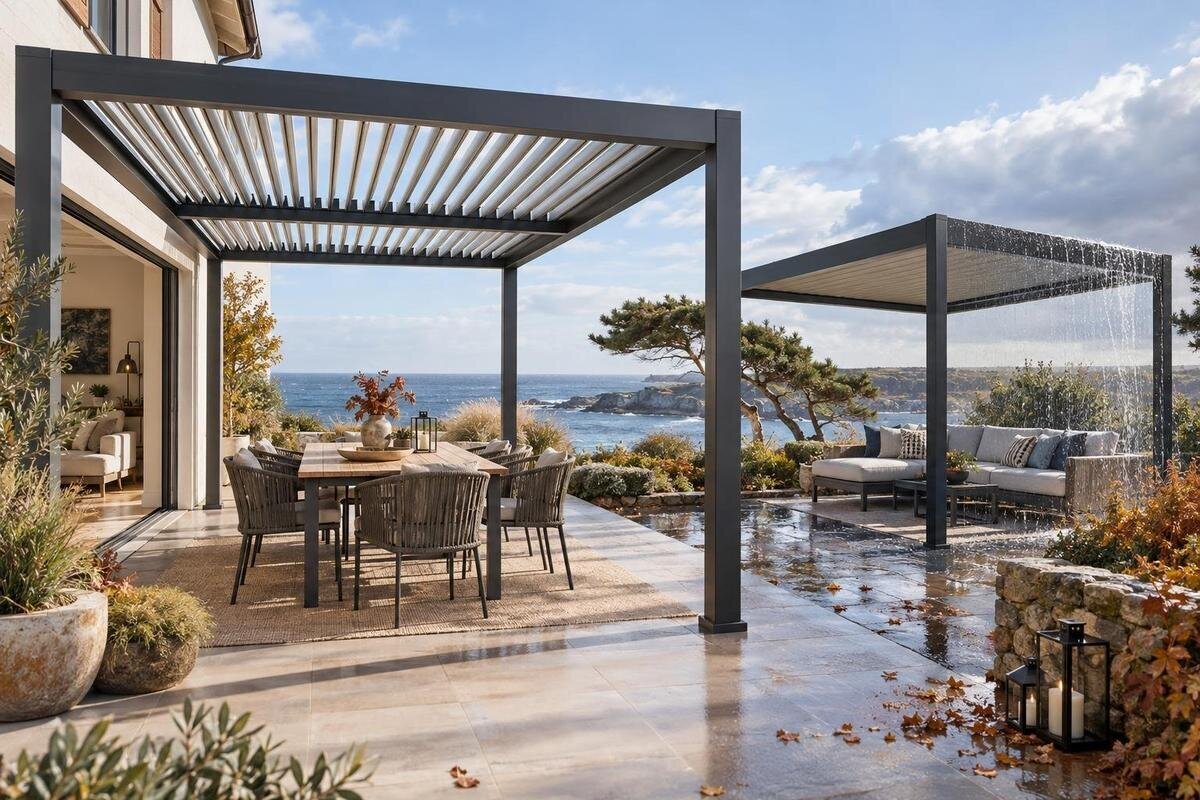
Seasonal buying guide
Black Friday pergola offers can make two listings look easy to compare: a price, a photograph and a few weather claims. The important detail is what each claim actually covers. A wind figure may depend on roof position; a rain description may refer only to water running off the cover; and a snow-load value may apply to one configuration rather than every version. This guide explains how to read those details before weighing up seasonal prices. Treat the seasonal label as separate from the product evidence: check each pergola’s own documentation and ask for missing information before you decide.

01
What a weather specification tells you
Treat a weather specification as a statement about performance under defined conditions, not a promise that a pergola will suit every garden or every storm. Before comparing values, identify the exact model and configuration, then note whether the information comes from a product page, technical sheet, manual or written reply. A useful figure names what is measured, gives its unit and explains the conditions behind it. Without those details, a short feature label may prompt questions, but it is not a reliable basis for comparing two products. The Bloomcabin pergola product page is a listing to inspect for documentation, not proof of any particular wind, rain or snow rating.
Check whether each claim applies to the complete assembled structure or only to one element, such as the roof covering. Look for stated limits on roof position, included components and exclusions. A number beside a photograph or brief description may leave those questions unanswered; that does not prove the pergola will fail, but it does leave an evidence gap. For a seasonal purchase, write down what each listing actually says and what remains unclear. This helps prevent a low headline price or a polished image from making an incomplete specification seem equivalent to a detailed, relevant one. The same notes are useful if a seller replies with a separate document.
Wind ratings: check the unit and test conditions
A wind claim may be given as a maximum speed, with units such as kilometres per hour or metres per second. Check whether it refers to gusts or steadier wind, which exposure or test setup applies, and whether the roof is assumed to be open, closed or in another position. A speed figure is not the same type of measure as wind pressure or force, so do not compare the numeral alone. If the units differ, ask the seller for a like-for-like comparison based on the stated conditions. If a value has no unit, or is presented without its basis, ask for the complete specification and supporting document. Do not treat a quoted maximum as a safe operating threshold unless the documentation clearly defines what it represents.
Look for the tested or declared configuration as well as the number. A document may cover only a particular size, roof arrangement or set of fitted components; verify its stated scope rather than guessing whether a change affects performance. A rating for one setup may not automatically apply with optional screens fitted or with the roof in a different position. If a listing says only ‘wind resistant’, ask what that means in measurable terms and where the definition appears. The bioclimatic pergola listing should be assessed from its own documentation; its name alone does not establish a wind rating.
02
Consider wind exposure at the proposed site
Wind exposure at the proposed site is a separate question from a product’s published rating. Note whether the location is open, sheltered by buildings, close to a boundary or exposed from more than one direction. These observations help a manufacturer or installer understand the setting, but they do not produce a safe wind limit. Nearby structures can block wind in one direction and affect its flow in another, so a garden that feels calm at ground level may not match assumptions in a document. Record the main obstructions and open sides rather than labelling the site simply sheltered or exposed.
Roof position and fitted accessories matter too. Read the model-specific instructions for the positions permitted in different conditions and any stated limits on leaving screens or other additions in place. Do not assume a single rule applies to every design. A wall-mounted description identifies a type of listing; it does not establish that a particular wall or connection is suitable. Ask the manufacturer about the rating conditions and have a qualified installer assess the proposed attachment and site. The wall-mounted pergola listing is a page to examine, not a guarantee of suitability for your wall.
Rain claims need a clear definition
Rain claims need their own definition. Words such as ‘water-resistant’, ‘rainproof’ and ‘waterproof’ can sound conclusive, but the listing should explain what they mean for that product. Ask whether the statement applies to a closed roof, all joints and edges, or only to the cover’s ability to direct ordinary rainfall away. Wind-driven rain can approach from the sides, while gaps and junctions may behave differently from the roof surface. Unless the documentation says so, do not read a general rain claim as a promise that every part of the area underneath will stay dry.
If a page gives a rainfall figure, such as a rate in millimetres per hour, check whether it is a tested result, what duration and roof position it relates to, and whether it covers the whole assembled pergola. Also ask where water drains and which channels, gutters or outlets are included in the configuration being priced. A roof that directs water to an edge still needs a suitable route away from the area in use; a product description may not answer that practical question. A drainage description also does not, by itself, say that paving or furniture will stay dry. Keep the pergola product page separate from assumptions not backed by its documents.

03
Roof position affects rain cover
A roof that opens or changes angle needs to be assessed in each relevant position. With a louvred design, an open position is not equivalent to a closed one for rain cover; a fixed roof raises different questions, including how its joints and edges are described. Ask for the weather information for the position you expect to use, rather than inferring performance from a photograph or from the broad roof category. If the page gives one rain statement but no operating position, treat that as an unanswered point, not evidence that every setting has the same behaviour.
Think about what protection you actually need: shade with occasional showers in mind is a different expectation from a reliably dry seating area. This is not a claim that one roof type meets either need; it is a way to decide what evidence to request. Check how the manufacturer describes rain entering from the sides, runoff at the perimeter and any included drainage components. Also consider where water falls as it leaves the structure. The Bloomcabin bioclimatic pergola page should be compared on those documented details, without assuming anything about its roof position or water performance from the product name.
Snow-load figures and their limits
A snow-load claim should state the value, unit and part of the structure it covers. Figures may use units such as kilograms per square metre or kilonewtons per square metre; check the exact unit and compare figures only where the stated scope and conditions align. Ask whether the value applies to the entire roof and assembled structure, to a specified size, and to a particular roof position. A phrase such as ‘snow resistant’ without a stated basis does not tell you how much accumulation is covered. Do not infer capacity from the roof’s appearance, material or the fact that a similar-looking pergola remains standing elsewhere.
Snow does not always sit evenly: wind can move it, and roof geometry can affect where it collects. The relevant documentation should explain any assumptions, exclusions and instructions for dealing with accumulation. Do not estimate a safe depth from a forecast or from how light the snow looks. If the listing gives no figure, ask the seller or manufacturer for documentation for the exact product and configuration. If a clear answer is unavailable, treat snow capacity as unknown rather than relying on a general statement. The Bloomcabin pergola entry identifies a product page, but the listing name does not answer the snow-load question.
04
Wind, rain and snow are separate questions
Wind, rain and snow ratings answer different questions. A wind value does not establish a roof’s rain performance, and a rain claim does not say how much snow the structure may carry. Nor does a high figure for one condition prove that other parts of the assembly have the same capacity. Keep a separate record for each weather type, including units and stated conditions. If a page presents several figures, make sure they are not being mistaken for a single all-weather rating; the documents should explain whether each applies independently or whether any limits are shared.
Look for the scope of each claim: the roof, frame, connections and complete assembled pergola may not be covered by the same statement. A manufacturer may specify one setup or installation condition, so an installer may need to confirm how the documents apply at your site. Do not add, average or combine wind, rain and snow values to invent a result. The bioclimatic pergola product page should be judged by its stated evidence for each condition, not by a general impression that one feature makes it weatherproof. A missing category stays unanswered even if another is clearly explained.
When a product page leaves out a weather figure
Some product pages are brief, and a missing number is not the same as a low rating. It means the page has not supplied enough information for that comparison. Do not fill the gap using a model name, advertised price, apparent weight, frame material, image or another pergola’s figures; those are not substitutes for the exact documentation. Record the item as ‘not stated’ and ask what evidence applies to the precise model and configuration. This is particularly useful if an offer page and a separate technical document appear to use different names or descriptions.
Request the relevant technical sheet or manual and ask for any omitted values with their units, test conditions, roof position and exclusions. If the reply uses broad wording, ask what it means for wind, rain or snow individually and whether it covers the complete assembly. A reply that says only ‘suitable for local weather’ is still too broad to compare defined conditions. The wall-mounted pergola product page can be matched to the reply by its exact listing identity; do not transfer a figure from a different model.
05
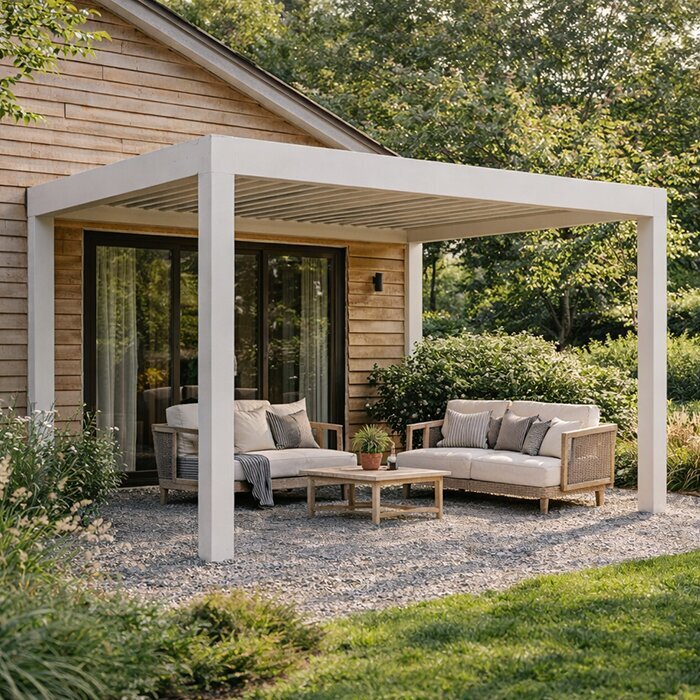
Compare Black Friday prices after the specifications
During a Black Friday comparison, separate the offer from the weather evidence. Confirm which exact model and configuration the displayed price refers to, then check that the documents you compared cover that same item. A similar photograph, shortened product name or neighbouring listing is not enough to establish that the specification matches. Note which wind, rain and snow information is available and whether it matches your needs before comparing prices. A marked-down price can be attractive, but it does not make an unclear or incomplete weather claim more dependable.
Check what the price includes, particularly where a roof configuration or optional component is shown separately; do not assume that accessories visible in a photograph are part of the package. If two offers cover different components, they are not a like-for-like comparison even if their headline labels look similar. Check the applicable price and the offer’s own terms when considering the purchase; no saving should be assumed from a headline alone. Keep this price check separate from technical suitability: a cheaper configuration is not automatically the right one for your intended weather exposure.
Keep the evidence tied to the product you may order
Keep the evidence attached to the product you might order. Write down the exact name or model reference shown on the page, the roof or configuration described, and the title or date of the technical document you used. If two pages use nearly identical names, do not assume their ratings are interchangeable; ask which document applies to which listing. Where a seller replies with a general statement, ask them to identify the exact product and the specification it refers to. This record makes it easier to spot when a weather figure belongs to a different version or setup.
A comparison sheet can have separate entries for wind, rain and snow: figure and unit; test or operating conditions; covered parts; exclusions; and whether information is missing. Add the stated price and components separately, so an offer does not obscure a gap in the technical evidence. Mark an unanswered field as unknown rather than treating it as zero, adequate or equivalent to a competitor’s rating. If the choice depends on a value the documentation does not provide, pause and seek an answer from the manufacturer or a qualified installer before ordering. That is more useful than trying to derive capacity from a photograph or a similar model.
Frequently asked questions
What should a pergola wind rating include?
Look for a numerical value with its unit, plus the conditions and configuration it covers. Check whether it refers to gusts or steadier wind, the roof position and any specified setup or exposure. A number without those details is difficult to compare. If the product page is brief, ask for the technical sheet or manual that defines the claim and applies to the exact model you are considering.
Does ‘waterproof’ mean the area underneath will stay dry?
Not necessarily. Ask what the term means for that pergola, which roof position and rain conditions apply, and whether joints, edges and wind-driven rain are covered. Find out where water is directed and whether the stated channels or outlets are part of the configuration being priced. Treat a broad label as unresolved until the documentation explains its scope.
Can a wind rating tell me anything about snow load?
No. A wind value describes performance under its stated wind conditions; snow load is a separate measure with its own value, unit and scope. Check which parts and configuration the snow information covers. Do not translate one rating into another or assume a pergola with detailed wind information also has a stated snow capacity.
What if no snow-load figure is shown?
Its absence does not mean the capacity is zero, nor does it confirm that the pergola is suitable for snow. Ask for documentation for the exact model and configuration. Do not estimate from the roof’s appearance, snow depth or another model’s figures. If your choice depends on snow capacity, seek an answer from the manufacturer or a qualified professional before buying.
How should I compare Black Friday pergola offers?
Confirm that you are comparing the same model and configuration, and check which components each price covers. Then compare the wind, rain and snow information, including its conditions and any missing details. A discount or similar photograph does not establish weather performance. Check the applicable price and offer terms when considering the purchase; do not assume a saving from a headline alone.
The clearest Black Friday comparison keeps price and performance in separate columns. A wind figure only helps when its unit and conditions are clear; rain wording needs a defined scope and drainage context; snow capacity needs its own stated value and limits. If a document does not match the exact pergola configuration, or a key figure is missing, leave it unresolved rather than filling the gap with a guess. Once the evidence is tied to the product you would order, you can judge whether the offer fits your planned use—and whether more advice is needed—without mistaking a seasonal price for a weather guarantee.
