
Buying a Pergola with Side Screens: Privacy and Weather
Pergola buying guide
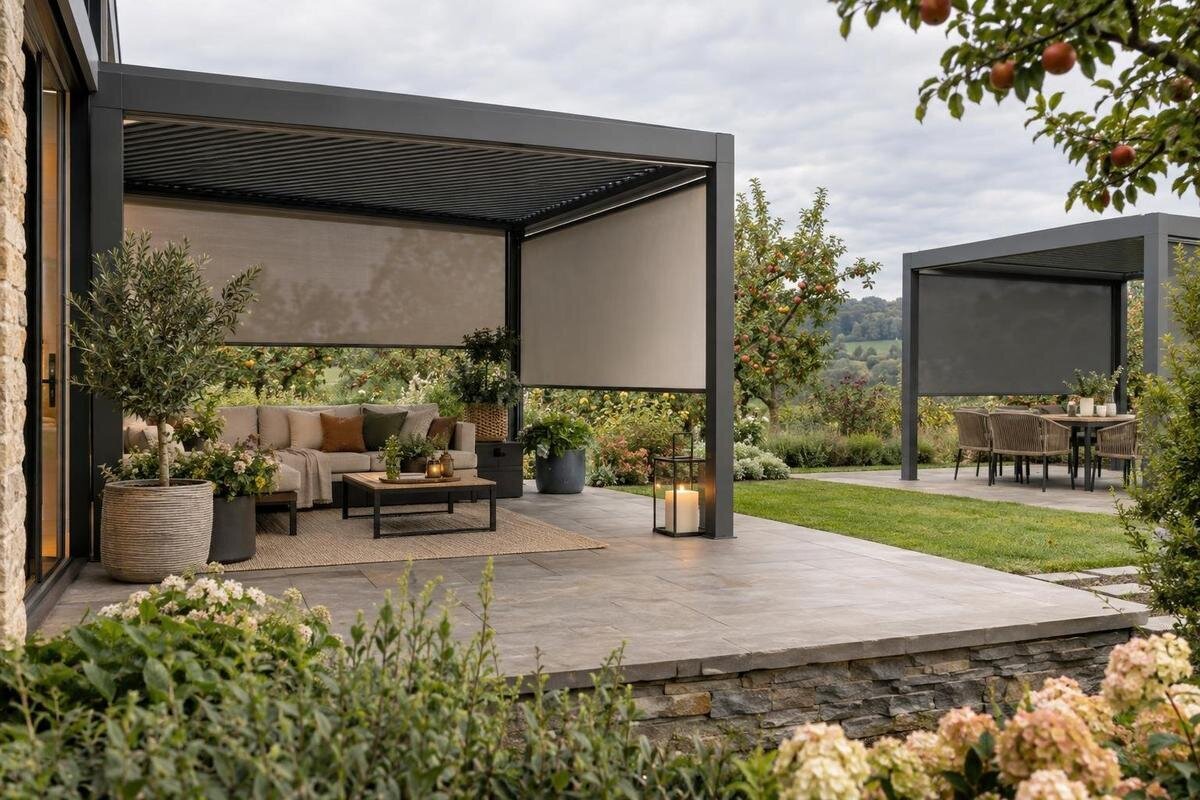
If you plan to buy a pergola with side screens, decide what each screen needs to do before comparing styles. A panel may limit views and provide some shelter at the side, but it also affects airflow, daylight, access and exposure to gusts. Check the actual material, fixing method and weather-use guidance for the proposed arrangement. The right choice depends on sightlines and conditions in your garden, not just how a screen looks in a product image.

Decide what the side screens need to do
Begin by looking at the places from which someone could see into the pergola: nearby paths, neighbouring windows, garden seating and your own doors. A screen that blocks a direct view from one angle may leave an oblique view from another, especially across a corner. Stand or sit at the positions that matter and note what you want hidden: a dining table, a seat, a boundary or the whole sheltered area. Consider both seated and standing eye level, because a screen that feels sufficient around a low lounge set may not screen people using a bar-height table. Repeat the check at the edge of the garden and from the approach to the house, rather than assessing privacy only from inside the pergola. This gives you a practical target for each side rather than an assumption that every opening needs the same treatment.
Also decide when privacy matters. Daytime screening can have different requirements from an evening gathering, when lights inside the pergola may make a translucent or open-weave screen easier to see through from outside. Consider whether you want a permanent visual barrier or the choice to open the view when the garden is quiet. Mark which sides need full coverage and which only need partial screening. This helps you avoid ordering more enclosed sides than you will use, while leaving space for a view, garden access or a breeze where those matter.
Choose how much privacy and openness you want
Opaque or closely woven fabrics can give a stronger visual barrier than an open mesh, but the exact result depends on the weave, colour, lighting and viewing angle. A more closed surface can also reduce daylight and air movement; mesh may preserve more view and airflow, yet it should not be treated as a guaranteed privacy screen. Ask for the precise material description and, where possible, a sample. Look at it from both sides in bright and dim conditions, rather than judging from a staged photograph taken in a single light.
Choose the balance opening by opening. If the aim is to screen a neighbouring window, a partial panel at the relevant sightline may do more than covering every side. If you want to conceal a seating area from several directions, check for gaps at corners and between screen sections. Use the Bloomcabin pergola product page as one listing to review, but establish separately whether a side screen is offered for the exact configuration, what material it uses and how much of the opening it covers. The pergola name or image alone does not answer those questions.
Check screen material, fixing and compatibility
Screen materials are not interchangeable. Depending on the range, a side treatment might be an open woven mesh, a denser fabric or a rigid panel; availability must be confirmed rather than assumed. Compare how transparent it is, whether it permits air to pass, how the surface is cleaned and what the supplier says about fading, water exposure and care. Colour affects the look and can affect apparent visibility through some fabrics, but a colour sample is not evidence of weather performance. Ask for specifications for the exact screen you would order.
Fixing is just as important as fabric. Depending on the design, screens may use side tracks, brackets, guide wires or fixed attachments, and each arrangement needs to suit the frame and fixing surface. Check whether the screen system is designed for the pergola’s posts and spans, whether its components are included and what clearances it needs at the sides. For a wall-mounted pergola listing, ask for confirmation of compatibility with the specific layout rather than relying on a product-category name. If you are unsure about the fixing surface or what the structure can support, ask the supplier or a qualified installer to assess it.
Assess wind exposure before enclosing the sides
Assess the site before choosing how many sides to close. A sheltered spot beside the house can behave differently from an exposed corner, open ground or a gap between buildings where gusts funnel through. Note the directions from which wind reaches the pergola and whether conditions change across the garden. A screen that feels comfortable on a calm day may behave differently in a gust, so base your choice on the actual location rather than on a generic idea of a typical garden.
A deployed screen presents an area to the wind, and the frame and fixings need to suit the complete arrangement. A porous weave is not automatically suitable for high winds, and a solid screen should not be left in place unless the product guidance allows it. Before buying, ask for written instructions on the screen’s permitted use in wind, when it must be retracted or secured, and whether the guidance covers both screen and pergola. A bioclimatic pergola listing still needs this separate check; its category label does not establish a side screen’s wind limit. If the site is particularly exposed or the guidance is unclear, ask the supplier or a qualified installer rather than guessing.

Set realistic expectations for rain shelter
Side screens can reduce rain arriving from the direction they cover, particularly when rain is driven sideways, but they do not make an open pergola weatherproof. Water can still enter from uncovered sides, around the edges, above the screen or below it. Mesh may allow rain through, and a fabric that looks dense may still have seams or limits on water resistance. Ask what the exact material is designed to do and whether the supplier describes it as water-resistant, water-repellent or simply a visual screen. Those terms should not be treated as interchangeable.
Think about where water might go once it reaches the screen and surrounding area. Check whether water from the screen could run onto a walking or seating area, and whether the screen can dry as intended. If reliable rain protection is a main reason for buying, compare the side screen’s stated role with the pergola’s roof arrangement and seek clear guidance about the complete setup. Do not infer roof performance or drainage from a screen description. You may prefer to leave some sides open; any choice about how to use the screen should follow the manufacturer’s guidance.
Measure the openings and plan access
Measure the clear span that the screen must cover, not just the pergola’s overall footprint. Record the width and height of each opening, the positions of posts and any wall junction, then identify whether a screen needs to cover one opening or turn a corner. Measure at more than one point if the ground or surrounding surfaces are uneven, as a single overall measurement can conceal a change in clearance. Note where the finished lower edge will sit in relation to paving, decking or a threshold, particularly if you want to limit gaps while retaining practical movement around the space. Confirm the finished screen dimensions, permitted span and required fixing clearances against the supplier’s drawing. A gap that seems small in a photograph can matter for privacy or rain, while a screen that is too large may not fit the intended attachment points.
Include practical obstructions and routes: doors, downpipes, lights, wall fixtures, steps and the path used to reach the garden. Decide whether people need to pass through a screened side and whether a fixed panel would interfere with that route. When comparing a Bloomcabin wall-mounted pergola page, check that its drawing or specification addresses the actual wall and post arrangement and confirms a compatible screen for those spans. If the wall, paving or another fixing surface raises questions, ask an appropriate professional for a site-specific assessment before placing an order.
Choose an operating style for everyday use
Think about how the screen will work on an ordinary day. A fixed panel may suit a side that should remain screened, while a retractable system can offer an open view or access when you want it; neither should be assumed to be available for a particular pergola until confirmed. Ask whether the screen can be opened part-way, where it sits when retracted and how it is secured in both positions. If you use the pergola as a route between the house and garden, the opening method and clear passage may matter as much as the material.
Check how the control is reached and whether everyone who uses the space can operate it comfortably. For hand-operated products, ask whether the screen needs a clear path to move and whether its handle or pull remains accessible once furniture is in place. A pergola listing labelled bioclimatic does not by itself tell you whether side screens are manual, fixed or motorised; those details should be confirmed for the exact combination you are considering. Ask how to secure or stow the screen, and follow the product’s guidance about operation in wind. Do not assume it can safely be left partly deployed just because that position is convenient.
Compare maintenance and replacement details
Ask for maintenance information for both the screen and its fittings. Cleaning may differ between mesh, coated fabric and rigid materials, and the instructions should identify suitable cleaning methods and any products to avoid. Check what is expected after exposure to rain, how the screen should be stored if it is removable and whether the mechanism needs periodic attention. Do not rely on generic care advice for a different material: request instructions for the named screen and keep them with the order documents.
Compare the parts that could need attention over time: screen fabric or panels, guides, moving components and fixings. Ask whether replacement sections are available and whether any stated warranty covers the screen material, operating mechanism, installation and exposure conditions; do not assume one answer applies to every part. The Bloomcabin pergola page can be included in your comparison, but confirm maintenance and replacement details for the screen itself rather than extrapolating from the pergola listing. Clear care requirements help you judge whether a high-privacy option is practical for the use and upkeep you expect.
Confirm what is included before ordering
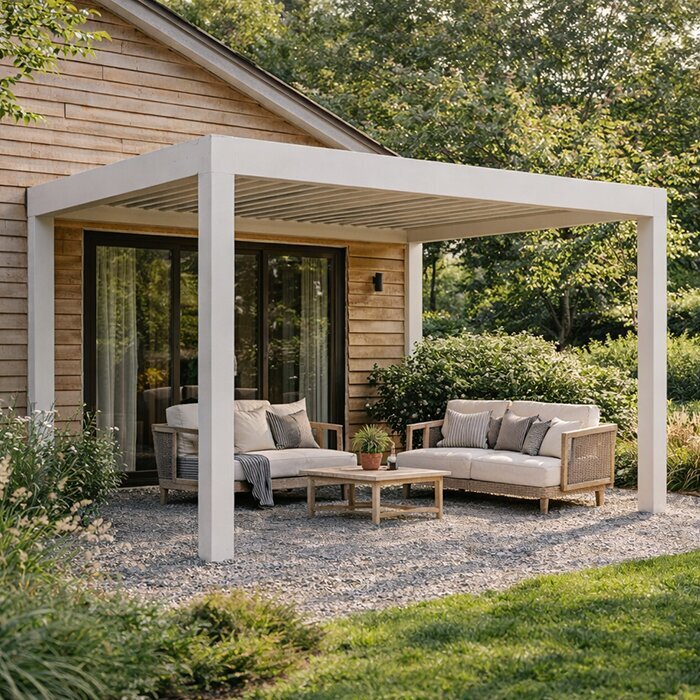
Before ordering, get a clear list of what the quoted package includes. It should identify the pergola configuration, number of screens, which sides they cover, screen material, operating style, colour, fixing components and any items supplied separately. Ask for each selected side to be identified clearly, rather than relying on descriptions such as left or right without an agreed viewing direction. This is particularly useful where a pergola has more than one opening of a similar size or where a corner arrangement is involved. Confirm whether the image shows optional extras and whether the screens are included in the same order or need to be selected separately. A drawing or itemised written description is more useful than an assumption based on a broad product name.
Confirm dimensions and compatibility for the exact arrangement, including all relevant openings and corner joins. Ask whether the screen option matches the selected frame, whether installation is included or arranged separately, and which site conditions need checking beforehand. For the bioclimatic pergola product page, treat the listing as an identity reference only: verify in the specific product details whether side screens are included or compatible. Record any unanswered wind, rain, care or fixing questions before completing the purchase, so the ordered configuration matches the privacy and shelter you expect.
Compare options against your priorities
Compare options against the same short list rather than comparing photographs. For each configuration, record the privacy level you can reasonably expect, how much view and daylight remain, how each side is fixed, what the supplier says about wind and rain, whether the screen retracts and what maintenance is required. Mark each item as documented, to be confirmed or not suitable for your plans. This makes it easier to see where apparently similar products differ and prevents a vague label such as ‘screened’ from standing in for a material or performance specification.
Give priority to evidence tied to the exact combination of pergola, screen, dimensions and fixing arrangement. If privacy is the main goal, the screen’s visibility and coverage may matter more than a broad weather claim; if wind exposure is the concern, documented use conditions and suitable installation deserve more weight than appearance. Use the general pergola listing as a comparison only after checking whether its screen arrangements and documentation answer the same questions. If a crucial detail is missing, request it before ordering; if the site raises structural or exposure concerns, seek qualified advice. The best choice is the one whose documented limits match the way you intend to use it.
Frequently asked questions
Will pergola side screens give complete privacy?
They can reduce direct views, but privacy depends on the screen’s material, coverage, lighting and viewing angle. Mesh or translucent fabric may look private in daylight yet offer less privacy when the pergola is lit in the evening. Check a sample from both sides if possible.
Do side screens keep rain out?
They may reduce rain arriving from the side they cover, but rain can still enter through uncovered openings, around the edges or beneath the screen. Ask what the exact material is designed to do; a side screen does not make an open pergola weatherproof.
Can mesh screens be used in a windy garden?
Some mesh allows air to pass, but its appearance does not establish a safe wind limit. Ask for the guidance that applies to the exact screen, pergola and fixing arrangement, including whether the screen needs to be retracted or secured in particular conditions.
Can I add side screens to any pergola?
Do not assume that screens fit every pergola. Confirm that the screen system is compatible with the specific frame, opening dimensions and fixing points, and establish whether screens are included or sold separately.
Should side screens be left down in strong wind?
Follow the instructions for the exact product. Before ordering, ask whether the screen must be retracted or secured in certain conditions and how the supplier says to do that. If the guidance is unclear, do not guess.
Treat each side as a separate choice: add privacy where sightlines call for it, preserve openness where airflow and access matter, and expect no more weather protection than the screen’s documentation supports. A screen that looks right may not suit a gust-exposed opening or provide the rain barrier you have in mind. Compare the material, fixings, operating method, limits and included components for the exact configuration. That makes the trade-off between screening and openness clear, rather than leaving the decision to a single product photograph.
