
Buying a Bioclimatic Pergola: How to Evaluate the Adjustable Roof
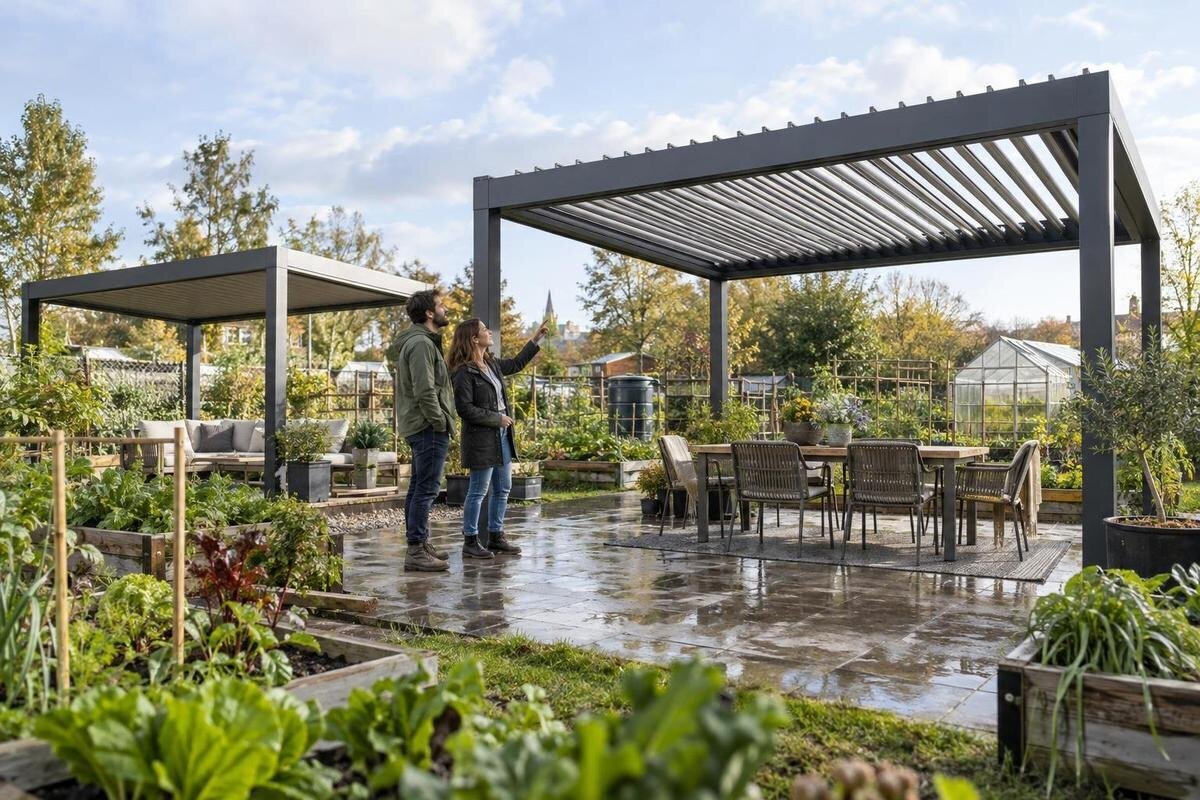
Pergola buying guide
If you plan to buy a bioclimatic pergola, give the adjustable roof more scrutiny than the product label. A louvred roof may offer open, closed and intermediate positions, but its useful range, operating method and handling of rain depend on the exact model. Compare written details about how the slats move, which controls are included, how air and sunlight change, and where water goes. A clear specification helps you judge whether the roof suits your routine without assuming that ‘adjustable’ also means fully weatherproof.

What ‘bioclimatic’ says about a pergola roof
A bioclimatic pergola is generally identified by an adjustable louvred roof: the slats change position to alter how much open sky, direct sunlight and airflow reach the area below. That differs from a fixed roof or a retractable fabric cover, even though all can provide overhead shade. Think of the louvres as an adjustable opening rather than a simple on/off lid. A partly tilted position can admit some light and air while cutting direct sun, although the effect depends on the angle, orientation and surroundings. The category name does not say how far the slats travel, which positions are available or how movement is controlled.
Treat ‘bioclimatic’ as a starting category, not a performance promise. It does not by itself establish that the roof is watertight, suitable to remain open in strong wind or able to block low-angle sunlight and side-driven rain. Nor does an adjustable roof turn an open-sided pergola into an enclosed room. Look for the exact roof description and its stated limits. If a page offers only a broad claim such as ‘all-weather’, ask which functions and conditions that wording covers. Specific answers make comparison easier and stop a product name or photograph standing in for a specification.
Assess the louvre adjustment range
Begin with the movement range. Find out whether the roof opens fully, closes fully and can be held at positions in between. A description that says only ‘open’ and ‘closed’ leaves practical questions: do all the louvres move together, can they stop at intermediate angles, and is the maximum opening stated? The range matters because it determines which combinations of shade and airflow you can choose. If an illustration shows several settings, check whether these are examples or the only positions. Look for a written description or diagram that relates to the exact roof configuration, not an approximate image.
Ask whether the published range applies across the whole roof and how movement is intended to work. On the Bloomcabin bioclimatic pergola listing, rely only on features explicitly described; the product name alone cannot tell you the louvre angle, number of positions or operating travel. If the details do not answer those points, request clarification before ordering and record the response. A useful answer makes clear what the end positions are, whether partial settings are available and what the seller means by ‘adjustable’. If a diagram gives a measurement, check that it refers to the complete roof configuration rather than an illustration of one slat.
Match roof positions to shade and airflow
Shade and airflow are related, but they are not the same result. A more open roof admits more sky and lets air pass through; angling the louvres changes the amount of overhead sunlight. The effect shifts with the sun, roof orientation and nearby shade, so a setting that works at one time may not do so later. Ask what positions are available and whether the roof can be left at a partial angle. Do not judge coverage from one photograph: its viewpoint and time of day may not match your garden. A roof also cannot block glare or rain arriving from the sides.
Write down when you expect to use the pergola and what you want at those times: filtered light for lunch, more open sky on a mild evening, or overhead cover during a shower are different priorities. Use the Bloomcabin pergola page as a comparison entry only after checking that its written details actually describe an adjustable louvre roof. A general pergola label is not enough to judge light or ventilation settings. If you need shade at the edges as well as over the centre, compare the stated roof coverage with the seating area and note where sun may still enter.
Compare manual and motorised operation
Manual or motorised operation is a choice about how movement is triggered, not a guarantee of ease. With a manual system, check where the operating point is and how you reach it; with a motorised one, check the control supplied and whether movement can be paused at intermediate positions. Think about how often you expect to adjust the roof and who will use it. A control that is difficult to reach or instructions that are unclear can make an otherwise useful range inconvenient. Ask for the operating method in writing, rather than relying on a label such as ‘electric’ or an image of a remote.
Confirm whether the motor, switch, remote or other control is part of the selected configuration or offered separately. For the bioclimatic pergola page, look for an explicit description of the mechanism and controls; if the listing is silent, ask rather than inferring from pictures or the category. If a powered version is offered, ask what site or power requirements apply and have a qualified installer address electrical questions. Check whether one control operates the whole roof or separate sections, and whether the instructions explain how to stop at a desired setting. If relevant to the specific design, ask what the operating guidance is if power is interrupted.

Follow the rainwater route
Rain management deserves its own comparison line. When the louvres close, ask where water runs, whether the system has channels or gutters, how these connect, and where the water leaves the structure. A useful diagram should make the route understandable from roof to discharge point; if a page shows only closed slats, it has not answered that question. Check whether drainage parts are built into the pergola or listed separately, and whether they are included in the selected option. A roof that moves is not automatically a roof with a clearly documented way to handle runoff.
Clarify the conditions attached to any rain claim. Does it apply only when the roof is fully closed? Does the seller specify how the system handles ordinary rain, heavier rain or rain driven sideways by wind? Ask what happens at the edges and joints, and whether the instructions explain how outlets should be kept clear. In the Bloomcabin page for a bioclimatic pergola, look for an explicit drainage description. If it is absent, ask for the water route and stated limits in writing; do not infer leak resistance from how tightly the roof appears to shut.
Read weather-protection claims carefully
Read broader weather claims in context. ‘Rain resistant’, ‘weatherproof’ and ‘all-weather’ are not interchangeable technical specifications unless the seller explains what each means for the roof. Ask which louvre positions are permitted in changing conditions, whether the roof must be closed before certain weather and what limits apply to wind, heavy rain or snow where relevant to the site. A performance claim for a closed roof may not apply with the slats partly open. Ask how the manufacturer says to operate the system as conditions change instead of assuming that one position is suitable year-round.
On the Bloomcabin pergola listing, treat any weather wording as a prompt to find the supporting conditions, not as evidence beyond what the page actually states. A useful answer identifies the permitted operating conditions and points to the relevant product instructions; vague reassurance leaves a buying question unresolved. Ask whether the roof is intended to remain in position during the stated conditions or must be moved, and what guidance applies if a motorised control is unavailable. Use the product only within its documented limits. If site exposure could affect suitability, ask the supplier or a qualified installer to assess it.
Choose a roof that suits your routine
Compare the roof with your pattern of use rather than choosing the greatest number of adjustments on paper. If you expect to set it once before a meal, a small number of clearly defined positions may be enough; if you plan to respond to changing light, ease of operation and control range matter more. Consider whether the roof will usually be open, partly angled or closed, and whether you are willing to adjust it as conditions shift. The useful question is how well the available settings fit your routine, not how long the feature list is.
Separate overhead shelter from other expectations. A louvred roof cannot provide privacy or stop every side exposure; low sun and wind-driven rain can still reach an open-sided area. Think about where people sit and which edges matter, then check the roof’s stated coverage rather than assuming the full frame footprint is covered. If side screens are important, look for them as separate features and confirm whether they are included. This helps prevent choosing an adjustable roof for a problem that requires a different kind of shelter or screening.
Check roof coverage against the planned position
Compare the outside frame size with the area covered by the louvres, since a product drawing may show overall width or length rather than the shaded roof section. Look for posts, beams and roof edges on a dimensioned plan; ask what each measurement refers to if the page gives only a size. Consider whether a nearby wall, branch or other obstruction could affect roof movement or access to the controls. If clearance is uncertain, have the site assessed rather than estimating from a product image. This check is about the usable roof area, not just the structure’s outline.
Keep roof mechanism separate from mounting format. ‘Bioclimatic’ refers to an adjustable roof, while ‘wall-mounted’ describes how the pergola is positioned. If you are also comparing the wall-mounted pergola listing, assess that format against the space and check the roof details independently; the mounting label does not establish louvre range, control type or rain handling. Position also affects how shade reaches the area, so consider orientation and surrounding structures alongside the roof specification. Treat these as two filters: the configuration that fits the site and the roof operation that suits your needs.
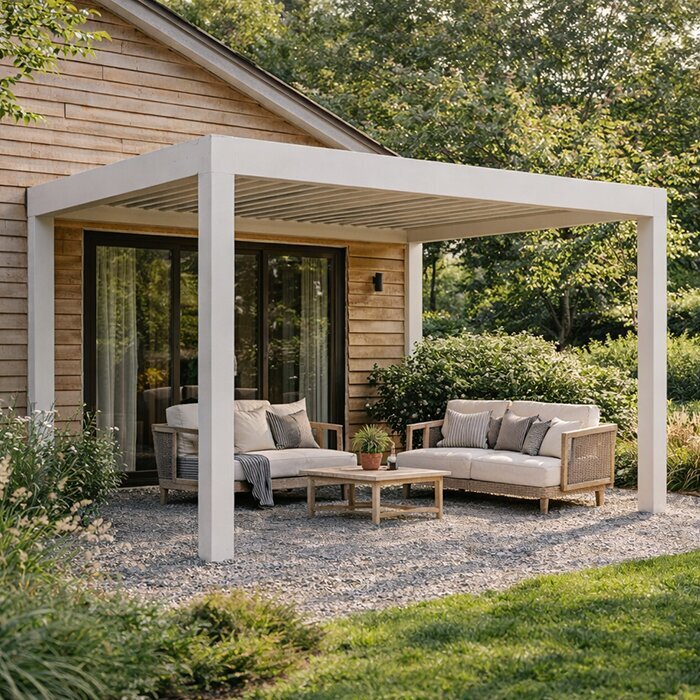
Compare specifications, not product-page headlines
Put options into a simple comparison using the same headings for each: louvre movement, available positions, manual or powered control, included controls, drainage route, stated weather limits and actual roof coverage. Mark each item as stated, unclear or still to confirm. That makes omissions visible before you order and prevents a page with persuasive wording from seeming more complete than one with precise details. Compare like with like: claims are meaningful only when their terms refer to the same roof position and weather conditions. Treat an unanswered point as something to clarify, not as a feature that is definitely included or absent.
Use Bloomcabin’s pergola product page as one entry in that comparison, not as a shortcut to a conclusion. Separate details explicitly stated for the selected roof from general category wording, images and information you still need to request. Give priority to specifications tied to the exact configuration; if an answer sits in a separate manual or document, obtain it before deciding. Note the source of each important answer so you can reconcile it with the quotation. This record is useful when product pages use similar names but do not describe the same roof features.
Confirm the chosen configuration before ordering
Before ordering, confirm the exact product and configuration you are buying. Record the roof type, louvre movement, control method, drainage parts and accessories that are included, plus anything listed separately. If a quote or order uses a model name, match it with the product page and written specification rather than relying on a similar photograph. Keep the description, quotation and order confirmation together; if they use different wording, ask which configuration is being supplied before paying. The aim is to avoid a gap between the roof you compared and the version named in your order.
Keep a record of the page you reviewed, such as the Bloomcabin wall-mounted pergola page, then check that the product identity matches the quotation. Ask what operating and care instructions come with the pergola, how to get support for the roof mechanism and whether service or replacement parts are specified. If the roof is motorised, ask the supplier or installer to explain the controls and any site-specific requirements; do not improvise electrical work. Check any stated guidance for drainage outlets and record the answers with the order documents.
Frequently asked questions
Does a closed louvre roof make a pergola waterproof?
Not automatically. Closing the louvres describes a roof position, not a verified waterproof rating. Check how water is collected and discharged, whether protection depends on full closure, and which rain and wind conditions the manufacturer covers. If those details are missing, ask for written information before relying on the roof for shelter in rain.
How far should pergola louvres open?
There is no single useful range for every space. Compare the stated opening range and available intermediate positions with the shade and ventilation you want. Ask whether the information applies to the complete roof, and consider how the pergola’s position and surrounding shade affect the result.
Is a motorised adjustable roof better than a manual one?
It depends on how often you expect to adjust the roof and who will use it. Compare the controls, how easy they are to reach, whether partial positions are available, and what power or site requirements apply. A motorised label alone does not tell you what is included or how the system operates.
Can I leave the louvres open in windy or unsettled weather?
Do not assume that an adjustable roof can stay open in every condition. Check the manufacturer’s operating instructions and any stated limits for the roof positions. If the product information does not explain what to do as conditions change, ask the supplier for clear guidance before ordering.
What if the product page does not explain drainage or controls?
Ask the seller to clarify the water route, the operating method and which controls or drainage parts are included in the configuration you are considering. Request the answer in writing and compare it with the order details. Do not infer these features from a product name or photograph.
Choosing a bioclimatic pergola comes down to a roof that behaves as you expect, not a label that sounds versatile. Compare louvre range, operating method, ventilation, drainage and documented weather limits on the same basis. Then confirm the exact configuration, controls and included parts in the order paperwork. If one of those points remains unclear, resolve it before committing; a well-matched roof is one whose useful settings and limits are clear from the outset.
