
Buying a Pergola: A Guide to Choosing the Right Type

Pergola buying guide
Pergolas come in different forms: they may stand independently or attach to a house, and their roofs can be open, fixed, retractable or adjustable. These choices affect shade, shelter, light, upkeep and installation. Before you buy, decide how you want to use the space, then compare the structure and roof that best suit those priorities. Product names and photographs are only a starting point; the written dimensions, materials, included parts and installation requirements need to support your choice.

Decide what the pergola should do
Begin by describing how you expect to use the space. You might want somewhere to eat outdoors, a shaded spot for a chair or a clearer boundary between the patio and the rest of the garden. Think about when you will use it, how many people it should accommodate and what furniture needs to fit beneath it. These details help you decide whether shade, overhead shelter, an open feel or a connection to the house matters most. They also make it easier to compare pergola types without being distracted by a photograph that shows a different garden or arrangement.
Turn those priorities into a short list before browsing. For example, decide whether you want a roof that stays open, provides more permanent cover or can be adjusted; whether the structure should stand apart from the house; and how much ongoing care you are prepared to take on. A product title cannot answer those questions for you. Treat a catalogue entry such as the Bloomcabin pergola product page as a starting point for checking the stated details, not as proof that its format suits your plans. The final choice depends on the specification and the site where it will be installed.
Freestanding or wall-mounted?
A freestanding pergola has its own supports and can define a seating or dining area away from the house. That independence gives you more choice over where the structure sits, but the posts still need to work with the layout: they should not make a path awkward or interfere with the furniture beneath the roof. Consider the view from the house and the route you will take to reach the pergola. A freestanding design is not simply a structure that can be placed anywhere; the ground, support requirements and usable space all affect where it can go.
A wall-mounted pergola adjoins the house, which can make sense when you want the covered area close to a door or patio. It does, however, depend on the wall being suitable for the specified attachment and on the proposed position working around doors, windows and other features. Do not assume that mounting it to the house makes installation simpler or removes the need for independent supports. Ask a suitably qualified installer to assess the attachment requirements. When comparing a Bloomcabin wall-mounted pergola listing, check the seller’s stated installation details against the actual wall and layout.
Choose the roof style
An open roof keeps the structure visually light, but it offers limited protection from either sun or rain. Roofs with spaced slats can provide some shade, depending on their arrangement and the position of the sun; they should not be treated as a solid cover. A fixed roof gives more consistent overhead coverage, but it may also reduce daylight reaching windows or the patio. Consider where rainwater will go and whether the roof’s appearance suits the house. The product description should make clear what the roof consists of and what, if anything, is supplied with the frame.
A retractable fabric canopy is another option where you want to change between open sky and shade. Its usefulness depends on the material, mechanism and guidance for operating it in different conditions. Check whether the canopy is included, whether it can be removed and what care it needs; do not assume that a frame shown with a cover in a photograph includes that cover. For a page labelled Bloomcabin pergola, look for an explicit roof description rather than inferring the design from the general word pergola. If the listing leaves the roof type or included parts unclear, ask before ordering.
Understand adjustable louvres
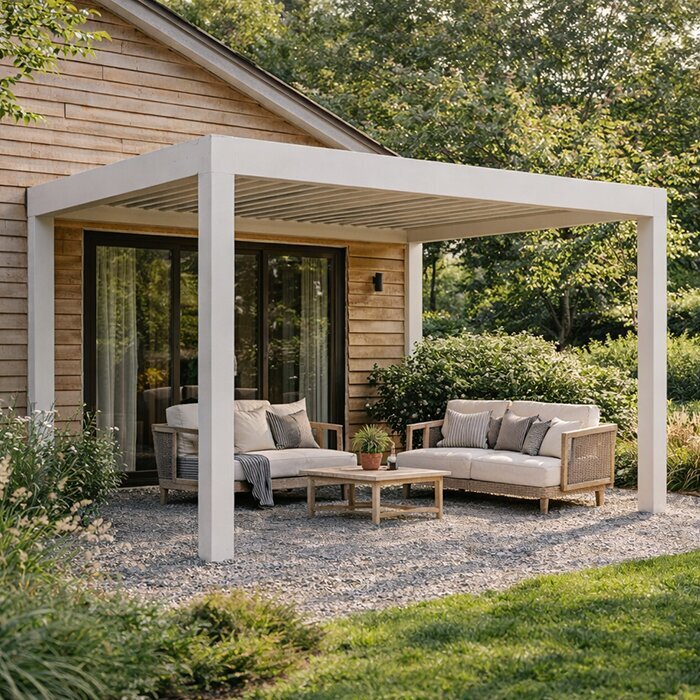
A bioclimatic pergola is commonly described as having adjustable roof louvres. Changing their position can alter how much light and air pass through, which gives you more control than a permanently open roof. That flexibility may be useful if you want to adapt the space at different times of day. It does not mean that every model works in the same way or provides a sealed roof when the louvres are closed. Check how the louvres move, what range of positions is available and whether the mechanism is manual or motorised.
Also look for information on drainage, operating limits, controls and maintenance. If the roof is motorised, confirm what the product includes and what arrangements are needed for installation; do not assume that controls or electrical work are part of the purchase. The title of a product is not a performance guarantee. An option identified as a Bloomcabin bioclimatic pergola still needs to be assessed against its own published specification. Compare what the seller states with the level of shade and shelter you actually want, and note any points that need clarification.

Compare materials and upkeep
Material affects the appearance of a pergola and the care it may need. Timber can suit a natural garden setting, but the upkeep depends on the timber, treatment, finish and exposure. Aluminium is often chosen for a more contemporary look; check the specified finish and the maker’s cleaning guidance. Steel is another possible frame material, with its own finish and care requirements. These are general characteristics, not guarantees about a particular product. Read the specification for the actual material and finish, and check what maintenance the seller recommends instead of assuming that every timber or metal structure needs the same treatment.
Think about colour and texture alongside care. A finish that looks good against the house in a product image may appear different in your own light, so use any available samples or display information where practical. Check how the frame, roof and any optional screens are finished, and whether accessories match or need to be ordered separately. Avoid choosing on appearance alone if you are not sure what upkeep is involved. The written instructions should tell you how to clean the product and whether the finish needs attention over time; ask for clarification if those details are important to your decision.
Consider scale and garden layout
A pergola should look in proportion to its setting as well as provide enough usable space beneath it. A large roof can dominate a narrow patio, while a smaller structure may feel out of place beside a broad seating area. Think about the shape of the space, the height of nearby doors and windows, and how the roofline will look from both inside and outside the house. The posts and roof edges are part of the footprint too, so consider how they relate to paths, furniture and access. This is about choosing a form that fits the garden, not just a size that looks generous in a catalogue.
Consider how the design will affect light and movement through the garden over the course of the day. A roof can cast shade beyond the area directly beneath it, and a structure placed near the house may change the light reaching an adjoining room. Make sure there is a comfortable route around the supports and that chairs can be used without blocking a main path. If you plan to add screens or other accessories later, check whether they are compatible with the chosen design rather than assuming they will fit. Confirm the exact dimensions and clearances in the product information before placing an order.
Be realistic about weather protection
The roof and sides determine how much shelter a pergola offers. An open-sided structure will still be exposed to wind and wind-driven rain, even if its roof provides some shade. A solid or adjustable roof may offer more cover, but its performance depends on the design, drainage and the conditions at the site. Think about how exposed the intended position is and whether nearby buildings or planting affect it. If keeping the seating area dry is essential, look for specific statements about the type of protection offered rather than treating a pergola as an enclosed or weatherproof room.
Screens can change the amount of wind and rain that reaches the space, but they also change the feel of the structure and may have their own limitations. Check whether screens are included, optional or unavailable, and whether the product guidance explains how they should be used. When reading the Bloomcabin bioclimatic pergola listing, look for stated information about water management and operating limits; the category name alone does not establish how much shelter it provides. For a site exposed to challenging conditions, ask the supplier or a qualified professional whether the proposed design and installation are appropriate.
Check the installation requirements
Before choosing a design, find out what its supports need. The requirements can differ according to the pergola and the surface where it will stand. Paving, a deck and bare ground are not interchangeable installation surfaces, and a surface that looks solid may not be suitable for the specified fixings. Do not improvise a base or attachment method: use the product’s installation information and ask a qualified installer to assess the site where needed. For a wall-mounted design, the installer should confirm that the wall and fixings are suitable for that product rather than relying on appearance alone.
Ask what preparation, assembly and access are expected, and who is responsible for each part of the work. Consider whether the structure can be brought to the intended area and whether any existing features could obstruct installation. If lighting or other electrical additions are planned, confirm compatibility and use a qualified professional for the electrical work. Requirements that apply to a proposed structure can depend on its location and details, so check with the relevant local authority or a qualified professional before committing. For the wall-mounted Bloomcabin pergola page, compare the stated fixing requirements with the proposed installation rather than assuming that all house walls are suitable.
Compare the product details before ordering
Make a like-for-like comparison of the specifications, not just the headline names. Check the overall dimensions, roof type, frame and roof materials, finish and any operating mechanism. Note what is included and what is optional: a product image may show furniture, lighting, screens or a canopy that is not part of the item being ordered. Look for the installation documents and care instructions too. If details are missing, ask the seller to confirm them in writing. The information on Bloomcabin’s pergola listing should be read in the same way as any other product page: verify each feature you rely on in the listing or its supporting documents.
Clarify the practical parts of the order as well. Check how delivery is arranged, what access is needed, whether assembly is included and what preparation is expected from you. Ask about the terms that apply to returns and any warranty, and keep the answers with your order information. These are not minor details: they can affect the overall effort and cost of getting the pergola installed and ready to use. If the order includes separate components or accessories, make sure the chosen combination is compatible. Resolve uncertainties before paying rather than relying on a verbal assumption or a photograph.
Match the type to your priorities
A freestanding pergola may suit a plan to create a separate garden destination, while a wall-mounted structure is worth considering when the intended area adjoins the house and the wall can accommodate it. An open roof prioritises an airy feel; a fixed cover offers more consistent overhead shelter; and a retractable canopy allows some adjustment. Adjustable louvres offer another kind of flexibility, but their operation and limits need to be checked. These are ways to narrow the choice, not promises about any individual model. Compare the designs against your intended use, the garden layout and the site’s installation requirements.
The strongest choice is the one whose compromises you understand. More control over shade may mean a more involved mechanism; a more sheltered roof may alter light or require closer attention to drainage; and a position beside the house depends on a suitable attachment. If considering a bioclimatic pergola from Bloomcabin, confirm the specific details that matter rather than assuming that the label guarantees a particular result. Weigh the product specification, upkeep, installation and complete order terms together. That makes the decision about the pergola you can actually buy and install, not just the one that looks most appealing in a picture.
Frequently asked questions
What is the difference between a freestanding and a wall-mounted pergola?
A freestanding pergola has its own supports and can create a separate area in the garden. A wall-mounted design connects to the house, so its location depends on a suitable wall and the specified fixings. Neither type is automatically the better choice: consider how you use the space and have the installation requirements checked.
Will a pergola keep the rain out?
Not necessarily. An open roof offers little protection from rain, while a fixed cover or adjustable roof may provide more shelter depending on its design. Wind-driven rain can still reach an open-sided space. Check the product information for roof details, drainage and any stated limits rather than relying on the name alone.
What does bioclimatic pergola mean?
The term is commonly used for a pergola with adjustable roof louvres, which can change how much sun and air pass through. The mechanism and degree of weather protection vary by product. Confirm whether the louvres are manual or motorised, how they are operated and what the manufacturer says about rain and wind.
Do I need planning permission for a pergola?
Requirements depend on the proposal and its location, so do not assume that every pergola is treated in the same way. Check the relevant requirements with your local authority or a qualified professional before ordering, particularly if the structure will be attached to the house or is part of a larger project.
What should I check before placing an order?
Confirm the exact model, overall dimensions, roof type, materials, finish and what is included. Also check the installation requirements, assembly arrangements, delivery access, care instructions and any applicable warranty terms. If a detail is missing or unclear, ask the seller for written confirmation before committing.
Choosing a pergola is a matter of balancing how you want to use the garden with the type of roof, structure and upkeep you are prepared to take on. Compare freestanding and wall-mounted designs, be clear about the shelter each roof can provide, and check that the installation requirements suit the site. Once the product details and order terms are clear, you can choose a pergola that fits the space and your plans without relying on assumptions from a name or photograph.
