
Buying a pergola for a hotel or holiday property
PERGOLA BUYING GUIDE
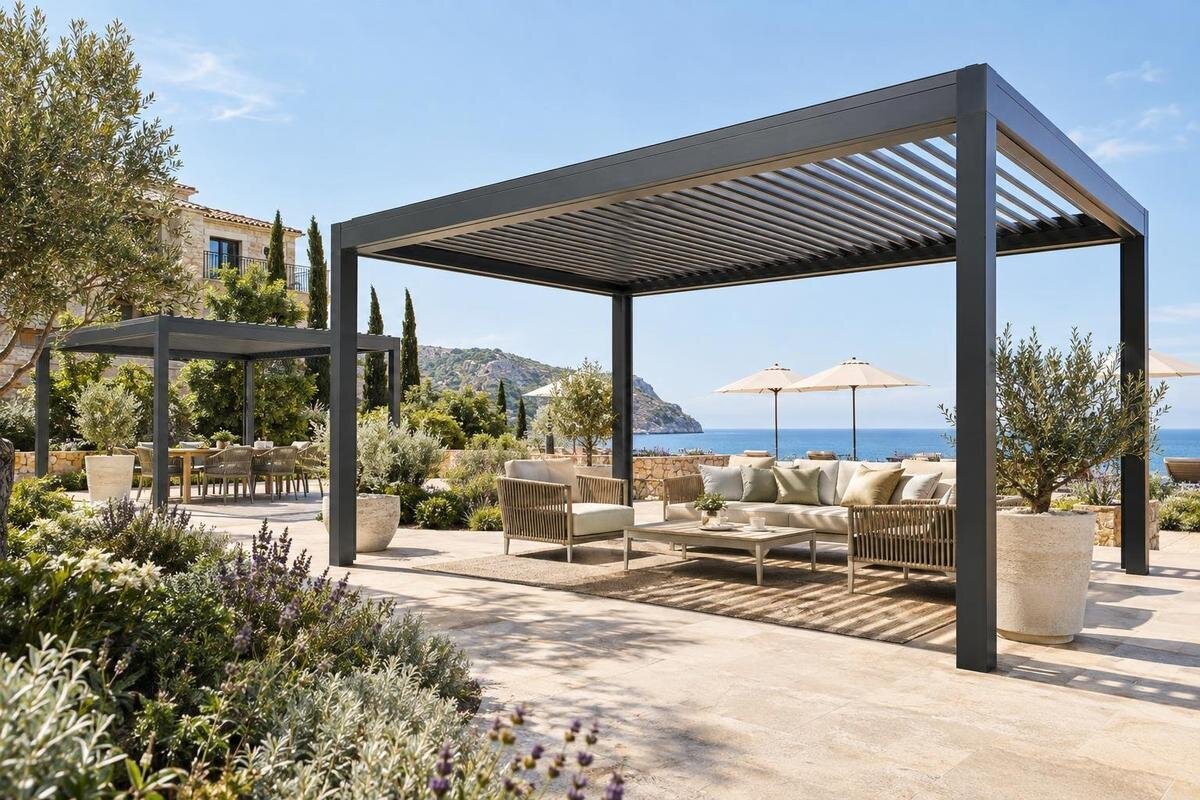
A pergola at a hotel or holiday property is more than a place to put a table: it changes how guests use the outdoor space and adds another area for the team to prepare and maintain. The right purchase depends on whether the space is a shared place to pause between activities, a quieter corner by a guest unit or a flexible outdoor setting. Begin with its purpose, then test the proposed layout, appearance, site conditions and operating needs against that purpose. This guide explains how to compare options and plan an order without assuming one design suits every hospitality setting.

Decide what the outdoor space is for
Before comparing pergolas, decide what the outdoor space is meant to do for guests. A hotel may want a comfortable place for people to pause between activities or extend a shared lounge; a holiday property might prioritise a private spot for guests staying in one unit. Those are different jobs, even if the available footprint is the same. Be specific: is the space intended for meals, a quiet coffee, waiting, socialising or a mix? A clear answer helps avoid choosing a feature that does not fit the property’s service model or the way guests are likely to use it.
Look at the daily pattern, not just the busiest photograph of the property. Note when the area might be occupied, whether visitors need staff service, whether furniture has to be reset between bookings and whether some guests may want a quieter alternative. A hotel with several outdoor zones could assign a clear role to each; a single holiday home may need one flexible arrangement. Think, too, about what the guest-facing description can honestly promise. Do not describe a pergola as an all-weather room unless the stated design and installation support that use. This purpose becomes a useful test for every option on your shortlist.
Map guest and staff routes
Trace the route from the property entrance to the pergola, and from it to accommodation, reception, dining or activity spaces. Include staff movement: carrying items, clearing tables or servicing rooms should not require repeated crossings through a busy seating area. Check doors, gates, steps, existing paths, planting and places where guests naturally pause. On a plan, mark the main route before positioning furniture. A pergola that fits in the remaining rectangle may still make the outdoor area awkward if chairs or tables interrupt the way through.
Measure beyond the structure’s stated footprint. Allow room for chairs to be pulled out, guests to pass and staff to clean and reset; account for doors or other moving parts shown in the product information. Consider guests using prams, mobility aids or carrying luggage, and ask an access consultant if a particular route needs expert review. Make a scaled sketch rather than relying on a garden photo, then check its dimensions against the current listing. A wall-mounted Bloomcabin pergola listing can be one format to include in your comparison; check its published measurements against your plan.
Choose between a shared and a private setting
A shared hotel area and a terrace associated with a single holiday unit may call for different arrangements. Decide whether the pergola is meant to be a social hub, a quieter retreat or a flexible space that serves more than one purpose. Putting it near reception or a busy activity area can make it easy to find, but may increase footfall and noise beside guest rooms. A more secluded position may feel calmer while being less convenient for staff or visitors. Consider sightlines from windows and nearby routes as well as the seating plan.
If a property has several rooms or lets, decide who can use the area and how guests will know. A pergola between accommodation areas might become a shared amenity, or it could make one unit feel overlooked; the answer depends on the layout and how the property is managed. Consider whether furniture, signs or booking information will help distinguish private from shared zones. If lighting is part of the intended setting, plan it as a separate requirement and have any installation assessed appropriately. A clear role for the space can prevent confusion and disappointment.
Compare pergola formats and product details
Compare formats by their relationship with the building and the way the covering is described, rather than by a label alone. If your shortlist includes freestanding, wall-connected or adjustable designs, note the different questions each raises about positioning, operation and installation. Product information should explain what the particular model includes and how it is intended to be installed. Decide what you need first, then see whether each candidate’s published details address it. The Bloomcabin pergola product listing can be one catalogue reference alongside other options; compare the written configuration rather than relying on the product name.
Check the stated measurements, components, finish, operating arrangements if applicable, assembly requirements and available accessories. Do not assume that two listings with similar photos offer the same configuration, or that every item shown in a photograph is included. If a missing detail could affect your layout or purchase, ask before ordering. Screens, furniture and lighting may be separate choices, and some additions may require their own installation or maintenance planning. Treat each as a point to compare against the property’s needs, not as an automatic part of the pergola.
Match the design to the property
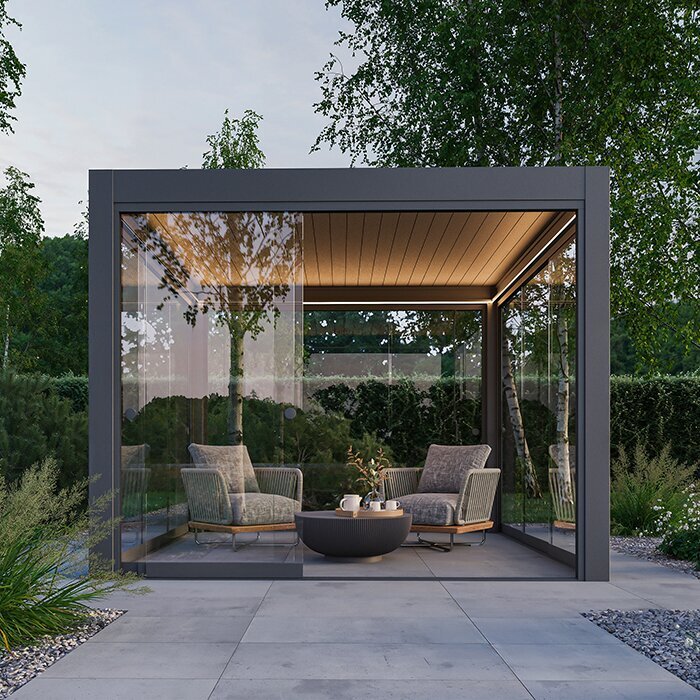
The pergola should look at home beside the property, whether it is a restored house, a contemporary hotel or a compact holiday let. Compare its apparent scale with the façade, garden, paths and existing outdoor furniture. A structure that dominates a small courtyard can make the space feel crowded, while one that looks undersized beside a broad building may not create the distinct guest area you want. Use photographs and a measured plan together: a wide-angle image can make proportions difficult to judge, so base the decision on the actual site.
Appearance also shapes what guests expect from booking photos and on arrival. Keep the property’s images and description consistent with the space that will be provided; a product photo or digital mock-up cannot show exactly how a finish will look in a different setting. Check stated colours and finishes and, where possible, review relevant samples or current imagery before deciding. Compare the presentation on the Bloomcabin bioclimatic pergola product page with the property’s exterior, then assess the actual product details against your design requirements.
Consider the building and installation context
Site suitability involves more than having enough floor area. The type and condition of the surface, the position of drains or services, changes in level, nearby boundaries and access for assembly can all affect where a pergola can go. If the design is intended to connect to an existing building, consider its wall and surrounding construction as part of the decision. Avoid assuming that a standard base or attachment will suit the site. Share the location information and the product’s installation requirements with a qualified installer before committing to a format.
Plan how components can reach the installation point without blocking guest access or disrupting rooms, reception or routine work. At an operating hotel, the timing and sequence of installation may matter as much as the finished appearance; at a holiday property, a narrow entrance or long route from the road can affect how the work is organised. Review the Bloomcabin wall-mounted pergola page alongside questions about the actual façade and site. Ask a qualified installer to assess the location and clarify who is responsible for preparing the ground, making attachments and completing related work.
Plan for the conditions at the site
Do not buy on the assumption that a pergola will make the area comfortable in every condition. Exposure varies across a property: an open garden, a sheltered courtyard and a position beside a building can face different wind, rain and sun. Consider when guests are likely to use the space and where shade is needed at those times. Then compare that requirement with the exact product information. If you need a particular level of weather protection or want the area available during a specific season, have that requirement confirmed for the model and site. A qualified professional should assess site-specific structural and installation questions.
Operational plans matter too. Decide who will move or store furniture and loose items, how staff will respond when conditions make the area unsuitable for use, and how the property will explain any limits to guests. A pergola does not automatically provide an enclosed or heated room, and adding equipment can bring separate installation and maintenance needs. Include the Bloomcabin pergola page in a shortlist if it is relevant to your comparison, and check its published details against the intended use. A practical plan avoids promising year-round comfort on the basis of a general description.
Include cleaning and upkeep in the decision
Guest-facing areas can turn over quickly, so include cleaning and care in your choice. Think about the tasks the team will actually do: clear cups and food, wipe tables, sweep beneath furniture and keep the route free of clutter. Check whether the position allows those jobs to be done without moving the whole setup or blocking access. Care for surfaces and components should follow the manufacturer’s instructions, so ask for the relevant cleaning and maintenance information before you buy. Do not assume that a finish is stain-resistant or that a structure needs no upkeep unless the product documentation says so.
Set a clear responsibility for routine checks, seasonal preparation and repair requests. A hotel may assign those tasks to its facilities or housekeeping team; for a holiday property, the owner, manager or turnover service needs to know what is expected between stays. Keep guest instructions brief and practical, such as where furniture belongs or whether an area is temporarily closed, rather than asking visitors to manage the structure. When comparing the Bloomcabin bioclimatic pergola listing, look for care information relevant to the listed model and consider whether it fits the property’s routines.

Compare the full purchase cost
Set the budget around the complete project, not just the product price. Depending on the site and model, the overall purchase may involve delivery, installation, ground preparation, furniture, accessories and ongoing care. Obtain itemised figures for the actual specification and installation plan, then compare like with like. If some site work cannot be confirmed until inspection, account for that uncertainty in your budgeting process. Add the listing for Bloomcabin pergola to the product comparison, while keeping the product cost separate from delivery, installation and any other project expenses.
For a hotel, consider the timing of work and its effect on guest operations; for a holiday property, consider whether installation can be coordinated between bookings. Confirm the current delivery terms, what is included, who arranges assembly and what happens if an agreed detail changes. Check any warranty, returns or after-sales terms in the current sales information rather than relying on a remembered offer or verbal summary. If more than one person approves the purchase, circulate the same plan, product specification and quotation so everyone is comparing the same arrangement.
Confirm the order before committing
Make a concise decision record covering the intended guest use, proposed location, measured footprint and routes, site findings, chosen configuration, finish, included parts, accessories and installation responsibilities. Match the dimensions in the current product information to your plan, including the complete assembled measurements where several dimensions are given. Confirm that the product details and written quotation describe the same variant. This helps prevent ordering one version while designing the space around another, particularly when photographs, product names and options appear together.
Resolve questions that depend on the building or ground with a qualified installer, and ask the supplier to clarify any product point the listing leaves open. Keep the current information for the Bloomcabin bioclimatic pergola product listing with the order record, together with any agreed details about components and responsibilities. Once the proposed space, operating plan and purchase documents match, you can judge whether the pergola is a sensible addition to the guest offer rather than treating the product alone as the decision.
Frequently asked questions
Does a pergola make a hotel outdoor space usable in every kind of weather?
Not by default. What guests can use the area for depends on the exact design, its installation and the conditions at the site. If you need a particular level of weather protection, confirm that requirement for the model you are considering and get site-specific advice from a qualified professional. Plan how staff will communicate any limits and what alternative space guests can use.
How much space should I leave around a pergola?
There is no single clearance that suits every property. Include the space needed for furniture, pulled-out chairs, guest and staff routes, doors and cleaning. Draw the proposed layout to scale and compare it with the product’s current dimensions. If access or the building layout raises a specific concern, ask an access consultant or qualified installer to review it.
Is a wall-mounted pergola suitable for a holiday property?
The label alone cannot answer that. Suitability depends on the product requirements and the actual building, surface and layout. Compare the written product information with the proposed location, and ask a qualified installer to assess any connection to the building before ordering. Also check whether the resulting space works for the guests who will use it.
What should I include in the purchase budget?
Compare the complete project, not just the product price. Ask for costs covering the chosen configuration, delivery, installation and any site preparation, furniture or accessories you need. Check current sales terms and clarify who is responsible for assembly and related work. Itemised figures make it easier to compare options on the same basis.
How can I choose a pergola for a holiday property with frequent guest changes?
Choose the space’s role first, then consider how guests will find it, move around it and understand whether it is shared or private. Include cleaning, furniture reset and routine care in the plan. Keep the property description consistent with what the installed space actually offers, and make any useful guest instructions simple.
Choosing a pergola for a hotel or holiday property is an operational decision as well as a design one. The best candidate is the one that fits a defined guest purpose, leaves routes and other spaces workable, suits the actual site and can be maintained within the property’s routines. A scaled plan, clear product comparison and agreed installation responsibilities make options easier to judge. When those pieces align, the pergola can add a coherent outdoor amenity; when they do not, a visually appealing structure may create extra work or expectations the property cannot meet.
