
Buying a Pergola for a Snowy Climate: What to Consider
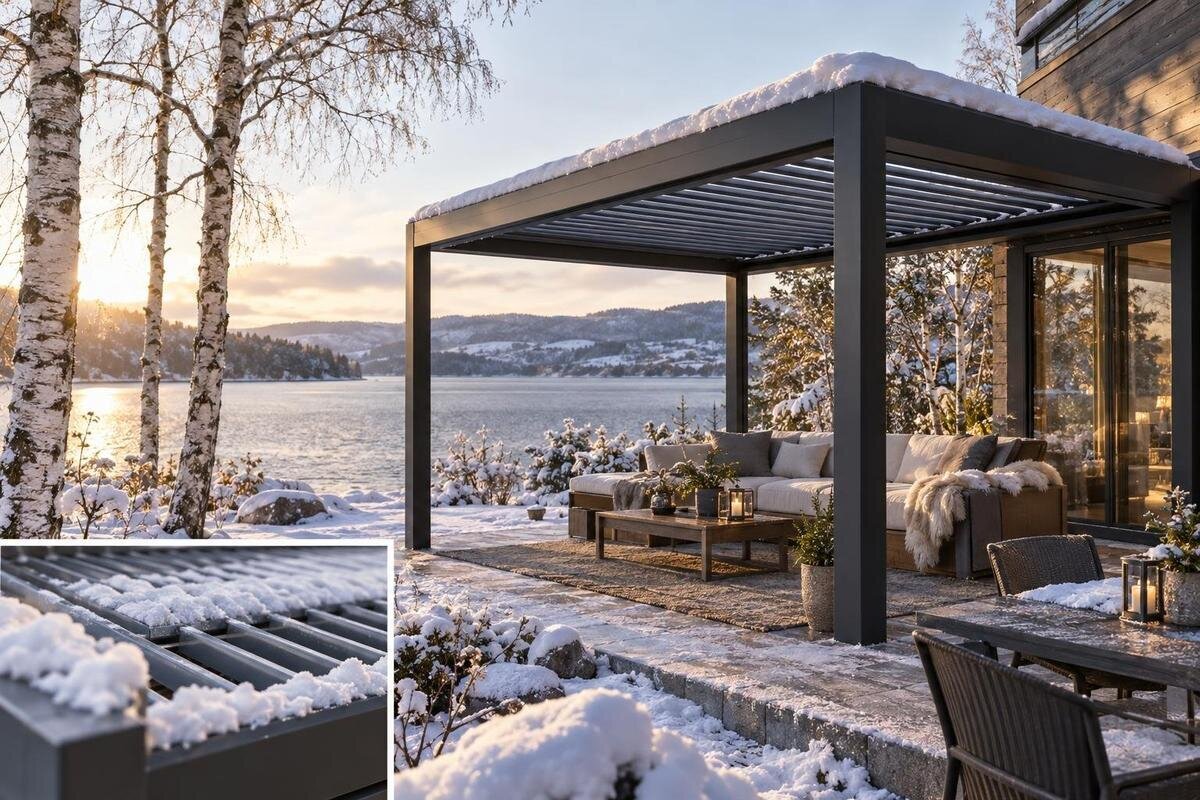
Pergola buying guide
Buying a pergola for a snowy climate calls for more than a visual comparison. Snow may collect unevenly, and the performance of a complete structure depends on the exact roof, frame, supports and fixing arrangement. Neither a solid-looking frame nor a familiar material name proves that a particular model is suitable. Before ordering, look for snow-load guidance for the exact configuration, then check whether its stated conditions and installation requirements match the garden where you plan to use it.

Snow-load guidance for the exact pergola
Look for a snow-load figure or a clear written statement from the manufacturer about the model’s permitted snow conditions. Ask which exact size, roof configuration and support arrangement it covers, how the figure is expressed, and whether any conditions or exclusions apply. A number without that scope can mislead: it may refer to another version, installation or set of components. Confirm whether the roof parts and fixings are included in the guidance. Words such as “strong” or “all-weather” are not a defined snow-load rating. Keep the relevant sheet or manual with your order notes so you can compare the stated use with the conditions expected at the site.
Read the guidance together with the installation instructions, not as a standalone headline. Check whether it assumes a particular roof position, support layout, fixing method or maintenance routine, and whether restrictions change across sizes. Do not transfer a figure from one pergola to another because they look similar or share a material. If no precise guidance is available, treat the snow capacity as unknown rather than estimating it from a photograph or product description. Where you cannot interpret the document or relate it to the site, ask the supplier for clarification and have a suitably qualified structural professional review the proposal before purchase.
How snow exposure varies around a garden
Snow exposure is specific to the intended position, not just the broad climate. The shape and height of nearby buildings can affect where snow falls or gathers, and a roof edge above the pergola may shed snow onto it. Drifting and uneven accumulation are also possible, so a general snowfall figure for an area is not a complete assessment of what one spot may experience. Note the planned location, nearby roofs and places where snow could collect before comparing products. A simple site sketch can help record the pergola footprint, roof edges, changes in level and sheltered corners where snow may build up. This matters particularly when the pergola is close to a house, outbuilding or boundary structure, where the surrounding layout may affect the proposed position. It also gives the supplier or professional a clearer description of the location than a general statement that the garden is exposed or sheltered.
Ask a qualified professional to consider those site conditions alongside the manufacturer’s stated assumptions; do not turn a weather forecast or a remembered winter into your own structural calculation. If the site could receive snow sliding from a higher roof, explain that and ask whether it changes the requirements. For a named option, the Bloomcabin pergola product page can identify the listing you want checked, but its name or image cannot establish how it suits your particular site. A seller’s general assurance about a region is not a replacement for comparing the model guidance with the installation location.
What the roof design can tell you about snow
A roof’s appearance offers clues about its layout, but not a snow-load rating. Slatted, open, fixed or adjustable roofs have different arrangements; none can be judged for snow simply from visible gaps, slope or apparent thickness. A roof that looks as if it might shed snow is not proof that it will do so safely or that the frame beneath it is rated for the resulting conditions. Ask whether the stated snow guidance covers the complete roof and all its parts, rather than only the main frame. This avoids treating roof style as a substitute for documentation.
For a roof with moving elements, ask whether the manufacturer specifies a particular position during snow, limits on operating it, or a requirement to clear accumulation. Get the answer for the exact model and configuration rather than relying on a general description. The word “bioclimatic” in a product title does not state a snow capacity or operating rule. The listing at the Bloomcabin bioclimatic pergola page is a product identity to check against its manual and technical information; do not infer performance from the label. Also check whether any accessory changes the stated guidance.
Frame materials and the complete structure
The material label is only one part of the comparison. A timber, metal or mixed-material frame can be built in many different ways, and the name of the material does not tell you the capacity of the assembled pergola. Ask for details of the posts, beams, roof members and connectors, and check that the snow guidance refers to those components in the model you plan to order. Member sizes, distances between supports and the way parts join all belong to the complete design; they cannot be judged reliably from a close-up image or a broad material category.
Compare like with like: the same roof arrangement, dimensions, support pattern and included parts. A thicker-looking beam or a heavier-sounding material is not enough reason to rank one product above another if neither comparison is backed by relevant documentation. Check whether braces, connectors or roof elements are optional, because guidance for one configuration may not apply when parts are changed. If material or component descriptions are vague, ask for the exact specification in writing. Focus on whether the complete supplied arrangement has stated snow guidance rather than selecting a material by reputation.

Anchoring, supports and the surface beneath the pergola
Snow suitability includes the route from roof to frame, supports, anchors and ground. A stated roof or frame capacity may depend on a prescribed support and fixing arrangement, so it is not enough to ask what the visible structure can carry. Ask what base or foundation is required, which fixings are specified, and whether the guidance assumes a particular surface. Paving, a deck, concrete and soil are not interchangeable just because each provides a place to stand the pergola. A surface that looks firm does not by itself show that it is compatible with the proposed anchoring system.
Before ordering, establish which parts are included and what preparation or professional installation the manufacturer requires. Do not plan to substitute convenient fixings, attach posts to an existing surface or alter the support layout based on guesswork; those choices need to match the product instructions and site assessment. For example, the Bloomcabin wall-mounted pergola listing identifies a layout to examine, but it does not show whether a particular wall, base or fixing is suitable. Have a suitably qualified installer or structural professional assess anything not clearly covered by the product guidance. Resolve this before delivery, not as an afterthought.
Freestanding and wall-mounted pergolas
Freestanding and wall-mounted pergolas create different site questions, but neither arrangement is automatically better suited to snow. A wall-mounted design relies on a connection to a suitable part of the building, so ask which wall types, attachment points and fixing details the manufacturer specifies. The apparent solidity of a wall is not enough to confirm that it can take the proposed connection. A freestanding model avoids that wall connection but still depends on its own support layout, anchors and base. In both cases, the complete design and installation need to match the stated snow guidance.
Compare the actual space available as well as the attachment type: a wall-mounted layout may be constrained by eaves, windows or doors, while a freestanding layout must fit its footprint and support positions. Neither label proves capacity or compatibility with every garden. If you are considering the wall-mounted pergola product page, request documentation for the exact model and ask a qualified professional to assess the proposed connection to your building. A suitable wall fixing cannot replace a snow-load rating for the pergola, and a product rating does not establish that a particular wall is suitable.
Pergola dimensions and nearby roof edges
Check dimensions against the actual garden plan before ordering. Confirm the overall footprint, post positions, roof projection and any clearance needed for parts that move; catalogue images can distort scale, and a general width or length may not describe the usable space beneath the frame. Leave room for the route you need around the pergola, but also consider where snow could fall from nearby roof edges or gather beside a wall. A pergola that fits on a drawing may still sit in a snow-collection area, so placement belongs in the product comparison as well as the landscaping plan.
Ask for accurate dimensions or a drawing for the exact version, then compare them with measurements from the intended position. Include roof overhangs, doors and access routes, and tell the professional reviewing the site about nearby roof lines or other obstructions. If comparing the bioclimatic pergola listing, use confirmed dimensions for the relevant model rather than estimating from its photograph or title. Check whether dimensions refer to the frame, roof edge or another point before setting out space. A photograph cannot confirm the clearances or snow exposure that matter in your garden.
Snow-related operation and maintenance
Ask how the manufacturer expects snow to be managed during use. The instructions may set limits on leaving accumulation in place or explain whether clearing is part of routine care; do not assume that occasional removal makes a structure suitable if its rating is otherwise missing. If clearing is required, ask what method and access arrangements are permitted for the exact model. Avoid climbing onto a pergola or improvising with tools: follow model-specific safety guidance and seek a suitable professional if the instructions do not explain a safe approach. This is easier to clarify before you buy than during a snowfall.
Moving roof parts may also have operating restrictions in snow or cold conditions. Ask whether they must remain in a particular position, whether movement is limited, and what the manual says about inspection after snow. For an option identified by the Bloomcabin bioclimatic listing, request the manual and operation guidance for its exact configuration; its name does not answer those questions. Confirm that the people who will use and maintain the pergola can follow the specified routine. If regular upkeep would be impractical at the site, include that in your buying decision rather than assuming a different roof behaviour.
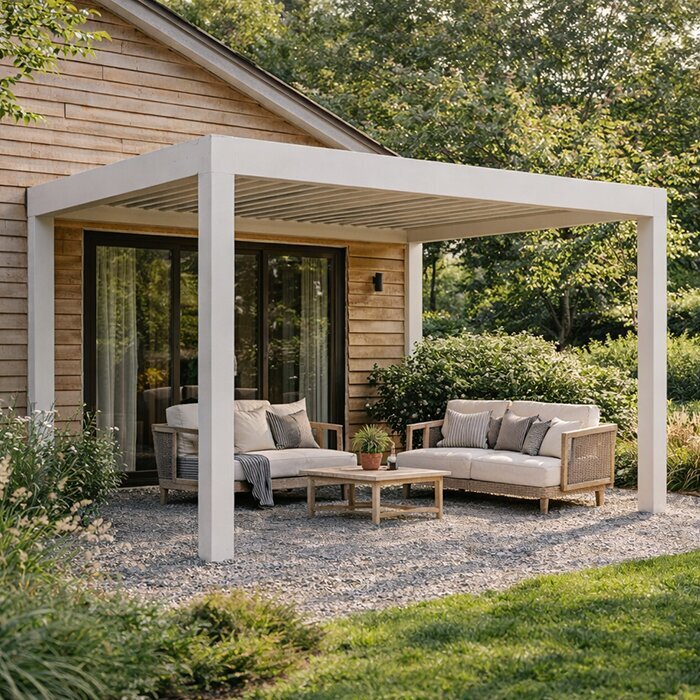
Documents to request before ordering
Gather the product documents in one place before placing an order: the exact model and size, a snow-load statement and its scope, roof configuration, support and fixing requirements, dimensional information, installation guidance and maintenance instructions. Ask the seller to confirm that the model being quoted matches the documents you have reviewed. If pages or versions use different names, resolve the difference in writing. This avoids ordering one configuration and relying on guidance for another. Check the document date or revision where it is shown, and ask whether later instructions or configuration changes affect the quoted product. Record any selected accessories, roof options and support arrangement alongside the paperwork, because a technical statement may apply only to a defined combination of parts. Do not rely on a generic range description when the order identifies a specific version.
Put practical questions to the supplier before paying: what is included, what is optional, what support surface is acceptable, and who should assess installation at the site? If warranty or guarantee terms are provided, read the conditions for snow or weather-related damage and do not treat a warranty as proof of structural capacity. When asking about the Bloomcabin pergola listing, refer to its exact page or model identity and request the relevant documents; an image cannot supply missing technical details. Keep written replies with the order confirmation so any assumptions are clear.
When to pause before buying
Set a clear threshold for proceeding: the exact pergola must have documented guidance for snow, the covered roof and support configuration must match what you plan to buy, and the required anchoring must be workable at the site. If any of those points is unknown, pause rather than treating appearance, material or a broad reassurance as evidence. This does not automatically rule out a product; it means its suitability has not been established from the information available. Compare another option with clearer documentation or obtain a professional assessment before committing to the purchase.
Where a professional’s input is needed, provide the exact manual, dimensions, intended position and any nearby roof details rather than asking for a general yes-or-no based on a product name. If you are comparing that Bloomcabin pergola page, apply the same evidence test as for any other candidate: confirm what is documented, what remains site-specific, and whether the proposed fixing arrangement is addressed. A model should not inherit a rating from a different size or roof. If the paperwork and site assessment do not refer to the same setup, hold the order until the gap is resolved.
Frequently asked questions
Does the pergola’s frame material determine whether it can handle snow?
No. A material name on its own does not establish the snow capacity of the assembled pergola. The roof, frame members, connections, supports and installation all matter. Look for guidance for the complete model and configuration, rather than choosing by material alone.
Can I judge snow suitability from a sloping or open roof?
No. A visible slope or gap does not confirm that a roof will shed snow, or that the full structure is rated for the resulting conditions. Ask what the manufacturer says about snow for that exact roof design and configuration.
Is a wall-mounted pergola automatically better suited to snow?
No. A wall-mounted layout still needs snow-load guidance for the pergola and details about the required wall connection and fixings. The building wall also needs to be suitable for the proposed installation. Ask a qualified professional to assess the site where required.
What should I do if the product page has no snow-load figure?
Ask the supplier for written guidance for the exact model, roof and support arrangement, including any conditions or exclusions. If the information remains unclear or unavailable, treat the capacity as unknown. Do not estimate it from an image, a product name or a similar model.
Should I plan to clear snow from the pergola?
Ask the manufacturer whether clearing is required and what method is permitted for the exact model. Do not assume that clearing makes an unrated structure suitable, or improvise a method that the instructions do not cover. Resolve access and maintenance questions before ordering.
Buying for snow is ultimately about matching the exact pergola configuration, its documented snow guidance and the conditions at the intended position. Frame material and roof appearance can help narrow a shortlist, but only relevant technical information can support the final choice. If the documents do not cover the configuration or the site remains uncertain, delaying the order until that gap is resolved is a sound part of the decision.
