
Buying a Replacement Pergola: Can Existing Foundations Be Reused?
Pergola buying guide
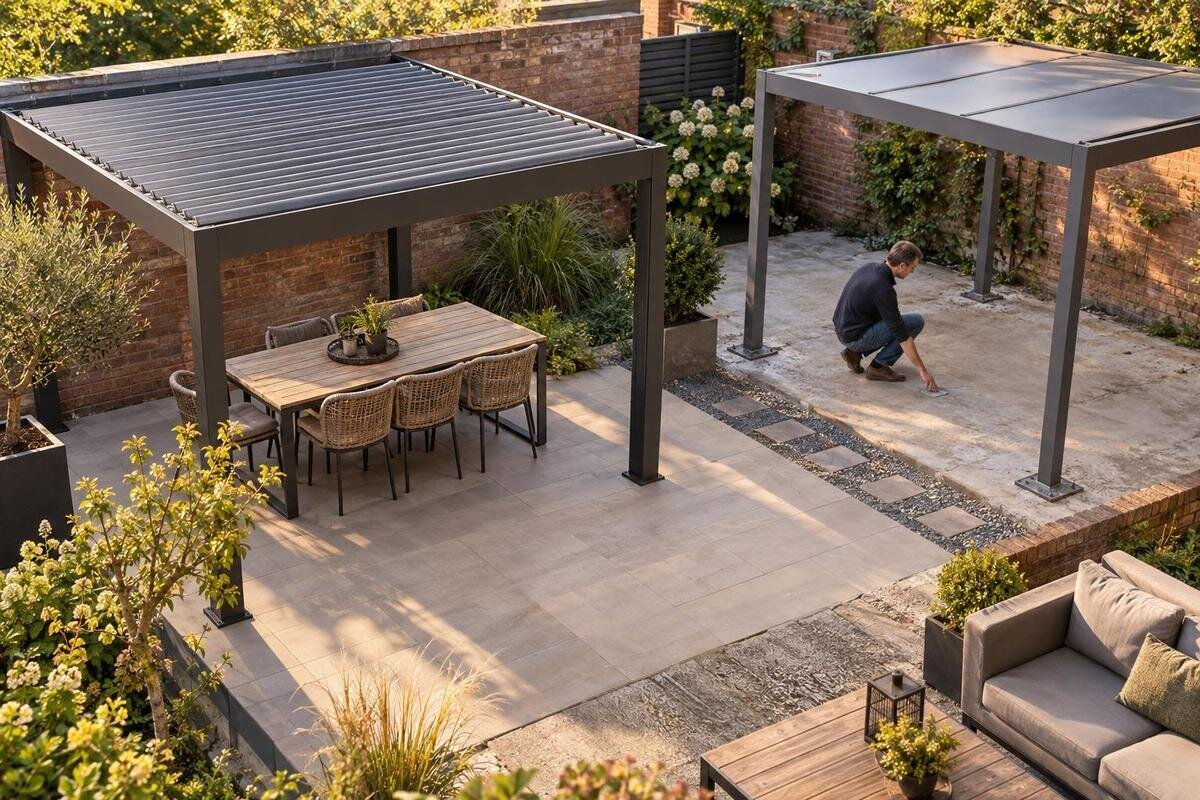
Replacing a pergola can look like a straightforward swap when the old posts already stood on a solid-looking base. The important question is not whether the new structure resembles the old one: its footprint, post positions, fixing details and foundation requirements must suit what is on site. A careful comparison before ordering can show whether the existing base is a realistic option, whether a professional should assess it, or whether new foundation work belongs in the plan. The decision depends on the replacement’s documentation and the actual condition and layout of the old supports.

Can you reuse existing pergola foundations?
Replacing a pergola can look like a straightforward swap when the old posts already stood on a solid-looking base. The important question is not whether the new structure resembles the old one: its footprint, post positions, fixing details and foundation requirements must suit what is on site. A frame that appears similar may put its supports in different places or use another fixing arrangement. Even if the posts sit over the existing base, the new model’s installation information still needs to allow that type of support.
Treat foundation reuse as two separate checks: does the new pergola’s fixing layout match the supports on site, and is the existing base suitable for the replacement and still in sound condition? Passing one check does not answer the other. A sound slab may not match the new post centres, while old anchors may line up with a base that is damaged or unsuitable. A quick visual comparison can help you begin, but it is not enough to confirm a fit or make a sound basis for ordering.
Record the existing base before comparing products
Make a record of the existing base and the way the old pergola was installed. Note whether it was freestanding or attached to the house, and whether its posts sat on separate concrete pads, a continuous slab or another arrangement. Measure the positions of the post centres and the distances between them, then note how far they are from a fixed reference such as the house wall or edge of a paved area. Include the visible base edges, not just the overall paved footprint; the finished surface may not be the supporting area. Label the measurements clearly and use consistent units so an installer can interpret your plan. Choose reference points that will remain in place after the old pergola is removed, rather than measuring from a post that may be out of square or damaged. Sketch the site from above and mark each support separately, including any step, drain, wall, boundary or door opening nearby. Measuring diagonals between supports can also reveal whether a layout is square, but it does not establish whether the foundations below are suitable.
Photographs and paperwork can add useful context. Look for the old model’s instructions, invoices, installer notes or drawings showing the intended footings and anchors. Record any repairs, alterations or areas hidden by paving or other finishes instead of guessing at what lies underneath. When reviewing a possible replacement such as the Bloomcabin pergola listing, look for a plan and written installation details; a product image or name cannot show whether its dimensions suit your site. If the information you need is not on the listing, ask for it before comparing the old base with the new one.
Compare the footprint and post positions
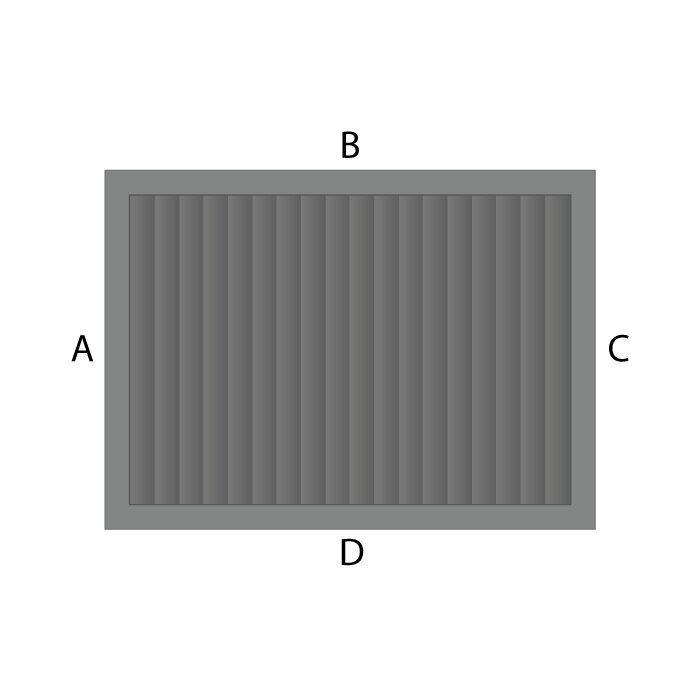
Compare a drawing of the new pergola with your measurements, using the same reference points on each. Overall width and depth can describe the outside edge of a roof or frame, while the distance between post centres shows where the supports actually land. Those measurements are not interchangeable. Check whether the drawing identifies post centres, base-plate positions and the orientation of the structure; clarify the view if the plan is unclear. Rotating a layout can change where the posts sit, even when the width and depth seem to match. Also consider whether the intended position leaves room for nearby doors, paths and other fixed features. Do not confuse an overhang with the structural footprint: both may matter, but for different reasons. The support layout determines whether existing foundations line up, while the outer extent of the structure affects clearances around the site. Mark both on your plan where the supplier’s documents distinguish them, and leave any unconfirmed dimension as a question rather than estimating it from an image.
Plot the new fixing positions against the existing supports on a simple site plan rather than judging by eye from product photographs. A candidate such as this pergola product listing should be checked using its own published dimensions and installation documents, not the measurements of the structure being removed. If the positions differ, ask whether the model permits another arrangement and have the proposed layout assessed before treating the base as reusable. Do not assume that shifting a post within the old slab is acceptable: the manufacturer’s requirements and the support beneath each fixing point determine whether a change is viable.
Check the fixing details, not just the layout
Foundation compatibility depends on how the pergola attaches as well as where it stands. Compare the base-plate outline, hole positions and specified fixing method with the existing anchors and any information available about the base. Old anchor bolts may be positioned differently, corroded, loose or part of a fixing system that the new model does not use. An installation drawing may show the fixing centres but leave other details unclear, so ask for the mounting specification when needed. A near match is not necessarily a suitable one: each post needs to be secured in the way specified for that particular product.
If you are considering this pergola product page, request its actual mounting details and check whether they suit the base at your property. Do not assume that existing anchors can be reused because they look intact, or that a new plate will cover old holes. Drilling extra holes, altering a plate or adding an adaptor should not be treated as a routine workaround; ask the supplier or a qualified installer to assess any proposed change. If the documentation is incomplete, keep that as an open question in your buying decision rather than leaving it to be resolved after delivery.

Look for signs of damage or movement
Note what is visible, but do not treat appearance as a structural assessment. Look for cracks, crumbling or flaking concrete, unevenness, signs of movement, water collecting around the supports, rust on exposed fixings and any previous repairs. A single mark does not establish the cause or say whether the base can be reused. Several signs, a change over time or a history of movement are reasons to get an appropriate professional opinion. Dated photographs and notes about where the signs occur can help an installer assess them in context, rather than relying on a general description such as ‘the base looks fine’.
Important information may be out of sight. Paving, decking, soil, edging or a post cover can hide the extent of a footing or the way a fixing is secured. Ask whoever assesses the replacement to distinguish what is visible from what is known about the foundation; a large finished surface is not proof of a continuous, sound base. Compare the new pergola’s requirements, including any supplied with the pergola product information, with what an installer can establish on site. The aim is to identify uncertainty early, not to diagnose hidden concrete from a photograph. Do not remove paving, expose footings or disturb anchors simply to obtain an answer unless the person responsible for the assessment considers that necessary. Instead, provide clear close-up and wider photographs, note where finishes change level, and explain any information from the original installation. This gives the assessor a more useful starting point and helps separate confirmed facts from assumptions about what is below the finished surface.
Confirm the base suits the new pergola
A base that supported the old pergola is not automatically suitable for a replacement, even if the post positions match. The new model may specify different support requirements, and a change in size or configuration can affect what its installation demands. Roof or side elements, where included in a particular design, may also change how forces reach the posts and base. The relevant comparison is the new model’s written requirements against the actual foundation and site, not a judgement based only on how long the old structure stood there. Its history is useful context, but it does not prove compatibility.
If the base type, condition or suitability is unclear, ask a qualified installer or structural professional to assess it. Share the product documents rather than just the model name so the advice can relate to the proposed installation. For a candidate such as the listed pergola product, request its foundation and fixing information before arranging an assessment. A professional can advise whether the existing support is appropriate and whether anything further needs to be investigated. Avoid trying to work out the base’s capacity from visible dimensions or the apparent weight of the previous pergola; important conditions may not be visible at the surface.
Check how the pergola will be mounted
Compare the new pergola’s mounting arrangement with the old setup. A freestanding structure relies on its ground supports, while a design intended to attach to a building also depends on that connection. Reusing ground foundations alone does not confirm that a wall can take the proposed fixing, and an old wall attachment does not prove that the replacement uses the same details. Check which supports the new installation requires, then have a qualified installer consider the building and ground supports together if the design calls for both. The same footprint does not make different mounting arrangements interchangeable.
If the existing pergola stood on a deck, raised platform or roof terrace, treat its suitability for that location as a separate question. Confirm with the supplier and a suitably qualified professional that the proposed product and support arrangement are specified for the actual site; a garden pergola is not automatically suitable for a rooftop installation. A listing such as this pergola option should be checked against its full installation instructions, not its title or appearance. A layout that matches on paper may still be unsuitable for the place where the base sits.
Choose a replacement around the confirmed site constraints
Once you know what can be kept, choose a replacement around the actual constraints of the site. If the posts need to remain in fixed positions, compare candidates by documented post centres, mounting method and foundation requirements before weighing appearance or optional features. If a different layout is acceptable, find out what foundation changes it would require and include that work in your project plan. This is more reliable than buying the closest-looking size and hoping an installer can adapt it. A different footprint may be easier to accommodate than a matching one with incompatible fixing points.
Use product pages to shortlist possibilities, then request the documents needed to check each against your measurements. For example, compare this pergola option with alternatives on the same basis: footprint, post locations, fixing details and foundation requirements. Do not infer any of these from a photograph. If a detail is missing, ask for a dimensioned drawing and installation guide before deciding. Keep any approved adjustment in writing so that a possible modification is not mistaken for a confirmed fit when you place the order or arrange installation.
Settle the practical details before ordering
Before placing an order, find out who will verify the measurements and compatibility. Ask whether the supplier expects a site check, whether the installer needs to see the existing base before confirming the work, and what documents they need from you. Clarify who will arrange foundation alterations if reuse is not possible, and whether that work forms part of the installation plan or must be organised separately. These details can change the scope of the project even though they do not change the pergola itself. Keep a written record of the measurements used and any conditions attached to the advice you receive.
Ask specific questions: what base arrangement does the product require, where are the fixing centres, and can the old anchors be used? Does the proposed installation rely on a wall as well as ground supports? A product page, such as the product page for this pergola, is only a starting point if those details are not shown; request the relevant documents before committing. Read the seller’s current delivery, installation and order-change terms rather than assuming that a mismatch found later can be resolved without cost or delay. Getting these answers before checkout gives you a clearer basis for comparing options.
Decide whether to reuse, adapt or replace the base
Reusing the base is a reasonable plan only when the replacement’s documented layout matches the supports on site, the fixing method is compatible, and the foundation’s condition and suitability have been assessed. If reliable information supports all three points, an installer can confirm whether reuse is appropriate for the job. If one remains uncertain, pause the order and find out what would resolve it. If the layout conflicts or the base cannot be confirmed as suitable, compare the work involved in changing the foundation with choosing a replacement that better suits the site.
Adapting an existing base may be possible in some installations, but it is not automatically simpler or acceptable. Consider changes only when the product requirements and the responsible professional allow them. A clear drawing, site measurements, foundation assessment and agreed installation scope give you a practical basis for the decision. They also help you compare the pergola and any associated foundation work as one project. The answer may be to reuse the base, alter it or start again; what matters is knowing which option the specific pergola and site can support before the purchase is finalised.
Frequently asked questions
Can I reuse the base if the replacement pergola is the same size?
Not necessarily. The outside dimensions may match while the post centres, fixing plates or foundation requirements differ. Compare the new product’s installation information with the positions and condition of the existing supports before deciding.
Can the old anchor bolts stay in place?
Only if the new pergola’s fixing information allows those anchors and their condition is suitable. A bolt that looks intact may still be incompatible or insecure, so have an installer assess it rather than relying on appearance.
Does a crack mean the foundation must be replaced?
Not on its own. A visible crack does not establish the cause or show whether the base is suitable. Record its location and condition, then ask a qualified professional to assess it in context.
What documents should I get before ordering?
Ask for a dimensioned plan showing the post and fixing positions, along with the installation guide and foundation requirements. If any of these details are missing, ask the supplier for them before comparing the design with your base.
What if the new fixing points do not line up?
Do not assume that moving a post, drilling extra holes or using an adaptor will be acceptable. Ask whether the manufacturer permits an alternative arrangement and have a qualified installer assess it. If there is no confirmed fit, consider another model or new foundation work.
The old base is an asset only when its layout, fixings and condition suit the replacement pergola. Compare the product’s installation information with measurements from the site, and get any uncertainty about the foundation assessed before ordering. That way, your buying decision reflects the whole installation rather than an assumption based on a familiar footprint.
