
Buying an Aluminium Pergola: Frame Finish and Maintenance
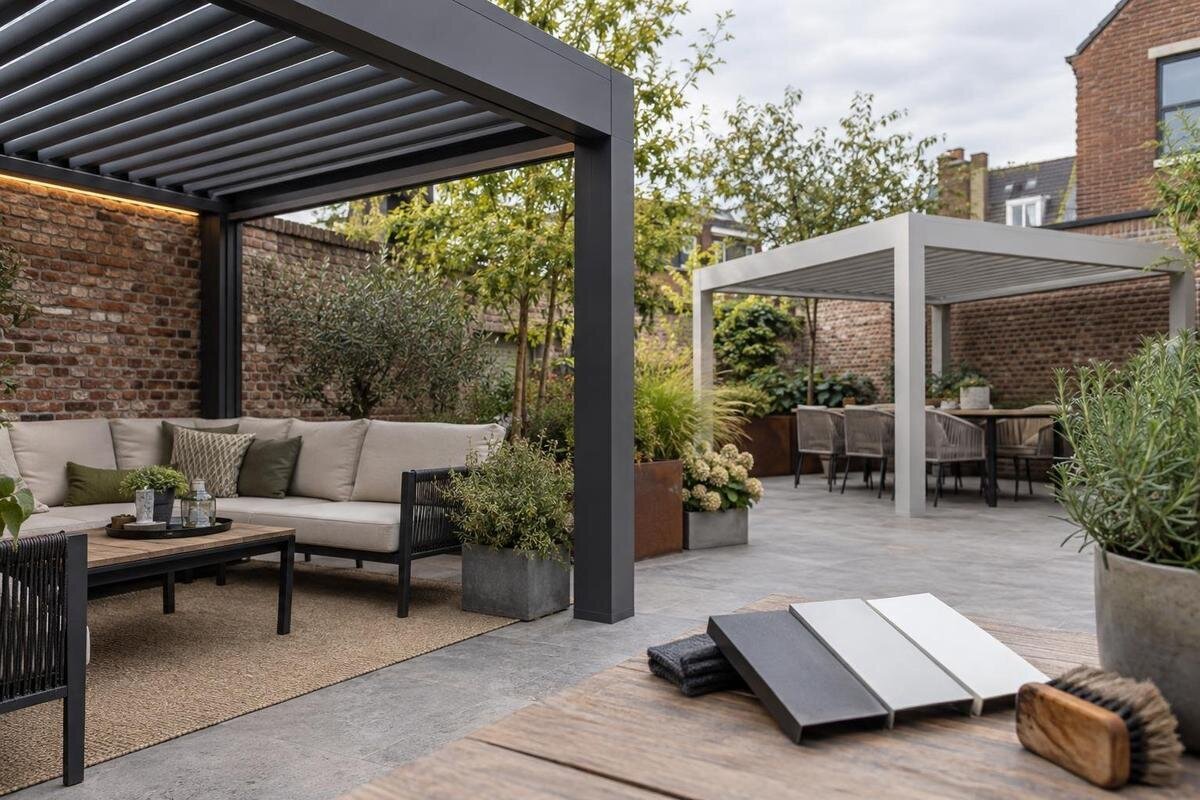
Pergola buying guide
Buying an aluminium pergola involves more than choosing a colour. The frame finish needs to suit the house and garden, and its care requirements should be clear before you order. Product photographs can make different surfaces look similar while leaving the coating method, matching parts and approved cleaning methods unanswered. Comparing written specifications, samples and aftercare information gives you a sounder basis for choosing than appearance alone.

Buyer’s checklist 1
Confirm the frame material and finish separately
Start by separating the frame material from its surface finish. A product photograph may show a silver, dark or timber-effect appearance, but it does not confirm that the structural frame is aluminium or explain how its surface is treated. Look for an explicit statement about the main posts and beams, followed by a separate finish description. If a listing says only metal or gives a colour name, treat the information as incomplete rather than filling in the gap yourself. A term such as powder-coated describes a finish process; black or grey describes a colour. Keeping those details distinct makes comparisons more meaningful. It also avoids confusing an optional decorative panel or accessory finish with the treatment applied to the load-bearing frame. Where descriptions use broad marketing language, ask for the exact wording used in the order specification.
Then check which parts the description covers. The frame, roof components, brackets, fasteners, gutters and optional accessories may have separate materials or finishes; a photograph that looks uniform does not prove that every part matches. If a consistent appearance matters, ask for a written breakdown and whether the stated colour applies to all visible components. Treat the first pergola listing as a page to assess, not as proof of any particular material or coating: use the specifications shown and clarify anything that is missing before you buy. This prevents a fully described finish being compared with an option whose key details are simply unknown. It also helps when comparing quotations, as a colour selection may refer only to the principal frame rather than every visible fitting.
Compare colour in the garden, not only on screen
Consider a colour beside the exterior surfaces it will sit with, rather than judging it as an isolated swatch. Compare it with the house cladding, door and window frames, paving and other fixed finishes. If the pergola will be seen from indoors, view the sample from that side too; the same frame may look different against interior colours than it does against the garden. A physical sample, if available, can help you judge the shade against those surfaces in daylight and in the places from which you will usually see it. Check it in both direct and indirect light, as reflections from glazing, pale paving or planting can change the impression of a colour without changing the finish itself.
Online images and screens can alter how a colour appears, so treat a rendered image as an illustration rather than a reliable colour sample. Ask whether the finish has a named shade or code, whether a physical sample is available, and whether the same choice applies to all the parts you want to match. Use another pergola product page only to compare the details it actually provides; do not assume that similarly named colours on different listings will look identical. Write down the exact shade you intend to order so it is clear in the final paperwork. Where samples are unavailable, retain the written colour description alongside any image so you have a clear reference when confirming the order.
Buyer’s checklist 2
Look beyond colour to sheen and surface texture
Colour is only one part of a frame’s appearance. A finish may be described as matt, satin, gloss or textured, and those words help you compare how it reflects light and how its surface looks up close. The same shade can appear quite different with a different sheen or texture. If a listing names a process such as powder coating or anodising, note the wording, but do not use the term by itself as a measure of durability or as a guide to care.
Ask what the finish description means for the particular frame, which parts receive it and what cleaning or repair guidance applies. Dust, fingerprints and marks may be more noticeable on some combinations of colour, sheen and texture than others, so a sample can be useful if those details matter to you. If a further pergola listing names a finish, compare its stated terms with the other options rather than inferring performance from an image. Choose on the information provided for the product, not on an assumption that one surface type is always easier to maintain. Record unfamiliar finish terms exactly as written, as this makes later questions to the seller more precise. If possible, examine the sample from normal viewing distance as well as close up, since a texture that appeals on a small piece may read differently across a larger frame.
Read the product details as a whole
When comparing options, check that you are looking at the finish for the configuration you actually plan to order. A product image may show one arrangement or combination of parts, while the listing may describe a different selection. Confirm the frame material, the exact finish wording and the colour together. If roof components, brackets or accessories are described separately, find out whether their finish is included in the same choice or needs a separate selection. This is especially important where a product page groups several variants under one description, as the image may not show the finish or accessory combination you have selected.
Keep a note of what is stated, what is unclear and what has been confirmed in writing. If a colour is shown in a photograph but not named in the description, do not assume the image identifies the option you will receive. Apply the same questions to the product details on this page as to any other candidate: check whether the information covers the whole structure and the chosen finish, then ask for clarification where it does not. This gives you a fair comparison between listings with different levels of detail. Keeping screenshots or downloaded product information can also be useful when you need to compare options at a later stage.

Buyer’s checklist 3
Understand the regular cleaning involved
Ask for the manufacturer’s care instructions before you buy, rather than assuming that aluminium needs no attention. For routine cleaning, the instructions may recommend removing loose dirt first with a soft cloth or non-abrasive brush, then using water or a mild detergent if permitted. Follow the stated method, including any directions about rinsing or drying. Avoid assuming that a household cleaner is suitable for the coating just because it is safe to use elsewhere around the home. Ask whether cleaning products used on nearby paving, glass or garden furniture should be kept away from the frame, since accidental contact can be as relevant as the products chosen for the pergola itself.
Do not use abrasives, solvents, scouring pads or pressure-washing equipment unless the product guidance specifically allows them. The finish could be marked or otherwise affected by a method that is unsuitable for it. Ask whether the maker recommends a particular cleaning interval, and whether that advice changes with the conditions around your pergola. The guidance for this pergola listing should be checked against its own product information; do not transfer care instructions from a different frame or finish simply because it looks similar. It is worth asking what products should be avoided, particularly if you already use specialist cleaners for paving, glazing or nearby outdoor furniture.
Ask how finish damage is handled
A knock or deep scrape can damage the surface treatment, but the appropriate response depends on the finish and the extent of the mark. Do not assume that a general-purpose exterior paint will match, adhere properly or be compatible with the coating. Nor is the same repair method necessarily suitable for every type of finish. Before ordering, ask whether the manufacturer provides a product-specific touch-up method or whether damage should be assessed by the seller or another recommended service.
Find out what to do if you notice a mark on delivery or during use, and whether the instructions differ for a small surface scratch and more extensive damage. Photographing a mark and getting advice before sanding, applying paint or using a solvent can help avoid making it harder to repair. Check the written terms for any guidance about finish repairs and coverage. For that product page, look for those details in its own information; if they are not stated, ask rather than assuming a repair kit or service is included. Keep any advice received with the order documentation, especially if the finish has a specific colour code or repair process. Note the date, location and appearance of any damage when reporting it, so the seller can understand the issue without relying solely on a general description.
Buyer’s checklist 4
Include roof and fittings in the care plan
The frame is not always the only part that needs attention. Depending on the design, a pergola may have roof components, moving parts, gutters, brackets, fasteners or screens made with different materials or finishes. Check which of these are included and whether their care instructions differ from those for the aluminium frame. If the roof has adjustable parts, ask for the relevant maintenance guidance rather than applying the frame’s cleaning method to every component.
It is also useful to know whether the instructions explain how to clean around joints and clear any fitted drainage parts without dismantling anything. Do not assume that every pergola has the same fittings or care needs. When reviewing one more pergola page, identify which components are actually described and which maintenance details are not provided. A care guide that separates the frame from other parts gives you a clearer idea of the routine involved than a general statement about the structure as a whole. This distinction is particularly helpful when deciding who will be responsible for routine upkeep after installation. It can also help you avoid using a frame-cleaning product on a moving component or fitting for which different care is specified.
Consider what the pergola will be exposed to
The surroundings can affect what settles on the finish and how often you may need to clean it. For example, a site near the sea or a swimming pool, or one with a lot of tree debris, traffic dust or other airborne deposits, may need different attention from a sheltered, cleaner setting. These conditions do not automatically rule out a finish, but they are worth mentioning when you ask for product-specific care advice. Consider the conditions throughout the year, not just on the day you choose the colour: nearby trees, building works and regular garden activities can all affect the kind of dirt that accumulates.
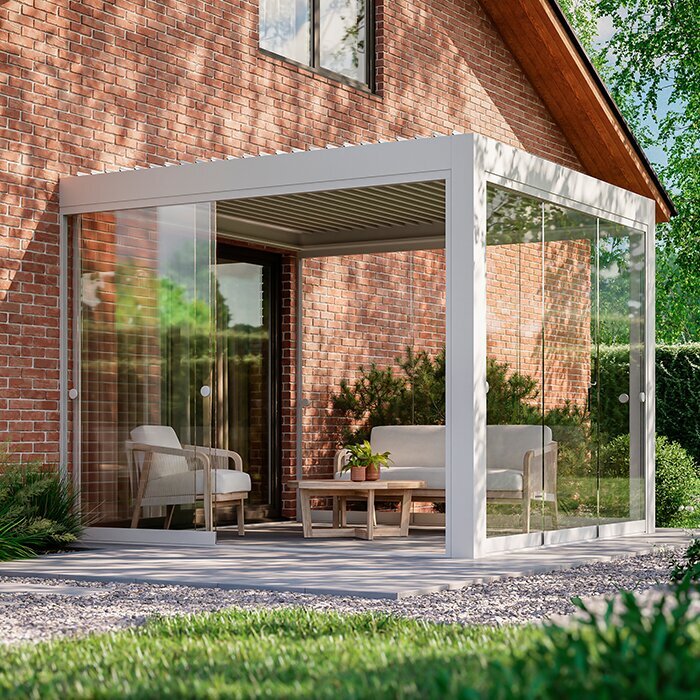
Ask whether the manufacturer gives guidance for the conditions where you plan to use the pergola, and whether any stated cleaning advice or warranty terms depend on the site. A broad description such as weather-resistant is not enough to establish suitability for every exposure. Before comparing the second linked listing with other options, check what its documentation actually says about the finish and care; do not infer a particular exposure rating from a product name, photograph or colour. Mention recurring local deposits when seeking advice, rather than describing the setting simply as exposed or sheltered.
Buyer’s checklist 5
Check aftercare and warranty wording
Look for written aftercare information as well as a description of the finish. If warranty terms are provided, check what they say about the frame and the coating separately, including any conditions that relate to cleaning or repair. Do not assume that a general warranty heading covers every surface or component. If the wording is unclear, ask what applies to the exact finish and configuration you are considering, and keep the answer with the product information.
You can also ask whether approved touch-up products, replacement parts or repair support are available, without assuming that they are included. Find out where to get the care instructions after purchase and whether the seller can identify the finish by a name or code if you need to refer to it later. Clear information about upkeep and repair makes it easier to judge the practical commitment involved; it is more useful than relying on a broad promise of low maintenance. If several people will care for the pergola, store those instructions somewhere accessible so unsuitable cleaning products are less likely to be used.
Compare shortlisted finishes on the same basis
Make a short record for each option so the comparison stays consistent. Note the stated frame material, finish process or description, colour name or code, and which components share that finish. Add the manufacturer’s cleaning instructions, any advice on repairing damage and the relevant written warranty terms. Mark each point as confirmed, unclear or not provided. That way, a detailed listing is not automatically treated as better suited simply because it gives more information; you can see which details still need an answer.
Then weigh the appearance you want against the care you are prepared to follow. A finish that looks right but has unclear maintenance details may need further clarification, while a well-documented option still has to suit the exterior and colour scheme. Do not predict lifespan or cleaning effort from a colour or finish name alone. The more confidently you can identify the actual frame finish and the advice that goes with it, the more informed your purchase decision will be. Before placing an order, review your record against the chosen configuration rather than relying on notes from a similar-looking option.
Frequently asked questions
Is an aluminium pergola maintenance-free?
No. The frame still needs suitable cleaning, and other parts may have separate care requirements. Follow the instructions for the specific finish and any roof or fittings included; there is no single cleaning schedule that applies to every pergola or setting.
Which finish is best for an aluminium pergola?
There is no universal best choice. Compare the finish description, colour, sheen and texture with your surroundings, then check the product-specific cleaning and repair guidance. A finish name alone does not tell you how well it will suit your site or how it should be maintained.
Does a darker colour mean a more durable finish?
No. Colour is not enough to establish the finish process or its performance. Ask what treatment is applied to the frame, which parts it covers and what supporting care or warranty information is available.
Can I use a pressure washer on the frame?
Do not assume that pressure washing is suitable. Check the manufacturer’s instructions for the finish and the rest of the structure first. If the guidance does not mention pressure washing, ask before using it; a soft cloth or brush may be recommended instead.
How should I repair a scratch in the finish?
Ask the manufacturer or seller for advice that matches the exact finish. A general paint or abrasive repair could look different or be unsuitable for the coating. Check whether an approved touch-up product or repair method is available before applying anything.
The right aluminium pergola finish is one whose material, appearance and upkeep are all clear. A sample helps you judge the colour, while product-specific cleaning and repair guidance helps you understand the care involved. Giving equal attention to those details makes for a more considered choice than selecting from a photograph alone.
