
Buying a Wall-Mounted Pergola: Check the Wall Connection
Pergola buying guide
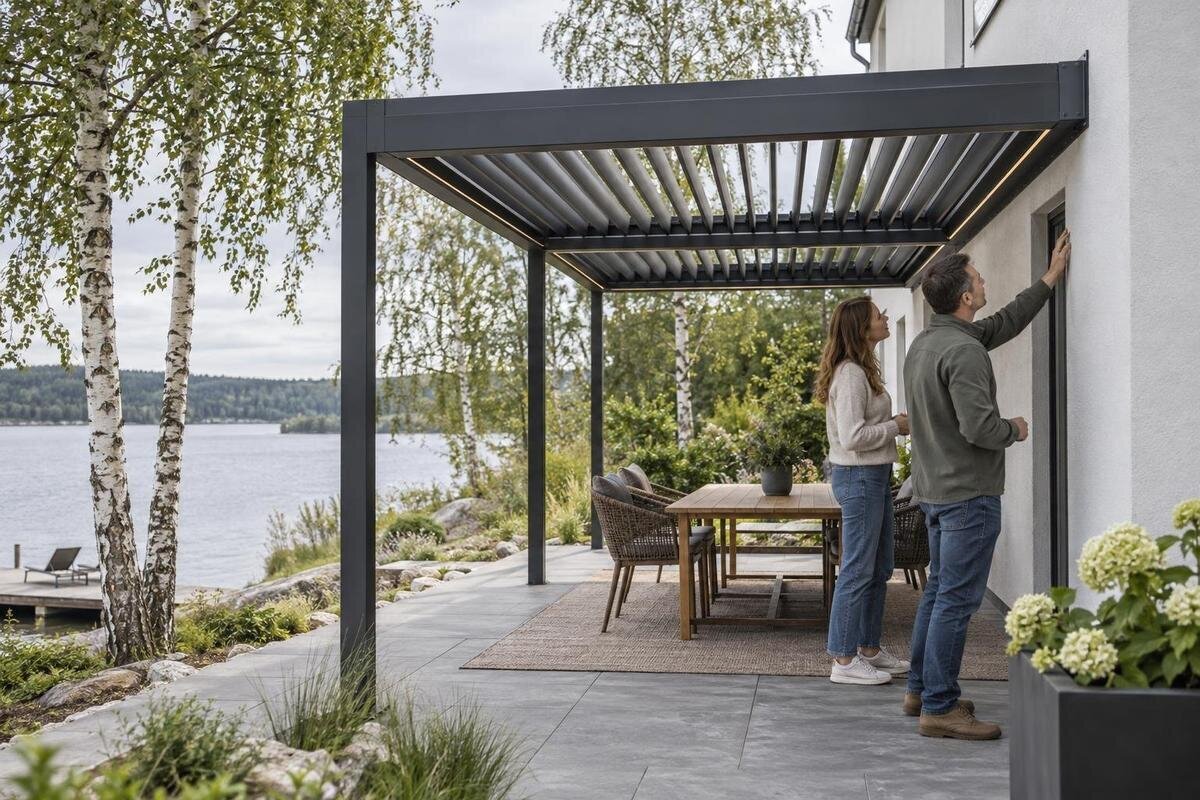
Buying a wall-mounted pergola involves more than matching its appearance to a patio. One side of the layout connects to the building, so the wall’s construction and the area available for attachment can affect whether the proposed arrangement is viable. Those details are specific to your home and cannot be confirmed from a product photograph. Before choosing or ordering, identify what is behind the external finish, find out what the selected pergola requires, and agree who will assess the building connection. This guide sets out the questions to resolve so that the product choice and the wall assessment are considered together.

Why the wall connection matters when buying a pergola
A wall-mounted pergola is designed to attach to a building, so its wall connection is part of the overall choice rather than a detail to leave until delivery. The design has to suit both the outdoor layout and the particular building at the proposed connection point. A product photograph can show how a pergola looks beside a house, but it cannot establish the construction of the wall or the suitability of an attachment there. Treat the site and product as two parts of one decision: the seller can identify what the pergola requires, while a suitable professional considers the building. That distinction helps prevent a purchase based on an assumption.
Begin by noting which wall you expect to use, the approximate area where the structure would meet it, and any openings or services nearby. If you cannot yet identify that area, shortlist products but keep the decision conditional until a competent person has reviewed the site. The wall-mounted pergola page can help you identify the type of product under consideration; its name and images do not confirm that it suits your house. Ask for the relevant product instructions or drawings, then have the proposed arrangement checked against the actual building. This gives you a specific question to put to a supplier or installer.
Identify the wall behind the finish
The visible surface is not a reliable description of the wall beneath it. Render, cladding or insulation may sit over a different construction, while masonry, timber framing and cavity walls each need to be understood in their own context. Even a surface that appears solid may include layers or details that are not obvious from outside. Do not treat the finish as the fixing substrate, or assume that two houses with similar exteriors have the same structure. The relevant question is what the wall is made of at the precise proposed fixing area, as assessed by someone suitably qualified to consider the connection.
If you have building plans, renovation records or details of previous work, make them available to the person assessing the connection. They may help explain the wall, but should not be treated as proof that the particular fixing area is suitable. Mention added insulation or cladding, repairs and any uncertainty about later alterations. Do not remove finishes or drill test holes as a way of checking the construction yourself. When viewing a general pergola product page, remember that it describes a product listing, not the material hidden behind your own exterior.
Pin down the proposed attachment area
The usable wall is rarely just a blank rectangle in a photograph. Note the positions of doors, windows, vents, lights, downpipes, gutters, wall joints and existing canopies. Consider how doors and windows open, where people need to pass and whether the proposed layout would interfere with access to the house. These details may affect where the pergola can sit, even if they are not part of the connection itself. A current elevation or a clear site sketch can help show the intended area; a rough visual estimate is not a substitute for checking the actual position.
Ask the person assessing the building to mark or describe the proposed connection area on the same drawing used to position the pergola. The product information and site plan should refer to one agreed arrangement, so that the person reviewing the wall is not considering a different position from the one planned for installation. The wall-mounted product page can help identify which configuration you are discussing, but it cannot say where on your elevation an attachment should go. If the position changes, confirm that the revised location still meets the product requirements before ordering.
Ask for the pergola’s connection information
Before choosing, request the product information needed to understand the building interface. This may include current installation instructions, drawings that show how the pergola meets the building, stated wall or substrate requirements, specified fixing components and any relevant exclusions. Check whether the material explains the connection, not just the assembly of the visible frame. If the documents are only available after purchase, ask what information can be reviewed beforehand and whether the order depends on later site approval. The purpose is to give the right professional something specific to assess, not to interpret technical details yourself.
A short description such as “wall-mounted” does not answer every connection question. Ask whether the supplier can clarify what the product requires from the wall, which components are included or separately specified, and what conditions may make the proposed arrangement unsuitable. If a sales page is brief, request the missing information rather than filling the gaps from a photograph. You can compare the information available on the bioclimatic pergola listing with another product page, but do not transfer connection details from one model to another.
Check dimensions against the house
Measure the area you want to use against the building before comparing dimensions. Mark the wall line, intended outer edge and clear route on a measured sketch, then use dimensions from the product documentation rather than scaling an image on screen. Check how the proposed layout relates to door thresholds, a garden path, furniture and the space needed to move between the house and garden. A drawing can also distinguish the pergola’s stated footprint from the area you want to keep free for access. If a measurement is approximate, label it clearly rather than treating it as a confirmed installation position.
Vertical space matters as well. Consider windows and doors when open, vents, exterior lights, rainwater goods and access needed for future maintenance. Do not assume a suitable height or clearance from a photograph; request dimensions and the relevant mounting positions for the selected item, then have them checked against the actual house. The Bloomcabin pergola listing can help identify the product you are considering, but it is not a substitute for a drawing with the details you need. Resolve any missing dimensions with the seller before finalising the order.
Agree who will assess the connection
Ask directly who is responsible for assessing the building connection. The supplier can explain what the product requires, but that does not automatically mean the supplier or a general installer can confirm the structure of your wall. The person reviewing the building should have suitable competence for that task. If the question falls outside an installer’s expertise, ask whether a structural engineer or another appropriately qualified building professional should assess it. The aim is to establish a clear route for checking the proposed connection, not to ask you to calculate or select fixings. A reassurance from someone who has not reviewed the wall may leave the central question unanswered.
Clarify the scope before ordering: whether a site visit is included, who confirms the wall construction and location, who supplies the connection components, and what happens if the actual wall differs from expectations. Also establish who will explain any required changes and whether making good the affected area is included in the work. Keep product-supply information separate from the building assessment, so each responsibility is clear. Bloomcabin’s bioclimatic pergola page identifies a product listing; it cannot identify who will assess your property. Whatever you shortlist, agree the roles with the relevant parties.
Resolve unanswered questions before ordering
If the wall build-up is unknown, the proposed position conflicts with an opening, or the connection requirements have not been matched to the building, pause before committing. Ask what further information or professional assessment would settle the question and whether the layout needs to be reconsidered. Do not agree to an improvised connection or an on-site change to fixings, brackets or position unless the product requirements and the responsible professional support that change. This is a point to resolve in the buying process, not an invitation to adapt the system yourself.
Before submitting an order, make sure the product and connection documents refer to the same item and planned position. Similar product names do not prove that two models have identical connection requirements. Record the exact product, agreed wall area, conditions still to be met and the person who has confirmed them. The listing labelled as a bioclimatic pergola can help identify that product if it is the one under consideration, but the order and assessment should each name the exact item. If site approval remains outstanding, ask the seller in writing how a change to the order would be handled and read the applicable terms before committing.
Compare layouts on the same basis
A wall-mounted layout may suit the intended position beside a house, provided a suitable building connection can be confirmed. A freestanding layout changes the support arrangement, but it is not automatically suitable for every site and has its own product and location requirements. Compare the options by the usable area, position, access, appearance and checks each requires, rather than treating wall attachment as a simple convenience. You can set the pergola product listing beside a wall-mounted option when considering layouts, but a listing title alone does not establish how either product can be used on your property.
If the wall connection is uncertain, first find out whether an appropriate assessment can resolve that uncertainty. Do not choose a different layout just because its name seems to involve fewer constraints. Review the alternative product’s own drawings and requirements, and ask a suitable professional to consider its proposed location. When comparing pages, focus on documented information and the fit with your garden plan, not assumptions based on category names. This keeps the decision centred on the whole purchase: the product, its position and the building connection or other support arrangement it requires.
Warning signs in a proposed fixing
Be cautious if you are told that every wall of a particular broad type can take the same fixing, that the visible render or cladding is sufficient, or that a product photograph proves compatibility. Another warning sign is a proposal that gives a generic fixing description but cannot identify the construction at the attachment area or explain how the product requirements have been considered. A sound explanation should distinguish the supplier’s product information from an assessment of your house. If a response is vague, ask what it is based on and who has reviewed the proposed position. The absence of a site visit alone does not prove a proposal is unsuitable, but the wall still needs an appropriate assessment.
Pause if no one is named as responsible for checking the connection, if the proposed method conflicts with the product instructions, or if you are told that any adjustment can be decided on the day. Ask for the disagreement or missing detail to be resolved in writing before the order or fitting plan proceeds. Do not treat a general reassurance as a substitute for a clear answer about the actual building and chosen product. If the proposed arrangement cannot be explained, seek a review from someone suitably qualified before deciding whether to continue with that layout.
What to include in your pre-order record
Keep a short record that brings together the exact product under consideration, its relevant instructions or drawings, and a sketch showing the planned position against the house. Note what is known about the wall construction, what remains uncertain and who has been asked to assess it. Record any stated connection requirements, exclusions and conditions that must be met, along with the names or roles of the people responsible for confirming them. This gives the seller, installer and building professional the same reference point and makes it easier to spot if the product or position changes during the buying process.
Before committing, use that record to ask three practical questions: do the product documents describe the intended connection, has someone suitably qualified considered the actual wall and position, and are the ordering and installation responsibilities clear? Check that the answers relate to the same product and location rather than to a general description of the project. If anything remains uncertain, keep shortlisting or reconsider the layout while you obtain clarification. A confirmed connection plan gives you a more reliable basis for choosing a wall-mounted pergola than appearance alone.
Frequently asked questions
Can I attach a pergola to render or cladding?
Do not assume that the visible finish is suitable for an attachment. Render or cladding may cover a different wall construction, so a suitable professional needs to identify the build-up at the proposed fixing area and assess it against the selected pergola’s requirements.
Should I order before the wall has been assessed?
You can shortlist products, but keep the choice conditional if the connection has not been checked. Ask what needs to be confirmed before ordering and how the seller handles an order if the proposed position proves unsuitable. Get the relevant terms in writing.
What information should I request from the seller?
Ask for the installation instructions and drawings that explain the building connection, the stated wall or substrate requirements, any specified fixing components and relevant exclusions. Also ask who is expected to assess whether those requirements suit your particular building.
Does wall-mounted mean the building provides all the support?
Not necessarily. The required support arrangement depends on the selected product. Check its instructions and drawings rather than assuming what the wall connection or any other supports need to do, and have the proposed arrangement reviewed by a suitable professional.
What if the proposed wall is unsuitable?
Pause the order or fitting plan and ask for the issue to be clarified by the person responsible for assessing the connection. You may need a different position or layout, but do not improvise fixings or adapt the product without confirmation that the revised arrangement is appropriate.
A sound buying decision brings together the pergola’s documented connection requirements, the construction of your wall and a clear assessment of the proposed position. Shortlist products based on layout and appearance if useful, but make the order only when those points refer to the same product and location. If the wall cannot yet be confirmed, keep the decision open or reconsider the layout rather than assuming a standard fixing will solve the issue. That way, the building connection is part of the purchase plan, not a surprise after delivery.
