
After a Storm: What to Check Around Your Pergola
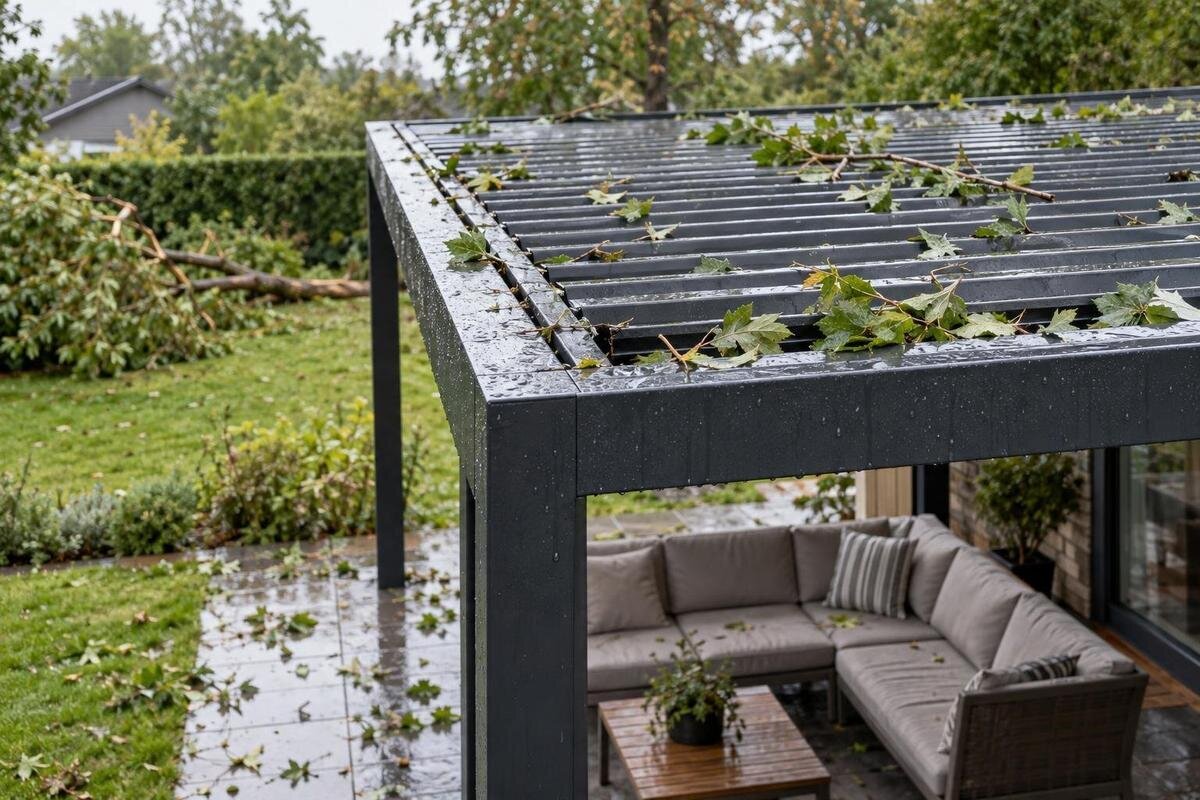
Pergola care
After a storm, a pergola can look unchanged from the patio while a connection, roof component or nearby area has shifted. A useful first check is deliberately limited: wait until conditions and access are safe, then look from ground level, record what you can see and avoid touching anything unstable. This guide covers the frame, roof, drainage, surrounding ground and attached items, along with signs that call for a professional assessment. It is not a structural test, and the absence of obvious damage does not confirm that hidden fixings or components are sound.

Wait for safe conditions before going outside
Do not go outside while strong gusts, heavy rain, thunder or poor visibility continue. Conditions can change again, and branches, loose roofing or outdoor items may still be moving. Wait until the weather has passed and there is a clear, stable route around the pergola. If you can see the frame shift, hear cracking, or notice a component hanging down, do not walk beneath it to get a closer view. Keep children, visitors and pets away from the area. This is a visual inspection from the ground, not a test of whether the structure can be used.
Before you approach, look at the route as well as the pergola. Fallen branches, glass, sharp fragments, slippery paving, displaced furniture and standing water can make a simple check unsafe. Do not move debris if it is caught on the frame or if reaching it would mean going underneath. Treat damaged cables or electrical equipment as a hazard: stay clear and seek help from the relevant qualified service rather than handling or testing it. If any part of the area feels unsafe, stop at a distance and arrange an assessment.
Record the scene from a safe distance
Begin with photographs from a place where you can see the whole pergola without standing beneath it. Take a wide view of the structure and its surroundings, then views from each accessible side, including the ground and any nearby wall. Keep the original files, as their date and time information may help establish when the damage was noticed. Note when the storm passed, its direction if known, and any unusual sound or visible change. Older photographs taken from a similar position can be useful for comparison; a single close-up may make an ordinary angle look like a lean.
If it is safe, take closer photographs of visible concerns without touching them or moving into a risky position. Include enough of the surrounding frame to show where each mark or loose part is, and label the location in your notes. Give each photograph a simple description, such as the side facing the garden or the post nearest the house, so someone unfamiliar with the site can follow your account. Use your paperwork, rather than a visual match to a catalogue image, to identify the installed model. The Bloomcabin Bioclimatic Pergola page can help you recognise the product name in your records, but it cannot confirm the identity of an existing installation. If the model remains uncertain, say so in the enquiry rather than choosing the closest-looking product.
Look for signs of movement in the frame
From the ground, compare the posts, beams and roof outline with older photographs or with features you know have not changed. Note a post that appears to lean, a new gap at a joint, a beam out of line, or a base that looks different from before. A changed view can also result from camera angle, so record what you observe instead of deciding what caused it. Do not push or pull a post, test a joint, tighten fixings or try to straighten anything. If the frame appears to have moved, keep clear and arrange a professional assessment before using the area.
If the pergola meets a house wall, look only at the visible junction from the ground. A new gap, cracked finish or apparent change in position is worth recording; do not pull trim away or try to look behind flashing. Describe whether the concern is at one end, along the junction or beside a particular post, and distinguish a visible crack in the finish from a gap between components. You do not need to decide what either means. The Bloomcabin Wall-Mounted Pergola listing provides a product name to compare with your paperwork, not details of how your own installation is fixed to the wall. Include relevant installation records with your photographs. Any visible separation or movement at the junction is a reason to keep clear and have it assessed by a suitably qualified professional.
Inspect visible roof components and attachments
Look up from a safe position, without standing beneath anything that appears loose. Depending on the design, the roof may include louvres, panels, fabric or glazing; note any part that looks displaced, cracked, bent, missing or uneven. Do not operate a roof, screen or other moving component to see whether it still works. Nor should you climb a ladder or reach up to examine a fixing. If the view is blocked, record that rather than moving closer under a suspect section. A visual check can show an obvious concern, but it cannot confirm the condition of parts you cannot see.
Check for loose-looking caps, trim or other attachments, as well as anything hanging down or caught on the frame. Photograph their position before anything is moved, if it is safe. In your notes, distinguish a part still attached to the pergola from a loose piece lying nearby; do not assume that every fragment came from the structure. The Bloomcabin Pergola page may help you compare a product name with your order records, but online product images are not parts diagrams. For a service enquiry, describe the component's visible shape and location rather than guessing its technical name. If a piece has come away, do not retrieve it if that would mean going under the roof, climbing or handling sharp material. Record where it was found and leave it for the professional to assess.

Look for drainage problems and water marks
Once the rain has eased and the area is safe, look from the ground for visible gutters, channels or outlets, if the pergola has them. Note overflowing water, debris visible at an outlet, fresh puddles, muddy patches and splash marks on paving or nearby walls. Record where water appears to run off and whether a mark is new compared with older photographs. These signs help describe what happened, but they do not by themselves show whether an outlet is blocked or whether water has affected the structure. Avoid assuming that every pergola has the same drainage arrangement.
Do not climb up to inspect a roof channel, reach under a damaged section or poke an object into an outlet. Do not try to reproduce the flow with a hose while damage is suspected. A simple note of where water collected, how long it remained visible and what the surrounding ground looked like can help a service provider understand the concern. If water is pooling beside a post, entering a building or gathering near electrical equipment, keep clear where needed and report the location. Leave any diagnosis or work on an inaccessible outlet to a qualified professional.
Inspect the posts and surrounding ground
Look at the ground around each visible post for fresh washout, exposed areas, cracks, lifted paving, displaced soil or new pooling. Check whether anything that previously covered the view, such as stored garden items, has moved, but do not shift a heavy object to uncover a base. A changed gap between paving and a post can be worth photographing, although the surface alone cannot tell you what has happened below it. Note which post is affected and whether the same area appears in older photographs. If a base looks exposed or a post seems to have shifted, stop at a safe distance and seek an assessment.
Do not dig around a post, lift paving, add material or try to secure a base yourself. Photograph what is visible from a safe position, including the nearby ground rather than only the post. Describe whether the change is beside the base, between paving slabs or farther out in the surrounding soil. This keeps the record clear without making assumptions about anything below the surface. If a close-up would require stepping under the pergola or disturbing the area, leave it out and explain that the view was restricted. When discussing repair or replacement, the wall-mounted pergola product page is a product reference, not confirmation of the anchoring arrangement at your home. A professional can decide what further inspection is appropriate and whether existing parts can be reused.
Check nearby trees, screens and outdoor items
Storm damage around a pergola may come from something nearby rather than from the frame itself. Look for fallen branches, fresh scrapes from vegetation, shifted fence panels, displaced bins or furniture, and objects caught against a post or roof. Photograph the item in place if it is safe, and note which side of the structure it came from. Do not pull down a hanging branch, retrieve an object from an unstable roof or clear anything that is holding another part in position. If the surrounding area is still unsafe, keep people away and wait for appropriate help.
If screens, fabric sides, lights or other accessories are attached, note whether any appear torn, loose or out of position. Distinguish damage to the accessory itself from a visible change where it joins the frame: these are separate observations to include in the enquiry. Record which side is affected and whether the item is still attached, without moving it to improve the photograph. Do not reconnect, operate or test electrical items, or assume that a part can be reattached because it looks undamaged. If you are also considering replacement, the regular pergola listing provides a product reference for that discussion; it does not establish accessory compatibility. Keep the immediate damage enquiry separate from questions about future additions, and leave inspection or repair of wiring and attachments to qualified service providers.
Know when to keep clear and call a professional
Treat visible movement, a pronounced lean, separation at a wall or joint, a cracked structural member, a partly detached roof section or a newly exposed base as reasons to keep away and seek professional assessment. The same applies if you hear continuing creaking or see a part move in otherwise calm conditions. Do not use the pergola, stand beneath it or ask someone else to test it. If a damaged part could fall into an area people cannot avoid, keep clear and contact the appropriate emergency service. For less immediate concerns, contact a qualified pergola installer or another relevant professional.
A surface mark may be cosmetic, but appearance alone cannot reliably distinguish that from damage that needs attention. Photograph the mark and its context, then describe its location and what has changed without labelling it as harmless or structural. In the enquiry, explain whether the area is currently kept clear and which parts could not be viewed safely. This gives the professional a clearer account than a close-up accompanied by a guess about the cause. If an assessment concludes that replacement should be considered, the Bioclimatic Pergola product page can support that separate discussion. First establish what the assessment says about the existing installation: whether repair is appropriate, whether further inspection is needed or whether replacement should be explored. A new-product listing cannot resolve those questions about storm damage.

Prepare clear information for a service enquiry
Put the useful facts together before contacting an installer or service provider: the model or order details from your records, when the storm occurred, when you first noticed a change, and what you can see now. Include wide photographs and close-ups from safe positions, and point out the affected side or post in a short note. If you have older pictures, manuals or records of previous work, keep them together. Separate direct observations from guesses about the cause; for example, note a new gap rather than stating that a particular fixing has failed.
Ask what information is needed to identify the installed system, whether an on-site assessment is required, and what precautions to follow while the concern remains unresolved. Group your questions around the observed damage so the service provider can distinguish an immediate concern from a request for a replacement part. Do not remove covers, dismantle a component or order a generic part to speed things up. If your records name the model shown on the Wall-Mounted Pergola page, include that name alongside the order details, but let the service provider confirm the correct component. Make clear which photographs show the current condition and which were taken before the storm. If wiring or a powered part is involved, leave inspection and repair to a qualified service provider rather than attempting a test.
Keep a record and plan the next inspection
Keep the storm photographs, notes, service messages and any assessment together. If a professional carries out work, record what was addressed and when, along with any instructions they give for later checks. Do not treat a clear ground-level view as proof that hidden fixings or roof components are sound. If no damage is visible, make a note of that too; it gives you a reference for a future comparison without certifying the structure as safe. Avoid returning to a damaged or restricted area until you have been told it is appropriate.
After the structure has been assessed or repaired, follow the instructions for that specific pergola and note any concern that reappears after later bad weather. Keep later observations separate from the original storm record, with dates and photographs where these can be taken safely. This makes it easier to explain whether you are reporting an unresolved concern or a change noticed after work was completed. If replacement is being considered, compare options only after the existing installation and site have been assessed. The Bloomcabin Bioclimatic Pergola is one product listing to review at that stage, not confirmation that it suits your location or can reuse parts from the damaged pergola. Retain the assessment and the record of completed work alongside your original photographs so future enquiries do not depend on memory.
Frequently asked questions
Should I inspect the pergola while the wind is still gusting?
No. Wait until the weather has passed and you can see and reach the area safely. Gusts can move loose parts or nearby objects, and poor visibility can hide debris. If you cannot keep a safe distance from the structure, leave the inspection for a professional.
Which signs mean I should keep people away?
Visible leaning or movement, a new gap at a connection, a cracked frame member, or a part hanging loose are reasons to keep clear and seek a professional assessment. Do not try to confirm the problem by pushing, pulling or operating the structure.
Can I move the roof or screens to see if they still work?
Do not operate them if you suspect storm damage, or if anything looks loose, bent or out of place. A movement test can create further risk. Record what is visible from the ground and ask a qualified service provider how the system should be assessed.
What information should I send with a repair enquiry?
Send wide photographs showing the pergola and its surroundings, closer views of visible concerns, the date of the storm and a short description of what changed. Add the model or order details from your records, if available, and avoid taking anything apart to find a part number.
How can I check drainage without climbing onto the pergola?
From a safe position on the ground, look for visible outlets, overflowing water, new puddles, muddy patches or marks showing where water ran. Do not climb, reach under a damaged roof or poke into an outlet. Record what you see and seek advice if a blockage or damage is suspected.
A careful post-storm check is a record of visible conditions, not a test of strength. Wait for safe access, photograph the pergola and its surroundings from the ground, and note any change without trying to move or repair a suspect part. Visible movement, separation or damage deserves professional assessment. Keeping clear when something looks unstable protects people and gives the person assessing the pergola useful information to work with.
