
How Aluminium, Wood and Wicker Furniture Suit a Pergola
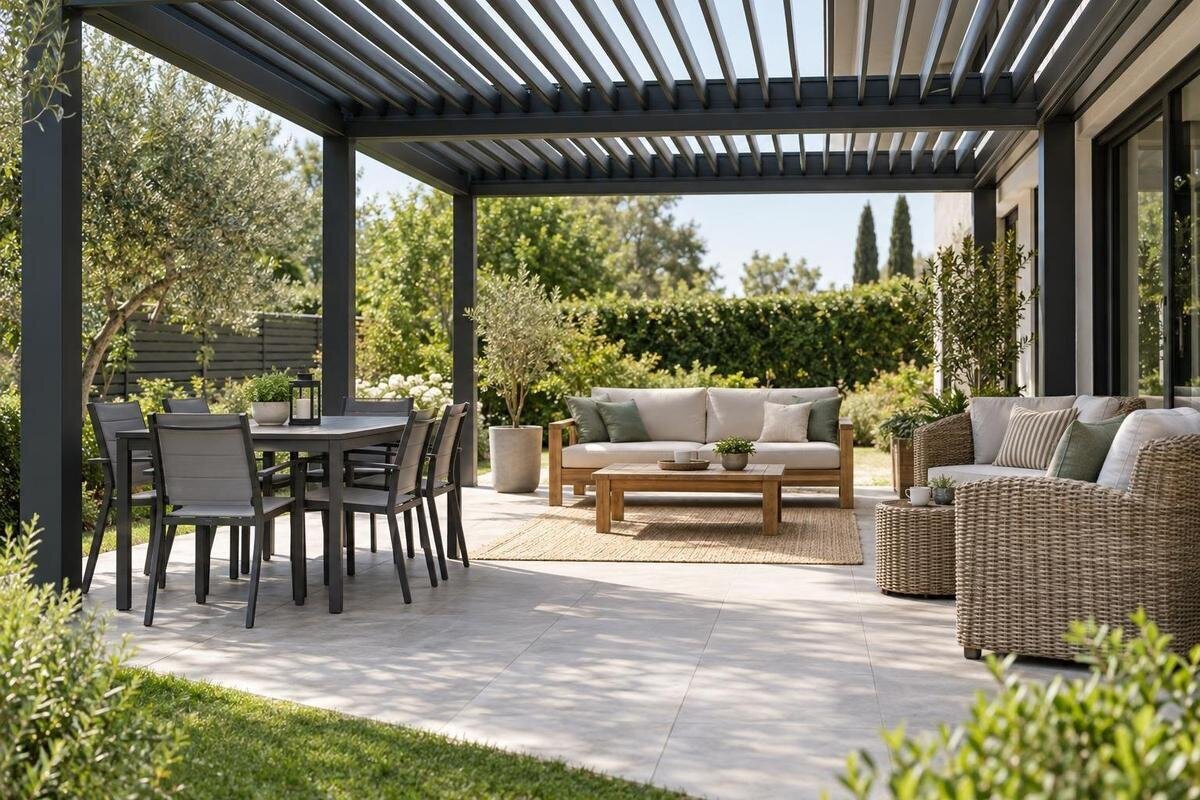
Pergola furniture guide
When choosing outdoor furniture for a pergola, the material is only part of the decision. Open sides, sun, wind-driven rain, how often you sit outside and whether you are willing to store cushions all affect what will feel manageable. Aluminium, wood and wicker each suit different priorities. Shelter matters, but so do the furniture's construction and finish: the term wicker, for example, does not tell you what the strands are made from. This guide compares typical care needs and comfort, explains what to check on a specific set, and shows how to measure furniture in use before settling on a layout.
Before you buy 1
Assess the pergola's actual exposure
Begin by observing the space rather than assuming that furniture under a pergola is fully sheltered. Notice when direct sun reaches the seating, which sides are open, and where wind-driven rain lands on paving or nearby walls. Check the ground after wet weather: water that lingers beneath a table or around chair legs affects drying and cleaning. Also note nearby doors, planting and paths, because a set that fits on an empty plan can obstruct a route once people sit down. Repeat these observations at the times you expect to use the area. The pergola's presence alone does not establish that cushions or timber will stay dry.
Write down what the furniture needs to do: everyday coffee, meals, reclining or a mix. Then measure the clear floor area you can actually use, not just the overall pergola footprint. The Bloomcabin Pergola range is listed from 9 to 24 m², which gives one area reference, but it does not show where furniture, doors and walking routes will sit in your garden. Compare the stated area for a particular configuration with your measured plan. These are separate checks: a material can suit the exposure and still leave an arrangement cramped or difficult to clean. Include any space you need to store cushions or move chairs when they are not in use.
Aluminium furniture: check the finish as well as the frame
Aluminium is often chosen for a clean, contemporary appearance and a frame that is straightforward to wipe down. Dust and ordinary surface grime can usually be removed using the cleaning method recommended by the maker. An aluminium frame does not need timber stain or oil, but its finish still requires care. Coatings can be scratched or marked, joints and fittings need attention, and tabletops, straps or cushions may be made from other materials. Check the full specification and care instructions for the actual set, rather than judging upkeep from the frame alone. Compare what needs cleaning on each component, not just how simple the frame looks.
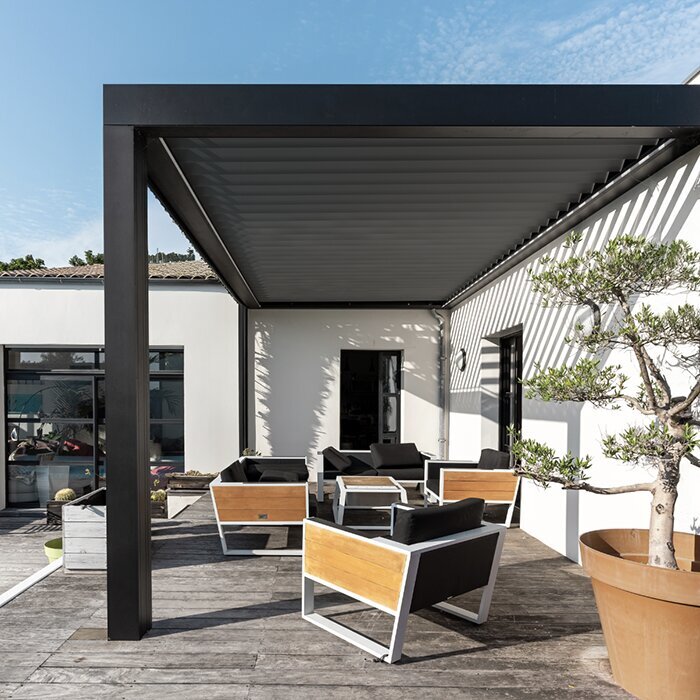
Weight and feel vary by design. A lighter chair may be convenient to move when you change the arrangement or clean beneath it, but it may be less stable in gusty conditions; a heavier frame can be harder to shift for storage. Try lifting and moving the actual piece if possible, rather than assuming that every aluminium chair will handle the same way. If you are considering Bloomcabin Bioclimatic Pergola for a space used for both dining and lounging, think about how often you will rearrange the furniture. The ease of moving each chair matters alongside its appearance when the set will not stay in one position.
Before you buy 2
Wood furniture needs finish-specific care
Timber brings visible grain and a natural variation that a uniform finish cannot reproduce, but wooden outdoor furniture covers many species, constructions and finishes. Ask what timber is used, whether a protective finish has been applied and what care the maker recommends. A coated surface may need different upkeep from timber intended to weather naturally; neither description alone tells you exactly how the set will look over time. Inspect joints, end grain and table surfaces as well as colour, and check that the furniture is intended for outdoor use. Its position beneath the pergola will affect how quickly it dries after rain.
Follow the care guidance for the particular finish: clean without damaging the surface, allow wet parts to dry and renew treatment only as directed. Some owners value the gradual change in colour; others prefer to maintain a more consistent appearance. Decide which approach you want before buying, so that the expected upkeep matches the look you prefer. A substantial timber table can also be awkward to move for cleaning. For a setting beside the house, such as one planned with the Bloomcabin Wall-Mounted Pergola, consider how you will reach the table's edges and legs without having to move the whole set each time.
Wicker is a weave, not a material
Wicker describes a woven construction, not one particular fibre. Outdoor furniture may use natural fibres, synthetic strands or a combination, so find out what the weave is made from before relying on the word in a product title. Natural woven materials generally need more protection from persistent damp than an outdoor-rated synthetic weave, but synthetic strands still vary in finish and care requirements. Check that the whole set is intended for outdoor use and identify its frame material too. A woven seat can have a separate metal or timber frame, with its own upkeep needs.
A textured weave can give a seating area a softer, more relaxed look, but comfort depends on seat shape, support and any cushion, not on the weave alone. Dirt can collect between strands, so ask how the maker recommends cleaning the pattern and allowing it to dry. When comparing woven furniture for a setting with a Bloomcabin Bioclimatic Pergola configuration, look at the whole chair rather than just its texture. Deep or wide lounge pieces can take up more room than compact dining chairs. Check their actual dimensions and whether cushions are needed for the comfort you expect; these affect both the space occupied and the care involved.
Before you buy 3
Plan for rain reaching the seating
A pergola can reduce some direct exposure, but open sides leave furniture affected by the conditions at the site. Rain may reach chairs from the side, damp can linger on a shaded surface, and splash from paving or nearby planting can wet lower parts. When planning furniture beneath a Bloomcabin Pergola, observe where water lands rather than treating the roof as a dry-storage guarantee. Compare the conditions at the edge of the seating area with those nearer its centre. A metal frame may be straightforward to wipe, while a timber finish or woven material has its own drying and care routine. The position of each piece therefore matters as well as the material.
Build drying into the routine. Bring cushions inside or to a dry, ventilated storage place when rain is likely or the furniture will be unused for a while; let damp covers dry fully before folding them away. A fitted cover may help protect furniture from dirt and exposure, but check that it suits the set and does not trap moisture against a wet surface. If the furniture cannot be moved, leave access to wipe or clean around and beneath it. That practical access can matter more than a broad claim that a material is weatherproof.
Sunlight affects furniture finishes and cushions
Sunlight still matters when furniture is beneath a pergola. Shade may move across the area through the day and the seasons, while open sides can admit direct sun. Finishes and textiles may fade with prolonged exposure, and a dark surface can become warm in direct sun. Consider when the seats will be used and check the care information for both the frame and any fabric. Do not assume that a shaded seat is protected from all sunlight, or that every finish will age in the same way. A position that is comfortable in the morning may feel different later on.
Cushions add comfort but also bring another care decision. Check whether their covers are intended for outdoor use, whether they can be removed, and how they should be cleaned and stored. Those details can matter more to everyday upkeep than the difference between aluminium and wood frames. Decide where cushions will go when seats are wet or unused; if there is no convenient dry storage, fewer removable cushions may suit your routine better. If you are choosing colours, view samples in the actual setting alongside the pergola, paving and planting, as indoor light or an online image may give a different impression.
Before you buy 4
Seat design matters as much as material
Material does not determine whether a chair is comfortable. Seat depth, back angle, armrests, table height and support all affect how long you will want to sit. A firm surface may need a cushion, while a generously padded design brings more fabric to dry and store. If possible, try the actual furniture, or compare its dimensions with a chair you already use. Check how easily a person can sit down, stand up and reach the table. For mixed use, a dining chair and a low lounge seat have different footprints, so do not plan the entire pergola around a product photo.
Consider how each piece supports the activity you have in mind. A dining chair needs to work with the table, while a low lounge seat serves a different purpose; moving one between the two arrangements will not necessarily make it comfortable for both. When comparing Bloomcabin Pergola options for a combined seating and dining area, decide which furniture will be used for each activity. Try the chair at a comparable table height if possible, including with any cushion you intend to use. A substantial wooden bench may stay in one position, whereas individual chairs may be moved regularly, so assess comfort in the position where each will usually be used.
Measure the complete furniture arrangement
Measure each item before ordering, including the table with its chairs in the positions people will use. On a simple concept plan, mark how far chairs pull back, the access to doors, any steps or fixed features, and the route between the house and the seating. Add side tables, loungers or a parasol base if they are part of the plan. Do not treat every square metre in a pergola's stated area as unobstructed: the shape of the space matters as much as its total area. A narrow edge may be less useful for a deep chair than the same area in a clear rectangle.
Compare the drawing with the exact size and shape of the pergola configuration you are considering rather than relying on an area figure alone. The Bloomcabin Bioclimatic Pergola range is listed from 9 to 24 m², giving you an initial range to compare with your plan. Mark the furniture footprints to scale, then include the circulation space that feels practical for your household. If you regularly add guests, draw that larger arrangement too, with the extra chairs in use rather than tucked away. Comparing the everyday and guest layouts can show which arrangement needs more space. A concept plan is a useful planning aid, not a guarantee of fit.

Before you buy 5
Choose a care routine you can maintain
Make maintenance specific before you buy. For aluminium, ask about the finish and recommended cleaning method; for wood, follow the stated treatment and drying guidance; for woven furniture, check whether the strands and underlying frame have different instructions. Ask whether the tabletop, fixings and cushion covers all need the same routine. This can reveal extra work in a mixed-material set. Avoid assuming that a familiar household cleaner suits every finish, or that a freshly washed weave is also dry around its joints. The maker's instructions are more useful than a broad label such as low maintenance.
Think about where each item will live between uses and during longer wet spells. If a set must be moved to a shed or storage area, make sure the route and available space work with its actual dimensions and weight. If it stays outside, plan access for cleaning around and underneath it, plus a dry place for cushions and removable parts. A routine that fits your habits is more realistic than choosing a finish you intend to preserve but will not treat regularly. Check whether replacement covers or parts are available only if the maker confirms this; do not assume matching components can be bought later.
Combining materials in one furniture arrangement
Using more than one material can give an outdoor area a coordinated look without buying a matching set. An aluminium dining set can sit beside a wooden side table, or woven chairs can add texture around a simple table, provided the sizes and finishes work together. Choose a colour or repeated detail to link the pieces, then consider whether their care needs suit the way you use the space. A mixed set may need separate cleaning methods, and a natural surface may change colour while a coated one stays more uniform. Decide whether the combination is mainly for dining, relaxed lounging or regular use for both.
For a dining arrangement, compare the chairs with the table as a combination, not as separate purchases. Seat height, armrests and cushions all affect how comfortably they work together. For lounging, consider whether each seat lets you reach the side table without an awkward stretch. If you are arranging mixed furniture beside the house under the wall-mounted Bloomcabin Pergola, use the same measured plan for all the pieces, including those bought separately. This makes it easier to compare a matching set with a combination of materials. The aim is a coherent arrangement in use, not simply a collection of finishes that look attractive together.
Frequently asked questions
Which material is easiest to maintain?
For many households, aluminium with a straightforward finish is easiest to wipe down. However, check the whole set: cushions, straps, tabletops and fittings may need different care. Timber finishes and natural woven fibres often call for more specific attention, so compare the maker's instructions rather than judging by the frame alone.
Can wicker furniture stay under a pergola?
It depends on what the weave is made from and whether the furniture is intended for outdoor use. Natural fibres generally need more protection from persistent damp than an outdoor-rated synthetic weave. Open sides can still let in rain, so check the care guidance and plan how the furniture and cushions will dry.
Does wooden garden furniture need oiling?
Not always. The right treatment depends on the timber, its finish and the maker's instructions. Some furniture is intended to weather naturally; other finishes need renewing to maintain their appearance. Check the specific care guidance before applying oil or another treatment.
Does aluminium furniture get hot in the sun?
A metal surface can feel warm after direct sun, but the result depends on exposure, colour and design. Shade can move during the day, so consider when you will use the seats. Try the furniture if possible, and remember that cushions add comfort but also need drying and storage.
How can I tell if a furniture set will fit?
Measure the table and each seat, then mark their footprints on a simple plan. Include chairs pulled back, any reclining space, doors and the route people need to walk. Compare that plan with the pergola configuration you are considering; an overall area figure alone cannot confirm clearances.
Aluminium, wood and wicker are not a simple ranking from best to worst. Aluminium can keep frame care straightforward, timber brings grain and finish choices, and wicker offers a woven look whose suitability depends on what the strands are made from. The right option is the one whose material, cleaning routine and comfort match the actual exposure beneath your pergola. Measure the chairs and table in use, account for rain and sun, and choose a care routine you are content to follow.
