
Clearing Algae from Pergola Posts and Paving
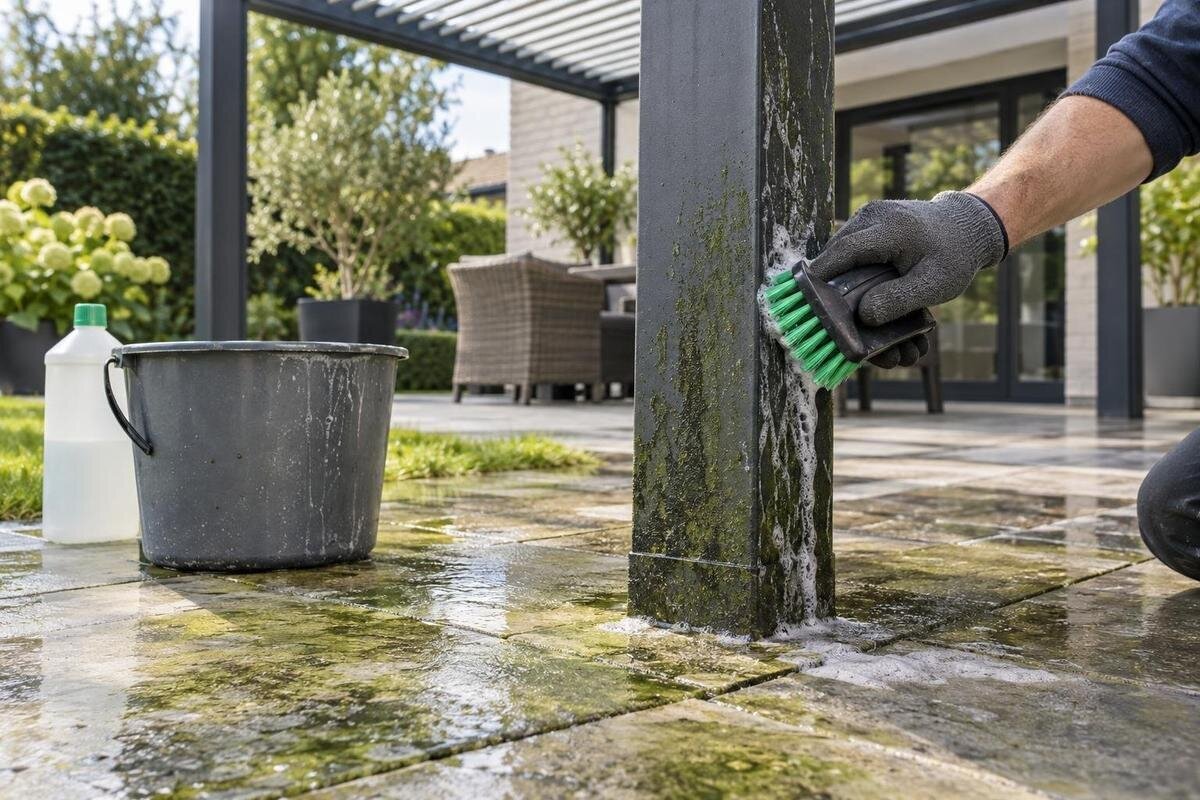
Pergola care
Algae on paving beside a pergola can make a route slippery, while the same green film on a post calls for a different cleaning method. A treatment intended for paving may not suit the paving material, and it must not splash onto coated aluminium unless the pergola’s care instructions confirm compatibility. The reliable approach is to identify both surfaces, separate the work and control where cleaner and rinse water travel. Here’s how to remove surface growth without turning one cleaning job into damage to another finish.

Before you begin 1
Different cleaning methods for posts and paving
Algae often appears where moisture lingers and light is limited. On a pergola, it may show on the shaded side or near the base; on paving, it can spread across a larger patch. Colour alone is not a reliable diagnosis. Dirt, moss, lichen, leaf staining or a change in the finish can look similar at a distance. Look closely in good light before choosing a method. Note whether the patch is soft or slimy, raised, crusted or part of the finish. If the coating itself is powdery, blistered, flaking or worn through, scrubbing it as though it were algae is the wrong first response. Avoid scraping it just to identify it; a close-up photo can record what you see without altering the surface.
Assess the area’s use as well as what is growing. A slimy patch on a path, threshold or step should be kept out of use while wet and until cleaning and drying are complete. Look for leaf litter, standing water and the direction in which rainwater drains, but do not assume one damp spot explains every patch. Take a few photos and note whether the growth is on paving, a post or both. If the paperwork has gone missing, a product listing such as the Bloomcabin Wall-Mounted Pergola listing can help you record the model name for a care enquiry. Use the model’s cleaning instructions to choose the method.
Check the coating before choosing a cleaner
Coated aluminium and paving are different cleaning surfaces, even when the same growth appears on both. A patio treatment may be too aggressive for the pergola’s finish, leave a mark or carry restrictions on contact with other materials. Do not rely on broad product names such as “patio cleaner”, “algae remover” or “multi-purpose” as proof of compatibility. The same applies to claims that a cleaner is natural or plant-friendly: those words do not confirm that a coating can tolerate it. Read the pergola’s manual or care sheet alongside the cleaner’s full label, including application, contact time and rinsing instructions. If instructions conflict, or the cleaner says to avoid coated metal, keep it away from the posts.
Find the exact product name and finish information rather than identifying a frame by colour alone. The Bloomcabin Pergola product page identifies the regular pergola, but a model listing does not tell you which chemical its coated surfaces tolerate. If the manual is unavailable, ask the manufacturer or retailer for guidance tied to the precise model and finish before using anything stronger than a method already permitted. An inconspicuous trial is not a replacement for compatibility advice: a small patch may not reveal a later change, and it may still be visible.
Before you begin 2
Prepare the work area and keep tools separate
Choose a reasonably calm spell and allow enough time for the area to remain out of use while it is cleaned and dries. Move furniture, cushions, outdoor rugs, toys and pots that could be splashed or block safe access. Sweep loose leaves before adding water, so they are not pushed into joints or dragged across the coating. Note nearby doors, walls, drains and planting, then trace where water might travel from the area you plan to clean. Keep children and pets away from the work zone and wet paving. If you cannot control the cleaner and rinse water, postpone the job or use a different method.
Use separate clean tools for the frame and the paving. A brush that has picked up grit can scratch a coating, while a cloth that has touched a paving chemical can transfer it to a post. Keep buckets, cloths and brushes apart rather than relying on a quick rinse between jobs. If you are using a paving product, shield the post with a stable physical screen placed clear of the finish so it cannot rub, trap grit or hold liquid against the base. Do not wrap a wet cloth around the post or let the barrier block drainage; remove it only after the treatment residue is controlled.
Clean coated aluminium gently
If the pergola’s care guidance allows washing, begin with clean water and the gentlest method it specifies. Use a clean soft cloth or sponge and lift the film rather than grinding at it. Add mild detergent only if the instructions permit it, and mix or apply it exactly as directed. Work on a small area at a time so you can see whether the film is lifting without repeatedly scrubbing the same spot. Rinse the cloth frequently so grit is not dragged across the surface. Avoid abrasive pads, wire brushes, scouring powders and blades; they can scratch or remove the coating.
Rinse permitted detergent with clean water using a controlled pour or gentle flow rather than a concentrated jet. Wipe drips promptly so they do not dry as residue, and keep rinse water away from any paving product that has not yet been removed. Do not use a pressure washer or steam cleaner on the post unless the exact pergola instructions explicitly allow it. If growth does not lift, stop rather than increasing pressure or switching to a stronger chemical. When asking which tools or methods are permitted, give the exact model name, such as the Bloomcabin Bioclimatic Pergola, and describe what you have already tried.

Before you begin 3
Choose a method for the paving material
Before cleaning the area, identify each surface: concrete, natural stone, brick, porcelain, timber decking and composite boards have different limits for water, brushing and cleaning products. Check invoices, labels or supplier guidance, and note whether the surface is sealed, textured or laid with joints. A product sold for patios is not automatically suitable for every paving type, grout, seal or neighbouring wall. Where the material is uncertain, do not guess from colour alone. Start with the least aggressive method allowed by the surface maker and follow any instruction for a discreet test area. Treat different materials separately if the area includes more than one finish.
Sweep away loose soil first, then try a soft brush and water if the paving guidance permits. Work on a small patch and look for colour change, roughening, film or loosened joint material before continuing. A stiff brush can mark some finishes, and a pressure washer can disturb joints or harm a softer surface, so neither is a universal shortcut. If a cleaner is needed, the label should name the exact surface or material and give application, contact and rinsing directions. Record the paving material and proposed treatment separately from the pergola model, such as the regular Bloomcabin Pergola, so any compatibility enquiry clearly identifies both surfaces.
Keep paving cleaner off the pergola posts
When a paving-approved cleaner is necessary, apply it only as its label directs and work in small, controlled sections. Keep the applicator directed away from the posts; avoid broad spraying, pouring near a post or treating right up to the base if you cannot prevent contact. Leave a narrow margin beside the frame, then clean that strip only with a method approved for the paving and suitable for the pergola’s finish. Do not pour leftover solution into corners or along the foot of a post to reach a stubborn patch. More product is not a substitute for a material-compatible method.
Before applying anything, look for wind, slope, joints and splash points that could carry product onto the frame. A sheet or screen may reduce splashes, but it cannot guarantee against liquid running beneath or around it. If the label excludes coated metal or says nothing about contact with coated aluminium, keep the product well away rather than treating a barrier as permission. If cleaner does reach the post, stop work and follow the cleaner’s spill instructions alongside the pergola’s approved rinsing guidance. Do not improvise a neutraliser or rub the substance across the coating.
Before you begin 4
Control runoff and rinse water
Plan the rinse before applying cleaner. Trace the fall of the paving and identify drains, channels, garden beds, thresholds and low points. Follow the product label on where rinse water may go and how to collect or dispose of residue; do not send it onto planting or another surface if the instructions prohibit that. If the label is unclear about runoff, ask its supplier before use. Any tray, absorbent material or diversion you set up must remain stable and must not create a trip or slip hazard or push water towards a neighbour’s property.
Rinse small sections and watch the water as it moves, particularly where joints or low points lead towards a post. Check that any barrier remains stable without pressing against the coating or blocking drainage. If rinse water carries cleaner towards the frame, stop and address that route before treating another section. Remove any residue on the post only by a method approved for the pergola. If product has dried there, follow its stated spill procedure or ask the manufacturer for advice. For an enquiry concerning Bloomcabin’s Bioclimatic Pergola model, explain where the liquid travelled and whether it dried on the finish, rather than reporting only that the post was splashed.
Check the paving before reopening the area
Treat wet paving as a temporary hazard. Keep people and pets away while you clean and rinse, and do not walk across a treated patch to reach another section. Work only from safe ground-level access; do not climb on wet paving or on the pergola to reach a higher mark. If the job involves difficult-to-reach areas or dismantling, stop and arrange appropriate professional help. Follow the cleaner’s instructions for contact time and re-entry; a surface that looks clean may still be slippery or hold residue.
After rinsing, inspect the paving from several angles and wait until it is dry before judging whether growth remains. Look for a residual film, changed colour, roughness, loosened joints or a surface that is still slick. If it remains slippery, keep it out of use and repeat only a permitted method; do not automatically switch to a stronger chemical or more force. Photograph any unexpected change and note the product, how it was applied and how long it remained on the surface. If a post has also changed, include the pergola model in your enquiry; Bloomcabin’s Wall-Mounted Pergola page can help you identify the product name.

Before you begin 5
Reduce the conditions that encourage regrowth
Once the area is clean, look for conditions that allow moisture and debris to linger. Sweep leaves, soil and seed pods away from post bases and paving joints; clear ordinary surface debris from drainage paths, following the pergola’s instructions around built-in channels. Check whether pots, stored items or vegetation keep one patch covered. Moving a planter or trimming vegetation may help the area dry, but avoid cutting into, drilling or altering the pergola or paving as a cleaning measure. If water repeatedly pools, investigate the drainage issue rather than trying to solve it with stronger cleaner.
Light, regular sweeping makes new growth easier to spot and avoids leaving a thick film to remove later. Recheck shaded or persistently damp patches after wet spells, but use a cleaning interval that fits what you actually observe rather than a rigid calendar. Do not apply a preventative sealer, biocide or coating unless the surface manufacturer approves it for that material. If you are considering the Bloomcabin Pergola for a new space, ask for its care information before deciding how to maintain the area. Plan the frame cleaning and paving treatment separately, with access to the post bases and room to control splashes.
When cleaning reveals damage
Cleaning removes surface growth; it will not restore a failed coating, repair a loose post or resolve water entering a damaged joint. Stop if you see blistering, flaking, deep scratches, exposed metal, persistent staining that appears to be part of the finish, movement or water entering a fitting. Do not sand, repaint, dismantle or apply a repair chemical based on appearance alone: the suitable material and method depend on the specific part and finish. If a post appears loose or a component is damaged, keep clear and ask the manufacturer or a qualified professional what to do next.
Make a support request useful by sending the exact model name or order details, clear close-up photos and a wider view showing where the affected post sits beside the paving. Record what cleaner was used, its label, how it was applied, how long it remained and how it was rinsed; say if the coating looked damaged beforehand. This helps distinguish cleaning residue from a potential finish or component issue. If you need to identify the product, compare your order details with the Bloomcabin wall-mounted model listing. Keep the enquiry specific to the affected part and finish, and seek appropriate service advice before attempting a repair.
Frequently asked questions
Can I use patio cleaner on coated aluminium pergola posts?
Only if the pergola’s care instructions and the cleaner’s label both confirm that it is suitable for the exact finish. A product intended for paving may not be compatible with coated aluminium, and splashes or runoff can reach the posts. If the guidance is unclear, keep the cleaner away and ask the manufacturer or retailer.
Is a pressure washer safe for algae on a pergola or paving?
Not by default. A pressure washer may harm a coating or disturb paving joints, depending on the surfaces and equipment. Check the pergola and paving guidance before using one. If either maker does not expressly allow it, choose a less forceful method that suits the material.
Can I use bleach or vinegar to remove algae?
There is no universal cleaner for every type of paving and pergola finish. Bleach, vinegar and other household products may be unsuitable for one or more nearby surfaces. Use only a product approved for the exact paving material, keep it off the coated frame and never mix cleaning products.
How do I stop paving cleaner splashing onto the pergola posts?
Apply the cleaner in small sections, direct it away from the posts and use the applicator specified on its label. A stable screen may help reduce splashes, but it cannot prevent all runoff. Keep separate tools for paving and aluminium, and follow the pergola’s guidance if any cleaner reaches the frame.
What should I do if algae returns quickly or the coating changes?
Sweep away leaves and debris, and check whether a patch stays damp or water repeatedly pools there. If the coating is blistered, flaking, scratched through or discoloured, stop scrubbing and take photos. Ask the manufacturer or a qualified professional for advice tied to the exact model and finish.
An effective clean depends on keeping the two surfaces distinct. Use only a method allowed for coated aluminium, choose any paving treatment for the exact material, and keep cleaner and runoff away from the posts. Once the area is dry, check for residue, changes to the coating and any recurring damp patch. Those observations help you decide whether careful routine cleaning is enough or whether the surface needs professional advice.
