
Repairing or Replacing an Older Pergola: A Decision Checklist
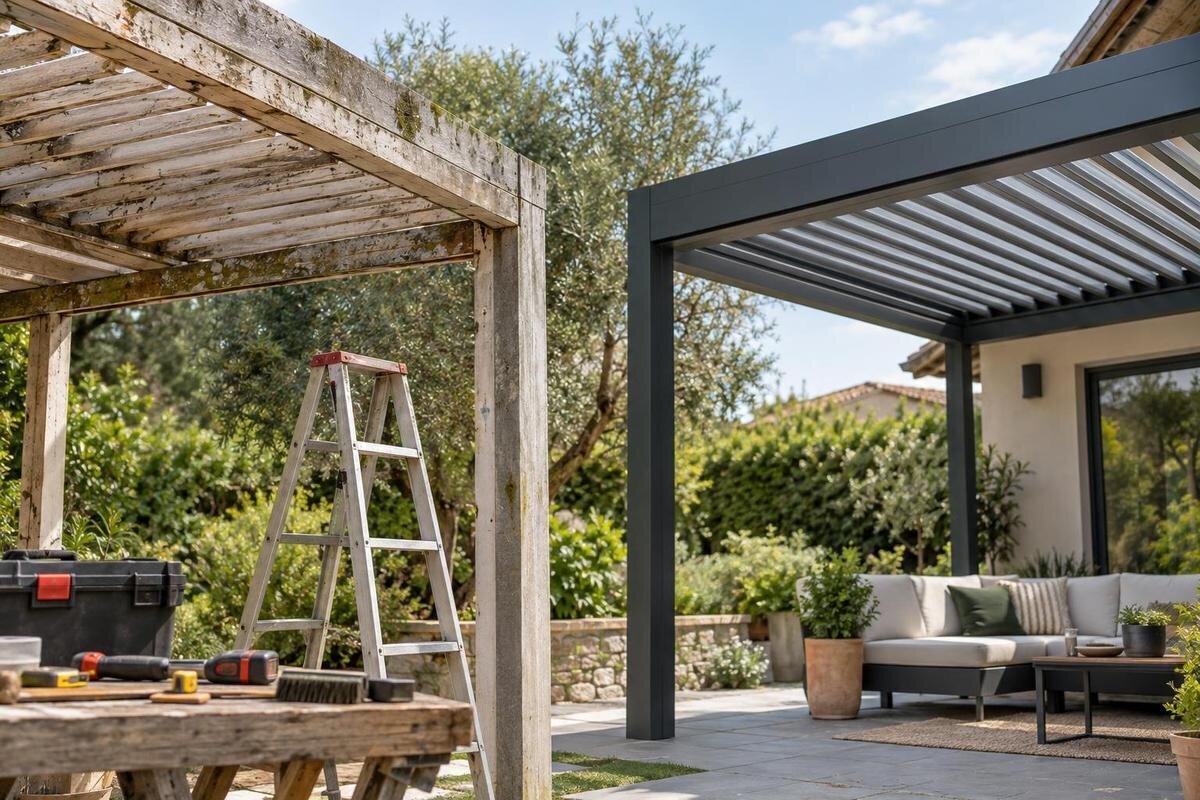
Pergola repair decisions
An older pergola may have one repairable fault, recurring problems or a condition that calls for a professional assessment. Its age alone cannot tell you which applies. This checklist helps you collect evidence, confirm whether the exact component and repair method are supported, and compare the full scope of a repair with a replacement project. The focus is the pergola as it stands today, not a prediction of its lifespan or a diagnosis from appearance alone.

Assess the pergola’s condition and the repair scope
Treat the choice as a comparison of present condition, the fault, parts support and the scope of the work, not a verdict based on age. First consider whether a safety concern needs professional assessment before use; then establish what has failed and how confidently it can be identified. A sound-looking frame may still have a failed component, while one visible defect does not automatically mean the whole structure needs replacing. Record observations separately from assumptions: “the moving section stops part-way” is more useful than “the motor has failed” before anyone has diagnosed it. If several issues are present, list them individually. Separate a concern needing prompt assessment from a wish to update the layout or appearance; they call for different enquiries.
Repair is more promising when a qualified assessment identifies a limited problem, confirms compatible parts and explains how the work addresses the cause. Replacement deserves a comparison if several areas are affected, the same fault returns, required components cannot be confirmed, or the proposed repair would leave an important issue unresolved. These are prompts, not automatic verdicts; an inspection or written estimate may change the picture. If key facts remain unknown, gather them before choosing. That prevents browsing for a new model from becoming a diagnosis, or a low repair figure from hiding work that has not yet been scoped.
Check safety before comparing repair costs
Look over the pergola from the ground without putting weight on it or removing parts. Note visible movement, a leaning or distorted frame, cracked or bent members, joints that appear separated, fixings that seem to have shifted, and any change since it was last used. These are reasons to request an assessment, not a do-it-yourself structural diagnosis. A mark in a finish, debris or an isolated sound may have another explanation, so photograph it and describe when it occurs rather than deciding what it means. Keep people clear of any area that appears unstable until a qualified person has assessed it. Do not climb on, push or pull members, or loosen anything to test a connection.
If a motorised part, controller or wiring is involved, do not open housings, alter wiring or force a stuck mechanism to see what happens. Stop using the affected function if it behaves abnormally and arrange an assessment by an appropriately qualified service person. Tell them whether you noticed movement, noise, a control response or visible damage, without claiming a cause. A pergola may have both a structural concern and an operating fault, so report each separately. This safety check comes before comparing estimates: a repair proposal cannot be judged sensibly if it assumes a condition that has not been assessed.
Find the exact product identity and its records
Find the original paperwork before requesting parts or a quote. Useful details include the supplier or installer, approximate purchase date, model name, serial or product label, assembly manual, technical drawings, invoices and records of previous repairs or alterations. Photograph labels if legible, and take an overall view plus close-ups of the affected area and its connection to adjacent parts. Do not remove a cover or dismantle a component just to reach a label; record what is accessible and ask the service team how to identify anything hidden. Keep the originals and send copies of invoices or drawings when possible.
Copy names and numbers exactly as shown instead of shortening them or relying on a similar-looking product. If records are incomplete, say so; a clear gap is more useful than a guessed revision or part number. Keep the identity of the old pergola separate from any product you are considering now. The Bloomcabin Bioclimatic Pergola product page identifies a current catalogue model, for example, but does not establish that an older unit shares its parts. Label your records accordingly so support can distinguish the installed structure from a possible replacement. If the model label is missing, provide photographs and ask how the existing pergola can be identified safely.
Record the fault pattern
Make a short fault log while details are fresh. For each issue, note the area or component, what you observed, when it began, how often it occurs and whether it follows a particular operation or weather condition. Record the position of any moving part, whether a control responded and whether the behaviour has changed over time. If two symptoms occur together, note that rather than assuming one caused the other. Do not repeat an operation just to make a video if it feels unsafe or would mean forcing a mechanism. A dated note with a clear photo or short video taken from a safe position can be more useful than a long description written later; label what you observed and what remains a guess.
Add earlier work if known: the date, the part or task named on the invoice, who carried it out and whether the symptom stopped or returned. If you cannot verify the repair history, say so rather than attributing a new fault to old work. Keep replacement ideas separate from the diagnostic record. For example, if you want to discuss the Bloomcabin Wall-Mounted Pergola, name it in a separate replacement enquiry rather than among the details of the existing fault. This keeps the service history clear and avoids confusing two different structures. A dated sequence gives a service person more to investigate than a list of unconnected complaints.

Confirm parts support and compatibility
Ask the original supplier, manufacturer or a pergola service specialist to confirm the exact part before ordering. Provide the model and serial information, any revision shown on paperwork, the fault log and close-up images. Ask whether the named component is compatible with this exact installation, whether another related part also needs checking, and whether the estimate includes fitting and any necessary testing by a qualified person. Similar appearance is not enough: components can differ by model or revision, and a generic substitute may not resolve the problem. Do not choose a part by photograph or assume dimensions alone prove a match.
Ask what options remain if the original part is no longer supplied or its revision cannot be verified. A useful response distinguishes a confirmed replacement part from a possible alternative and explains the basis for any proposed substitute. It should also identify any further inspection needed before ordering. If support cannot confirm a workable repair, compare a replacement project rather than ordering an uncertain component. When discussing the Bloomcabin Pergola product page, make clear that you are enquiring about a complete replacement, not a spare part for the old structure. Keep these enquiries separate so that a response about a new product is not mistaken for confirmation of repair compatibility.
Compare the full repair and replacement scopes
Compare written scopes, not one figure for repair and another for replacement. For a repair, ask what diagnosis is included, which components and labour are covered, whether access or removal is needed, what condition the proposal assumes and what result the service provider expects. Ask which tasks are excluded and how additional faults found during work would be handled. A part price is not the total repair cost if diagnosis, fitting, access or associated work sits outside it. Nor should you assume that the price covers a complete return to operation unless the quote says so. Have uncertain items listed clearly so you can see what could still change the decision. Ask whether the figure is provisional and who must approve any extra work.
For replacement, include the proposed removal and disposal of the old pergola, supply and fitting of the new one, any work needed at the supporting surface or wall, and changes to controls or services if applicable. Have the installer identify what is included and what needs separate professional assessment; do not assume old fixings or connections can be reused. Ask who is responsible for removing waste and reinstating any disturbed area. If you are considering the model shown in the Bioclimatic Pergola listing, identify it in the replacement quote so the comparison refers to a named product. Compare the complete scope on both sides, including exclusions and unresolved questions, rather than treating an unpriced item as cost-free.
Assess faults that recur after repair
One fault may be isolated; repeated calls about the same symptom or problems in several areas deserve a closer explanation. Set out the sequence: what failed first, what was repaired or adjusted, how long the improvement lasted as observed, and what has appeared since. Ask the service person whether the current symptom appears connected to the earlier one, whether the underlying cause is known and what evidence supports the proposed repair. Replacing a component is not a complete answer if the cause of repeated damage remains uncertain, but recurrence alone does not prove that the whole pergola is beyond repair.
Look at the pattern, not merely the number of invoices. Several separate tasks may still be repairable if a qualified person has assessed the frame and connections and each task has a defined outcome; one persistent fault may be difficult to resolve if its cause or compatible part cannot be established. Record whether the same component failed again or whether symptoms came from different areas. Ask for an assessment of the combined work, remaining unknowns and what the repair will not cover. If you are also considering a model from the Bloomcabin Pergola catalogue page, compare its replacement proposal with the combined repair scope, rather than with the cost of just the latest service visit.
Check whether the current layout still meets your needs
Condition is only part of the decision: consider whether the existing arrangement still meets your needs. Note how the patio is used now, which areas need cover, how people move through it, and whether doors, furniture or maintenance access are affected. List the features you value and the problems you would want a replacement to address, separating must-haves from preferences. This turns a vague wish for something newer into practical requirements. A model chosen because its name sounds similar may preserve an inconvenient layout or omit a function that matters, so decide what you need before browsing and assess each proposal against the list rather than judging from its title.
Changes around the pergola matter too: paving, walls, garden access, drainage routes and nearby services may have changed since installation. Note only measurements you can safely and accurately take, label estimates as approximate, and have an installer verify the site and attachment details before recommending a replacement. If wall attachment is part of your requirements, include the wall-mounted pergola listing in the enquiry alongside photographs and a description of the location. The existing wall and fixings still need assessment. Explain which layout problems you want to resolve, so the proposal addresses how you use the patio rather than simply reproducing the old footprint.

Check site requirements for a replacement
Treat replacement as a site project, not just a catalogue selection. Ask the installer to assess the existing support points and surface, clearances, water routes, adjacent openings and access for removing the old structure and bringing in the new one. Equal outside dimensions do not guarantee that a different design can use the old fixing points, and a similar appearance does not establish matching installation requirements. Ask which parts of the assessment are included and which need input from another qualified professional. If permissions or other site requirements may be relevant, confirm the position with the appropriate local professional or authority rather than assuming. Ask whether existing bases or anchors need further inspection as part of the proposal.
Set out constraints before choosing: the usable footprint, routes that must remain clear, features to retain and work that could disrupt the patio. Ask for the proposed model name, installation scope and exclusions in writing so you can compare them with the repair estimate. For an enquiry about the Bioclimatic Pergola model page, ask the supplier or installer to confirm the relevant dimensions and installation requirements against the actual location. Record which site questions have been resolved and which remain open. This gives you a clearer basis for comparing proposals than a model name or photograph alone.
Prepare a repair or replacement enquiry
Send a compact enquiry with the old model and serial details, purchase or repair records if available, overall and close-up photos, the fault log and a clear statement of what you want assessed. Ask for two distinct outcomes where practical: a diagnosis and repair proposal for the existing pergola, and, if repair is not supported or your needs have changed, the information needed for a replacement proposal. State what is unknown, such as a hidden label or a recurring symptom, instead of filling gaps with guesses. This helps the recipient decide whether they need more records, a site inspection or a qualified service visit before preparing a quote. If a visit is proposed, ask what it will cover.
Before approving work, check that the written response identifies the structure or model being discussed, distinguishes confirmed from unconfirmed parts, lists included tasks and exclusions, and describes the expected result. For electrical or mechanical service, ask who will carry out the work and whether it falls within their qualifications; do not attempt it yourself on the strength of an email or image. If replacement is proposed, confirm which site details have been assessed and what remains to be checked. Include the wall-mounted pergola product page if that is the model you want quoted. Ask whether the estimate is provisional or based on a completed assessment, and make sure any outstanding questions are recorded before approving the work.
Frequently asked questions
Does an older pergola automatically need replacing?
No. Age is only context; present condition, the exact fault, parts support and the work involved matter more to this decision. A qualified assessment can establish whether the problem is limited or wider. If important facts are unknown, record them and compare written repair and replacement proposals rather than deciding from the date alone.
Which signs should prompt a professional assessment before use?
Movement, a leaning or distorted frame, cracked or bent members, separated joints, shifted fixings or abnormal operation are reasons to seek an assessment. Do not climb on, force or dismantle the pergola to investigate. If any area appears unstable, keep people clear and arrange a qualified inspection before using it.
Can I choose a spare part by matching its appearance?
Not reliably. Ask the supplier or service specialist to identify the pergola by its model, serial number and any revision shown on the records, then confirm that the part matches the specific system. A photograph can help identify a component, but it does not establish compatibility or show whether related parts also need checking.
Is there a repair-cost percentage that means I should replace it?
There is no universal percentage that settles the decision. Compare a defined repair scope with the full replacement scope, including labour, access, removal, installation and exclusions. Consider whether the repair addresses the cause and what uncertainties remain. A low initial figure is not a fair comparison if important work has not been included.
What information should I send for an assessment?
Send the model and serial details, manuals or invoices if available, overall and close-up photos, a dated fault log and records of earlier work. State what you have not been able to identify, such as a hidden label or the cause of a recurring fault. This helps the service person advise whether more information or an inspection is needed.
Base the decision on the pergola’s condition, its fault history, the availability of compatible parts and the work each option includes. Repair may remain practical when the problem and expected outcome are defined; replacement may be more appropriate when the existing condition, gaps in parts support or changed requirements would leave a repair incomplete. If a key point is still uncertain, record it as an open question rather than assuming it is covered by the estimate. The better option is the one that addresses the identified problems and meets your current needs.
