
Fabric Roof or Aluminium Louvres for Your Pergola?
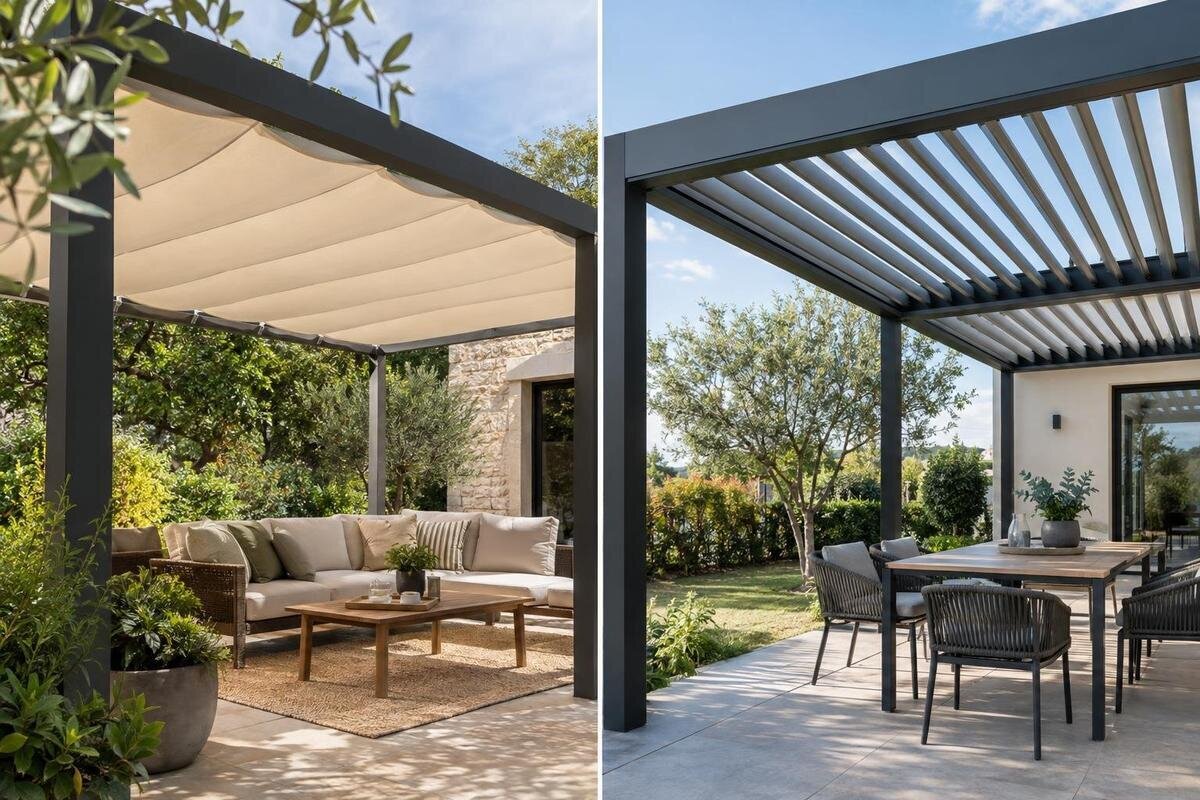
Pergola roof guide
Choosing between a fabric-roof pergola and aluminium louvres involves more than choosing the covering material. The everyday difference lies in how the roof moves, how much of the patio it covers in each position, and what the manufacturer permits in rain, wind and seasonal conditions. A fabric roof might be fixed or movable; louvres change angle, but neither label tells you the controls, drainage details or limits of a particular model. Compare the opening you want with the cleaning, storage and operating routine each option requires.
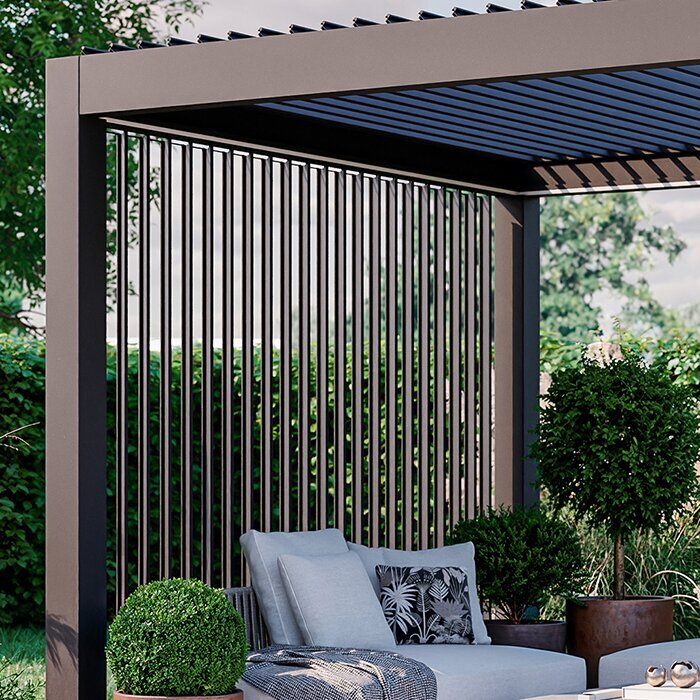
Fabric roof types and opening positions
A fabric-roof pergola is a broad description, not a single mechanism. Some covers remain tensioned over the frame; others are designed to slide, roll or gather away, and some can be removed. Those choices determine how much of the roof remains overhead and whether the opening ever becomes fully clear. The label alone does not say whether the textile filters light, admits air, resists water or is intended to provide rain cover. Ask for the exact roof configuration and a diagram showing its open and closed positions. If a canopy is fixed, opening it is not an option; if it retracts, check how far it travels and where it sits when parked.
An aluminium louvred roof uses blades whose angle can be adjusted to change the cover above the patio. That is different from drawing a fabric canopy back: the blades remain part of the overhead structure, and the available opening depends on the design. The Bloomcabin Bioclimatic Pergola listing gives a stated area range of 9 to 24 m², but this does not establish its roof movement, controls or weather limits. For a fair comparison, identify the exact fabric option and the exact louvred model, then compare their drawings and instructions rather than relying on their category names.
How the roof opens affects everyday use
Think about how often you expect to move the cover and what you want each change to achieve. A retractable textile roof may let you uncover the sky or leave partial shade, but its actual travel varies by design; a fixed fabric roof cannot provide that choice. Ask whether the roof can stop part-way, how it is operated and whether the fabric needs to be secured or moved to a particular position in certain conditions. Do not assume a motor, remote control, sensor or automatic response: those are model-specific features, not part of the words fabric roof. Manual and powered operation also create different questions about access and maintenance.
Space around moving parts matters too. A fabric canopy may need a clear run along a track or room for the gathered cover; a louvred roof keeps its blades overhead even when their angle changes. Ask for a plan and side view showing the frame, the roof in its open position and where moving parts finish. When considering the Bloomcabin Pergola listing, establish the roof configuration before assessing its movement. Mark the proposed seating and dining areas on the plan so you can see which parts you want covered and which you would prefer to uncover. Also consider where you would stand to operate a manual mechanism. This makes the comparison about a usable opening and convenient operation, rather than simply whether a roof is described as movable.
Louvres change angle; they do not necessarily retract
A louvred roof is designed around changing the angle of its blades. That can alter how much direct sun reaches the patio and how much air passes through the roof. It is not the same as moving a fabric canopy completely out of the way: the blades and their supporting structure remain overhead. The degree of adjustment, the positions available and the size of any gaps vary by model. If a clear view of the sky is important, ask whether the blades only tilt or whether another movement is available; do not assume the roof retracts because its angle can be changed.
Check how the mechanism is operated, which blade positions are available and whether the instructions specify a position for particular weather. Do not assume a manual crank, motor, sensor or app-based control is included. If the Bioclimatic Pergola model page is on your shortlist, use the operating diagram for the exact configuration to understand the adjustment offered. A demonstration, where available, can help you judge whether the controls are convenient to use from your usual position on the patio. Ask to see the roof in the positions you are likely to use, rather than only fully open and fully closed. For manual operation, consider access to the control; for powered operation, establish which controls are included and how they are used. Compare the practical steps involved in changing the roof position, not just the presence of an adjustable mechanism.
Rain protection depends on the complete roof design
Rain performance is not settled by the cover material alone. Fabric can be designed to shed water, but its construction, seams, tension and edge drainage all matter; a fabric sold for shade may not be intended to provide rain cover. On a louvred roof, closed blades may direct water into channels, but blade joints, seals and drainage routes affect how the system behaves. Wind-driven rain can also behave differently from a light, vertical shower. Treat terms such as water-resistant and waterproof as specific claims to verify, not conclusions to draw from a product photo or a general roof label.
Ask what position the roof must be in for rain protection and what conditions the manufacturer’s guidance covers. Check where water is directed and what happens when rain arrives while the roof is open. For the Bloomcabin Wall-Mounted Pergola page, distinguish the mounting arrangement from the roof’s rain performance: being attached to a wall does not establish the latter. Use the roof drawing to identify the edges of the covered area and the intended water outlets in relation to your table, chairs and access route. If your main aim is to keep a dining area covered, ask specifically about that area rather than treating the whole advertised footprint as equivalent rain cover. This gives both suppliers the same practical requirement to address.

Light and shade vary with the roof position
With fabric, the amount of light beneath the roof depends on the textile and whether it is fixed or moved. A fixed cover remains overhead; a retractable one may let more direct light through when it is drawn back, but folded material or tracks may still occupy part of the opening. Fabric colour or appearance alone cannot tell you how much light passes through. Look for a description of the actual material and, where available, a sample or display that lets you judge the effect in person. Decide whether you want shade over the whole seating area or only part of it. If you are viewing fabric samples, compare them in the same conditions and distinguish a preference for their appearance from a requirement for a particular level of shade.
Louvres offer a different kind of adjustment: changing blade angle can alter direct shade and airflow without moving the whole roof away. The result still depends on the model and the sun’s position, so consider how the patio is used at different times rather than judging from one photograph. For a candidate such as Bloomcabin’s bioclimatic model, establish the roof arrangement before comparing the available positions. Think separately about a lunchtime table, an evening seating area and any space where you prefer an open view overhead. You may value different roof positions for each use. Compare those priorities with the fabric option’s fixed or retractable coverage, and distinguish the ability to adjust shade from the ability to clear the roof opening altogether.
Fabric roofs need material-specific care
Care instructions should match the fabric, not just the pergola category. Before buying, find out how to remove loose debris, what cleaning method is permitted and whether the cover should be dried before it is stored. Do not assume that machine washing, bleach, pressure washing or a particular detergent is safe. Inspect the visible fabric, seams and edges as advised by the manufacturer, and check whether the mechanism has tracks or moving parts that need separate attention. Clear access for routine cleaning matters: a roof that is difficult to reach may be harder to keep in the condition the instructions require.
Ask whether the cover is fixed, removable or retractable, and what the manufacturer says about storage when it is not in use. A fixed cover has no retracted storage position, while a removable one may need a suitable place to be kept. If you are considering the Bloomcabin Pergola model page, confirm the roof material before applying any fabric-care advice to it. For a removable textile option, find out what removing and refitting the cover involves, whether this is intended as a routine task and how the stored cover should be handled. Consider where you would carry out any permitted cleaning and drying, as well as where you would keep the cover afterwards. These practical arrangements help you assess whether seasonal removal is manageable, rather than treating removability alone as a convenience.
Cleaning access for louvres and drainage
A louvred roof has surfaces and moving parts to consider as well as the visible blades. Ask how to clean the blade surfaces and how to reach their joints, pivots or any other parts identified in the instructions. Keep to the manufacturer’s approved cleaning method; do not assume abrasive products, solvents or lubrication are suitable. If routine care requires access above head height or close to moving parts, ask what safe access the manufacturer recommends and whether any servicing should be done by a qualified professional.
Drainage is part of the care routine where the design uses channels or outlets to carry water away. Find out which parts need to be kept clear and how they can be reached without dismantling the roof. Leaves and other debris can collect in exposed areas, so it is useful to know what the manual says about inspection and cleaning after periods of poor weather. Do not judge maintenance only by the number of visible blades: the frame, water routes and mechanism can all affect the work involved. Compare those instructions with the fabric option’s cleaning and storage needs.
Wind and seasonal limits are model-specific
A pergola roof should be used in line with the limits and positions stated for its exact model. A fabric cover may have instructions about when to retract, secure or remove it; a louvred roof may have specified positions for particular weather. Do not guess a safe position from the material or assume that a roof described as adjustable can remain in any position in strong wind. Ask for written guidance on wind exposure and, where relevant, snow or other seasonal conditions. If the manufacturer provides a limit, check what it applies to and how the roof must be set up when that limit matters.
Mounting descriptions and area ranges are not weather ratings. If you are considering the wall-mounted model page, ask a qualified professional about the proposed fixing and site using the product-specific installation information. Separately, establish the roof positions required in changing weather and during periods when the pergola is not in regular use. Consider how you would follow those instructions when away from home: a roof that needs attention before certain conditions is a different practical choice from one whose permitted setting suits your planned absence. Do not assume that automation will deal with this unless it is specified for the model. Include any seasonal removal or storage requirements in the comparison, alongside the normal position of the roof when you are not using the patio.

Compare complete specifications, not roof labels
A like-for-like comparison begins with the same intended coverage and the exact roof configuration. Compare drawings for the footprint, the covered area, the amount of opening available and any parts that remain overhead when the roof moves. Then check what is included: the roof material or blades, the operating mechanism, drainage components and any controls. Keep questions about installation, maintenance and replacement parts in the comparison too. A broad term such as fabric roof or louvred roof is not a specification, and two products with the same advertised area can still differ in their layout and everyday operation.
When comparing the Wall-Mounted Pergola listing with a fabric-roof alternative, make sure both quotations describe the same intended coverage and clearly list what is included. Separate the roof system from optional controls or accessories so that a difference in the package is not mistaken for a difference between fabric and louvres. Record each model’s opening method, rain position, cleaning access and seasonal requirements in a simple comparison table. Leave an unanswered item blank or mark it as unconfirmed; do not fill it with a feature associated with the broader roof category. Where the two proposals differ in size or configuration, note that difference before comparing their cost. This makes it easier to see whether you are choosing between roof mechanisms, different levels of equipment or substantially different pergola layouts.
Choose for the way you use the patio
If your priority is a roof that can move out of the way, a retractable fabric option may fit that preference, provided the exact design offers the travel and clear opening you want. If you mainly want to adjust overhead shade and airflow, the positions available on a louvred model may matter more. These are starting points for comparing functions, not guarantees about any particular product. Check that the roof’s permitted positions, rain instructions and care routine suit the way you expect to use the space, including whether you want cover in place for ordinary outdoor meals or prefer to open the roof often.
Consider the effort involved as well as the result. Picture an ordinary day on the patio: opening the roof before sitting down, adjusting the cover while eating and leaving it in the required position afterwards. Which of those changes would you genuinely make, and which would you prefer to avoid? Then consider less frequent tasks, such as cleaning hard-to-reach areas or storing a removable cover. If either option requires a routine you are unlikely to follow, its theoretical flexibility may not be useful in practice. A fixed fabric cover may deserve consideration if you do not need an adjustable opening; a movable roof is worth comparing when you expect to use its different positions. Choose the exact configuration that meets those priorities, rather than paying for movement or controls simply because they are available.
Frequently asked questions
Is every fabric pergola roof retractable?
No. A fabric roof may be fixed, retractable, removable or designed to move in another way. Check the exact model’s operating instructions and diagram rather than relying on the term fabric roof.
Are aluminium louvres waterproof when closed?
Not automatically. Rain performance depends on the blade design, joints, seals and drainage, as well as the conditions covered by the manufacturer’s guidance. Ask for the specific model’s rain instructions.
Which type of pergola roof is easier to maintain?
It depends on the materials and mechanism. Fabric needs care suited to its textile and any tracks or moving parts; louvres need access for cleaning and may have joints and drainage channels to keep clear. Follow the model’s instructions.
Can I leave a fabric roof open in strong winds?
There is no universal position or wind limit for every fabric roof. Check the manufacturer’s instructions for the exact model, including when the cover should be retracted, secured or removed.
Will louvres provide ventilation when it is raining?
The airflow and rain cover depend on the blade position and roof design. An open or angled position may admit rain, while a closed position may be designed to direct water into drainage channels. Check the product guidance.
The better choice is the roof whose normal positions, care requirements and written weather guidance fit how you use the patio. Fabric and aluminium louvres differ in the way they open and need maintenance, but neither is automatically more protective or more convenient. Judge the exact model by its diagrams, operating instructions and documented limits, then decide whether its everyday routine suits you.
