
Greenhouse crop rotation: keeping soil healthy
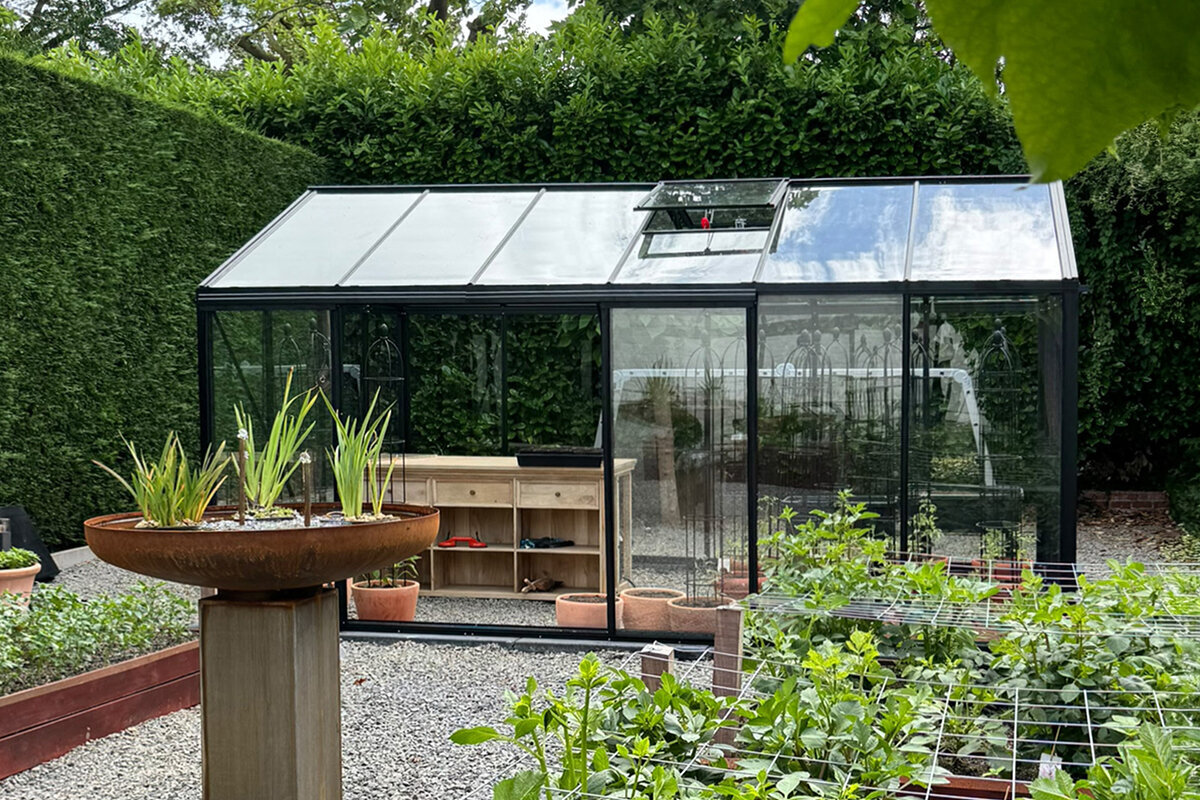
Soil log / file 32
Crop rotation under glass: caring for the soil
No greenhouse bed enters spring with a clean slate. Earlier crops leave root channels, depleted nutrients, debris, moisture patterns, salt traces, harmful organisms and the effects of past soil treatments.
Rotation begins by interpreting that history ahead of the coming season. It is especially valuable under glass, where tomatoes, peppers, cucumbers and leafy crops may repeatedly occupy one bright bed.
A working overview
Study the bed before the next planting.
- The uses and limits of rotation
- Clues from plant relationships
- Root systems, remains and feeding needs
- Designing a four-year sequence
- Making two or three beds work
- Containers, grow bags and combined layouts
- Cover-crop intervals, compost and renewal
- Testing, salts, cleanliness and crop-free intervals
The history held in soil
Each harvest adds another clue.
Peppers and tomatoes sit in the same nightshade family. Replacing one with the other may appear to diversify the bed, but many shared threats still meet a related host. Courgettes, cucumbers and melons form another relationship; rocket, radish, cabbage and mustard belong together as brassicas. Start the plan with these links, since relatives commonly have comparable growing preferences and vulnerabilities.
A greenhouse plan also needs more than a family chart. Fruiting plants occupy space for months, draw heavily on water and nutrients, and leave plenty of stems and roots. A quick lettuce crop spends much less time in the upper layer. Root-nodule bacteria allow legumes to capture nitrogen, but they do not necessarily meet the full needs of the demanding crop that follows. Results vary with the species, growth achieved, roots, residues, soil biology, available interval and later bed preparation.
Think of each bed as a compact landscape receiving close attention. Move between crop groups to lessen repeated exposure to the same hosts, and alter both rooting patterns and feeding intensity. Check the soil before adding fertiliser and clear away unhealthy material. Build in growing roots, brief rests or, where room is scarce, renewed container medium. The greenhouse can remain productive without treating its soil as expendable.
A register of crop groups
Rotate botanical relationships, not just crop names.
Use these groups as a practical greenhouse aid, not as evidence that every relative behaves alike. Confirmed diagnoses, advice suited to the locality, resistance of individual varieties and the recorded history of a bed outweigh any generic pattern.
01Nightshade family
02Gourd family
03Cabbage family
04Pea and bean family
05Leafy and quick crops
Nightshade family. Tomato, pepper, chilli, aubergine and potato are relatives, so following peppers with tomatoes provides no meaningful family interval. If tomatoes occupied the bed for many years, or a problem received a firm diagnosis, plant an unrelated group there or manage the fruiting crop separately in containers.
Gourd family. Cucumbers trained upwards, melons and courgettes may yield heavily under glass. Their dense foliage, regular water requirement and bulky remains still need managing. Follow them, where suitable, with alliums, beans, lettuce or a different crop that does not host the identified problem, thereby changing the rooting pattern, timing and care routine.
Cabbage family. Cabbages, Asian greens, rocket, radishes, mustard and oilseed rape all belong among the brassicas. Record these short crops as one related group. If brassicas have dominated, or an associated disease is known, mustard cannot serve as an unrelated green-manure break.
Pea and bean family. Beans, peas, clovers and vetches broaden the planting mix and may capture nitrogen through nodules on their roots. The amount available afterwards is variable. Including them cannot replace soil analysis or a feeding decision based on the requirements of the succeeding crop.
Leafy crops and quick harvests. Useful gaps around lengthy main crops can hold head lettuce, lamb’s lettuce, spinach, chard, carrots or alliums. They still require sound seed, sensible spacing, steady moisture, drainage and cleanliness rather than being effortless choices. Their chief advantage is flexibility in both timing and position.
Botanical relationship is an opening check, not the whole decision. Consider roots, feeding level, diseases, pests and whether occupation lasts only weeks or extends to seven months.
Recording the rotation
Use a moving strip rather than a fixed wheel.
A strip reflects the physical reality of permanent greenhouse beds better than abstract quarters. Assign a row to every zone, then advance the crop groups annually. Where timing permits, insert a brief leafy crop or green manure. Note what was actually grown, along with fertiliser, compost, symptoms and yield, instead of preserving only the original plan.
Bed
Year 1
Year 2
Year 3
Year 4
N
F
L
G
R
S
R
F
L
G
O
G
R
F
L
W
L
G
R
F
F – long fruiting phase. Tomatoes or peppers represent the extended, hungry main crop. Before setting them out, assess their allocated bed, verify that water reaches it evenly and reconsider earlier fertiliser inputs rather than repeating them automatically.
L – pulse-crop phase. Beans followed by an autumn planting alter rooting space, foliage density and the time for which the bed is occupied. Clear suspect remains promptly. Nitrogen captured during the legume phase may contribute later, but assess it instead of treating it as the next crop’s entire feeding plan.
G – leafy-greens phase. Lettuce, spinach, carrots or suitable brassicas can fill an adaptable seasonal gap. If a brassica disease is already known, depart from the general sequence and select an unrelated host instead.
R – soil-renewal interval. Depending on light, season and time, this interval could contain phacelia, a suitable grass mixture, quick lettuce, alliums or a carefully selected crop unrelated to the previous host.
Treat the sequence as a model rather than an instruction. In Ireland, adjust crops to local light, Atlantic exposure and variable seasonal conditions. After a confirmed plant disease, choose both the cover crop and its sowing time with particular care.
Soil profile
0–5 cmResidues
5–25 cmRoots
25–45 cmTransition
BelowDrainage
Changing root depths
Observation matters as much as feeding healthy soil.
Salads with shallow roots, beans reaching farther down and deeper-rooting fruit crops use the bed in different ways. Their roots do not remain within tidy layers, nor can a successor undo every effect left by its predecessor. Varied architecture may broaden patterns of water use and biological activity, whereas repeatedly growing one crop tends to place demands in the same part of the profile.
Across the surface: Inspect for dried layers of compost, scattered granules of fertiliser, algae, pale salty deposits, compressed mulch and debris needing removal. These visible signs are useful observations, but cannot establish a diagnosis by themselves.
Through the main rooting area: Examine remaining roots, former planting pockets and moisture beside the irrigation run. Successive fruit crops may focus their demand for water and nutrients within one confined strip year after year.
Farther down: Poor infiltration, compressed trenches, the underlying soil and any resistant layer influence everything planted above. Moving crop families will not repair drainage trouble that has gone unnoticed.
Inspect beds once crops are cleared. Note whether roots decompose, water soaks in consistently and the ground outside the dripper run remains dry. Those details turn a rotation diary into practical soil management.
A point for covered beds: Covered ground misses the regular leaching supplied by rainfall. Test heavily used greenhouse beds periodically for pH and major nutrients, adding a salinity assessment where appropriate. Compost contributes useful organic matter, yet large yearly applications under glass can raise salts and nutrient levels, particularly when the original material was heavily fertilised.
Practical limits
Create meaningful intervals when an ideal rotation will not fit.
Case A / permanent beds
A pair of ground beds
Alternate the principal fruiting crop between beds and make deliberate use of spring, autumn and winter. Tomatoes might occupy one from May into autumn, while the other holds cucumbers, beans or peppers if its family and disease record allows. During cooler Irish periods, spinach, lamb’s lettuce, alliums or a suitable cover crop can keep the ground purposefully occupied.
- Maintain the record for at least three to four years.
- Base each bed’s soil additions on its own test results.
- Wash canes, supports, clips and watering components so that problems do not travel when the crop moves.
Case B / movable containers
Pots and grow bags
Containers provide a defined restart because their rooting medium can be managed or changed independently. Place tomatoes, peppers or cucumbers in adequately sized pots, leaving ground beds available for leafy crops, beans, herbs or green manure. New medium is only part of the reset: clean the saucers, staging, tools, supports and irrigation emitters as well.
Before using medium again, inspect its structure, remaining roots and any visible salt deposits. Suspected disease or severe deterioration may justify isolation, treatment or replacement. Do not allow old compost to transfer an undocumented problem between plant groups or from one season to another.
Case C / a combined arrangement
Put the physical layout to use.
A ground bed along one wall, a propagation table and several large pots can form an orderly, useful whole. The Classic aluminium greenhouse has enough flexibility to combine permanent beds, paths and movable crops in one plan. Use those distinct areas to keep recurring fruiting plants apart from soil that remains in place.
To coordinate daylight, usable roof vents and purposefully separated areas from the beginning, see the Classic aluminium greenhouse.
Disrupting routes of infection
Good hygiene makes rotation more effective.
Some hazards persist in crop remains; others move on tools, pots, supports, splashing water or soil. Their survival differs greatly according to the organism, host, weather, material and growing method, so one general waiting period would mislead. If plants repeatedly wilt, roots decay or crops fail without explanation, obtain the clearest diagnosis available from an appropriate local adviser or specialist before deciding what follows.
For growing areas that remain clearly organised through successive seasons, the Classic aluminium greenhouse is a useful base, particularly when a long tomato season must share the house with movable pots, paths and separately managed beds.
Harvest finished
Clear
Between crops
Wash
Before replanting
Break
Once harvesting ends
Clear finished crops, dropped produce and any tissue showing disease. Infected material should not be used as mulch. Its destination—properly managed compost, the local green-waste service or another route—should follow the diagnosis and advice applicable in the area.
Between crops
Brush earth from hand implements, then wash clips, canes, tables, trays and climbing supports. Mend leaking irrigation. After watering, ventilate and, where the plants permit, limit splashes and persistently wet leaves, as both conditions can favour disease under cover.
Ahead of planting
Select an unrelated plant group where feasible and use only vigorous, healthy young plants. Resistant varieties or grafted stock may assist with particular difficulties, but they cannot substitute for diagnosis, cleanliness, effective drainage or a meaningful pause in cultivation.
A workable growing record
Honest plans for three greenhouse sizes.
Use these sequences as sketches rather than instructions. A nightshade fruit crop might be tomato, pepper or aubergine, and changing to another member next year is not a rotation. Adapt each sketch to the Irish site’s season, crops you value and any issue you have actually seen or had diagnosed.
Ahead of planting: Enter three facts in the soil record: the previous crop, any problem noticed and the botanical group intended next. Recording them now avoids dependence on memory when a demanding greenhouse season has ended.
| Layout | Suggested order | Why the sequence can work |
|---|---|---|
| One bed plus containers | Bed: salads and radishes → beans or herbs → suitable green manure. Containers: tomatoes or peppers in medium that is deliberately monitored and renewed when required. | Keeping the recurring nightshade in containers spares the permanent bed. Thoroughly wash pots, saucers, supports and implements between growing seasons. |
| Two fixed beds | Bed A: nightshade fruit crop → salad or legume → cucurbit. Begin Bed B at a different point and give it a gentler autumn or winter interval. | Make preceding and following crops meaningful breaks. Do not follow peppers with tomatoes, or melons with cucumbers, in one bed. |
| Three or four zones | Fruiting plants → leafy and root crops → legumes → cucurbits or soil renewal. Advance each group by one zone every year and note intermediate crops. | This arrangement creates generous room for unrelated crops, varied rooting and focused soil care. Analyse zones independently when their growing histories are different. |
For a new growing area, favour a durable structure whose interior can remain adaptable: the Classic aluminium greenhouse and the Classic aluminium greenhouse give you room to arrange planting intervals, walkways, pots and ground beds sensibly ahead of the opening crop.
Compost, cover crops and soil analysis
Let measurements guide recovery rather than adding excess.
Compost supplies organic matter and may aid structure and moisture retention, but continually adding more is not a dependable feeding method under glass. Without outdoor rainfall leaching the profile, salts and particular nutrients can rise more readily. Sample beds separately where they have been managed differently. Test results for pH, phosphorus, potassium and magnesium are useful; an intensively cropped house may also warrant professional interpretation of salinity, available nitrogen and the quality of irrigation water.
Read the results before choosing mature compost, a specific fertiliser, a feeding pause or another correction. Incorporate suitable amendments in a way that matches both soil and crop instead of building repeated dry layers. More compost will not correct an elevated salt result. Advice based on testing can separate the influence of fertilisers, original ingredients, watering quality and restricted drainage.
A green manure assists recovery only when it belongs in the wider rotation. Grasses extend roots through the bed and absorb some available nutrients, while legumes may capture nitrogen; mixtures can combine functions. Mustard and oilseed rape are brassicas, so avoid them where cabbage-related disease or a brassica-heavy history is relevant. Terminate the cover before it sets seed freely. A brief rooted interval can still benefit a domestic greenhouse, provided its sowing date, water requirement and removal are planned as carefully as the tomato crop.
Practical questions from growers
Common questions about greenhouse rotation
When can tomatoes return to a bed?
One waiting period cannot suit every greenhouse. If space permits, keep a botanical group away from its former bed across several growing seasons. A confirmed disease could call for a longer interval tailored to a non-host, whereas containers make changing the medium more straightforward. Base the decision on crop relationship, diagnosis, management and locally relevant specialist advice, rather than treating one number of years as universal.
Can I alternate tomatoes and peppers?
No, not as the required botanical break. Tomato, pepper, chilli and aubergine all belong to the nightshades and can face comparable nutrient demands and threats from soil-borne organisms. In a compact greenhouse where both crops matter, grow one in a large pot or grow bag with monitored medium, while assigning the ground bed to an unrelated group.
Can beans provide all the next crop’s fertiliser?
No. Root-nodule bacteria enable beans and peas to capture nitrogen, but the share reaching a later planting varies with growth, nodule development, roots, crop remains, timing and activity within the soil. Legumes are useful for diversity and soil biology; continue to establish the successor’s feeding requirement through observation and analysis.
Does greenhouse soil need annual replacement?
Generally, no. Ground beds respond well to rotation, appropriately judged organic matter, drainage, cleanliness and repeat analysis. Renew container compost when poor structure, salinity, dense roots or suspected disease make reuse unsuitable. If a persistent bed has a confirmed soil-borne problem, obtain specialist guidance before replacing large volumes because faulty watering or drainage may also need attention.
What green manure works in a compact greenhouse?
Begin with the available interval and the botanical groups due afterwards. Phacelia or a suitable blend may fit; grasses introduce another root pattern and legumes may capture nitrogen. Where brassicas already feature heavily, mustard and oilseed rape are not unrelated breaks. Use a modest time window at first, and only establish the cover where it can develop adequately before being ended in a controlled manner ahead of the following crop.
References for deeper reading
Develop the plan further.
The German technical references below cover rotation, compost, soil analysis, salinity and greenhouse hygiene. For suspected disease, seek a crop-specific diagnosis and recommendations suited to your own area.
More from Bloomcabin: How to arrange a greenhouse · Choosing a long-lasting aluminium greenhouse · Aluminium greenhouse FAQs
- LWG Bavaria – planning a garden-year vegetable rotation
- NRW Chamber of Agriculture – vegetable rotation planning
- German Environment Agency – compost for more sustainable gardening
- German Environment Agency – soil nutrients and garden testing
- LWG Bavaria – diagnosing vegetable symptoms under glass
- NRW Chamber of Agriculture – salts in greenhouse soil
Preparing the next season
Decide the next entry before clearing the bed.
A greenhouse responds to consistent attention, but healthy soil depends on distinguishing continuity from repetition. Keep a written history, vary the demands placed on each bed and provide a genuine recovery interval.
Classic aluminium greenhouse