
Pergola Privacy After Sunset: Lighting and Sightlines
Pergola planning
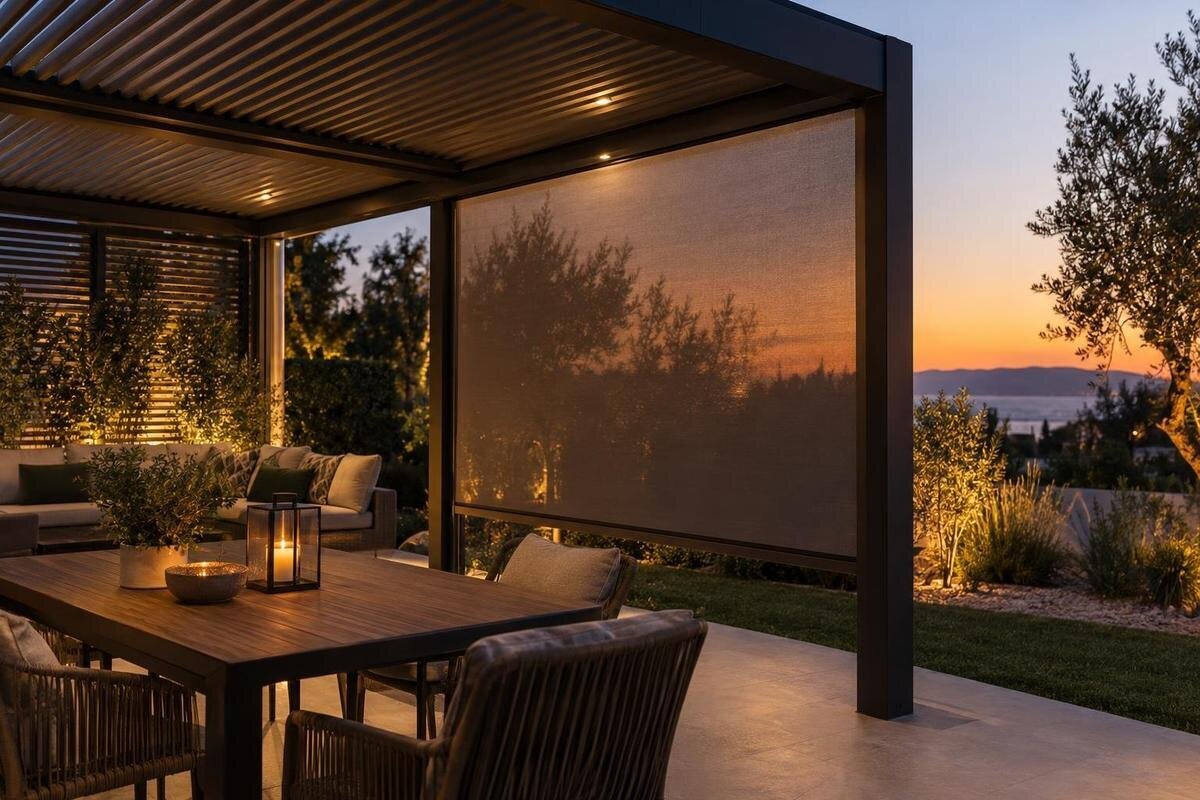
Even a side screen that feels private by day can reveal movement once the pergola and house are lit against a dark garden. The result depends on who can see in, where light falls, the viewing angle and whether the side panels are fabric or glazing. A practical evening check should reproduce the views and lighting you actually use, rather than rely on a product photo or daylight sample.

Why pergola privacy changes after sunset
During daylight, people often judge a side screen by whether they can see the garden through it. After sunset, the balance shifts: the pergola may be bright while the view beyond is dark. In that situation, someone outside may notice movement or silhouettes through fabric or glazing that looked private earlier. The result depends on the material, its weave or finish, the viewing angle and the relative brightness; no generic label settles it. The screen has not changed, but the contrast around it has. Treat apparent opacity in a daylight photograph as a description of that scene, not a guarantee about an evening one.
Privacy is directional as well as time-dependent. Someone sitting inside may have a clear view out, while a neighbour looking towards a lit interior notices the people inside; clear glazing can preserve views in both directions. Reflective or tinted surfaces can also behave differently when the brighter and darker sides change. Your eyes adapt to the light indoors, so a comfortable view from your chair does not tell you exactly what someone outside can see. Ask what you want to conceal and from which position, then check that view at dusk and again after the garden is fully dark.
Identify the viewpoints overlooking the pergola
Draw a simple plan showing the pergola, seating, doors, boundary and any side panels being considered. Add every likely observer position: a neighbour’s ground-floor patio, an upstairs window, a path, a gate or a room in your own house. The point is not simply whether a boundary is high; it is whether a clear line reaches the place where people sit or stand. Mark the positions you care about most, such as the dining seat or the route to the house, so you can distinguish a direct view from a general feeling of exposure. Include gaps between buildings or corners that open a diagonal view.
Walk the route and look back towards the pergola from each marked position at an ordinary eye level. Include an upstairs view if it is relevant and can be checked safely and respectfully. Then reverse the test from the chair and standing area: what can you see through the boundary, across the garden or into neighbouring windows? If Bloomcabin’s regular pergola model is under consideration, send this plan with your enquiry and ask which side configurations are approved for that exact model. A drawing makes the request specific without suggesting that any screen is included. If an upstairs window is the key viewpoint, ask the neighbour to check from their normal position rather than guessing its angle from the ground.
How house and garden lights affect visibility
List the lights likely to be on together: lamps in the house, light spilling through patio doors, a television, pergola or wall lights, and lighting in neighbouring gardens. A source behind the people at the table can make them stand out against a darker view beyond. A lamp directed at a side panel can also create a bright patch that draws the eye. Note which windows face the seating and whether their light falls behind the people, on the screen or beyond it; those positions can matter as much as a lamp’s brightness. Record which lights are on so you can repeat the same scene when testing a sample.
Distinguish lights needed for an activity from those that illuminate the surrounding space. A controlled light on the table may be less revealing than a bright source behind occupants or an exposed lamp in the direct line of sight, although the result still needs testing. In an enquiry about a Bloomcabin Bioclimatic Pergola, describe where you intend to sit and which existing lights reach that area. Ask about any proposed lighting accessory separately: the model name alone does not establish what can be fitted or where it can be positioned.
Test fabric screens from both sides
An open weave, a denser cloth and a translucent fabric can behave differently when backlit. Colour and weave affect what an observer may pick out, but appearance in a showroom or daylight photograph is not a reliable night-time test. Ask for a sample of the exact fabric and place it at roughly the intended height and orientation. Look through it from both directions, first with the garden visible behind it and then with a light behind the sample, as those scenes may reveal different levels of detail. Check the edges and joins too; a sample that covers only a small patch may not show how the full panel reads.
Test more than an empty screen: moving people, a bright top and the outline of a chair may be easier to recognise than facial detail. Have one person sit and move behind the sample while another observes from the mapped window or boundary point, then swap roles. Check at the distance and angle that matter, not only with your face close to the cloth. Repeat with the usual lamps switched on, since room lighting can backlight the fabric without any outdoor light. When assessing fabric for a Bloomcabin Wall-Mounted Pergola, include light coming through the house doors and windows. This helps distinguish visibility through the cloth from a view around its edge.

What glazing can conceal at night
Clear glazing is not a privacy screen: unless a view is physically blocked, it allows sight through in either direction, even if reflections sometimes make one side less noticeable. Frosted, patterned or otherwise obscured glazing can soften detail but may still reveal movement or silhouettes when a bright interior is viewed from a dark garden. Tinted or reflective glass should not be treated as one-way after sunset; the balance of light may change, so its effect can differ from a sunny daytime view. Ask whether any stated privacy is based on daytime conditions, a particular angle or a tested night-time setup.
Use a sample or supplier information for the precise glazing, finish and orientation proposed. Compare the view from outside with the pergola lit and from inside looking towards a darker garden. Look at an oblique angle as well as face-on: reflections from nearby lamps may hide some details from one position while leaving the view open from another. Note whether the glazing obscures faces, outlines or movement, rather than recording only a general impression of privacy. A small sample may not show how a whole panel looks, so keep any judgement about the material separate from the assessment of gaps around the installed panels.
Compare seated, standing and elevated views
A seated person and a standing person do not use the same sightline. A low screen may block a view from a chair but leave a standing occupant visible to someone at an upstairs window; a higher barrier may interrupt a view out that you want to keep. On your plan, draw a separate line from each important observer position to the relevant seat, table or walking route. Mark where that line crosses a proposed panel and whether it meets an opaque, translucent or clear part. Use the actual chair and standing positions rather than assuming one point represents everyone who will use the space.
Repeat the check at the edges, not just in the middle: moving a chair or approaching a doorway can put someone in a gap between panels. A side elevation helps when an observer looks down from above, while a plan view helps with a path or neighbouring patio at a similar level. When enquiring about the Bloomcabin Pergola, include both sketches and mark which views you want to block. Show any view you want to retain as well. This gives the supplier a clearer question than a request for general privacy and helps you compare the proposed panel positions against the same seating layout.
Recreate an ordinary evening before deciding
Re-create an ordinary evening before choosing a material. Switch on the house lights, use the lamps and patio-door lighting you expect, and turn on only the outdoor lights you would ordinarily use. Check at dusk and again after dark: a screen that seems effective while there is still sky light may read differently once the background is dark. Repeat for the scenes that matter, such as dinner, reading or coming and going, rather than testing one unusually bright or unusually dim setup. If you use different lighting on some evenings, begin with the arrangement you use most often.
Ask another person to stand at the main observer positions while you occupy the pergola, then exchange places; both directions matter. Note whether faces, movement, silhouettes or only a glow can be distinguished, and which lights were switched on. A phone photograph can help you remember the scene, but automatic exposure can brighten dark areas, so use your own view as the main test. Keep a short record for each arrangement, using the same viewpoints and activities. If Bloomcabin’s Bioclimatic Pergola is on your shortlist, use those observations to explain the level of screening you need, rather than relying on the word ‘privacy’ alone.
Screen only the sightlines that need cover
Screen only the sightline that causes the problem where practical. A panel along a neighbour-facing edge may protect one seat while leaving another view open; wrapping every side can reduce the sense of openness and hide areas you still want to see. Check the ends and joins of panels, the route to the house and any position where someone stands to use the space. Judge privacy at actual seating and circulation points, not just from the centre of an empty pergola. Make sure a clear or open section does not line up directly with an observer position you have marked.
Think through how the space changes when a screen is open, closed or removed, if the proposed system offers those choices. A fixed obscuring panel, translucent panel and movable fabric may create different compromises in view and light. Decide whether privacy is needed throughout the evening or only for a particular activity, and whether changing a screen’s position would suit how you use the seating area. For a wall-mounted Bloomcabin pergola, identify which openings you would want screened and which you would leave open. Check the resulting view from each seat, not only from the direction you prefer to look.

Plan lighting and side treatments together
Set the lighting plan and the screening plan together. A bright lamp behind a translucent panel can turn it into a luminous surface; a light aimed across a screen may cause glare or make people behind it easier to notice. Turning down a light may reduce how strongly an occupant stands out, but it does not remove a direct view through clear glazing. Change one light at a time with the chosen sample in place, keeping the observer and seating positions unchanged. That comparison helps you identify which source affects visibility, rather than attributing every difference to the screen material.
Separate task lighting from ambient lighting where the design allows, and avoid aiming a bright beam at a neighbour’s window or directly into an observer’s line of sight. Dimming or switching off an unnecessary source may help, but adding brighter boundary lights will not automatically conceal people and may simply illuminate them. If an accessory or control is being considered with the Bloomcabin Bioclimatic Pergola model, confirm its compatibility and intended use with the supplier. Use a qualified professional for electrical design or installation, then test the final arrangement once the actual lights are in place.
Confirm the exact model and accessories
Before ordering, record the exact model, the side or sides to be screened, the material and the lighting arrangement used in your test. Ask which accessories are approved for that model and configuration, and whether they are included or supplied separately. Make sure the quotation identifies the proposed fabric or glazing finish clearly enough to distinguish it from other options you considered. Do not treat a third-party curtain, screen or glazing panel as compatible unless that is confirmed for the specific setup. If the arrangement depends on dimensions or mounting details, ask the supplier or an appropriate professional to check them.
A useful comparison is not which side looks most private in a catalogue image, but whether people and movement are concealed from the relevant window at the time you use the pergola. Include the bright-interior, dark-garden view and any reverse view you want to preserve. If a supplier describes a fabric or glazing as private or obscure, ask what remains visible when occupants are lit from behind. The Bloomcabin Pergola listing identifies the regular model you are enquiring about; the night-time result still depends on the confirmed configuration, material and sightlines around your home.
Frequently asked questions
Can a fabric screen that looks private by day reveal people at night?
It can. When the pergola is brighter than the garden, backlighting may make movement or silhouettes easier to see through some fabrics. Test a sample with the lights you expect to use, and have someone check it from the viewing points that matter.
Does reflective glazing keep a pergola private after dark?
Do not assume that it does. Reflections may make a view less noticeable from one angle, but the effect depends on the glass and the relative brightness on either side. Check the precise finish in both directions under realistic evening lighting.
Will brighter garden lights improve privacy?
Not necessarily. More light can make people or a screen more visible, particularly if it falls on occupants or shines towards a neighbouring window. Test the lighting arrangement before adding lights, and consider whether an existing source can be redirected or switched off.
How can I check a view from an upstairs window?
Mark the window on a sketch and draw a line towards the seats and walking areas you want to screen. If it is the key viewpoint, ask a neighbour to check from their normal position where practical. Compare seated and standing views, since a screen may block one but not the other.
Are side screens automatically included with a pergola?
Do not assume that a screen or other accessory is included or compatible. Ask which side treatments are approved for the exact model and configuration, whether they are supplied separately, and what evidence describes their performance in the conditions you expect.
Night-time privacy depends on the lighting and the observer’s position, not just on the pergola or screen material. A sketch, a sample tested from both sides and a check with your usual lights switched on can reveal whether a targeted screen, a different glazing choice or a lighting adjustment addresses the problem. The aim is to block the view that matters while retaining the views and light you want.
