
Keeping Outdoor Furniture Under a Pergola All Year
Pergola guide
Outdoor furniture can stay beneath a pergola all year only if both the furniture and the exact pergola set-up can cope with the exposure. A roof may reduce direct rainfall, but open sides still admit wind-driven rain; moisture can also linger on surfaces or beneath a cover. Treat cushions, frames and the roof mechanism as separate care questions. The key decision is not simply whether there is a pergola overhead, but how wet the space gets and what each item’s maker allows.

How much rain a pergola keeps off
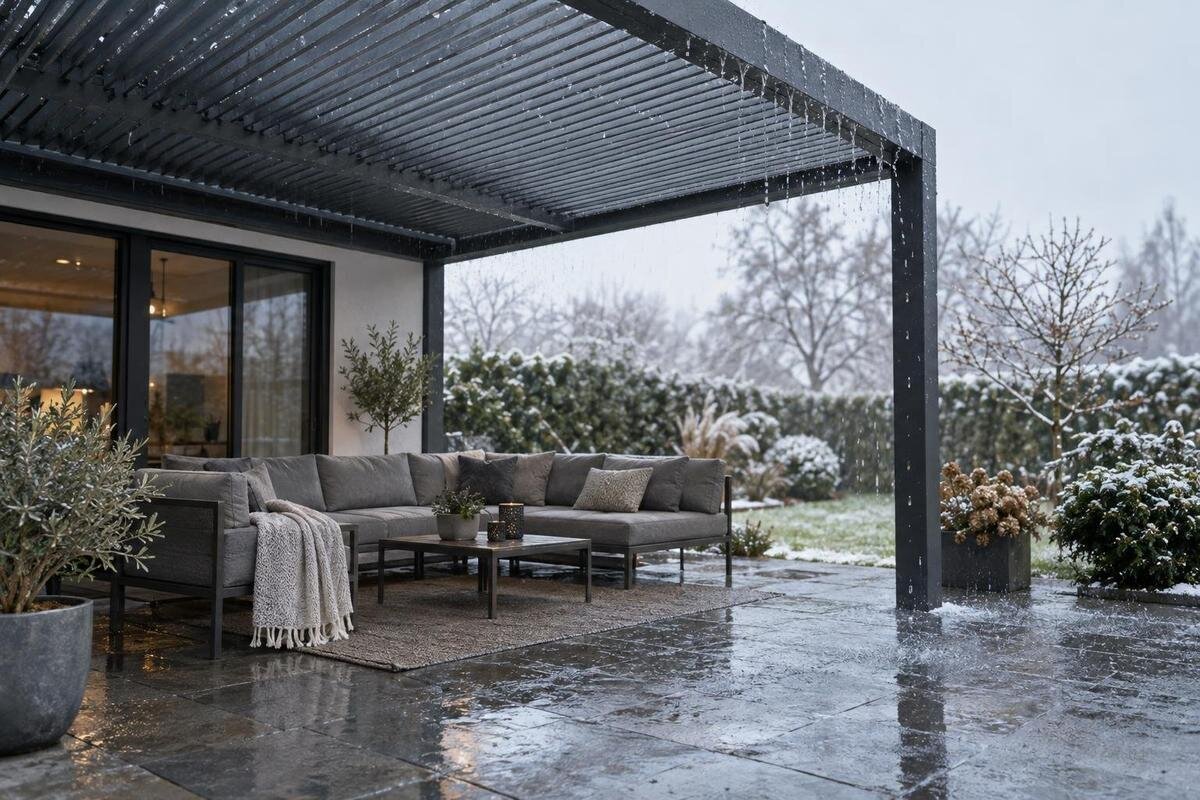
An overhead structure can reduce direct rainfall, but it is not automatically a weatherproof room. Pergola designs differ: sides may remain open, roof sections may be fixed or movable, and an enclosure changes how weather reaches the space. Rain can cross the roof edge at an angle or be blown through open sides. Furniture beyond the covered area may get wet even if the centre stays sheltered. A floor that looks dry after a brief shower does not show whether chair seats, joints or a table underside have taken on moisture. Judge the area where each item sits, not only the roof footprint. Protection from rain above is not necessarily protection from wind-driven rain.
Before making a year-round plan, identify the exact model and roof-and-side configuration, then establish what weather performance is documented. When considering the Bloomcabin Pergola product page, use the model details to frame specific questions about shelter rather than assuming the product name promises dry storage. Ask which roof position and side arrangement the weather information describes, how any observations were made, and what conditions were not covered. The distinction matters when deciding whether to leave a dining set beneath the roof or store vulnerable pieces elsewhere. If the information does not address your site’s exposure, keep furniture protection as an open question. Retain the pergola information alongside, but separate from, the furniture’s care instructions.
Wind-driven rain and the pergola’s open sides
Rain exposure depends on orientation and surroundings as well as the roof. A wall can shelter one side while leaving an adjacent edge open; a corner may channel gusts; nearby buildings, fences or planting can alter where rain lands. A wall-mounted design should not be assumed to seal the roof-to-wall junction or protect furniture from every direction. Look at each exposed edge and note whether rain reaches the seating area directly, is driven through a gap or splashes back from paving. Patios beneath apparently similar pergolas can therefore have different furniture-care needs.
Observe the area in more than one wet spell, including when wind comes from different directions. Note which parts of seats, table tops and paving become wet, and how long they remain damp. A single dry inspection does not represent all weather; rain may also run from another surface towards the patio. If you are considering a Bloomcabin Wall-Mounted Pergola, include the adjoining wall, the roof-to-wall junction and the exposed sides in your questions about the proposed arrangement. Explain where you intend to put the furniture and which direction rain usually reaches it from. Ask which side enclosures, if any, are approved for that configuration; do not count an unverified third-party screen as part of its weather protection.
Condensation and damp that lingers
Rain is not the only source of moisture. Dew or condensation may appear on cool furniture surfaces in humid conditions, and water held in seams, folds or fabric can dry slowly. This can happen after the sky clears, so a dry forecast for the next day does not mean every item is dry enough to cover or stack. A pergola is not automatically a climate-controlled room: depending on the arrangement, solid sides, closely grouped furniture or a heavy cover may reduce air movement around items. Check the backs and undersides, where damp can be less obvious, as well as the visible tops.
Look for recurring moisture on chair undersides, table joints, cushion seams and the floor around furniture feet. If one place dries more slowly than another, give it a separate routine: leave space around the item, unstack it when practical and dry removable parts before storage. When comparing the Bloomcabin Bioclimatic Pergola, ask about ventilation and condensation in the roof-and-side arrangement you are considering. Check whether any controlled observations relate to that arrangement rather than a different enclosure. The useful question is how moisture behaves around the furniture, including after rain has stopped. Neither the model name nor a particular roof position establishes that condensation will be prevented, so retain a drying routine for items that need it.
Roof drainage, paving and splashing water
Roof runoff and water at patio level are related but distinct. Where a pergola has a defined drainage route, find out where water is directed and which configuration the drainage diagram covers. Then check the paving after rain for puddles, run-on from a higher surface, splashback at the edges or places where chair feet sit in water. Even if seat tops remain sheltered, damp feet or lower joints can keep a frame wet. A drainage route may manage roof water without keeping the area beneath it dry, so do not treat drainage as a promise that furniture will stay dry.
For the Bloomcabin Pergola, ask for the model-specific drainage diagram and an explanation of how it applies to the chosen roof and side arrangement. Relate that diagram to the patio layout: identify where water will discharge, where the table and chairs will stand, and whether their lower parts could be exposed to splashing. Keep any required inspection access clear rather than placing furniture permanently across it. If the route is unclear, have it explained before settling on the layout. After rain, compare the intended route with the puddles or wet patches you can see. Where paving dries slowly, include the exposure of furniture feet and lower joints in your decision about what can remain there.
Furniture materials need different care
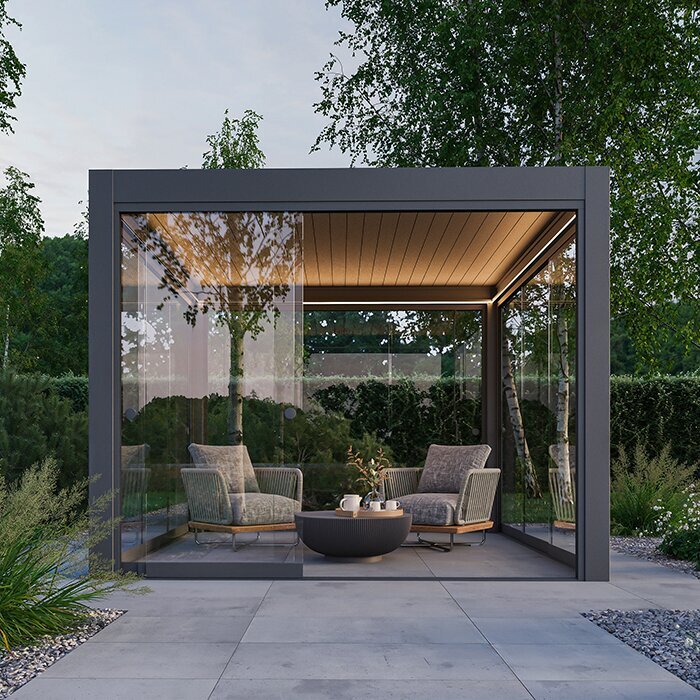
A label such as timber, metal or synthetic weave is not a complete care instruction. Timber can absorb moisture and change as it dries; the acceptable exposure depends on its construction, finish and the maker’s maintenance advice. Coated metal may need attention if the surface is damaged, while joints or fasteners can hold water. Woven furniture can use natural or synthetic fibres, with different requirements for damp, sunlight and cleaning. A resin or plastic frame may tolerate rain yet still have separate guidance for UV exposure, cold or handling. Consider the whole piece, not just the visible frame.
Check each item’s instructions for year-round outdoor use, finish care, storage guidance and what to do after prolonged wet weather. Inspect feet, undersides, joints and fasteners, where damage or retained water may be easy to miss. If you are comparing the wall-mounted Bloomcabin model, keep two separate sets of questions: ask the pergola supplier about shelter and the furniture supplier about the complete item’s care requirements. A sheltered position does not change a finish’s stated maintenance needs. Record any differences between the frame, tabletop and woven or upholstered parts, rather than giving the whole set one routine. If the furniture maker recommends storage, allow space for it even when the item sits beneath a roof.
Cushions need a separate storage plan
Cushions and upholstered components may need attention before the frames do. Fabric, stitching, piping and filling can all retain moisture; a water-repellent outer fabric does not necessarily mean the padding will dry quickly or tolerate being left exposed. Check the care label and maker’s instructions for whether cushions may remain outdoors, whether they should be removed after rain, how they should be cleaned, and whether they need to be stored dry. Apply the same checks to seat pads and fabric accessories left in the seating area. Fixed upholstery may call for a different plan from removable cushions.
Make a dry storage place part of the layout rather than deciding where to put cushions during a downpour. Do not seal damp cushions in a box, bag or cupboard; allow them to dry in line with their care instructions, and avoid stacking wet fabric against a frame. If the upholstery is fixed, ask the furniture supplier about suitable maintenance and drying expectations. Check seams and undersides after rain, not just the sitting surface. If only the cushions need to come inside, make removing and replacing them straightforward enough to do consistently.
When an outdoor furniture cover helps
A furniture cover can reduce direct rain and soiling, but its suitability depends on its material, fit and care instructions. Check whether it is intended for outdoor furniture and whether it allows air movement; do not assume any waterproof cover is suitable for continuous use. A cover pulled over damp cushions or a wet frame can hold moisture in, while water may collect in a sagging area or run down onto the feet. A loose cover can move in wind and rub against finishes. The aim is to reduce exposure without creating a damp pocket or another maintenance problem.
Use a cover as its maker directs, and inspect underneath after wet or windy weather. Check the furniture beneath it as well as the cover’s fit: a dry outer surface does not tell you whether cushions, joints or feet are still damp. Make sure the cover does not block a documented drainage route or interfere with moving parts. If you are also considering an enclosure for the bioclimatic Bloomcabin model, assess that separately from the furniture cover. Ask which enclosure arrangements are approved and what weather limits apply to each. A screen, curtain or other accessory should not be assumed to be included, compatible or sufficient to keep furniture dry.
Deciding which pieces can stay outside
Choose between leaving frames exposed, covering them or moving them according to the furniture maker’s instructions and the work you can keep up with. If year-round exposure is allowed and your observations show that the area suits the item, leaving a frame in place may be practical; it still needs routine inspection and cleaning. If the frame can remain outdoors but cushions cannot, remove the soft parts and keep them dry. If the whole item needs dry storage or regular treatment, a pergola may reduce rain without removing that requirement. A cover is an extra layer, not a substitute for the item’s stated care needs.
Think about the routine as well as the materials. Can you remove a cover, lift cushions or shift chairs when required? Is there enough indoor or sheltered space for the pieces that must come in? When planning a layout around Bloomcabin’s wall-mounted pergola, map where each item will sit and the route you will use to move it into storage. Leave enough access to inspect undersides and joints without having to dismantle the seating arrangement. If the necessary routine is impractical, choose furniture whose care requirements fit the actual shelter rather than relying on an ideal routine. A permanent layout should still allow you to reach covers, remove soft furnishings and move pieces that need drying.

Furniture care and winter roof operation
Furniture remaining beneath a pergola does not tell you whether the roof can be left or operated in a particular winter position. The structure may have separate limits or instructions concerning wind, frost, ice, rainwater and snow; these depend on the exact model and configuration. A shelter that reduces furniture exposure is not, for that reason, guaranteed storm-proof or watertight, nor does it imply a general snow guarantee. Do not infer roof safety from a chair staying dry or from the furniture maker’s outdoor-use rating. These are separate questions and need separate information.
For a pergola with moving roof components, follow the operating instructions and weather limits for that exact model; do not guess based on how exposed the furniture feels. Ask what guidance applies in freezing conditions, which positions are permitted in stated weather, and how drainage should be maintained. An added enclosure may also change the exposure, so check the documents for the intended arrangement rather than assuming the base configuration’s limits still apply. If instructions are unclear, seek clarification from the supplier or a suitably qualified installer. Assess the roof by its own documents and furniture by its own care instructions.
What to check before leaving furniture out all year
Bring the site observations and the two sets of guidance together before settling on a year-round arrangement. For the pergola, record the exact model, installed roof-and-side configuration, documented weather limits, drainage route and any approved enclosure. If the Bloomcabin Pergola listing is on your shortlist, use that model name in enquiries and keep the answers with the details of your proposed arrangement. Note whether the information covers wind-driven rain as well as rainfall from above, and which conditions or roof positions it excludes. Alongside this, record each furniture maker’s exposure and care instructions, including separate advice for frames, covers and upholstery. This gives you a practical reference when deciding what stays outside and what needs storage.
Then inspect the patio in real conditions: visit after rain, check the top and underside of furniture, note where water lands and how long surfaces take to dry, and check the route to indoor storage. Repeat when the wind direction changes; decide which pieces will stay, which will be covered and which must be moved. Confirm cover instructions and make a manageable routine for cleaning, drying and inspection. If there is an unanswered question about the roof configuration, get it clarified before treating the area as protected. A workable plan should still make sense in poor weather.
Frequently asked questions
Will a pergola keep garden furniture dry?
Not necessarily. Rain can blow through open sides, and water may reach furniture through runoff or splash from the paving. Check the weather information for the exact pergola model and configuration, then observe how your own seating area behaves in more than one wet spell.
Can cushions stay under a pergola in winter?
Follow the cushion maker’s care instructions. Fabric, seams and filling may take longer to dry than the furniture frame, so removable cushions often need a separate dry-storage plan. Do not cover or store them while damp unless their instructions specifically allow it.
Should I use a furniture cover under a pergola?
A suitable cover can reduce direct rain and soiling, but it should be used as its maker directs. Check ventilation, fit and how it sheds water. A cover over damp furniture may hold moisture in, and a sagging or poorly secured cover can create its own problems.
Can timber furniture remain outside all year?
That depends on the timber, construction, finish, site exposure and the maker’s care guidance. Check whether year-round outdoor use is permitted, what maintenance is required, and whether the item needs dry storage during prolonged wet weather.
Does furniture staying under a pergola mean the roof can be operated in winter?
No. Furniture care and roof operation are separate matters. Follow the exact pergola model’s instructions and weather limits for winter use; the furniture’s exposure does not establish what roof positions or operation are permitted.
Leaving furniture in place all year is a maintenance choice, not a benefit guaranteed by overhead cover. A reliable plan distinguishes wind-driven rain, lingering damp and roof runoff, then follows the care instructions for each frame, fabric and cushion. Use a furniture cover only as its maker directs, and store vulnerable pieces when the observed exposure exceeds their guidance. Separately, use the pergola’s own model-specific information for winter roof operation. If both plans work on their own terms, keeping some furniture beneath the pergola can be practical; if either depends on an unverified assumption, leave room to dry or store the items.
