
Pergola Insurance: What Details Should You Give Your Insurer?
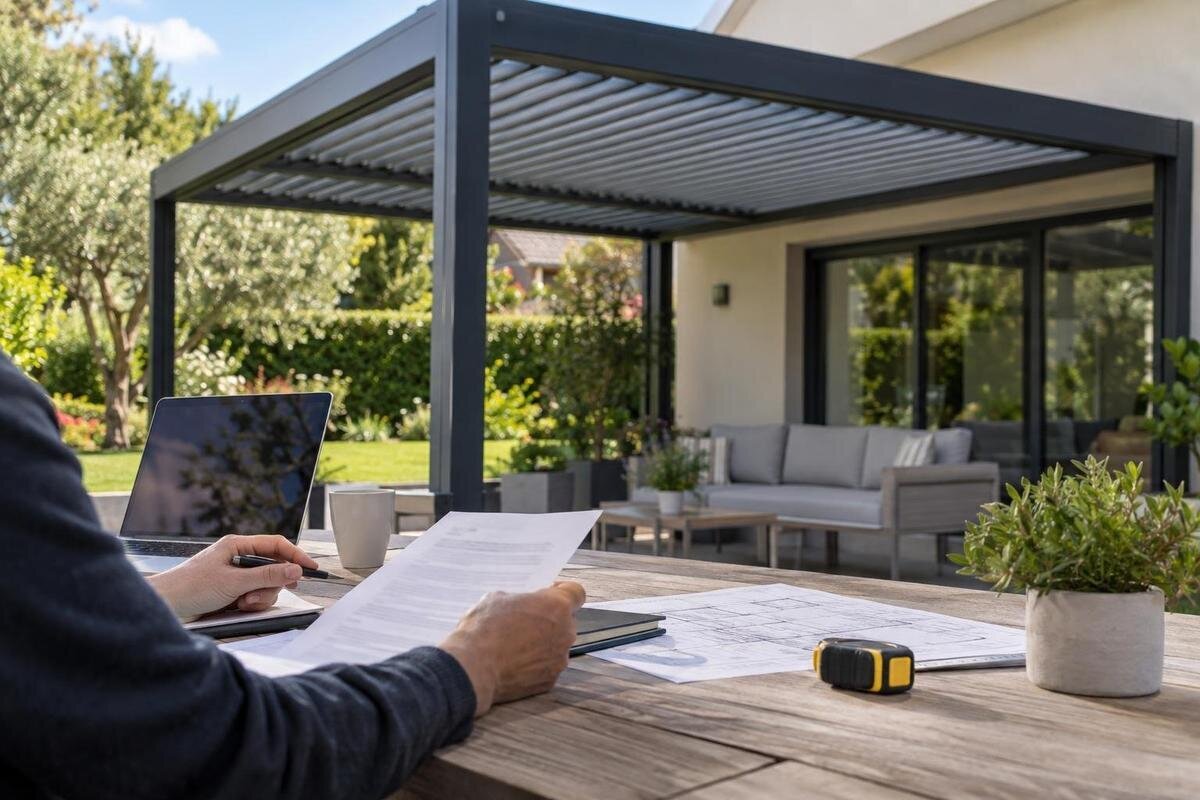
Pergola insurance
Before asking whether a pergola can be insured, give your insurer a factual description of the structure and its installation. A product name or the word “pergola” does not settle how a particular policy treats it. The answer depends on the policy and the details of your project. This checklist helps you assemble those details and ask clear questions without assuming cover.

01
Questions about pergola cover
Start by stating whether you are considering a purchase, have placed an order or are asking about an installed pergola. Those are different stages: a drawing at quotation stage may still be provisional, while an installed structure should be described as it stands. Give the policyholder’s name, insured property address and policy reference or renewal date, if available, so the enquiry is matched to the right policy. Say whether you want an initial view on a concept or an answer based on final, documented details. Ask how the insurer treats the structure; do not decide for yourself that it belongs under the house, an outbuilding or garden contents. The insurer can explain the wording of your policy.
Make the question specific. Ask whether the insurer can cover this particular structure and how the policy would treat damage to the pergola or damage it might cause, where relevant. Ask which conditions, exclusions, limits or excesses apply and whether information is required before installation. A broad “Is it covered?” may not identify the event, structure or policy wording you mean. If your documents name the Bloomcabin Pergola, include that exact product-family name, then add the selected configuration and installation facts. A model label alone does not establish cover or settle how the insurer classifies it. Ask for any answer to refer to the policy and project details you submitted.
Identify the exact model and configuration
Write down the supplier’s exact product name and model reference, then the configuration actually quoted or installed. Record the external width, projection and height from the relevant drawing, plus the stated footprint or area where available; include units and say whether each figure comes from a supplier drawing, quotation or your own site measurement. If the size or options are still being discussed, mark them as proposed. A listing such as the Bloomcabin Wall-Mounted Pergola identifies a product family; it does not tell the insurer which size or project scope you selected. Use consistent figures across your email and attachments, or explain discrepancies rather than silently choosing one. Copy the drawing’s own dimension labels so overall measurements are not confused with clear space beneath the structure.
Include material and technical descriptions only where confirmed in the quotation, specification or drawing. Do not infer a material, performance level or construction detail from a photograph or model name. Note which parts are included in the order and which are being sourced separately; a contractor’s additional work may not appear on the supplier’s quote. If the pergola has not arrived, date the quote and identify it as a proposed configuration. After installation, amend the record if the delivered model or selected options differ. Record model or serial markings when available, and check that they match the invoice. If a reference or dimension is missing, ask the supplier or installer for it rather than turning an estimate into a specification.
02
Show where the pergola will stand
Give the full insured address and show the planned or finished position on a simple site plan. Mark the house outline, pergola footprint, nearby outbuildings and any adjacent structures that help explain the setting. If a boundary or access route is relevant to the insurer’s question, label it; there is no need to assign a legal significance to it. Add measurements to fixed points instead of writing only “behind the house”. State whether the sketch is to scale and date it. A clear plan explains location and proximity; it is not a calculation of risk or evidence that any particular distance changes cover. If the location has changed since ordering, submit the updated plan.
State whether the pergola is freestanding or connected to the house, and whether that connection is planned or already present. If relevant, identify which side of the house and what the drawings show at the junction, without guessing about hidden fixings. The Bloomcabin Pergola product page cannot tell the insurer where yours sits on site; give the actual arrangement rather than an assumption based on a catalogue label. If the completed layout differs from the plan, note why and attach a current photograph or amended drawing. You can also ask which neighbouring features the insurer wants shown, rather than sending speculative conclusions about trees, fences or other structures.
List the roof and every added feature
Describe the roof as the supplier’s documents do: its stated type, whether it is fixed or has moving components if applicable, and the final configuration ordered. If a brochure uses a product term, repeat it and attach the relevant drawing instead of translating it into technical claims. The name Bloomcabin Bioclimatic Pergola identifies a product family, but does not record the roof options selected for your particular project. Note control or operating details only when they are confirmed in the quote or manual. If the documents are unclear, mark the detail as unknown and ask the supplier. If no option was specified, say so rather than letting a blank be mistaken for a confirmed feature.
List each separate feature forming part of the project: side screens or panels, glazing, lighting, heating equipment, sensors, controls, rainwater components or other additions, where present. For each, record whether it was included in the pergola order, bought separately or arranged by another contractor, and supply a model reference, invoice or installation record if available. Do not report an option shown in an illustration as included unless your quote confirms it. Separate planned additions from items already installed. If you expect to add equipment later, ask whether the insurer wants an updated description before work begins. This helps prevent an early enquiry about a basic proposal being mistaken for a description of the finished installation.

03
Describe the base and connection to the house
Describe what the support points stand on using the terms in the project records: an existing patio, deck, slab or another surface, where accurate. If separate bases or groundworks were part of the project, state what was specified, who arranged it and whether it is complete. Attach the relevant plan, invoice or installer’s note rather than describing the result with a broad phrase such as “securely fixed”. If you have no record of the base or fixings, say so and ask the installer what can be confirmed. If the terrace or supporting surface was altered for the project, note who carried out that work and whether it is included in the pergola contract. Do not estimate technical capacity.
For a structure joined to the house, distinguish the connection from the roof or equipment attached to it. State what the documents say about the point of attachment and provide a drawing or photograph of the completed junction if available. The wall-mounted Bloomcabin listing supplies a product name, not evidence of the fixing method used at your home. If the insurer asks for structural or installation details you do not hold, request the relevant records from the designer or installer, or speak to an appropriately qualified professional. Do not calculate or certify the connection yourself. Explain whether any work to the wall was done as part of the same project or by another contractor, so the scope is clear.
Record who supplied and installed it
Record the supplier, installer and any separate contractor, along with the delivery and completion dates. Explain who did each part of the work: for example, who supplied the pergola, arranged the base, assembled it or installed separate equipment. Say plainly whether it was professionally installed, assembled by you or completed through a mix of arrangements. Do not imply that an inspection, approval or certification took place unless you have written evidence of it. If installation is still planned, label the method and date as provisional. A contract or invoice records the agreed scope; compare it with the work actually completed before describing it as final.
Keep the order confirmation, final quote, contract, invoices, change orders and any handover information together. Identify who handled lighting or other separate work, if applicable, so the insurer does not attribute every part of the project to one party. If you hold planning, consent, inspection or completion documents, offer them when requested and describe only what each document actually says. Do not state that permission was unnecessary or that an approval was obtained unless that has been checked. If a consent question remains, verify it with the relevant local authority or a suitably qualified professional; an insurance enquiry does not answer it. For an order from the Bloomcabin pergola range, include the order record identifying the selected model and agreed scope.
04
Send drawings, photos and purchase records
Choose plans that match the product and version under discussion. A supplier drawing may show dimensions and arrangement; an annotated site plan may show how the pergola sits beside the house. Label each file with its date or revision and state whether it represents a proposal, approved order or as-built arrangement. If the quote and drawing disagree, flag the difference and say which document is newer; do not quietly choose whichever measurement seems more plausible. The insurer can tell you whether a marked-up sketch is enough or whether it wants a different format. Send the relevant pages, not an unexplained bundle of every draft. Do not label an illustrative image as a site plan or an estimate as a measured dimension.
Use your own dated photos to show the site context, each side of the installed pergola, its junction with the house if any, and visible accessories or labels. The wall-mounted pergola product page can help identify the product family but cannot show your finished installation. A wide view and a few close-ups are easier to interpret than a large uncategorised gallery; caption each with the date and what it depicts. Include a quote, invoice or drawing only where it clarifies a fact in your enquiry. Ask about secure upload or file-size requirements if you are unsure, and keep the original files in your project folder.
Ask what changes need to be reported
List every change from the description already sent: a revised size, different model or roof option, added screens or lighting, relocation, new attachment or enclosure. Make clear whether each change is proposed, approved, ordered or completed; a revised quotation does not automatically update the insurer’s answer. If you are considering switching to a Bloomcabin bioclimatic pergola, attach the revised order or drawing for the actual configuration rather than relying on the product name as evidence of what was supplied. Ask which changes the insurer wants notified, and when—before ordering, before work starts or after completion—rather than assuming the same process applies to all changes.
Ask the insurer to refer to the correct policy and the updated facts in its reply. Check whether it needs a new proposal, written notification, updated schedule or another record; do not assume a particular form applies. Save the response with your drawings, and note the date, contact route and any reference number. If more information is requested, write down exactly what is outstanding and who will provide it. Ask whether the insurer needs time to review the change before you proceed. If you use a broker, check how the insurer’s answer will be recorded and shared with you.

05
Keep the final installation record up to date
After installation, reconcile the paperwork with what is actually on site. Check the model, dimensions, attached or freestanding arrangement and accessories against the final invoice, drawings and change orders. If a component was substituted, omitted or added, record the difference and ask the supplier or installer for an updated description where possible. Date the final photos and label which views show completed work. This is not an engineering inspection; it is a factual handover so the insurer is not relying on an outdated proposal. If you find a mismatch before writing, explain it openly instead of sending documents that appear to agree when they do not.
Keep one project file, digital or paper, with the final description, order, installation records, invoices, drawings, photos and insurer’s reply. Add later replacements, repairs or new equipment with dates and supporting documents, and keep old versions rather than overwriting them. If a loss occurs, follow the insurer’s claims process and ask what evidence it needs; do not assume an old quotation or general conversation provides all the details needed for the claim. At renewal, review whether the file still describes the pergola as it stands and ask whether any update is needed. A short change log can show what changed and when.
Write the enquiry so the answer is specific
Put the key facts first, followed by a list of attachments. You can adapt this wording: “I am planning / have installed a pergola at [insured address]. It is [attached / freestanding], measures [confirmed figures], and has [roof and equipment confirmed in the documents]. The supplier is [name]; installation is [planned / complete] by [installer or me] on [date]. I have attached [quote, drawing and photos]. Please tell me how this is treated under policy [reference], what conditions, exclusions, limits or excesses apply, what information you still need, and when I should report a change.” Replace each bracket with a fact, label it as provisional, or state that you do not yet know.
Before sending, check that the message distinguishes the facts you are providing from the questions you need answered. Use descriptive attachment names so the recipient can identify the site plan, final quote and installation photos without opening every file. If the response is broad, ask the insurer to clarify it by reference to the policy, structure and relevant wording, rather than treating “it should be fine” as a definite answer. If you speak by phone, note the date and information discussed, then ask whether a written response or policy document is needed to record the insurer’s decision. Keep your message and attachments together, and note any questions that remain unanswered.
Frequently asked questions
Should I contact the insurer before installation?
If you need to know how the proposal will be treated, ask while the design is still being finalised and say clearly that it is proposed. Ask what information or timing the insurer requires before work begins. If the completed structure differs from the plan, send an update; an early view based on a sketch may not address the finished arrangement.
What if I do not have final drawings yet?
Send the current quote or sketch, mark it as provisional and list what is still undecided. Ask whether the insurer can give an initial view and what final information it will need. Do not present draft dimensions or unselected accessories as confirmed; update the enquiry when the design is agreed.
Does it matter whether the pergola is attached to the house?
It is useful information, but the relationship to the house does not by itself determine the answer. State whether the pergola is separate or joined to the house, identify the location on your plan, and provide installation records or photos of the junction if available. Ask the insurer how that arrangement affects your policy.
Should I mention lighting, screens or other equipment?
Yes. List features that are fitted or planned, including lighting, screens, controls or heating equipment where relevant. Note whether each came with the pergola order or was added separately, and provide a product or installation record if available. Ask whether the insurer needs to know about them; do not assume they are part of the original description.
Will home insurance automatically cover a pergola?
Do not assume so. A product name, product page or general reference to home insurance does not confirm how a particular policy treats the structure. Ask the insurer about your actual pergola and policy, including relevant terms and limits, and whether it needs to record its answer in writing or update a policy document.
A useful insurance enquiry connects the proposed or completed pergola, its supporting documents and the policy-specific reply. Keep confirmed facts separate from provisional choices, and update the record if the final installation differs from the plan. That gives you a clearer account of what was put to the insurer; the project details themselves do not guarantee cover.
