
Creating a Reading Corner Under a Pergola
Pergola planning
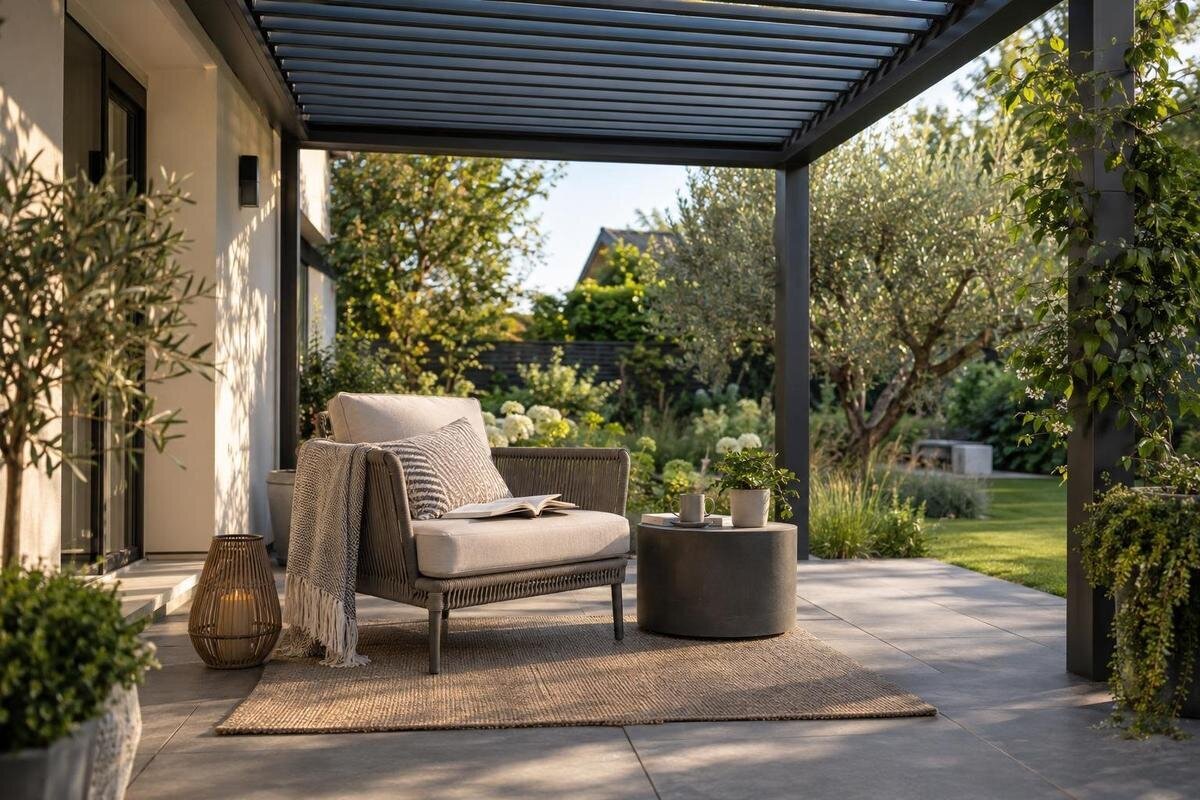
A reading corner beneath a pergola works when the chair, shade, light and storage suit the way you actually read—not just the look of the patio. Measure the furniture in use, note when sun reaches the proposed seat, and check that people can pass without moving the reader’s things. Then decide how to provide focused light and where books will stay dry between sessions. The guide below helps turn those tasks into a layout you can test before choosing a configuration.

Furniture for your reading routine
Begin with a real reading session in mind. A single paperback reader needs less surface space than someone who alternates between a book, notebook and tablet, or shares the corner with another person. Decide which uses are normal rather than trying to provide for every possibility. Note whether you sit upright, recline, use a footstool or need a place for a cup. Also consider whether you take notes, keep glasses nearby or switch between books during a session. Those details set the furniture brief: a chair, a companion seat if it will be used, a stable side table and any lamp or footrest that belongs there. A corner with room for the chair but not the things you handle can feel incomplete once you settle in.
Measure each piece in use, not only when folded or closed. Include the chair’s full width and depth, its armrests, any reclining or rocking movement, and the space needed to put down a book and stand. Mark the pieces on the patio with removable tape or chalk, then sit in place and see whether the arrangement feels natural. Use the actual chair if possible: a rectangle on paper will not show how it moves when you get up. Make a simple scale sketch showing the furniture and routes. When comparing the Bloomcabin Pergola product page with your plan, use the dimensions for the configuration you are considering and retain the space around the furniture, not just the space beneath it.
Keep the chair clear of everyday routes
A reading chair should not sit in the middle of a route simply because the view looks good there. Trace how people move from the house to the garden, dining area, bins or other regular destinations, including when the patio is busy. Check the door’s full opening, any steps and narrow pinch points. The route should stay clear while the reader is seated, while a companion chair is occupied and while someone carries a tray through. If the patio is compact, draw the walking line before placing furniture rather than treating the only direct walkway as spare seating.
Make sure the chair can be approached and left without dragging it around a wall, table or planter. A side table should remain reachable without its legs pushing into the route, and an occupied footstool still needs room around it. Try walking past while someone sits in the chair, rather than judging the gap when everything is empty. For a position by the house, the Bloomcabin Wall-Mounted Pergola is one named configuration to compare; its name does not establish door clearance or whether a particular wall suits your site. Match the exact product drawing to on-site measurements before counting the area as usable.
Track changing shade and glare
Daylight changes over a day and across the year, so visit the proposed seat at the times you normally read. Note when direct sun reaches the page, your eyes and the side table; a bright patch may be welcome at one hour and create glare at another. Reflections from a tablet or glossy page can matter as much as direct light. Record nearby trees, buildings and fences that cast shadows, and repeat the observation when conditions differ if practical. A brief note of the time and light conditions is more useful than relying on memory. One midday visit is not a reliable picture of every reading session.
Use those observations to turn the chair slightly or adjust where you hold the page to avoid reflections. Test the arrangement at more than one reading time before settling on a position. Temporary shade can help you judge whether a small change makes the page easier to see, but it must not block a doorway or walking line. When reviewing the Bloomcabin Bioclimatic Pergola, consider the marked chair position alongside the information for the exact configuration. Keep your observations about sunlight with the layout sketch so that the seat’s position reflects when you intend to read, rather than just how the furniture looks.
Find a quieter, more private position
Quiet is relative, so spend time in the proposed spot at the hours you plan to read. Listen for regular sources such as a road, neighbouring activity, garden equipment or the household’s route through the patio. Notice whether the sound changes when a door opens or people use another part of the garden. A position that feels calm for ten minutes at midday may not suit an evening routine. Moving the chair or turning it away from a direct sightline can make the corner feel more separate, but a pergola should not be treated as sound insulation.
For privacy, sit down at eye level and check views from neighbouring windows, paths and the house, not just from a standing position. A screen or planter may interrupt a direct view, but it can also reduce light, narrow the route or make the area feel enclosed. Test a temporary arrangement before buying anything, and keep it clear of the chair and door movements. If you are considering the wall-mounted pergola model for a position beside the house, include those sightlines in your layout sketch. Assess any separate screening alongside the seat position, noting which views you want to retain and which you would prefer to screen.
Choose light that reaches the page
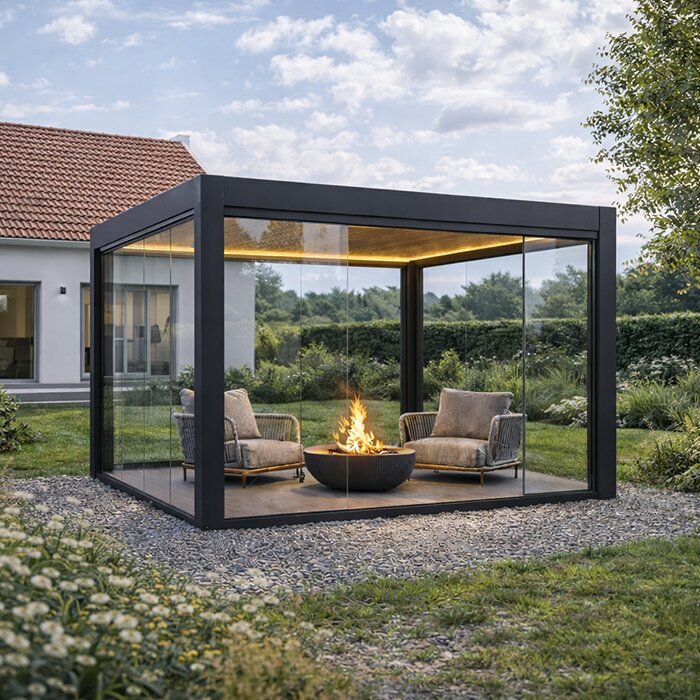
Do not assume a pergola includes lighting or that a lamp intended for indoors is suitable outside. Separate task lighting from general ambience: a gentle glow may make the patio inviting, while a reading light needs to illuminate the page without shining into the reader’s eyes or a neighbour’s window. Sit in the chair with an open book and test the direction. The page, your hand and the position of the table can all affect shadows, so a lamp that looks right from the doorway may not work once you are seated.
For occasional use, consider a portable light only if its manufacturer says it is suitable for the conditions where you intend to use it. Decide where it will be kept between sessions, and keep its base and any cable clear of the route to the chair and door. If you want a fixed fitting or a permanent electrical connection, ask a qualified electrician to advise on an appropriate solution. Set the furniture out before settling on the light position; otherwise, you may end up illuminating the circulation space rather than the page.
Plan book storage between sessions
Treat book storage as a separate requirement rather than assuming overhead cover makes the corner dry. Pergolas vary, and a roof does not necessarily enclose the sides or protect belongings from wind-driven rain. Keep books, paper notebooks and reading devices indoors between sessions, or use a closed storage unit only if its manufacturer confirms it is suitable for the conditions where it will stand. An open basket can keep reading items together, but it does not protect them from the weather.
Put the day’s book close enough to reach without leaning across the chair, but do not fill a narrow passage with a shelf or storage box. A removable container may work for a book and glasses in settled conditions; clear it afterwards if it is not intended for outdoor exposure. Keep drinks on a separate, stable surface from books and electronics. Decide how you will bring the reading kit inside before choosing its storage spot. A simple routine for putting things away is more useful than a display that encourages you to leave them outdoors.
Test the chair and side table together
Try the chair before choosing it, especially if you expect to read for a while. Check whether the seat height, back and arms suit the way you like to sit, and whether you can reach the side table without twisting around other furniture. Comfort is personal; a product image cannot tell you how a chair will feel. If more than one person will use the corner, have each person try the seat and reach for a book or cup. Check that a footstool can be used without extending into a walkway, and that the table has enough surface for the items you actually bring outside.
Measure the chair and table together, including any parts that move, then compare the result with the product dimensions and drawings for the exact size you are considering. A stated area does not tell you the clear space available for furniture or movement. The Bloomcabin Pergola listing gives a model range from 9 to 24 m²; that figure alone cannot confirm that your chair and table will fit comfortably. Check the dimensions for the chosen configuration and compare them with your sketch, rather than sizing the furniture from a lifestyle image.
Plan for the actual weather exposure
Match the reading routine to what the proposed spot actually offers. During ordinary outdoor use, notice whether a breeze makes pages difficult to handle, whether rain reaches the seat and whether damp surfaces would send you indoors. A pergola is not an enclosed room, and the shelter available depends on the specific construction and conditions. Do not treat a product name or photograph as proof that a chair, cushion or book will stay dry. Check care instructions for cushions and throws too, and decide where they will go when the weather changes.
If the proposed spot is beside the house, consider how the door and furniture work together; if it is further into the garden, check that the route back indoors remains convenient. Review details for the exact configuration instead of assuming every pergola provides the same cover. The Bloomcabin Wall-Mounted Pergola listing identifies a product type, but does not show how a particular seat will be sheltered from wind or rain. If your reading routine depends on staying dry, confirm the intended exposure with the manufacturer and ask an appropriately qualified installer to assess the site.
Fit reading around the patio’s other uses
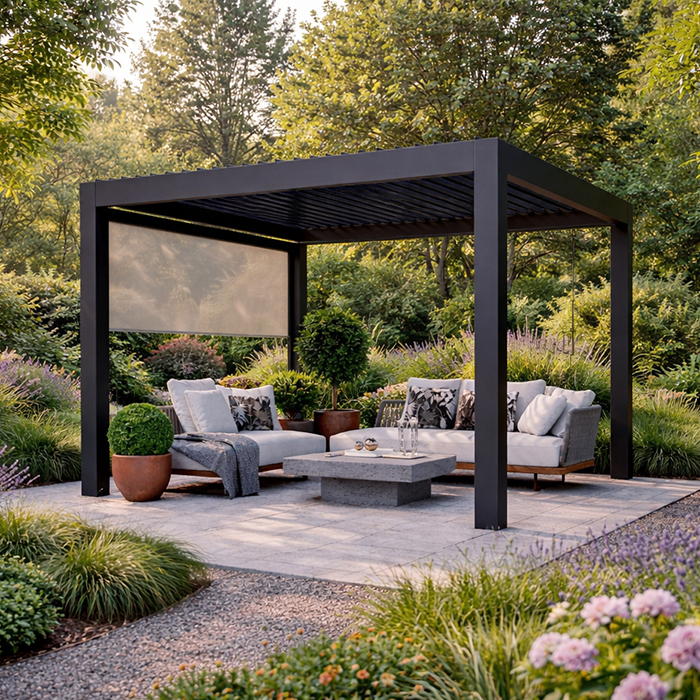
Map the furniture and features that share the patio, such as a dining table, existing chairs, plant pots or the route to the garden. A corner can look spacious when everything is moved aside for a photograph and feel cramped when chairs are occupied. Leave room to pull out shared seats and move between them; do not make the reader’s only route depend on shifting a table. If the pergola area serves several purposes, decide which use has priority during the hours you want to read and plan the furniture around that choice.
For one reader, a chair and side table may be enough; adding a second seat makes the space more social but increases the footprint and may change the view and noise. Test the arrangement with the household, including whether someone can pass without interrupting the reader. When comparing the Bioclimatic Pergola configuration, plot its actual product dimensions against the shared-use plan, with the other patio furniture in its normal position. Decide where the reading chair and table will go when the patio is used for another activity, so returning to your reading layout does not require moving everything else.
Compare the measured layout with the pergola details
Before choosing a configuration, compare your measured footprint with the product drawing and the furniture plan. Check the details for the exact size and configuration, including any supports or openings shown, and make sure the chair, table and route still work in that arrangement. Do not estimate dimensions from photographs. If a drawing or specification leaves an important measurement unclear, ask the supplier or installer to clarify it. Have a qualified professional consider site-specific installation questions, including any proposed attachment to the house; do not infer suitability from a model name or image.
Then rehearse the whole routine in the marked space: sit down, retrieve a book, use the table, switch on the planned light and stand up again. Ask someone else to use the normal route past the chair while you are seated. This final test brings together circulation, comfort and the practical tasks that a simple floor plan may miss. The Bloomcabin Bioclimatic Pergola product page is one place to review a model, but match any choice to its exact product information and your measured layout. A corner that works in everyday use is a better guide than a perfect-looking arrangement that needs constant rearranging.
Frequently asked questions
How much room should I allow for a reading corner?
There is no single ideal footprint. Measure the chair in use, its movement, a side table and the space needed to approach and leave it. Then check that the arrangement does not obstruct a door or the usual route across the patio. A product’s stated area does not, by itself, show how much clear space your furniture will have.
Will a pergola keep books dry?
Do not assume so. Pergola configurations differ, and overhead cover does not necessarily protect the sides from wind-driven rain. Keep books and paper indoors between sessions, or use storage that its manufacturer confirms is suitable for the conditions where it will stand.
Which way should the chair face?
Choose the direction that gives you a pleasant view without making the page difficult to see. Check the seat at the hours you usually read, since sunlight and reflections change during the day. Turning the chair slightly or shifting the table may solve glare more simply than fixing the furniture in one position.
What lighting works for outdoor reading?
Look for a task light that the manufacturer says is suitable for its intended outdoor setting, then test its position from the seated reading angle. It should reach the page without shining into your eyes or casting an awkward shadow. Ask a qualified electrician to advise on any fixed fitting or permanent electrical connection.
Can I create a reading corner on a small patio?
Often, a single chair and a compact side table are enough. Mark the space they occupy in use, then preserve a clear route to doors and other parts of the garden. A layout that can be reset easily may work better than adding a second seat that makes the patio difficult to use.
A reading corner earns its place when you can settle in, find a comfortable view, read the page without fighting glare and put everything away without reorganising the patio. Let the real chair, clear route, changing light and storage routine determine the footprint. Once those details are mapped, compare pergola configurations using the exact product information and site advice where needed. The result is a space shaped around reading, rather than an attractive area that only works in a photograph.
