
Pergola Screens or Hedges: Balancing Time and Space
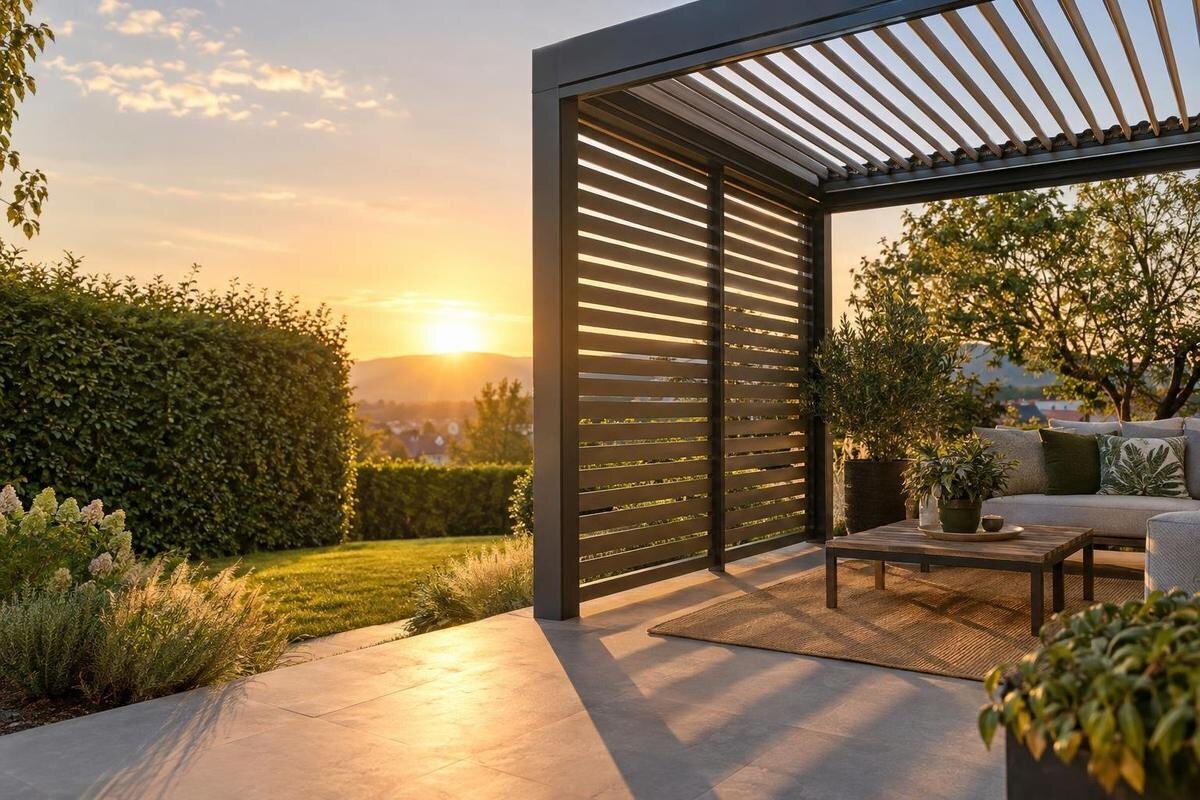
Pergola privacy planning
Garden privacy is often framed as a choice between a living hedge and a pergola screen, but the practical trade-off is where the cover is needed, when it must work and how much space is available. A hedge can soften a long boundary, though it needs a planting strip and its cover changes as it establishes and through the seasons. A pergola screen can address a chosen side after it has been fitted, with coverage determined by its position. Map the view before comparing the mature hedge’s footprint with the space needed for the pergola, access and any approved side configuration.

Before you choose 1
How hedges and pergola screens provide privacy
An established hedge and a pergola side screen can both interrupt a view, but they work on different timelines and occupy space differently. A hedge is a living boundary: it must be planted and given time to establish and fill out. Its eventual width, height and density depend on the species and growing conditions, so a new row is not an immediate privacy wall. A screen is a manufactured side element in a chosen position. Once the compatible component is fitted, it can cover a defined area, but only from the angles its placement actually blocks. The hedge changes over time; the screen stays in the position and form selected.
That distinction matters if the view comes from one neighbouring window, a raised garden or a path beside the patio. A hedge may suit a longer boundary where there is room for planting and the whole edge needs softening; a pergola screen is more targeted when the exposed view crosses one side of the seating area. Neither automatically encloses the garden, and a pergola roof does not by itself provide side privacy. Set out the intended result first: cover one seat, screen a boundary or create a planted edge. When considering the Bloomcabin Bioclimatic Pergola, distinguish the frame from any side-screen accessories: check what is included and which options are approved for the exact configuration.
The sightline that needs cover
Start with a simple garden plan rather than a guessed boundary height. Mark the chair, table or doorway where privacy matters, then note who can see it: a neighbour’s window, a raised garden, an overlooking path or an upper-level room. Sit and stand in the places the garden is used, since the line of sight changes with eye level. A photograph taken from each position can make a hidden angle obvious. Record whether the exposure comes from one narrow direction or across a wider sweep, and whether it affects a single seat or the whole boundary. This helps prevent screening more area than the problem requires.
On the same sketch, mark the proposed panel’s position and ends, then check whether a view could pass above, below or around it. For a hedge, show the planting line and allow for its expected mature form, not just the gaps visible on planting day. Include diagonal views as well as a straight-on one; a short panel can miss an angle from beside the seating. A plan and a simple side-view sketch are enough for an initial conversation with a supplier or nursery. If you are considering the Bloomcabin Wall-Mounted Pergola, use those drawings to explain where the seating needs cover and which views you want to keep open.
Before you choose 2
The full footprint of a mature hedge
Plan for a hedge’s mature size, not just the narrow row that arrives from the nursery. Find the mature spread for the species you are considering, then allow for the shape you intend to maintain. A tight strip between paving and a boundary can leave little room for pruning or replacing a plant; branches may also narrow a path or obstruct a doorway if the planting line is too close. Mark the bed and the space needed to reach it on your plan. If those areas compete with dining chairs, a gate or a route through the garden, the bed width alone understates the space you will need.
Ask a nursery about likely mature width in your conditions rather than assuming a small plant will stay compact. Locate existing planting and any drains or service routes before choosing where to dig; clarify uncertain positions before work begins. A pergola also takes ground space, so compare its posts, seating clearance and proposed side arrangement with the hedge bed rather than comparing leaf width with panel thickness. The Bloomcabin Pergola listing gives a product area range from 9 to 24 m², but that figure does not include the space needed for an adjacent planting strip or maintenance access. Mark those areas separately so that neither option appears to use less space than it actually needs.
Hedge growth and seasonal cover
Privacy from a hedge develops on a plant’s timetable. How quickly a row closes depends on the species, initial size, spacing, establishment, soil and exposure, so one growth estimate cannot be applied to every garden. A newly planted hedge can leave views between plants, and adding more plants closer together is not automatically the right fix; crowding can affect how the hedge grows and is maintained. Ask a nursery for advice based on the exact species and site, and decide whether partial cover is acceptable while it establishes. If privacy is needed by a fixed date, treat the hedge alone as an uncertain short-term answer.
A screen has a different timing: it can provide cover once the compatible side element has been fitted, but buying a pergola or accessory is not the same as having the side covered. Check the actual position, size and openings against the viewpoints on your sketch. The seasons matter around planting too. Deciduous foliage may leave more open views after leaves fall, while plants described as evergreen are not necessarily dense or gap-free. If you plant in stages, different sections will have different establishment periods. Look at the appearance across the year, not only a full-leaf summer photograph, and ask the nursery about seasonal cover.

Before you choose 3
Choosing a pergola screen for a specific view
An installed screen is most useful when the privacy need has a clear edge: one exposed side of a dining area, for example, rather than the entire garden boundary. Its position, width and height relative to the sightline matter more than the general word screen in a product description. A panel that stops short of the viewing angle, sits beyond the area needing cover or leaves an open end may miss the original problem. Covering more than necessary can reduce the view out and make the pergola feel closed. Use your sketch to identify the smallest area that would interrupt the sightline.
Check the actual panel design: an open pattern, gaps or a translucent material may give a different level of visual screening from a solid surface, and viewing angles matter. For a model such as the one on the bioclimatic pergola page, ask which side elements are approved and whether they are included or optional. Do not assume a third-party screen fits. Ask the supplier to show or describe the chosen layout and coverage rather than treating a catalogue image as proof. Relate that layout to the exposed seat or dining area on your sketch. If airflow matters, include that in the same enquiry so that privacy is not considered in isolation.
Maintenance and access for each option
Include regular work in the space decision. A hedge may need watering while it establishes, trimming at intervals suited to the species, clearing cuttings and attention if a plant fails or a gap develops. The amount and timing vary; no single pruning schedule suits every hedge. Decide who will do the work and whether both faces can be reached without standing in a narrow bed or damaging nearby paving. If you want a neat, even boundary, the time needed to maintain that shape can matter as much as the bed itself. Allow room to carry tools and remove cuttings too.
A screen avoids plant growth and routine hedge trimming, but it should not be assumed maintenance-free. Ask how the particular material and fittings should be cleaned or inspected, whether a panel must move or be removed for care, and how you can reach the relevant parts once furniture is in place. These are questions for the supplier or installer of the exact system, not assumptions to apply to every screen. If the component has an operating path, keep that area clear and check the product instructions before positioning a bench or planter. Compare recurring tasks over several years, not just installation against planting.
Before you choose 4
Site conditions for planting and screening
Check the ground and surroundings before deciding that either option will work well there. Plants respond to soil, drainage, light and exposure, so the same species may not establish evenly in every part of a garden. A shaded corner, dry strip beneath an overhang or exposed edge can change the planting result; ask a local nursery what suits the actual conditions rather than choosing from a photograph alone. Note existing trees and structures that affect light or access. If the hedge’s eventual size could obstruct a route or nearby feature, settle the layout before ordering.
A pergola screen needs a different site assessment: the supplier should confirm that the selected frame and side configuration suit the planned position. Do not infer that any fabric or panel can be added because a pergola is present, or that a garden screen is intended for another structure. If you are considering the model on the regular pergola page, describe the proposed location as well as the side you want to screen. Include nearby doors, paths and seating, since they must remain usable once the side element is in place. Consider whether a denser side would change the open feel or airflow you want, particularly where surrounding planting already encloses part of the area.
Combining a hedge with a pergola screen
Using both can solve separate parts of one privacy problem, but only if each has a clear job. A hedge might follow a long boundary for gradual, living cover, while a screen addresses the one view into the seating area before the plants establish. That avoids extending a pergola screen along every boundary because one corner is overlooked. It also lets the planting line be chosen for the garden instead of forcing the whole hedge to act as a precise barrier. Draw both on one plan and check that they do not compete for the same narrow strip, narrow a route or restrict access for pruning.
Plan any transition rather than assuming the screen can be removed later. The hedge may remain less dense than expected, and a raised window may still overlook the seating after it fills out. If the panel is intended as temporary cover, ask how the approved accessory can be changed or removed and what the arrangement will look like afterwards. For a wall-attached option such as the wall-mounted pergola model, include that future change in the initial enquiry. Check whether the remaining planting would cover the same sightline rather than merely reaching the panel’s height. A combined solution makes sense when its footprint, access and maintenance remain manageable even if the hedge grows more slowly than hoped.

Before you choose 5
Space, upkeep and the overall cost
Compare the whole commitment rather than an assumed cheap hedge against a finished screen. A hedge can involve plants, preparation of the strip, watering during establishment, pruning tools or paid maintenance, and replacement if plants fail. It also uses ground that might otherwise serve as a path, dining area or clear view. A compatible pergola screen may involve a frame, a side accessory and fitting; what is included and what is optional must be checked. No general price rule settles the choice, because plant selection, site work and the selected system differ. Ask for comparable quotes where installation is part of the plan.
Make two written lists: work and costs for the first year, then recurring tasks and possible replacements. Add access or paving changes to the hedge option, and ask whether screen components are priced separately for the exact pergola model. If you are comparing an option from the Bioclimatic Pergola listing, request a quote for the chosen frame and approved side configuration together. Include fitting or landscaping only when it appears in the relevant quote, and note any work you would need to arrange separately. This makes the comparison more useful than setting the price of a bare pergola frame against the full cost of planting and maintaining a hedge.
Choosing between a hedge and a pergola screen
Choose a hedge when the privacy line is long, a planting bed and maintenance access fit comfortably, and gradual, season-changing cover is acceptable. Choose a pergola screen when a defined view needs interruption once an approved side panel is fitted, and you prefer a localised solution to a living boundary. If neither description fits, reconsider the position: moving a seat, narrowing the target area or combining a short screen with planting may reduce how much needs covering. Test these options on the drawing; a small change in where people sit can alter the sightline.
Before committing, bring the space and timing decisions together on one final sketch. Show the hedge’s mature spread, paths, doors, furniture and proposed screen side, then note which views would remain open while the planting establishes. For a model on the Wall-Mounted Pergola page, identify the exact side configuration in your enquiry so that the response addresses your layout rather than the frame alone. Keep the nursery’s advice on mature form and seasonal density alongside that plan. The deciding question is whether the arrangement meets your privacy needs within the space and upkeep you can sustain, without relying on an exact growth promise or a product photograph.
Frequently asked questions
Does a pergola screen provide privacy straight away?
It can cover a specific view once the compatible side element has been fitted, but only across the area and angles it blocks. Check the panel position, height, gaps and ends against the sightline you want to screen; a pergola roof does not close its sides.
How much room should I leave for a hedge?
Allow for the chosen species’ mature width, the shape you intend to maintain and access for pruning. Include the bed and the space needed to reach it on your plan, then check how they affect paths, doors, seating and nearby planting. Ask a nursery about the likely mature spread in your conditions.
How quickly will a hedge give privacy?
There is no dependable growth rate that applies to every garden. Species, plant size, spacing, soil, exposure and establishment all affect how quickly gaps fill. If privacy is needed by a fixed date, plan for partial cover while the hedge grows rather than relying on a precise timetable.
Can I combine a hedge with a pergola screen?
Yes, if each has a distinct purpose and the combined layout leaves enough room for planting, access and maintenance. A screen could address one exposed seating area while a hedge follows a longer boundary. Confirm the screen’s compatibility with the exact pergola model, especially if you expect to change the arrangement later.
Will an evergreen hedge give year-round privacy?
Evergreen planting can retain foliage, but that does not guarantee a dense, gap-free barrier in every season or at every viewpoint. Check the likely mature form and seasonal density of the particular species with a nursery, and consider whether a screen is needed for any view that must be covered sooner.
Consider the sightline, deadline and available space together. A hedge suits a continuous living boundary where there is room for mature growth and ongoing care; a pergola screen suits a specific view that needs cover once an approved panel is fitted. If both needs exist, give each element a distinct purpose on the plan. Choose an arrangement that will still leave room to sit, move through the garden and carry out maintenance when the hedge is mature.
