
Pergola Surfaces: Porcelain, Timber or Natural Stone?
Pergola planning
Choosing a pergola surface is not simply a choice between three looks. Porcelain paving, timber decking and natural stone feel different underfoot, respond differently to sun and rain, and call for different care. The right option is the one that works with how you use the space and the conditions at your home. Compare the actual finish, not just the material name, then plan its joints and edges around the pergola and the routes through the garden.
Decide how the pergola floor will be used
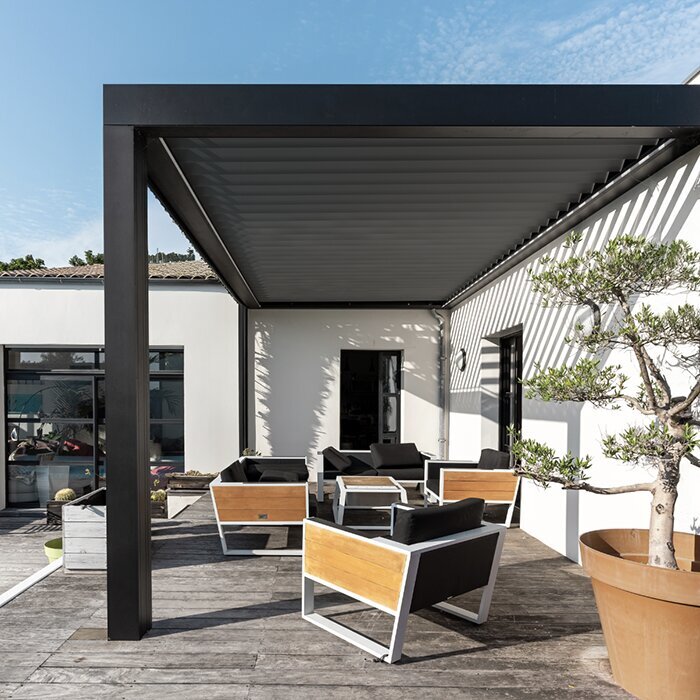
Think first about how the pergola floor will be used. A dining area needs a comfortable surface around chairs; a route from the house has to connect cleanly to a threshold, step or existing patio; a quiet seating corner may put more emphasis on texture and appearance. Mark the places where you walk, sit and move furniture before comparing materials. That plan shows whether the surface needs to form one continuous terrace, define a smaller zone or link several areas. It also helps you account for practical details such as door clearance, furniture feet and the path to the garden, rather than choosing from a catalogue image alone.
Then decide how the floor relates to the pergola footprint. A wall-mounted structure meets the house, while a freestanding layout leaves edges on more than one side; either can call for a different boundary, route and visual balance. Compare the Bloomcabin Wall-Mounted Pergola with your plan if a wall-mounted option is under consideration, and mark the finished floor edge before settling on a surface format. The paving need not stop precisely at the roof line: extending it can make the area feel connected, but it changes the amount of material and care required. Keep the main route clear of furniture and avoid narrow strips that are difficult to finish or clean.
Porcelain paving for a consistent, manufactured finish
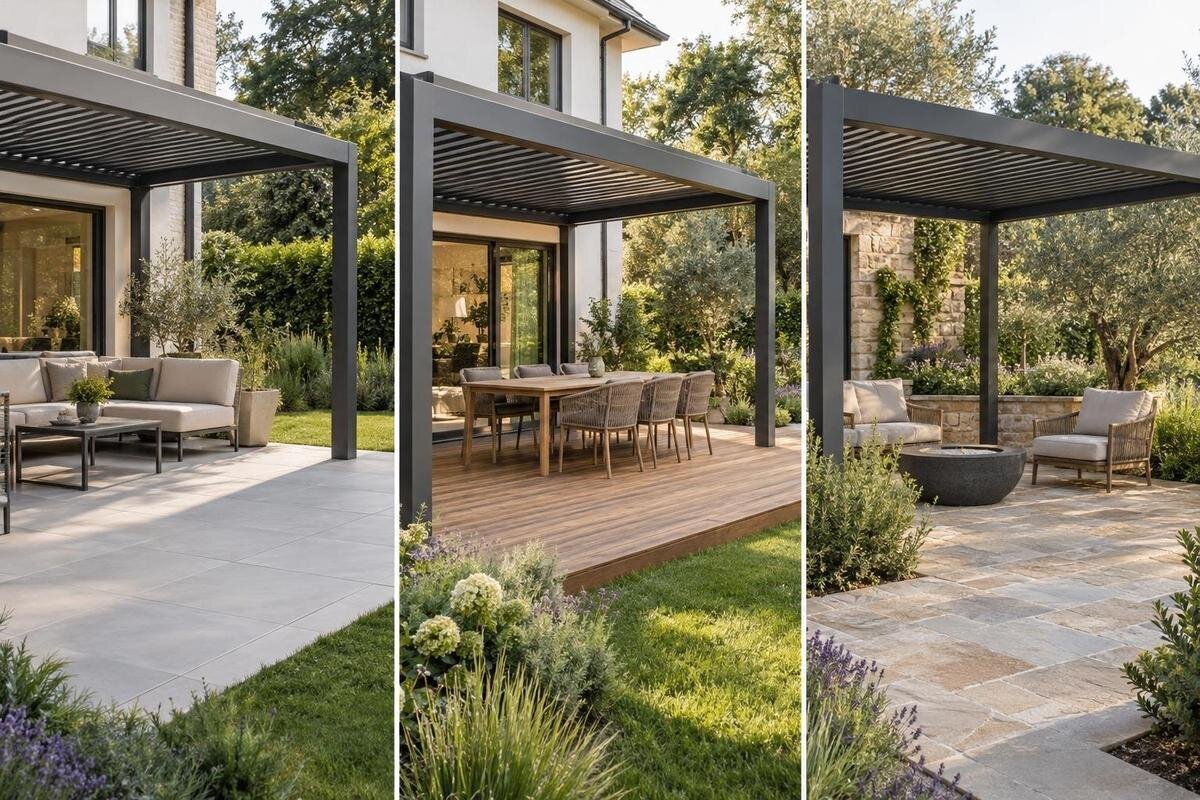
Porcelain paving suits a neat, controlled look: manufactured slabs usually offer more consistent colour and dimensions than quarried stone, although patterns and shades still differ between ranges. A large format can reduce the number of visible joints and give a compact seating area a calmer appearance; a smaller format may sit more comfortably with existing paving or introduce a deliberate pattern. Neither is automatically the better choice. The layout has to accommodate edges, cuts and the pergola position, and a sample is more informative than a screen image. Compare it with the house threshold and nearby paving in daylight, since an attractive slab on its own can look out of place beside older materials.
For an exposed patio, look for a product specified for outdoor use and read the information for its exact surface finish. Ask about resistance to staining, recommended cleaning methods and any slip-performance information for wet conditions. A smooth appearance does not prove poor grip, just as visible texture does not prove how a slab will perform when wet. Confirm that the proposed format can be set out neatly around the planned edges and access points. If the paving layout is being designed around a pergola, include the Bloomcabin Pergola in the same discussion rather than choosing a slab pattern in isolation.
Timber decking and board layout
Timber decking introduces grain and directional lines and can look less hard-edged than an area of paving slabs. Knots, board width and direction all contribute to the finished effect. Running boards along the main sightline or walking route may make the space seem longer; changing their direction can visually separate the pergola seating area from the rest of the terrace. These are visual choices, not guarantees of how large the area will feel, so try a few board samples in place. Consider where board ends, borders and changes of direction will fall: a short board or awkward junction can draw the eye more than the overall layout.
Timber’s appearance can change with exposure and upkeep. Colour may fade or weather, and the amount of change and treatment needed depend on the species, finish and conditions at the site. Dirt can collect between boards, so think about how you will sweep and reach those gaps; leaves and damp debris should not be left to build up. Ask for care guidance for the precise timber and finish, including suitable cleaners and whether periodic treatment is advised. Also consider the surface when wet and the spacing of the joints for bare feet, chairs and small objects. Do not assume every timber deck needs the same products or maintenance timetable.
Natural stone: colour, texture and variation
Natural stone is valued for variation: veining, fossils, mineral flecks and shifts in tone mean two slabs may not look identical. That variation can sit comfortably in a mature garden or add texture beside a clean-lined pergola, but it is not a uniform finish. View several pieces together and ask how the selection will be blended; one small sample cannot show the full range. Surface finish and edge treatment matter as much as colour. A sawn or honed appearance reads differently from a more textured face, and irregular edges can change the rhythm of the joints. Choose by viewing a representative spread in the kind of light the patio receives, not by selecting one attractive stone fragment.
Care depends on the stone. Porosity, staining behaviour and recommendations on sealing vary by type and finish, so get guidance for the exact product rather than assuming all natural stone should be treated alike. Ask how it should be cleaned and whether a sealer alters its colour or appearance. A sample seen dry may look quite different after rain; compare both states if possible. Plan joints and cuts so natural variation looks intentional rather than like a set of mismatched pieces. If the Bloomcabin Bioclimatic Pergola is on your shortlist, show the intended pergola outline on the same drawing as the stone layout. That helps you judge edges and routes together.
How sun and shade affect underfoot comfort
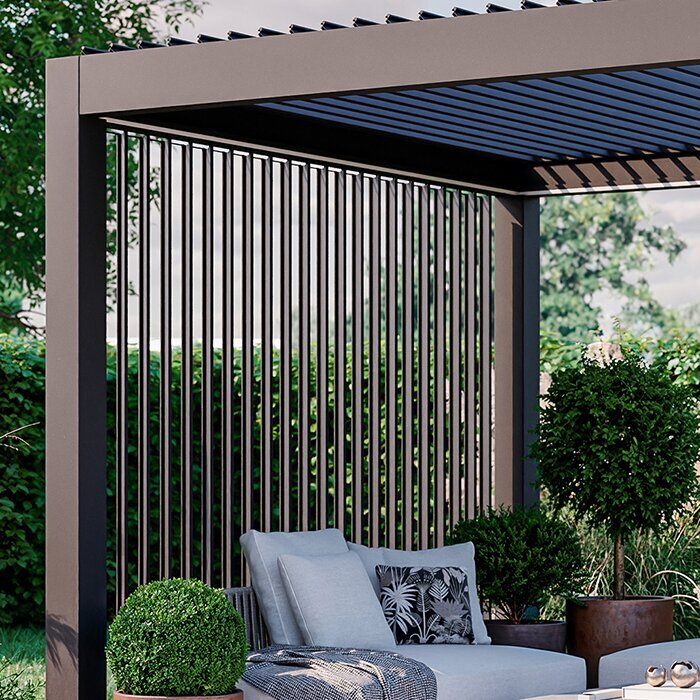
Surface warmth is affected by more than the material name. Colour, direct sunlight, shade, airflow and time of day all influence how a particular slab or board feels. Darker finishes often absorb more solar energy than lighter ones, but colour alone is not a reliable temperature guide across different products. Porcelain, timber and stone come in varied shades and finishes, and the same sample can feel different in full sun and shade. If people regularly walk barefoot, assess the actual product at the times the area is likely to be used. A pergola may shade part of the floor, while its edges and the surrounding patio remain exposed.
Use samples to compare likely conditions rather than asking which material is always coolest. Put a few candidates in the proposed area, note which parts receive sun and view them at more than one time of day. A board or tile photographed in a bright showroom may not represent a shaded garden, and a small sample warms differently from a full surface; treat it as a guide, not a precise test. If comfort in warm weather is the priority, colour and shade may matter as much as the choice between porcelain, timber and stone. A pale surface may suit the scheme, but you still need to check its outdoor finish, grip, cleaning instructions and appearance when damp.
Cleaning and maintaining an outdoor surface
All three surfaces need routine attention outdoors, even beneath a pergola. Wind can carry leaves, pollen and grit into the covered area, and rain can reach it from the sides. Sweep often enough to stop debris building up in joints, corners or beside furniture, then use cleaning methods recommended for the surface. Porcelain may be straightforward to wash, but ease of cleaning depends on the exact product and what has marked it. Stone can vary in porosity, while timber has gaps and a finish that may change over time. Think about access as well as cleaning products: a narrow edge behind a bench or against a wall is harder to maintain than an open border.
Work out how you will reach the whole surface for cleaning, particularly where the pergola meets the house. Furniture and tight corners can obstruct sweeping and rinsing, so leave access to the edges rather than considering only the open area in the middle. Include the wall-mounted Bloomcabin option when drawing that junction, and discuss the layout and surface details with the project team. Follow the surface supplier’s cleaning instructions rather than choosing a strong cleaner simply because it is available. The cleaning method should suit the material and finish, as well as the type of dirt or mark.
Wet-weather grip, joints and transitions
Grip is a product-specific question, not a simple ranking of the three materials. Stone can be rough or smooth, porcelain slabs come in different finishes, and timber boards vary in profile and treatment. Any surface may become more slippery with wet leaves, algae or other residue. Ask for slip-performance information for the exact finish in the wet conditions expected outdoors, and seek advice if the area is often shaded or stays damp. Visual texture alone is not a dependable test. Cleanliness, surface wear and regular removal of organic debris affect the experience too, so include a realistic cleaning routine in your decision rather than relying only on a specification sheet.
Transitions deserve the same attention as the main surface. Check where the new floor meets a house threshold, an existing patio, a step or lawn, and think about how furniture and people will cross each junction. A change from boards to slabs can introduce a visible line or level difference; joint widths and edge details also affect how wheels or chair legs move. Have the installer confirm that the planned finish and transitions can be achieved at the site, especially where levels need to connect. If the Bloomcabin pergola option is part of the design, mark its position on the plan so you can check the approach and threshold in relation to the floor. Draw the route as well as the seating area before committing.
Coordinating colour and texture with the garden
The floor covers a large part of the view, so compare it with the pergola frame, house exterior, planting and existing patio rather than judging a sample on its own. Porcelain tends to offer a more consistent, repeated pattern; timber introduces grain and directional lines; stone brings natural variation. Those differences can complement the pergola’s shape or compete with it. If the frame already has a strong colour or profile, a simpler surface may bring the elements together; if the frame is plain, a distinctive stone or board layout can provide interest. These are design relationships, not fixed rules. Choose one or two shared qualities, such as a warm tone or a clear line, rather than combining several unrelated patterns.
Check samples in context: lay them beside the house wall, at the intended pergola edge and next to a piece of outdoor furniture. Look from inside the house as well as from the garden, because the floor may form part of the view through doors. Compare dry and damp appearance, and note how the joint colour changes the overall effect. Judge the sample rather than relying on its colour name; a supplier’s label does not tell you how a finish will look beside your brick, render or planting. For a wall-mounted layout, include the wall-mounted Bloomcabin pergola in a drawing or visual comparison so the frame, wall and paving are considered together.

Furniture and clear walking routes
Furniture puts the surface to work. Dining chairs need room to move back without catching on uneven joints; table legs should sit securely, and a lounger may be moved more often than expected. A smooth paving surface may be easy to sweep, while board gaps or an irregular stone face can affect how small wheels and chair feet travel. These details depend on the exact finish and furniture, so test a sample with the pieces you actually use if possible. Mark the table, seating and circulation space on the plan; the footprint of a chair pulled back is larger than the chair at rest. This helps avoid choosing an attractive floor that feels cramped once furnished.
Think about the outdoor route too: where do people step out, carry food, reach the garden or move a chair into the sun? Keep the route clear and avoid making people weave between table legs. If easy access for wheeled furniture or a garden trolley matters, tell the installer before choosing the surface and discuss joints, changes in level and edge details. If the Bloomcabin bioclimatic option is on your shortlist, mark the intended pergola position and seating zones on the drawing before finalising the floor pattern. This lets you assess the routes with the furniture in place, rather than judging an empty terrace.
A practical way to compare the shortlist
Compare shortlisted products against the same questions, not just their initial appearance. Record the outdoor-use specification, wet-surface information, colour range, surface texture, cleaning method and ongoing maintenance advice. For timber or stone, ask which species or stone type is actually being offered; for porcelain, identify the precise finish and format. Check what the supplier recommends for stain removal and whether routine care differs from occasional deep cleaning. If a point is unclear, ask before ordering. This gives you a fair comparison between products that may use the same broad material name but differ in day-to-day use.
Bring the comparison together on a dimensioned drawing showing the pergola footprint, furniture, walking routes, door openings, surface joints and finished edges. Decide which feature matters most—easy cleaning, a particular feel underfoot, a natural pattern or a consistent colour—and rank the others rather than expecting one surface to be best in every respect. If the Bloomcabin Pergola model is among the options, include its product information in the design review and confirm dimensions and site details with the relevant team. Your final choice should have a clear place in the layout and a care routine that suits how you will use the area.
Frequently asked questions
Which pergola surface is easiest to maintain?
There is no universal winner: the finish and the conditions on site make a difference. Porcelain may be straightforward to wash, while timber and some types of stone can have specific care needs. Compare the cleaning and maintenance advice for the exact products you are considering.
Will a pergola keep the floor dry?
Do not assume so. Rain can reach an outdoor floor from the sides, and leaves, dirt and splashes still need attention. The amount of cover depends on the design and conditions, so choose a surface for the exposure it will actually face.
Which material is least likely to feel hot underfoot?
There is no reliable answer based on material name alone. Colour, sunlight, shade and the specific finish all affect how a surface feels. Compare samples in the planned location and at the times you expect to use the pergola.
Does natural stone need to be sealed?
That depends on the stone and its finish. Ask the supplier for care instructions for the exact product, including whether sealing is advised and whether it changes the colour or appearance. Do not assume every type of stone needs the same treatment.
What should I check about grip in wet weather?
Ask for slip-performance information for the exact surface finish and outdoor conditions. Texture alone is not a dependable guide. Also consider whether the area tends to stay damp and how you will remove leaves, algae or other debris.
Porcelain, timber and natural stone can each make a convincing pergola floor, but their differences show up in the daily details: how the surface feels underfoot, how its finish looks in sun and damp, and how much care it needs to stay presentable. Compare actual products, plan routes and edges around the way you use the space, and choose an upkeep routine that is realistic for your household. The result should feel like a natural continuation of the garden, not a surface selected only to match a photograph.
