
Outdoor Sockets Under a Pergola: A Planning List
PERGOLA ELECTRICAL PLANNING
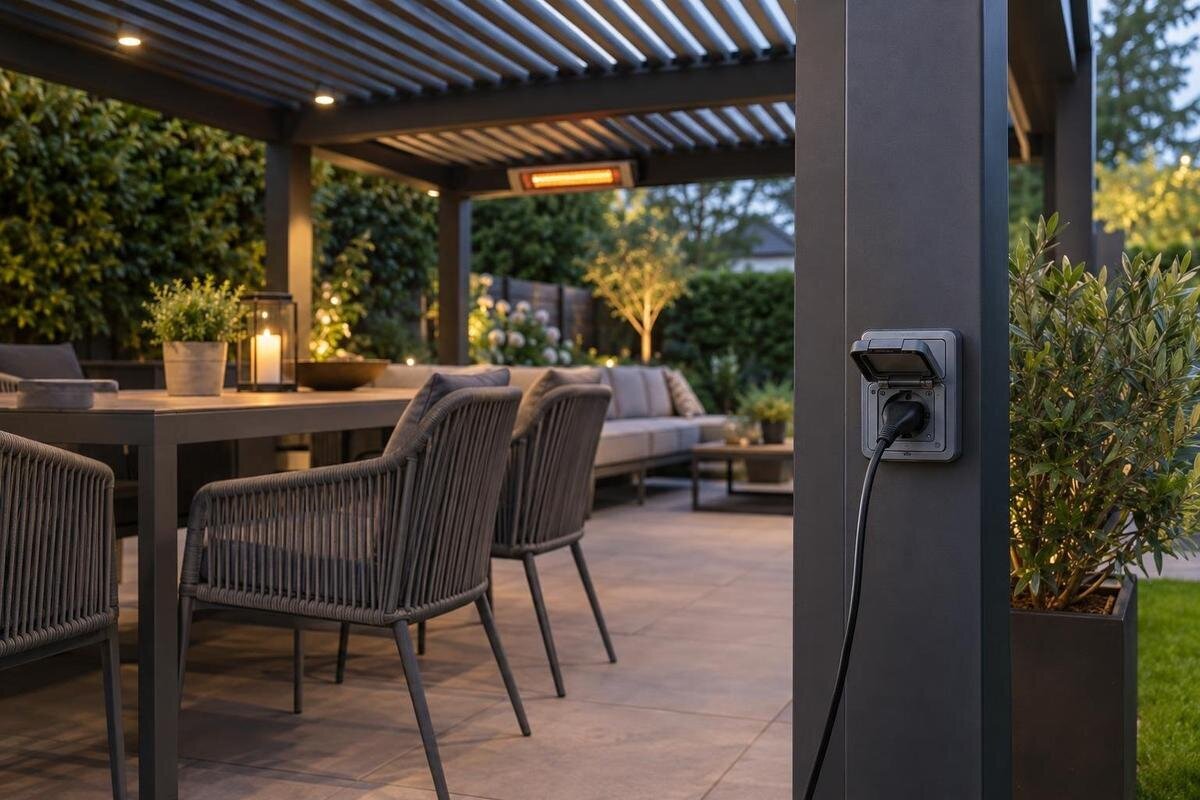
Outdoor sockets beneath a pergola need planning around what you will plug in and how exposed each position is. A roof overhead does not by itself make a socket weatherproof, and the number of sockets does not show whether the existing supply can handle the intended appliances. A useful electrician brief records the devices, their locations, the site’s rain and splash conditions, and what may run at the same time. The points below are for planning and discussion, not instructions for wiring or fitting equipment.

Before you brief an electrician 1
List every intended appliance
Start with the actual uses, not a guessed socket count. List task or ambient lighting, phone and tablet charging, a speaker, and any small fridge, cooking appliance or patio heater you may want. Include occasional items such as a vacuum cleaner or seasonal lights if you expect to use them in this area. Mark each as frequent, occasional or a future possibility, and note whether you expect it to plug in, operate on a battery or need a fixed connection. That distinction gives the electrician a fuller brief than a simple total. An item you have not bought yet still belongs on the list if it could change the electrical provision you need.
For each plug-in appliance, record its make and exact model, then use the rated input and connection details stated on its label or in its manual. Add the manual’s information about outdoor use and any stated conditions for its supply. Note roughly when you expect to use each item and whether it might run alongside others; there is a practical difference between a charger used now and then and a heater or cooking appliance used during a gathering. Keep confirmed purchases separate from possible additions, so the electrician knows which requirements are definite and which need discussion. Where you have not selected an appliance, leave its technical details open rather than borrowing figures from a similar-looking model. Include the structure reference alongside this list: Bloomcabin’s wall-mounted pergola listing identifies the model under discussion, while the appliance manuals provide the connection details the electrician needs.
Map socket positions around furniture and paths
Sketch the pergola and the space around it from above. Mark the usual seating and dining positions, doors, steps, paths and any area reserved for cooking or storage. Then mark where each appliance is likely to sit or be used. This makes it easier to spot a socket that would end up behind a bench, beside a doorway or on the wrong side of the table. If you expect to rearrange the furniture between seasons, note that too. The aim is not to draw an installation route yourself, but to show the electrician how people and equipment will occupy the space.
Consider where a plug can be reached without moving heavy furniture or trailing a lead across a walking route. A charging point beside the usual seating may be more useful than one near the entrance; lighting and other appliances may need different positions. Mark a preferred location and, where the layout is uncertain, one alternative for discussion. Explain the reason for each position, such as charging at the dining table or reaching a lamp beside a chair. This helps the electrician suggest an alternative without losing the purpose of the original request. If furniture moves seasonally, show both arrangements on the sketch rather than adding sockets to an unspecified layout. Attach the exact structure reference as well: the Bloomcabin Pergola product page identifies the model for the plan. The electrician can then assess your preferred positions against site access, exposure and the appliance instructions.
Before you brief an electrician 2
Describe the weather exposure at each position
An overhead cover does not make every point beneath a pergola a dry indoor location. Wind can carry rain in from the sides, and water may run or drip from roof edges. The amount of shelter can differ between a post, a wall, the centre of the space and the outer edge. Describe the roof and side arrangement as it exists on site rather than assuming that a photograph or product name shows how protected a socket will be. If the roof has more than one operating position, ask the electrician to consider the exposure in each position.
Note other sources of moisture as well as rain: garden irrigation, a nearby tap, hose use, splash from paving or water collecting close to a post. Mention whether the site is coastal, where salt-laden air may be relevant, and whether you expect to clean the area with water or cleaning products. If practical, take photographs that show roof edges, drainage and nearby water sources, without testing the socket area with water. Label the photographs to match the proposed positions on your sketch, so the electrician can tell which view belongs to which location. Distinguish conditions you have observed from concerns you want assessed; both are useful, but they are not the same information. If the selected model is Bloomcabin Bioclimatic Pergola, include that reference alongside the site photographs rather than relying on catalogue images to describe the property.
Weather protection depends on the exact socket position
Ask the electrician to select socket equipment for the site conditions and the manufacturer’s instructions. A weather rating is useful only when it applies to the way the equipment will actually be installed and used. Ask what protection is appropriate for the expected rain and splash, and whether the stated conditions change when a plug is inserted or a cover is open. The cover, enclosure and cable entry all form part of the choice; a cover alone should not be taken as proof that the socket is suitable for every exposed position.
A sheltered-looking point can still receive runoff, be exposed to wind-driven rain or become awkward to use. Conversely, a very exposed position may not be the best place for a socket even if suitable equipment can be selected. Have the electrician compare the preferred locations with the site rather than choosing a rating from a general chart. When discussing a structure shown on the Wall-Mounted Pergola page, keep socket equipment as a separate item in the proposal. Ask for the exact socket rating, the conditions under which it applies and the reasons it suits the location. The explanation should cover your intended use with appliances plugged in, not merely the appearance of the closed cover. Keep those details with the installation documents so you can distinguish the selected equipment from alternatives considered during planning.

Before you brief an electrician 3
Check what may run at the same time
Ask the electrician to assess likely combined use, not just each appliance on its own. You might use lighting and charging at the same time as a heater, or run lighting while using a cooking appliance. A socket can be physically convenient without the supply being suitable for every combination of loads. Share the rated inputs from the manuals and describe the busiest realistic use of the space. You do not need to calculate totals or decide whether a dedicated supply is needed; the electrician can assess the demand and explain the options.
Include existing outdoor lighting, sockets, garden equipment or other known loads in your brief, along with anything else in the property that may already use the relevant supply. Do not assume that an existing outdoor socket has spare capacity just because it is nearby. If you have circuit labels or installation records, make them available; leave inspection of electrical equipment to the electrician. Describe combined use in plain language, for example an evening meal with lighting and a heater, rather than presenting your own electrical calculation. Identify any appliance you expect to use only occasionally but would still want included in the assessment. For a quote concerning the Bloomcabin Pergola listing, give the electrician the same appliance list you used for the layout, so the proposed positions and demand assessment refer to one consistent plan.
Discuss protective devices and isolation
Ask how protection for the outdoor sockets will be assessed. Useful topics include residual-current protection, overcurrent protection and earthing, as well as whether the existing arrangement is suitable for the proposed work. These are questions for the electrician, not choices to make from a general checklist: the answer depends on the existing installation, the appliances and the planned circuit. Ask the electrician to explain which protective devices will serve the new provision and how any relevant limitations affect the way you can use it.
Also agree how the sockets or fixed appliances can be isolated and what to do if a protective device operates. The person using the pergola should know which switch or control applies and how to get help, without having to guess or open electrical equipment. Ask what inspection or testing will be carried out and what record you will receive, including any labels or instructions needed for everyday use. Keep questions about socket protection separate from questions about the pergola’s own controls, so each part of the proposal is clear. If you are considering the model shown on the bioclimatic pergola product page, identify it in the brief and ask the electrician to distinguish any provision for the structure from the sockets intended for your appliances.
Before you brief an electrician 4
Agree the cable route and approved mounting points
Discuss how the electrician might bring a supply from the property or another suitable point to the pergola, but do not plan or install the route yourself. The route can affect appearance, access and future maintenance. Point out walls, doors, paving, drainage, planned planting and any work that may change the site, such as new paths or landscaping. If work around the pergola is still being planned, tell the electrician before those areas are finished so the route can be assessed in context. The electrician must decide how the installation can be carried out at the property.
Treat the pergola frame as a structure that needs model-specific approval before anything is fixed to it. Do not drill a post or beam, clip a cable to the frame or attach a light or heater based only on an image. Ask the supplier or installer for documentation confirming any proposed mounting point and for relevant instructions about access or moving parts. For the named wall-mounted model, include the exact product reference when requesting those details. A page that identifies the structure does not, by itself, approve a cable route or attachment.
Match lighting and heating to their manuals
For every light or heater, provide the exact product manual rather than asking the electrician to work from a broad category. The manual can show whether the item is intended for outdoor use, whether it plugs in or needs a fixed connection, and what supply or installation conditions the manufacturer specifies. The electrician can then decide whether the proposed socket or other provision is appropriate. Do not assume that a general outdoor socket can supply any heater, or that a fixture can be attached to any part of a pergola. The exact model and its instructions matter.
Record how you would like the equipment to operate. You may want lighting switched separately, timed operation, dimming or controls for a heater; a roof control or other powered feature may also be part of the wider plan. Separate essential functions from preferences, and say where you would expect to use each control. For example, wanting to switch a light from the house is a different request from operating it while seated under the pergola. Ask which functions can be provided together and what manuals or approvals are needed. Include Bloomcabin’s pergola model reference when discussing the structure, but list any proposed lights, heaters and controls by their own exact model names. Their compatibility needs to be established individually, rather than assumed because all the products are described as outdoor equipment.

Before you brief an electrician 5
Plan access for cleaning and maintenance
Check how the proposed socket positions will work once the pergola is furnished and in regular use. Beyond reaching a plug, consider whether a cover can be opened comfortably and whether the equipment remains visible for inspection. A planter, storage box or seasonal furniture arrangement may obstruct access that looked straightforward on the original sketch. Tell the electrician which items are likely to stay in place and which are moved regularly. Ask how access for maintenance will be preserved, particularly where a socket or its cable route would be close to fitted seating or storage. Record any agreed access requirements on the layout, so they are not lost when the space is furnished. This is a maintenance check on the proposed positions, rather than a reason to add more sockets.
Include the way you clean and store equipment in the discussion. Explain whether furniture is moved for cleaning, where seasonal appliances are kept and whether covers or storage units could conceal a socket when those appliances are put away. Ask what care instructions apply to the selected socket equipment and who to contact if a cover, enclosure or fitting appears damaged. Keep those instructions somewhere accessible rather than relying on memory after installation. Any temporary extension lead use should be discussed separately; a lead left in place is not a substitute for a planned socket position. If the layout changes later, review access and cable paths before returning appliances to use, and leave alterations to the electrical installation to the electrician.
Put the details into a written electrician brief
A useful brief can be short, provided it contains the right information. Include an annotated sketch, photographs of the site, the pergola’s exact model name, your appliance list and the manuals you have found. Mark preferred socket positions, note likely weather and splash exposure, and describe which appliances may be used together. Add any known information about existing outdoor equipment or circuit labels. If some choices are undecided, state what you are considering rather than leaving the electrician to guess. Date the brief and give each proposed socket position a simple reference that also appears on the photographs. If you revise the furniture layout or appliance list, update the same brief so the electrician is not comparing a current sketch with an older set of requirements.
Ask for the proposed work to be explained in writing: socket locations and equipment, the supply and protective measures, the intended route, any approved mounting details, and the checks or records included. Ask what information is still needed and what is outside the proposed scope, especially if you may add appliances later. This makes it easier to compare plans on the same assumptions and to resolve practical questions before work begins. Keep the response with the appliance manuals and pergola information so that future changes can be discussed against the original brief.
Frequently asked questions
Does a pergola roof make a socket weatherproof?
No. Rain can reach sockets from the sides, around roof edges or through runoff, and exposure may differ across the structure. Ask the electrician to assess each proposed position and the socket’s protection in the conditions in which it will be used.
How many sockets should I plan for?
Count the devices you expect to use, where they will be used and whether several may run together. A socket count alone does not establish that the existing supply is suitable; have the electrician assess the appliances and the installation.
Can I plug a patio heater into an outdoor socket?
Only if the heater’s manual allows that connection and outdoor use, and the electrician confirms that the socket and supply suit the exact model. Share its manual and rated input rather than relying on the product category.
What protective devices should I ask about?
Ask how residual-current protection, overcurrent protection, earthing and isolation will be addressed for the proposed installation. The electrician should assess the existing arrangement and explain what applies to your site; there is no need to choose devices yourself.
Can I use an extension lead instead of planning sockets?
An extension lead is not a good substitute for planning permanent sockets around regular use. Include the intended appliance locations in the brief and ask about any temporary lead use separately, taking account of the appliance instructions and the conditions outdoors.
A useful socket plan follows the way you intend to use the pergola while recognising that it remains an outdoor location. Share the appliance manuals, a simple site plan and a clear description of weather exposure and simultaneous use. With those details, a qualified electrician can assess the supply, protection, equipment and route for the actual structure and property.
