
Scratches on a Powder-Coated Pergola: Assessing Repairs
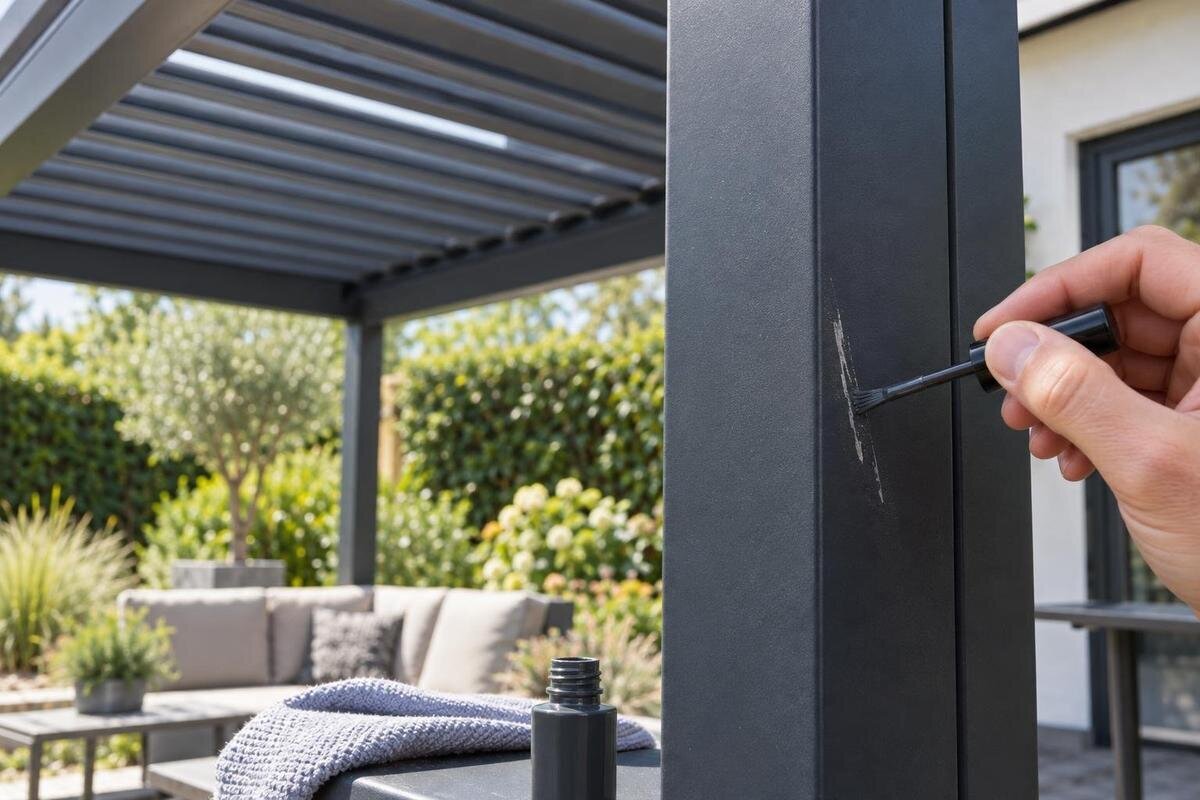
Pergola repair guide
Scratches on a powder-coated pergola are not all the same. A grey streak may be material sitting on the finish; a cut, chip or flaking edge may mean the coating is broken. The sensible response depends on which it is, the part affected and the original finish. Learn how to record what you see and ask for an approved repair system without guessing at a paint match.

01
Is it a surface scuff or a break in the coating?
Begin by checking whether the mark sits on the coating or changes it. A transfer from furniture, packaging or a tool can look like a scratch, while grit or dried residue can leave a line that disappears after a cleaning method permitted by the product manual. Photograph the area before touching it, then view it dry in steady natural light; glare, moisture and shadows can exaggerate a groove or hide a colour change. If the mark lifts with approved gentle cleaning, it was at least partly surface contamination. If it remains, that does not prove the coating is cut: a scuff can alter sheen or texture while the underlying layer remains covered.
Clues that the coating may be breached include a sharply defined cut, a chip or lifted edge, flaking around the mark, or a contrasting layer visible beneath the finish. A smooth, dull streak without exposed material may be a surface scuff, but appearance alone is not conclusive. Textured finishes can look different at different angles, so do not use a blade, fingernail or other tool to test the depth. Avoid pressing hard, scraping or rubbing repeatedly. If you cannot tell whether a lower layer is exposed, describe it as uncertain and send clear images rather than labelling it cosmetic or applying a marker.
Identify the pergola, component and finish
Find the exact model and affected component before searching for a repair product. Copy the model name from the order confirmation, installation manual, invoice or product label; add a serial or production reference only if a label or document provides one. Name the affected part as it appears in the manual, if possible, and describe its position in plain terms: which side or face, and how far along it is. A supplier should not have to guess whether a photograph shows a post, beam, roof element or trim piece. Keep any finish description, colour code, gloss or texture wording exactly as written.
If your documents identify the unit as the Bloomcabin Bioclimatic Pergola, use that product name in your enquiry. The model name identifies the product family, but the age, revision and finish of your own unit still matter when selecting a repair. Look for a colour or coating reference in the purchase documents, labels or earlier supplier correspondence, copying letters, numbers and wording accurately. Keep the order reference with these details so the supplier can find the relevant purchase record. If no finish code is recorded, say so rather than guessing from a general colour name or screen image. Also distinguish details taken from your paperwork from your own observations: for example, a documented finish description and a mark that appears lighter than the surrounding coating are different kinds of information. This gives the supplier a clear basis for checking its records without treating an estimated colour as a confirmed specification.
02
Clean gently before judging the mark
Use the care instructions for the specific pergola to decide whether and how to clean the area. If they permit cleaning, follow their stated requirements for cloths, water and products, and use only the contact needed to remove loose residue. Photograph the mark first, then let it dry fully before deciding what remains; a wet surface can look different from a dry one. Record whether the mark changed after cleaning instead of assuming it has disappeared. If you cannot find instructions for the finish, ask the supplier before using a chemical cleaner.
Do not treat cleaning as a way to remove the coating around the scratch. Unless the care instructions explicitly allow the method, avoid abrasive pads, wire wool, scouring powders, blades, solvent-based cleaners, polish and pressure washing. These can alter gloss, create a further mark or leave residue that makes assessment harder. Car polish, wax, clear lacquer and household paint are not substitutes for a repair system confirmed for the original coating. The aim at this stage is to see what is there, not to improve its appearance before a supplier has assessed it.
Compare the mark with the surrounding finish
Look at the affected area beside an undamaged part of the same component, under similar light. Note whether the mark has a distinct edge, a different sheen, a visible change in colour or a rough or lifted boundary. A neighbouring component may have a different angle, texture or exposure, so it is not always a fair comparison. Take a second view from another angle rather than rubbing the finish to judge it by touch. A change in appearance can help describe the mark, but it does not by itself confirm how deep the damage goes.
An online catalogue image can help with a product-family name, but it is not a colour sample for a pergola that has been outside. For example, the Bloomcabin Wall-Mounted Pergola page can help you identify the model when preparing an enquiry. Screen settings, lighting, image processing, weathering and surface texture can all affect the apparent shade. Do not select a repair colour by comparing a phone photograph with a product picture or online swatch. Instead, describe the difference you can see on the actual component: whether the mark is lighter, darker, shinier or duller than the adjacent finish. State whether that difference remains visible from several angles or only under particular lighting. These observations help explain the appearance without assigning a colour code to it. Use any finish code in your own documents and ask the supplier to confirm the match against the original coating.

03
Damage location, extent and surrounding conditions
Record whether the mark is isolated or part of a wider pattern. A single short scuff on a flat face is different from several chips, a long line crossing an edge, or coating that is lifting beyond the original mark. Note whether it follows a known impact, handling or assembly event, or whether something continues to rub against the same area. Do not remove covers, open joints or move components to inspect hidden surfaces. If the mark is difficult to reach or its boundary is spreading, say so in your enquiry rather than trying to expose more of it.
Mention relevant surroundings, such as persistent moisture, salt deposits, regular contact with tools or furniture, or staining near the mark. These details may help a supplier interpret the photographs, but they do not identify the substrate or prove a coating failure. If your documents name the unit Bloomcabin Pergola, include that name when you report the damage. Describe the location precisely enough to distinguish it from similar parts elsewhere on the structure. For several marks, give each one a simple reference in your written notes and use the same references for the photographs, without marking the pergola itself. Separate what you observed from what you suspect caused it; if the cause is unknown, leave it unknown. If you see a loose or deformed part as well as a scratch, describe both and request a service assessment rather than treating it as a paint-only issue.
Photographs that make an assessment easier
Take three types of photograph: a wide view showing where the mark is on the pergola, a mid-range view that identifies the component, and a close-up that shows the surface. Keep the area dry and include a ruler beside the mark for scale, without letting it touch the finish. Make sure the close-up is in focus and that the full edge of the mark is visible. A single extreme close-up may show surface detail but leave the supplier unsure which part of the structure it belongs to; the wider views give that detail context.
Use steady, even light and take more than one angle if glare hides the surface. Keep the original images rather than relying only on cropped, filtered or edited versions, and do not put adhesive labels or marks on the pergola to identify the spot. Add the date, approximate size, component name and what you know about the event or cleaning. Arrange the photographs from wide view to close-up so the reader can follow the location without guessing. If there are several marks, keep each set together and explain which close-up belongs to which wider view. The Bioclimatic Pergola listing may help you identify the product family, but your order documents or product label identify the unit itself. Send those details alongside the photographs rather than expecting the supplier to recognise the exact model, finish and affected component from a close-up alone.
04
Request a repair system approved for the finish
Send the model and component details, finish references, photographs and any uncertainty to the seller, manufacturer or installer who can check the original specification. Ask them to confirm a repair system for the exact pergola, component, coating and intended outdoor exposure. If your purchase documents identify the wall-mounted pergola model, use the recorded name along with the affected part and finish code. Explain what you want assessed: whether the coating is breached, which repair system is suitable, and whether the work can be carried out by the owner. Include any cleaning or other treatment already attempted, naming the product used if you know it. This avoids presenting a treated surface as an untouched scratch. If a detail is missing, identify the gap clearly and ask what information or inspection would help the supplier select the right system.
Ask what the approved system includes and whether it requires particular preparation, additional products or a specified application method. Request the instructions for application, drying or curing, and any limits on the conditions in which the repair can be done. Check whether the supplier considers it suitable for owner application or recommends a qualified service provider. Ask what appearance to expect and whether the repair is intended to protect the affected area, improve its appearance, or both. If several products are named, ask which are required together rather than selecting only the colour coat. Keep the recommendation and application instructions together so that a product name does not become separated from the conditions attached to its use. Do not assume that a product described simply as touch-up paint is compatible with the original finish.
Colour matching and repair alternatives
A matching colour reference does not guarantee that a repair will disappear. The existing finish may have weathered, and gloss and texture affect how a colour looks. A liquid touch-up product may also have a different appearance or application method from the original factory-applied powder coating. Ask the supplier what the approved repair is expected to achieve and what variation may remain. Avoid choosing a shade from an online picture or a generic chart, even if it looks close on screen; neither shows how it will look on your pergola.
If the supplier cannot confirm a suitable system, ask whether its records can identify the original finish, whether an in-person assessment is needed, or whether professional refinishing or component replacement should be considered. None of these options is automatically suitable or available; the answer depends on the exact part and coating. When discussing a component for the Bloomcabin Pergola model, give its recorded part name and position rather than assuming that a visually similar piece will match. Ask how each proposed option would address the damaged area and what visible difference might remain. This separates a small local repair from work affecting the appearance of a whole component. If replacement is suggested, clarify which part the recommendation covers before proceeding. Wait for a specific recommendation before sanding the area, layering another coating or buying a product based on colour alone.

05
Warranty questions and repairs needing a service visit
A visible scratch does not show whether warranty terms apply or what effect a repair attempt might have. Read the written terms supplied with the pergola and, if coverage may matter, contact the seller or manufacturer before applying a product or arranging a third-party repair. Keep the photographs, dates and a short account of what happened. Ask who should assess the damage and whether a particular repair route is recommended. Do not assume that a scratch is automatically covered, or that it automatically cancels cover; the terms and assessment are what matter.
Treat a bent or cracked member, a loose connection, widespread flaking or visible corrosion as a wider service issue, not something to disguise with touch-up paint. The same applies if the mark is accompanied by movement or damage at a joint. Do not dismantle the frame or try to restore a damaged connection with a coating product; ask a qualified service provider to assess it. For an enquiry about the bioclimatic pergola model, include the recorded model name and distinguish the coating damage from any other visible problem. Explain whether both were noticed after the same event, without assuming that they have the same cause. Make clear which photographs show the scratch and which show the connection or component requiring assessment. That helps keep the request focused on the full condition of the affected part rather than its paint finish alone.
Keep the repair record and prevent repeat damage
Once a repair system has been confirmed, keep its instructions and approval with the pergola documents. Record the product or system reference, any batch detail supplied, the date of the repair and before-and-after photographs. If a service provider carried out the work, retain its notes as well. Follow the specified drying and aftercare instructions; do not add another layer simply because the repaired area looks different at first. If the coating lifts or the appearance differs from what the supplier described, send new photographs and ask for advice before trying another product.
Keep the record under the exact model name so that a future enquiry is specific. If your paperwork identifies the wall-mounted pergola range, retain the recorded model name alongside the product label or order details. File the repair photographs by component and date, especially if more than one area has been treated. To reduce repeat scratches, take care when moving garden furniture and tools near the frame, and follow the product manual for cleaning and maintenance. If regular contact caused the original mark, address that contact rather than relying on repeated touch-ups. After a known impact, photograph any new mark before cleaning it and note whether it overlaps the repaired area or affects a different part. That makes it easier to distinguish a fresh scuff from an older repair or a change in the surrounding finish.
Frequently asked questions
How can I tell whether a scratch has gone through the powder coating?
A cut, chip, lifted edge or contrasting layer beneath the finish can indicate a breach, but lighting and textured finishes make visual checks uncertain. Do not scrape or probe it. Photograph the dry area and ask the supplier to assess it if you cannot tell.
Can I use a paint pen or car touch-up paint?
Not unless the manufacturer or supplier confirms that the specific product is suitable for your pergola’s coating, component and exposure. A similar colour does not guarantee compatible adhesion, texture or gloss. Ask for an approved repair system for the exact finish.
Should I sand or polish the scratch before applying a repair product?
Do not sand or polish unless the instructions for an approved repair system specifically require it. Abrading the area can remove more coating or change its appearance. Ask the supplier or a qualified service provider what preparation is appropriate.
Will a colour-matched repair be invisible?
Not necessarily. The existing finish may have weathered, and texture and gloss affect how a colour looks. Ask what appearance to expect from the approved repair system; a matching colour reference alone does not guarantee an invisible repair.
Does a scratch affect my warranty?
You cannot determine that from the mark alone. Check the written terms supplied with the pergola and contact the seller or manufacturer before applying a repair product. Do not assume that a scratch is either covered or automatically excluded.
The key distinction is whether the mark is residue, a change to the surface or a break in the coating. Keep the area intact while you establish what you can, then give the supplier a clear model and component reference with useful photographs. A suitable repair begins with a system confirmed for the original finish, not an approximate colour match.
