
How Rotating and Retractable Pergola Louvres Differ
Pergola roof guide
Rotating and retractable louvres change a pergola roof in different ways. Rotating blades tilt while staying in the roof frame; retractable elements travel aside to uncover part of the overhead opening. That distinction affects shade, sky view and the checks needed before choosing a model.

The difference between tilting and retracting
Think of each louvre as a roof blade and ask whether it pivots or travels. In a rotating system, the blades turn around their pivots but remain across the roof opening. They can change angle, yet do not slide out of the way. In a retractable system, roof elements move along a mechanism, gathering, sliding or folding towards a storage area so some of the opening is exposed. The exact route varies: the term does not tell you whether individual blades or linked sections move, or where they collect. A plan or mechanism diagram makes the distinction clear.
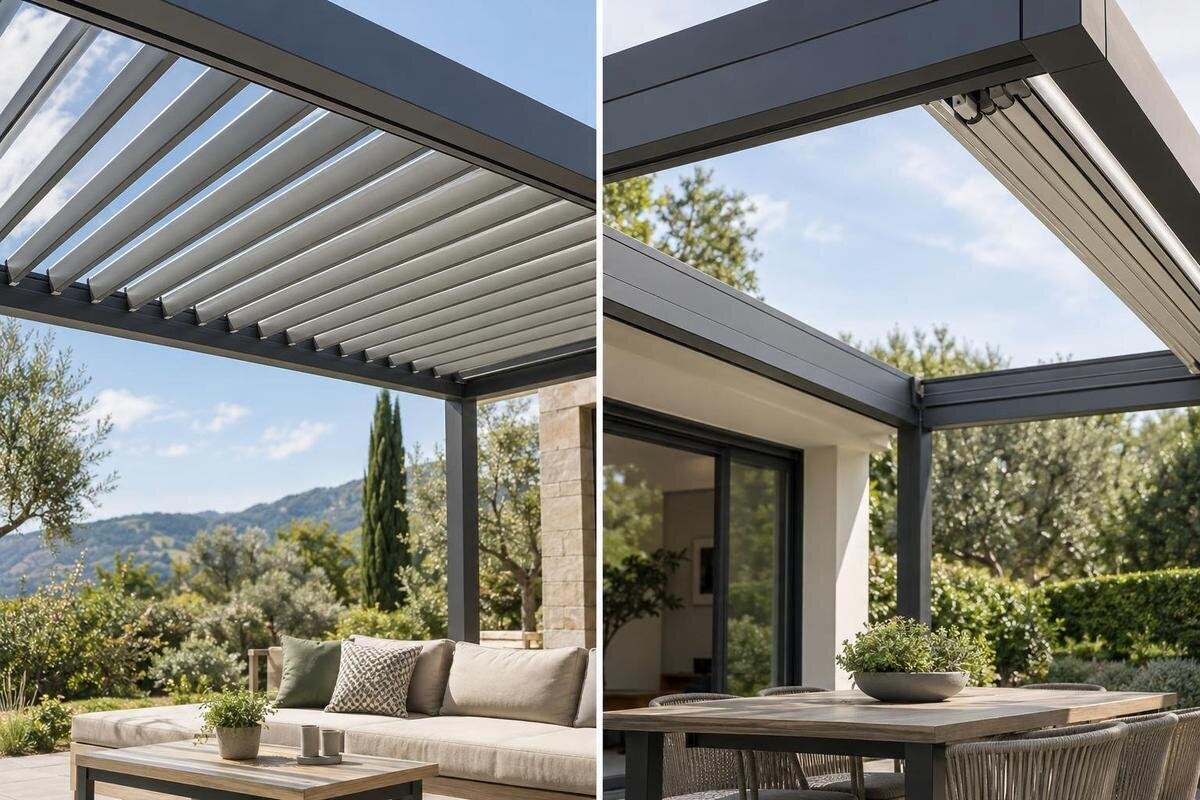
This matters because open can describe two different results. Tilted blades may admit light and air while remaining across the roof opening, with gaps visible between them. A retractable mechanism can uncover a patch of sky if its elements travel far enough, although beams, tracks or a gathered stack may remain in view. In a product image, open may refer only to an angled position, so check what the word means for that model. Neither label confirms rain performance, controls or whether both movements are available. If the wording is broad, ask whether the blades tilt, move away, or do both.
How rotating pergola louvres work
A rotating louvre is supported at pivots and turns around its own axis, usually across the roof frame. When operated, its angle changes but the blade remains in its place in the roof layout. Depending on the design, linked components may move several louvres together; the roof label does not tell you how the linkage or control works. The available angle range and stopping positions are model-specific, as is the closed position. At a more open setting, spaces between blades become more apparent, but the blades still occupy the overhead area. A side view or sequence diagram explains this movement better than a single product photograph.
The practical effect is adjustable shade while the blades remain above the seating area. Changing the angle changes the light pattern and the view of the sky between blades, but it does not create the same clear overhead opening as moving roof elements aside. Sun position, blade spacing and surrounding buildings or trees affect the result, so one setting may not suit every time of day or shade the whole area. When comparing Bloomcabin Bioclimatic Pergola, distinguish the blades’ available angles from the gaps visible between them. An angled roof and a roof with its elements moved aside should not be recorded as the same kind of opening.
How a retractable pergola roof opens
A retractable louvred roof moves its components away from some of the area they cover. Depending on the design, individual blades may slide on guides, or linked sections may fold and collect together. Check the direction of travel, the area used for the stack and whether the movement is continuous or limited to set positions. Do not assume every retractable roof works like slats sliding along one rail: a mechanism diagram shows which parts move and what stays fixed. The name Bloomcabin Wall-Mounted Pergola identifies a mounting style, not how its roof operates, so the precise version needs its own roof details.
When the roof elements are withdrawn, the area they leave can provide a direct view of the sky and admit unfiltered daylight. The opening may be partial or substantial, depending on the amount of travel and the frame layout. Tracks, rafters or collected elements can still cross the view, so retractable does not promise a wholly unobstructed opening. Nor does the word guarantee a choice of every intermediate position or operation in all weather. If a partly open setting matters, check that it is shown and available for the model rather than assuming it from a fully open image. The collected stack may itself occupy part of the roof area.
Adjustable shade or an overhead opening?
The most useful starting point is the roof position you want during ordinary use. If you prefer adjustable shade while blades remain above the seating area, ask how much angle control a rotating system offers. If you want to look directly up through the roof, the key question is how far a retractable arrangement clears its frame. These are different experiences even if both are described as adjustable. When including Bloomcabin Pergola in your comparison, describe your preferred position precisely: blades tilted above a table, for example, or an uncovered area above a chair. This gives you a specific requirement to compare with the model’s roof details. The widest opening shown may not be the position you use most often.
Think about the people and activities beneath the structure: a table, a reading chair or the route between house and garden may have different preferences for overhead cover. One layout may call for a shaded roof whose angle changes; another may value the option to expose part of the sky. A retractable opening can change the covered area, whereas rotating blades mainly change how light passes through it. Neither mechanism changes the pergola’s sides by itself, so roof movement is not a substitute for separate side screening or shelter from rain blown in at an angle. If you expect to switch positions often, check whether the roof can stop where you need it.

Shade, daylight and the view overhead
Rotating blades alter the pattern of shade rather than removing the roof assembly. A chosen angle may let more or less light through the spaces between blades, producing a mix of shade and brighter bands below. The exact result depends on blade spacing, sun angle and the surroundings; an image taken from one position cannot show every daytime effect. When viewing the Bloomcabin bioclimatic pergola listing, distinguish the roof position pictured from the light conditions in that photograph. The image shows one view, not the range of light and shade throughout the day. An angle that limits direct sun at one time may have a different effect later, even though the blades have not moved.
Retracting elements change how much roof remains above you. Where the system clears a section, that area can receive direct daylight and show more of the sky; where it stays covered, the effect depends on the parts left in place. This can suit someone who values an open-air position at certain times, but it also brings greater direct exposure to sun and whatever falls from above. A partial opening can shift the line between shade and sunlight across seats as the sun moves. Think about glare and where people sit rather than relying on a still image of the roof at its widest opening. Ask for drawings that show the opening, then consider how the sun reaches your particular seating area.
Rain cover depends on more than movement
A rotating louvre roof may have a designated closed setting, but closed does not by itself mean watertight. Water handling depends on how the blades meet, any seals or overlaps, the frame’s drainage routes and the model’s stated limits. Ask where water goes in the closed position, how joins are treated, and whether the manufacturer describes the system as suitable for rain cover under particular conditions. For the wall-mounted pergola listing, mounting style alone says nothing about rain performance; the exact roof design and drainage information matter. A roof that looks close-packed in a photograph is not proof of how it handles water.
With a retractable roof, any area the elements have moved away from is open to the sky, so there is no overhead cover there while it remains open. Closed and partly open positions each need a clear explanation: check how water is routed and what the instructions say about operating or leaving the roof in changing weather. Confirm where gutters or outlets sit and where water is discharged instead of assuming the route from the roof shape. Rain entering from the sides is a separate issue for either mechanism, even where the roof manages water as intended. The movement label is not a substitute for weather guidance and drainage details.
Operation and maintenance are separate decisions
Roof movement and operation are separate choices. A rotating or retractable system may be manually operated or motorised, depending on the product; the category name does not confirm which, whether sensors are included, or how many stopping positions are available. Confirm how the roof opens and closes, what controls are supplied and any limits on operation. A motorised roof can still only rotate, just as a retractable mechanism is not proof of automation. If it is motorised, ask what happens if the usual power or control method is unavailable rather than assuming a manual override. In a comparison that includes the bioclimatic pergola model page, record the roof movement and operating method separately so that one is not mistaken for the other.
Maintenance questions also follow the mechanism. A rotating system has pivots and linked moving parts; a retractable one can have guides, folding joints or a place where elements collect. Those are different areas to understand, not proof that one design is automatically more reliable or harder to maintain. Ask how routine cleaning reaches them, whether leaves or dirt can obstruct a moving path, and what the maker’s care instructions require. Look for clear access and service guidance; do not improvise cleaning or lubrication methods that conflict with those instructions. A maintenance schedule is useful only if it applies to the exact roof mechanism.
Clearance around the moving roof
Space above and around the frame deserves attention. Rotating louvres stay in the roof opening, although the blades move through an arc as their angle changes. Retractable elements need a clear route and a place to gather or fold; some of that mechanism may occupy one edge of the roof. If a collected stack sits over the position where you want open sky, its location may matter as much as the travel distance. Check plan and side views for beams, guides and the extent of the uncovered area, then compare them with lights, branches, walls or other objects near the installation. When reviewing Bloomcabin’s wall-mounted model, include the space beside the house in these checks rather than considering only the area beneath the roof.
Also separate the roof’s operating space from the pergola’s overall footprint. Drawings can show whether an element travels towards the house, towards the garden or into an internal stack, which affects the view and usable headroom. If outdoor lighting or another overhead fixture is planned, check its clearance through the full movement rather than only when the roof is closed. Confirm dimensions and installation assumptions for the exact version with the supplier and, where an existing support or attachment needs assessment, a suitably qualified installer. Do not base structural decisions on a generic description of rotating or retractable louvres; the documents should relate to the model being considered.

What to compare in model documents
When comparing models, ask for an overhead plan and side view showing the roof closed, partly open if available, and at its maximum opening. The drawings should make clear which parts pivot, which travel, where they gather and what remains across the opening. A plan shows the travel and stack; a side view can reveal what stays overhead and the movement path. Ask whether the system offers rotation, retraction or both, rather than relying on a broad label such as adjustable. The Bloomcabin Pergola model page identifies a named model for comparison; its product title or a lifestyle image cannot establish the roof mechanism.
Then check the consequences of that movement: opening size, intermediate positions, operating method, rain guidance, drainage and routine care. Confirm that the details match the selected size and configuration, since product images may show another version. If the wording is unclear, ask for a diagram that distinguishes the fully covered setting from partly or fully withdrawn positions. A useful comparison records what the roof does at each position, not simply whether a brochure calls it adjustable. This helps you compare product descriptions without treating different mechanisms as equivalent.
Which roof movement suits your use?
Rotating louvres fit the requirement for a roof whose blades change angle while staying across the frame; retractable elements address the wish to move the roof away and reveal an overhead opening. If you need both fine shade adjustment and a clear opening, do not assume one system offers both: look for two separately explained movements in the model documents. If maximum opening matters, compare the clear area with the space you want exposed, including supports, tracks or stacked elements that may remain in view. Someone who mainly wants controlled shade may focus on the available angles; someone who needs the roof to clear may treat travel as a priority. Neither mechanism is inherently better.
Consider a typical day beneath the pergola rather than choosing solely by the widest opening. You may want shade while sitting at the table, a different light level when reading, or an open view overhead when the space is not in use. Decide which of these positions matters most and whether you expect to change between them often. A rotating roof keeps its blades above those activities; a retractable roof changes the area covered as its elements move aside. Rain cover and access for routine care remain part of the choice, but they do not erase that basic distinction. The better fit is the mechanism whose available positions match how you actually want to use the space.
Frequently asked questions
Do rotating louvres make a pergola roof fully open?
Not in the same sense as a retractable roof. Rotating blades change angle but remain over the roof area, leaving gaps between them. That can increase the view of the sky, but it does not move the blades out of the opening. Check the model’s maximum opening position if you want an unobstructed view overhead.
Can retractable louvres also rotate?
Some designs may combine movements, but the word retractable alone does not confirm that. Ask whether the blades pivot as well as travel, and request an operating diagram for the exact model. If only one movement is documented, do not assume a second function.
Which type is better for rain?
Neither term guarantees rain shelter. For a rotating roof, confirm how the blades meet and how water drains in the stated closed position. For a retractable roof, an area left open has no overhead cover. Check the instructions for partly open positions and consider rain entering from the sides too.
Is a retractable pergola roof always motorised?
No. Manual or motorised operation is separate from whether roof elements tilt or retract. Confirm which controls and positions are included in the exact configuration, and ask what the instructions say if the usual operating method is unavailable.
What should I check in a model’s documents?
Look for plan and side-view drawings of the roof closed, partly open and at its maximum opening. They should show whether blades pivot or travel, what remains overhead and where moving parts collect. Also confirm the opening size, operating method, rain and drainage guidance, and maintenance instructions for the selected model.
The practical difference is the roof’s movement: rotating louvres vary the angle of blades that stay overhead, while retractable elements clear part of the roof opening. That distinction is more useful than a broad label such as adjustable. Choose according to whether you want changing shade or the option of an open sky, then confirm the exact model’s movement, maximum opening and weather guidance. The model documents should answer those questions without relying on a picture or product name.
