
How to Work Out Pergola Heating Costs for Seating
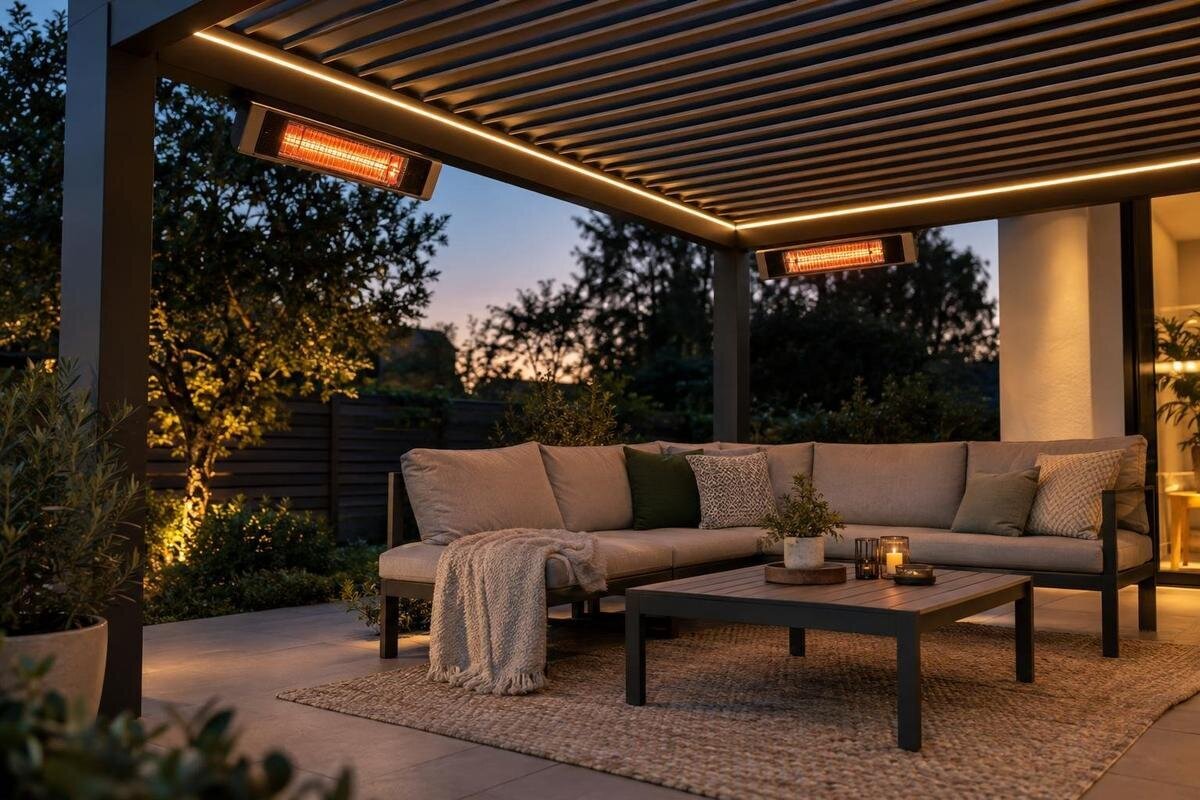
Pergola heating costs
Heating a pergola seating area raises two separate questions: how much electricity the heater uses and whether its warmth reaches people comfortably. The first can be estimated from electrical input, operating time and your unit rate. The result depends on your assumptions: full-power use gives a different figure from a heater that cycles or runs on a lower setting. Outdoors, radiant warmth and air temperature are not the same thing, and wind can affect how comfortable a seat feels. This guide sets out the arithmetic, shows how to project it over a season and explains what must be verified separately from the energy cost.

Calculate the electricity cost
Electricity consumption is measured in kilowatt-hours (kWh). Convert the heater’s rated electrical input from watts to kilowatts by dividing by 1,000, then multiply by the number of hours it draws that input. In compact form, energy use in kWh = input in kW × operating hours. To estimate the energy charge, multiply the kWh by your electricity unit rate per kWh. A 2,000 W heater is 2 kW; at full input for two hours it uses 4 kWh. At an illustrative rate of €0.30 per kWh, that session costs 4 × €0.30 = €1.20. This is an example calculation, not a current Irish price. If a rate is quoted in cents, convert it to euros or keep the calculation in cents and label the result clearly.
Keep kW and kWh distinct: kW describes power, while kWh counts energy over time. For several heaters, calculate each unit’s input multiplied by its own operating hours, then add the results. If they all run for the same period, you can add their kW first. Use the rate that applies during those hours; where a tariff has different time bands, price each band separately rather than using an unweighted average. The result is the heaters’ variable electricity cost, not the whole household bill. Write down the input, hours and rate beside the total, and round only at the end so the estimate is easy to update.
Read the heater’s electrical input
Look for rated electrical input on the exact heater’s label or manual, usually stated in W or kW. Use that figure, not an advertised heat-output figure, a general description such as high heat, or the floor area of the pergola. A heater may show a maximum input and separate settings, so note the figure for the setting you expect to use. If the document lists only heat output, or it is unclear whether a number means electrical input, ask the supplier or manufacturer to clarify it. A Bloomcabin Pergola is the structure being planned around; its name is not a substitute for the heater’s own rating.
Controls affect how rated input translates into energy over a clock hour. A fixed-output heater left on continuously is straightforward to estimate at its stated input; for a variable setting, use the documented input for that level. Do not assume a middle setting uses exactly half the maximum unless the manual says so. A thermostat may switch a heater on and off, so multiplying maximum input by every hour of an evening could overstate normal use. Treat that as a high-use scenario if the heater does not draw maximum input throughout, not as a measured average. If average consumption is not documented, keep the full-input calculation and its assumptions visible rather than inventing a duty cycle.
Estimate the hours the heater will run
Estimate switched-on hours, not just the time people spend seated. Include any period the heater runs before a meal, while the seats are empty, or after people have gone; those are still operating hours. Build a likely week from the evenings you genuinely expect to use the space, the average run time per session and the number of weeks you expect to heat it. When planning evening use of a Bloomcabin Bioclimatic Pergola, base the estimate on your intended routine and the heater’s controls, rather than the structure alone. If you have not used the area yet, write down low, typical and high-use schedules instead of settling on one precise guess.
Separate the length of an occasion from the heater’s operating time. If a gathering lasts three hours but the heater is on for two, cost two hours; if it runs for an hour before guests arrive, include that hour too. A timer can help describe a schedule, but only assume a cut-off if the equipment is actually set up to provide it. For a new seating area, keep a short record of start time, stop time, setting and number of heaters over several uses. That will give you a more realistic estimate than assuming every visit lasts the same length, and it will make the seasonal calculation easier to revise.
Estimate heating costs for the seating area
Do not multiply a heater’s running cost by the pergola’s full floor area. For seated use, mark the table, chairs and positions people occupy; an unused corner does not automatically need the same heating plan. Heater count and input should follow the intended zone and the manufacturer’s stated coverage, clearances and permitted mounting, not a generic watts-per-square-metre rule. The Bloomcabin Pergola range is listed from 9 to 24 m²; that describes the pergola size range, not a promise that one heater will make every point within it comfortable. Use the actual seating arrangement when comparing a one-zone estimate with a plan involving more than one heater.
Once an approved plan identifies the heaters, cost each one from its own input and operating time. Two units with the same input used for the same number of hours double the electricity use; a second unit run for only part of an evening adds only its own hours. Do not presume separate zones or independent controls unless the selected equipment supports them. If a seat falls outside the heater’s documented coverage, adding it to a floor-area calculation will not resolve that issue. Keep the energy calculation and the coverage decision separate: one estimates what the heaters may cost to run, while the other assesses whether the arrangement suits the seats.

Radiant comfort is not the same as air temperature
Running cost does not tell you the temperature of the air under the pergola. With a radiant or infrared electric heater, warmth can reach people and surfaces in its path without heating the surrounding air uniformly. A thermometer reading at one point therefore cannot show how warm every seat will feel. When considering heating for a bioclimatic pergola, keep energy use and comfort separate: the pergola name does not establish the heater’s coverage or an air-temperature result. Those questions depend on the exact heater, the confirmed pergola configuration and where people sit. A space that is comfortable near a heater may not feel equally warm throughout.
Treat comfort as separate from kWh. A heater can use a known amount of electricity without warming the whole outdoor seating area evenly, and a chosen air temperature is not a reliable proxy for direct radiant exposure. Check the heater’s documented coverage and permitted setup against the actual positions of chairs and the table. Objects between the heater and occupants may interrupt its direct path, and a seat farther away may receive a different level of warmth. These are reasons to review the layout, not to apply an arbitrary percentage to the energy calculation. Cost the input and hours, then assess comfort claims on their own evidence.
Allow for wind and the position of the seats
Exposure can change likely running time, even though it does not alter the arithmetic for one fixed operating hour. On a still evening, seats may feel comfortable after a shorter period; in a draughty position or open layout, people may switch the heater on earlier, choose another setting or stop using the area sooner. Wind can disperse warmed air and make a seat feel less sheltered, while radiant warmth still depends on exposure to the heater. The cost for an hour at a given input and tariff stays the same, but the number of hours or heaters used may change. Rather than adding a fixed weather allowance, calculate different usage patterns.
Map the seats, openings and likely draught paths before assessing whether a proposed heater position will suit them. If you are considering a wall-mounted pergola layout, mark the wall, structure and seating separately so you can compare the exposure of different seats. Neither a wall nor a pergola frame is automatically an approved heater support; mounting and electrical suitability need separate checks before purchase. For the running-cost estimate, record whether your planned hours assume sheltered conditions or a more exposed seating position. This makes the assumptions clear when you compare usage patterns, without treating a change in comfort as a change in the heater’s rated input.
A worked example for a regular routine
Suppose an electric heater has a rated input of 1,800 W, or 1.8 kW, and you plan to use it for two hours per session, three sessions a week for ten weeks. At full input, one session uses 1.8 × 2 = 3.6 kWh. The weekly figure is 3.6 × 3 = 10.8 kWh, and the ten-week total is 108 kWh. At the illustrative rate of €0.30 per kWh, that is €32.40 in energy charges. For one two-hour session, the equivalent is €1.08. Replace the input, run time, number of sessions, weeks and unit rate with your own figures; this example is not a tariff forecast.
Use the same example to see how much frequency affects the seasonal total. One two-hour session each week for ten weeks would use 36 kWh and cost €10.80 at the sample rate; five sessions a week would use 180 kWh and cost €54. The heater, setting, session length and tariff are unchanged, so the difference comes from use. If the heater cycles or runs at a lower setting, actual consumption may be lower than the full-input figures, but use only an average or setting value that is documented. Label the result as an energy estimate: it excludes other project costs and any separate appliances.
Turn weekly use into a seasonal estimate
For a seasonal budget, multiply the hours per typical session by sessions per week and weeks of use, then apply the heater’s input and unit rate. If use changes through the year, split it into periods instead of assuming a single weekly average: occasional use in one part of the season and more regular use later can be entered as separate blocks. Build low, expected and high scenarios by changing hours or session count while keeping heater power and tariff visible. If a time-of-use tariff applies, assign each period’s kWh to the rate that actually applies at that time. An average rate is useful only if it reflects when the heater will run.
If you are budgeting for a Bloomcabin Bioclimatic Pergola configuration, distinguish provisional heater figures from those for equipment you have actually selected. Do not infer that a heater is included, compatible or approved from a pergola name alone. Once an exact heater has been identified, its electrical rating can replace a provisional figure; if no heater is selected, label the calculation as an example and compare possible inputs rather than presenting one precise seasonal total. Keep the tariff and the period it applies to with your estimate, so a later rate change is not mistaken for higher heater consumption.
Separate running cost from the project budget
The formula estimates electricity only. A project budget may also include the heater, controls, qualified electrical assessment or work, and separate lighting or appliance loads; none belongs in the heater’s kWh figure. Keep running cost and one-off costs on separate lines, and compare like with like when reviewing quotes. When budgeting for a Bloomcabin Pergola project, distinguish the structure from a heater and any electrical work until a supplier’s written scope confirms what is included. Do not call a combined total a running cost unless it clearly states the period and any one-off items included.
Treat fixed charges separately too. A standing charge is not caused by a particular heater session, so leave it out when estimating the extra energy cost of using the heater; show it separately in a whole-house budget. If a quoted or billed unit rate presents taxes or other elements differently, make sure the rate you use is comparable to the charge that applies to your account. Lights, motors or other appliances add their own consumption when in use. Include them only if you are preparing a broader electricity estimate, and keep their loads distinct where possible.
Check heater and pergola compatibility before purchase
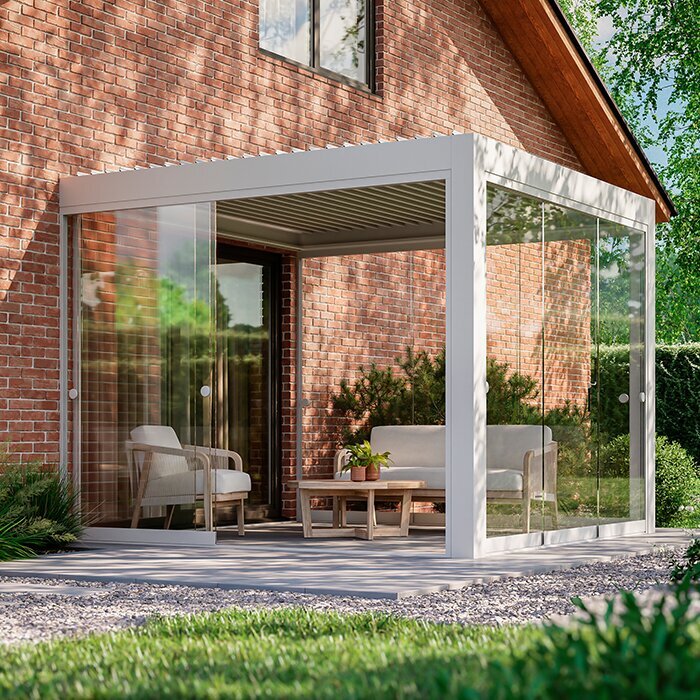
Before selecting a heater, check the exact heater manual and pergola documentation for permitted outdoor exposure, mounting approval, clearances and any restrictions on nearby materials. A general product name or an image cannot confirm those details. With a Bloomcabin Wall-Mounted Pergola, ask for confirmation for the exact configuration and proposed heater attachment; do not assume that a wall-mounted structure makes every wall or frame member suitable. The heater manufacturer’s instructions must cover the fixture’s permitted use and mounting, and the pergola manufacturer must confirm the attachment point. No running-cost calculation can replace those checks.
Have a qualified electrician review the electrical requirements for the selected heater and any other equipment planned for the area. Provide the exact model information and manuals; do not infer that existing lighting, a nearby socket or a pergola’s electrical preparation is adequate for a heater. This is a planning check, not wiring or installation guidance. Once the exact heater, approved position, electrical input and likely operating schedule are known, the estimate becomes more useful. If any of these changes, update the relevant figure rather than treating the original cost as fixed for every configuration.
Frequently asked questions
How do I calculate an electric pergola heater’s running cost?
Convert its rated electrical input from watts to kilowatts, multiply by the hours it runs to get kWh, then multiply by your unit rate per kWh. For variable settings, use the documented input for the setting you expect to use.
Is the heater’s rated wattage enough to estimate the bill?
It gives you the input figure, but you also need operating hours and the applicable unit rate. If the heater cycles or uses a lower setting, its actual consumption may differ from a calculation that assumes full input throughout.
Will a heater warm the air across the whole pergola?
Not necessarily. A radiant heater can warm people and surfaces in its path without heating all the surrounding air uniformly. An air-temperature reading alone does not show whether each seat receives direct warmth.
Should I include the electricity standing charge?
Leave it out when estimating the extra energy cost of using one heater: a fixed standing charge is not caused by a particular session. Show it separately if you are preparing a whole-house budget.
How can I estimate costs for a full season?
Multiply hours per session by sessions per week and weeks of use, then apply the heater’s input and your unit rate. If your routine or tariff changes, calculate separate periods rather than relying on one unweighted average.
A useful budget pairs the heater’s documented electrical input with a realistic schedule and the unit rate that applies when it runs. Keep that energy figure separate from the question of whether radiant warmth reaches the seats comfortably, and from any equipment or electrical work in the wider project. When the heater, controls, usage pattern or tariff changes, update the relevant input rather than relying on a single cost estimate for every setup.
