
Victorian Greenhouses | Design, History & Garden Ideas Malta
Malta • Historic greenhouse architecture • Bloomcabin Journal
Victorian greenhouses
Timeless glasshouse architecture reinterpreted for modern Maltese gardens, with aluminium, glass, masonry, ventilation and the presence of true garden architecture.
The greenhouse as architecture
Victorian greenhouses remain captivating because they combine practical purpose with visual theatre.
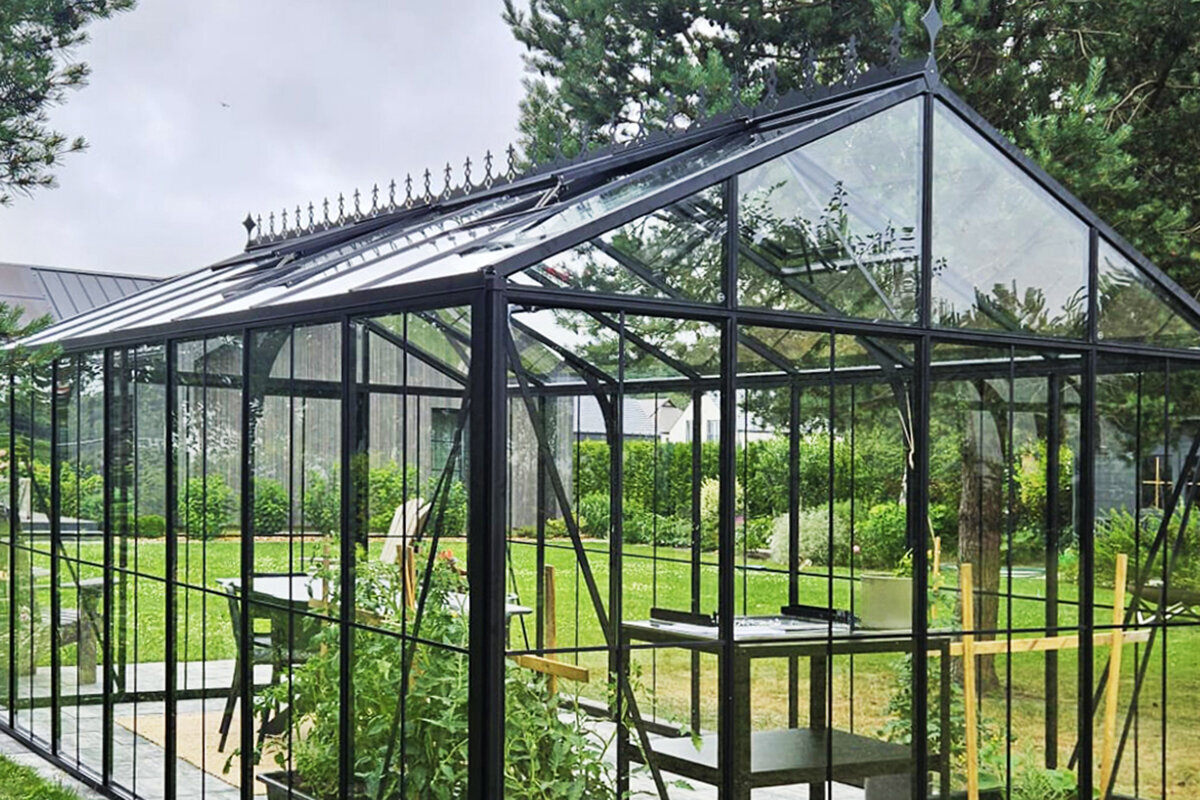
A Victorian-style greenhouse can be a serious growing space, garden room, citrus house or architectural focal point. Its impact comes as much from proportion as ornament: tall glazed walls, a crisply defined ridge, regular panes, an emphasised entrance axis and a composition designed to be seen from the house or garden path.
In Malta, the term Victorian greenhouse is generally used as a style description. A modern structure may use powder-coated aluminium, safety glass, roof vents, integrated gutters and contemporary foundations while retaining the spatial discipline of historic glasshouses.
That is the strength of the style: there is no need to copy a nineteenth-century structure to achieve its architectural dignity. Modern materials can simplify maintenance and everyday use, while roof form, divisions, colour and masonry connections carry the historic character.
If you are already comparing specific models, start with the Bloomcabin greenhouse range for Malta and the classic aluminium greenhouse to assess proportions, glass rhythm and dark frames as primary design tools.
1848
01 • Origins
Why Victorian glasshouses still shape the idea of the grand greenhouse
The nineteenth century transformed glasshouse architecture. Industrially produced glass, iron structures and new engineering possibilities enabled larger, more transparent buildings. Meanwhile, botanical interest in exotic and frost-sensitive plants grew. The resulting architecture brought horticulture, engineering and prestige together.
Kew’s celebrated glasshouses became symbols of this development. The Palm House and later Temperate House show how repeated metal-and-glass grids, wide spans and lofty interiors still define our image of a Victorian greenhouse.
Germany also has its own tradition of grand glasshouses. Frankfurt’s Palmengarten was conceived in the nineteenth century around an innovative large glasshouse; Greifswald’s historic greenhouses have been used for more than 130 years, while Karlsruhe Botanical Garden’s restored showhouses vividly unite garden art, glass and metal.
02 • Design language
10 features that make a greenhouse feel Victorian
01. Tall proportions
High side walls and a generous ridge create presence and room for climbers, citrus and larger specimen plants.
02. Defined roofline
A clear, steep or at least legible roof volume makes the house read as architecture rather than a transparent box.
03. Repeated glass rhythm
Regular vertical profiles and repeated panes create the disciplined rhythm of classic conservatories and glasshouses.
04. Symmetry
Central doors, balanced roof forms and clear axes give even a smaller greenhouse formal calm.
05. Dark frames
Black, deep green, bronze or anthracite emphasise the structure and visually recall historic metalwork.
06. Ridge details
Cresting, finials or a finely accented roof edge are powerful but should be used sparingly as references to historic models.
07. Masonry base
Brick or natural stone gives the transparent upper structure visual weight and links it to the house and garden wall.
08. Formal entrance
Wide or double doors on a main axis reinforce the pavilion character and make furniture and larger plants easier to handle.
09–10. Ornament + planting
Ornament alone is not enough: vines, citrus, ferns, terracotta and a few large plants make the historic character more credible than decorative details without appropriate planting.
03 • Modern interpretation
Traditional style does not need historic construction
Historic glasshouses used the materials and technical systems of their era. A greenhouse today can preserve their visual language while being far easier to live with: powder-coated aluminium instead of regularly painted metal, modern safety glass, integrated drainage and automatically operating roof vents.
Aluminium is especially suitable because it allows slim, regular profiles while remaining corrosion-resistant and easy to maintain. That matters for a Victorian expression: the structure should be visible without appearing heavy.
The Bloomcabin Classic is a natural starting point for this aesthetic; the Prestige greenhouse shows how a more architectural effect can combine with modern precision.
Historic expression, modern function
Historic idea: narrow repeated glass panels.
Modern solution: precise aluminium profiles.
Historic idea: a formal glasshouse ridge.
Modern solution: technically integrated roof ventilation and drainage.
Historic idea: dark iron.
Modern solution: durable powder coating.
Historic idea: a grand garden building.
Modern solution: a space combining growing and relaxation.
04 • Masonry
A Victorian greenhouse on a brick or natural-stone base
A masonry base is not essential, but it can be the strongest single design decision when a greenhouse should feel like a permanent garden building. Brick or stone gives the transparent upper structure weight and creates a clear connection with the façade, garden wall or terrace.
In Malta, it is often effective to echo a material already present on the building or plot. Red brick with black or dark-green frames feels traditional. Pale natural stone with anthracite is more restrained. Rendered masonry with cream metal can create an elegant conservatory effect.
A base also creates possibilities inside: raised beds can meet it neatly, work surfaces can be integrated and the space feels more sheltered. For a direct connection to existing architecture, consider a Bloomcabin lean-to greenhouse as an alternative.
05 • Glasshouse against a wall
Victorian wall and lean-to greenhouses
A glasshouse placed against an existing wall is one of the most convincing uses of historic greenhouse architecture. The wall becomes part of the composition, so the structure feels less like a separate garden object and more like an extension of the building.
For Maltese homes, this solution can work beautifully with limestone, render, brick or timber façades. Proportions are decisive: roof junction, door height and panel rhythm should respond to the building rather than look like an afterthought squeezed into leftover space.
The wall position is functionally interesting too. One side is less exposed, routes to water and electricity may be shorter, and access from house to garden feels more natural. Depending on orientation, the wall may store warmth, but shade and summer heat must be considered.
A modern example of this principle is the Bloomcabin lean-to greenhouse.
06 • Greenhouse or orangery?
Victorian greenhouse vs. orangery: where the ideas overlap
The terms often overlap today, but their spatial emphasis differs. A greenhouse is read primarily as a highly glazed growing space. An orangery feels more like a garden room or pavilion, often offering more space for seating, specimen plants and a formal main axis.
Victorian design particularly suits T-shapes and pavilion proportions. A projecting centre creates a focal point for a table, citrus tree, double doors or formal garden axis. The result becomes more fully part of the garden design.
For this effect, compare classic models alongside the Bloomcabin Orangery .
Choose a greenhouse when …
growing area, beds, shelving and extending the season are clearly the priority.
Choose orangery proportions when …
the space should also work as a garden destination, seating area or formal focal point.
07 • Scale
Small Victorian greenhouse or large garden pavilion?
Small garden
Keep proportions tall
For a compact Victorian greenhouse, height is especially important. A pronounced roof, slim profiles and vertical glass panels retain elegance even with a modest footprint.
The Classic is a useful starting point for a traditional, clearly proportioned solution.
Medium garden
More architectural presence
As floor area increases, a stronger entrance axis, larger doors, a central path and specimen plants become worthwhile. The greenhouse can then deliberately perform as a garden building.
The Prestige suits this more architectural approach.
Large plot
Think in pavilions, not utility buildings
A large Victorian-inspired glasshouse can organise an entire garden composition. Paths, hedges, fruit trees or seating areas can be deliberately aligned with the entrance.
At this scale, the Bloomcabin Orangery is especially relevant.
08 • Colour
The best colours for a Victorian greenhouse
Black
Clear, graphic and architectural. Especially strong against brick, pale stone and dense green planting.
Historic green
The most botanical option. The frame relates to hedges and trees yet remains legible as a fine structure.
Anthracite
More modern and neutral; suits contemporary homes, grey stone and metal details.
Bronze / brown
Warm and restrained beside red brick, timber, gravel and traditional terrace finishes.
Cream
Light, elegant and conservatory-like; especially fitting with pale rendered or painted buildings.
The safest approach is to pick up a colour already found on the house: window frames, roof, masonry, fence, metalwork or paving. The greenhouse should feel related to the plot without disappearing into it.
09 • Interior
Ideas for the interior of a Victorian greenhouse
The most convincing interiors feel collected and grown over time rather than decorated. Begin with a central path of brick, natural stone or gravel. Add terracotta, timber, restrained metal shelving and a few larger plants instead of filling every surface with many small pots.
Climbers use precisely the height that defines the style. Vines, climbing plants or trained citrus make the roof zone part of the planting. Ferns, pelargoniums, orchids and tender foliage plants create a more botanical collection character.
If the greenhouse is also a retreat, keep the main sightline clear. A small table, bench or chair beneath the ridge creates atmosphere without displacing productive use.
A simple material palette
Brick or natural-stone path
Terracotta and aged clay pots
Timber or black metal shelving
One or two large specimen plants
Climber or grapevine
One restrained piece of furniture, not a fully furnished living room
10 • Planting
What suits a Victorian greenhouse?
Historically, glasshouses appealed because they cultivated plants that could not reliably tolerate the local outdoor climate. This principle remains useful in Malta, though summer heat, ventilation, shading and water management are central. Citrus, figs, vines, tomatoes, cucumbers, peppers and herbs can benefit from protected conditions; tender ornamentals may also need careful protection from intense sun.
Large historic glasshouses were conceived around plant collections. Use the height accordingly: a vine beneath the roof, a citrus tree by the entrance or a large fern at the end of the path gives the room a visible hierarchy.
For combining edible plants and relaxation, the Bloomcabin Orangery offers more freedom for separate planting and seating areas.
A mix of edible and decorative plants often feels more authentic than pure row production. This interplay of collection, use and spatial atmosphere made historic glasshouses so distinctive.
11 • Comparison
Victorian greenhouse vs. minimalist modern greenhouse
| Feature | Victorian inspired | Minimal modern |
|---|---|---|
| Character | Architectural, decorative, garden-pavilion-like | Clear, reduced, technical |
| Roof effect | Pronounced and design-led | Simplified geometry |
| Glass rhythm | Repeated vertical divisions | Larger calm glass surfaces |
| Colour | Black, green, bronze, cream | Black, grey, silver, white |
| Masonry base | Very easy to integrate | Optional, less style-defining |
| Suitable for aluminium? | Yes — excellent for a modern historic interpretation | Yes — a typical modern material |
12 • Garden placement
Where should a Victorian greenhouse stand in the garden?
Because the style has strong visual presence, its position should be considered as part of landscape planning. Rather than hiding the greenhouse behind outbuildings, it can terminate a path, sit on an axis with a terrace or house windows, or become the centrepiece of a kitchen garden. The more architectural the model, the more important a composed view becomes.
In Malta, consider the character of the setting: limestone, rendered façades, traditional townhouses, rural properties and contemporary homes each call for different material combinations. A Victorian greenhouse feels more convincing when its base, frame colour and paths respond to the surroundings.
Design must not override growing practice. Winter sun, shade from trees or buildings, wind, water access and drainage must work. A perfect view of the greenhouse is of little use if it is permanently shaded, overheats without relief or stands on poorly drained ground.
13 • Function
Ventilation matters as much as Victorian details
A historic-looking greenhouse can perform poorly for plants if summer heat cannot escape. Roof vents suit Victorian architectural language well because they respect the roof form while releasing rising warm air.
Doors and lower openings provide replacement air; in larger or densely planted houses, circulation fans can reduce temperature and humidity differences. Decorative ridge elements should never obstruct genuine ventilation areas.
Glazing is functional too. Clear glass preserves the transparent historic character and admits generous light. Modern safety glazing combines that impression with contemporary everyday practicality.
A model such as the Bloomcabin Prestige can combine modern ventilation and precise glazing with a deliberately architectural garden presence.
14 • Choosing
How to choose a Victorian greenhouse for a Maltese garden
1. Start with the houseFirst note its scale, roof form, existing metalwork and masonry.
2. Define the useGrowing only, growing plus seating, or a garden pavilion? This determines width, height and doors.
3. Decide on masonryBrick or stone strengthens the Victorian character but changes foundation and door planning.
4. Prioritise ventilationNever sacrifice usable roof vents and doors for decoration alone.
5. Think in garden viewsCheck the effect from the house, terrace and main path, not only from inside.
6. Compare proportionsA taller, more generous greenhouse feels more architectural than the same language in an overly low form.
15 • FAQ
Victorian greenhouse FAQ
What is a Victorian greenhouse?
Today, the term usually means a greenhouse inspired by nineteenth-century glasshouse architecture: tall proportions, repeated panes, strong roof forms, dark metal, symmetry and sometimes masonry or ridge details.
Can a Victorian greenhouse be made from aluminium?
Yes. Aluminium is particularly suitable for combining slim repeated profiles, clear glazing and low maintenance.
Does it need a brick base?
No. A fully glazed greenhouse can also look convincingly Victorian. Masonry mainly reinforces visual weight and the character of a permanent garden pavilion.
Which colour feels most traditional?
Deep green feels especially botanical; black is more graphic and architectural. Bronze, anthracite and cream can also work beautifully when coordinated with the house.
Can a Victorian greenhouse be attached to a house?
Yes. A Bloomcabin lean-to greenhouse is a natural modern interpretation of the traditional glasshouse against a building wall.
Final perspective
The best Victorian greenhouse feels inherited, even when newly built
That impression comes from proportion, restraint and context rather than artificial ageing. A crisp ridge, frame colour suited to the house, sufficient height, transparent glass, a deliberately designed path or base and a few precise details are stronger than excessive ornament.
Modern aluminium makes it possible to pair this architecture with contemporary glazing, drainage, ventilation and low maintenance. Victorian character is not weakened by good technology; it becomes more convincing because the technology stays in the background.
Discover Bloomcabin greenhousesSources & further information
- Palmengarten Frankfurt — history and historic Palm House
- University of Greifswald — historic greenhouses
- Karlsruhe Botanical Garden — historic greenhouses
- Karlsruhe Botanical Garden — history of garden architecture
- Royal Botanic Gardens, Kew — Temperate House
This article uses “Victorian greenhouse” as a contemporary design category inspired by nineteenth-century glasshouse architecture. It does not claim that every detail appeared identically in every historic greenhouse. For a specific Maltese project, consult a perit on planning classification, foundations, wind exposure and other applicable requirements.
