
Greenhouse Temperature & Humidity | NZ Guide
New Zealand • Greenhouse climate guide • Bloomcabin Journal
Greenhouse temperature & humidity: the complete guide
Conditions by crop, season and time of day, including VPD, dew point, condensation, ventilation, shading and sensor placement for New Zealand gardeners.
The climate under glass
A greenhouse is not simply warmer than outdoors. It is a small climate system that changes continually through the day.
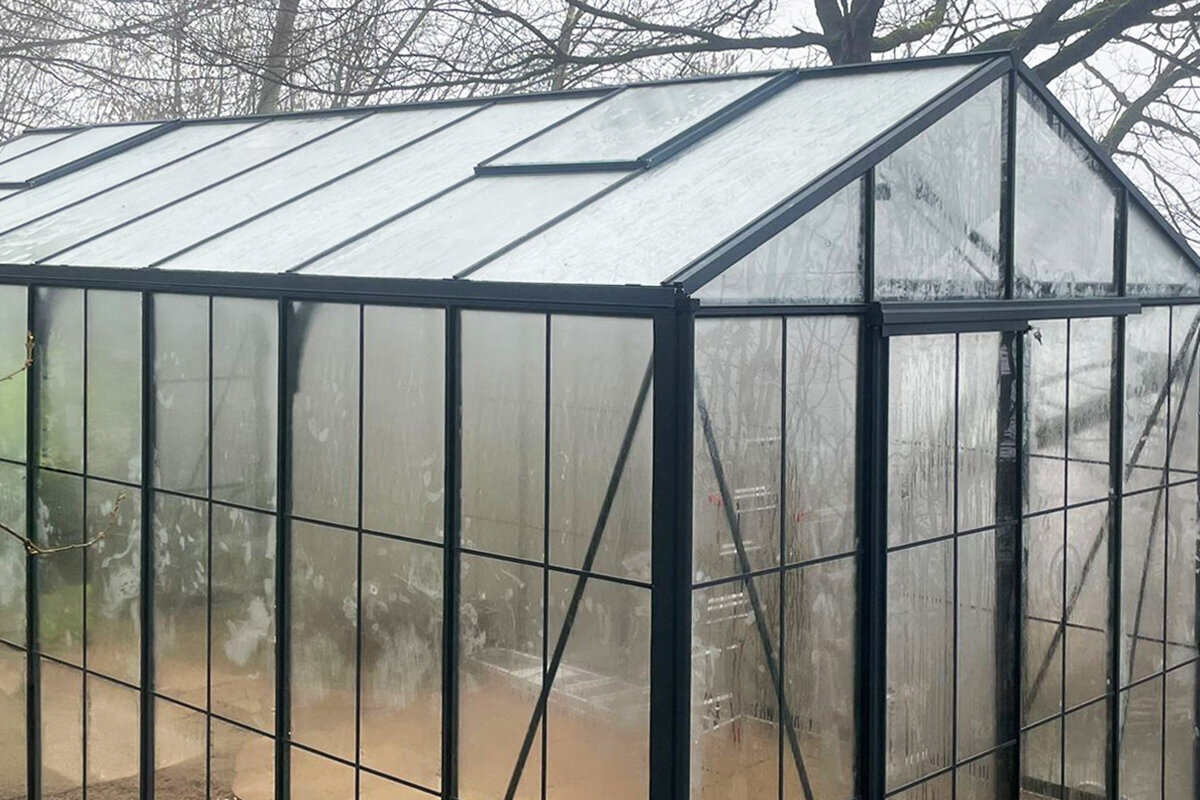
Sunlight can quickly lift greenhouse air well above the outdoor temperature. Meanwhile, plants add water vapour through transpiration. As evening approaches, glazing, aluminium profiles and leaves cool, relative humidity rises, and some surfaces may reach dew point. Conditions across New Zealand vary greatly, from mild northern and coastal sites to frosty inland valleys and exposed southern gardens: cold spring nights matter in many places, whereas summer heat needs prompt ventilation.
Good greenhouse management therefore means managing relationships, not just one thermostat setting. Temperature affects photosynthesis, respiration, flowering and fruit set. Humidity affects transpiration, nutrient movement, pollination, disease pressure and condensation. Air movement changes the boundary layer around leaves, watering changes moisture, and shading changes leaf and air temperature.
For home gardeners, the practical aim is a stable, responsive microclimate suited to the crop. Lettuce and seedlings need different conditions from tomatoes, cucumbers or capsicums. Conditions also vary between warm lowlands, urban gardens, elevated sites and exposed locations around New Zealand.
When planning a new greenhouse, consider climate control from the start. In the Bloomcabin greenhouse range for New Zealand look beyond appearance to useful vents, height, air volume and glazing.
01 • Temperature
What is the ideal greenhouse temperature?
There is no universal ideal temperature. In a mixed home greenhouse, it helps to distinguish cool-season from warmth-loving crops. Lettuce, spinach and many seedlings grow well at considerably lower temperatures than tomatoes, cucumbers, eggplants, basil, capsicums or chillies. Growth stage and available light also shift the best range.
For many warmth-loving vegetables, a comfortable daytime range is roughly 20–27 °C, with slightly cooler nights acceptable. This is not a fixed target. Tomatoes can set fruit poorly in prolonged heat; capsicums may drop flowers at unsuitable day or night temperatures; lettuce bolts faster when too warm.
The key practical rule is to define climate around the crop mix. A house for leafy vegetables can run cooler. One with tomatoes, capsicums and basil needs more warmth. With mixed planting, zoning, adequate spacing and effective ventilation all help.
The better question
“Which temperature range supports this crop without creating heat, cold or humidity stress?”
02 • Day and night
Why daytime and night-time temperature should be assessed separately
By day, light drives photosynthesis and leaves can become warmer than surrounding air in sunshine. At night, photosynthesis stops while respiration continues. A moderate day-to-night difference is normal. Problems arise when nights are cold enough to slow metabolism, or so warm that plants receive no recovery period.
On clear nights, leaves and glazing can cool below measured air temperature through radiation. That surface temperature is decisive for condensation. A leaf can reach dew point even when the air sensor reads several degrees higher.
In cooler regions, buffering night cold is a major greenhouse benefit. In very warm locations, however, a house must still release heat overnight in summer. Larger air volumes respond more slowly; models such as the Bloomcabin Classic therefore have different climate dynamics from a very small enclosed unit.
A min-max thermometer or data logger is one of the most useful tools. One midday reading often hides the two numbers that explain plant responses: yesterday’s maximum and the overnight minimum.
03 • Humidity
What is the ideal humidity in a greenhouse?
Simple humidity targets can be misleading. Relative humidity depends on temperature: warm air can hold more water vapour than cold air. If the absolute amount of water stays unchanged while temperature falls, relative humidity rises. A greenhouse that seems fine in the afternoon can therefore be close to saturation a few hours later.
The highest humidity is often not at the doorway, but in the crop canopy. Leaves continually release water while dense foliage reduces air movement. A hygrometer by the door may show acceptable readings although the space between tomato leaves is already much damper.
For a mixed home greenhouse, a moderate working range is more useful than a magic percentage. Very dry air raises evaporative demand and can cause wilting. Very humid air slows drying, can affect pollination in some crops, and increases the risk of condensation and fungal disease.
The most important rule is not to leave the greenhouse near saturation for long periods, especially overnight. Dry leaf surfaces and moving air are usually better disease prevention than strict hourly adherence to an exact RH reading.
04 • VPD
VPD: a clearer view of what the plant experiences
Vapour pressure deficit, or VPD, describes the difference between the water vapour air could hold at a given temperature and the moisture it actually contains. It is more meaningful for plants than relative humidity alone because it better describes evaporative demand on the leaf.
At very low VPD, air is very humid relative to its capacity. Transpiration slows and leaf surfaces dry poorly. At very high VPD, air is strongly drying; water leaves the plant quickly and roots must supply it accordingly. The suitable range depends on the crop and growth stage.
Home gardeners do not need to become greenhouse engineers. A sensor measuring temperature and RH, and calculating dew point or VPD, is enough to reveal patterns. Most importantly, 70 % RH at 12 °C means something different for a plant than 70 % RH at 30 °C.
Simply put
RH describes the air. VPD better describes how strongly air can draw water from a plant.
That is why good climate control needs more than one number.
05 • Dew point
Dew point & condensation: why a dry afternoon can mean a wet greenhouse at night
Dew point is the temperature at which air can no longer retain all its water vapour as gas. When glass, metal, pipes or leaves cool below it, water condenses. The coldest surfaces become wet first. With further cooling, condensation can eventually cover the crop too.
This wetness is not merely unattractive. Drips from glazing can splash soil and plant debris. Wet leaves create favourable conditions for Botrytis and other pathogens. Sealing a greenhouse completely every evening to “keep all the heat in” can therefore also create a humidity problem.
The answer is not to leave everything wide open all night. Better results come from suitable heating, short humidity-venting periods, air circulation, morning watering, clean ground and adequate plant spacing.
A common misconception
“It is raining outside, so ventilation cannot dry the greenhouse.”
It can. Cold saturated outdoor air often contains less absolute moisture than warm greenhouse air. Once brought inside and warmed, its relative humidity falls and it can absorb additional water.
06 • Climate by crop
Practical starting points for common greenhouse crops
These values are practical starting points for home greenhouses, not universal professional production targets. Variety, growth stage, light, root temperature and local climate all change the optimum. The humidity column therefore describes a strategy rather than a falsely precise percentage.
| Crop | Useful daytime range | Night strategy | Humidity strategy |
|---|---|---|---|
| Tomatoes | Around 18–27 °C for strong growth; sustained heat above about 32 °C can reduce pollination and fruit set. | Slightly cooler than daytime; avoid persistently cold or very warm flowering nights. | Moderate; avoid saturation overnight and prolonged wet leaves. |
| Cucumbers | Warm; around 21–29 °C is useful for many home crops. | Keep nights warm enough to prevent stalled growth. | Tolerates more humidity than many crops, but still needs air movement. |
| Capsicums & chillies | Around 21–27 °C is a very useful range; extremes reduce fruit set. | Warm nights, but avoid continually hot nights during flowering. | Moderate; avoid very high humidity during flowering and night condensation. |
| Basil | Warm; around 21–29 °C supports active growth. | Protect from cold nights; basil is sensitive to cold. | Moderate with good air movement; wet foliage encourages disease. |
| Lettuce | Cool; around 15–20 °C suits many lettuces better than summer heat. | Cool nights are usually helpful if cold damage is avoided. | Avoid wet leaves and stagnant humidity. |
| Strawberries | Moderate temperatures; a broad range depends on variety and crop stage. | Cooler nights suit them well; avoid frost during flowering. | Keep flowers and fruit as dry as possible; air movement matters. |
| Seedlings | Crop-dependent; after germination, moderate rather than constant heat is usually best. | Avoid cold roots as well as warm, low-light nights. | Higher humidity can suit germination, then reduce it after emergence. |
For crop-specific detail, compare temperature tables with New Zealand gardening advice and your own plants’ response.
07 • Seasons
Greenhouse temperature & humidity through New Zealand’s seasons
Spring
Spring: the main risk is treating one warm afternoon as proof that the season has settled. Monitor overnight minima and root temperature. Vent early on sunny days because the greenhouse can heat sharply even while the outside air feels cool. Conditions vary across New Zealand: inland, elevated and southern sites may still face cold nights, while warmer northern and coastal gardens may need ventilation sooner.
Summer
Summer: overheating becomes the main risk. Vent early and generously, create air movement and use shading during extended heat. In dry areas, high VPD becomes more important; in humid areas, watch the combination of heat and high humidity.
Autumn
Autumn: humidity management becomes more important. Warm days load air with water vapour, then rapid evening cooling raises RH and dew-point risk. Reduce watering as light declines and continue ventilating on mild days.
Winter
Winter: temperature is only half the task. Low light reduces growth and transpiration while tightly closed glazing holds moisture. Decide whether the aim is frost protection, cool winter cropping or genuinely warm cultivation; these approaches have very different energy and ventilation needs.
08 • Air exchange
Ventilation is the greenhouse climate control you use every day
Ventilation removes heat and water vapour, admits fresh CO₂ and reduces temperature differences. With natural ventilation, warm air rises towards roof vents while cooler outdoor air enters through doors or lower openings. Fans can assist either outside-air exchange or internal circulation.
For a home greenhouse, roof vents, doors or lower openings, plus internal air movement, are usually more effective than one small window. Automatic vent openers are particularly valuable when a sunny morning starts while nobody is home.
If climate control is a priority, compare designs with usable openings and adequate air volume, such as the Prestige range or a lean-to greenhouse from Bloomcabin.
Roof vents, side openings or doors?
Roof vents: ideal for releasing rising hot air.
Doors / lower openings: supply replacement air and create stronger cross-ventilation.
Circulation fans: do not replace outside-air exchange, but reduce hot, cold or humid zones.
Polytunnels: often rely heavily on passive ventilation, so large openings are especially important. Another growing format is the Bloomcabin polytunnel greenhouse.
09 • Heat control
How to cool an overheated greenhouse
Ventilation comes first. Shading does not remove heat already stored inside; it reduces incoming solar energy. Together, the two measures are highly effective. During long hot spells, shade cloth or solar-control glazing can help seedlings, lettuce and fruit vulnerable to sunscald.
Do not overlook the root zone. Black pots on dark surfaces can become far hotter than the air. Larger containers, mulch, lighter surfaces and even watering reduce stress. Avoid heavy leaf removal immediately before a heatwave.
Climate changes very quickly in small structures. Air volume matters as much as the model. For more thermal stability and working room, compare the Bloomcabin Orangery .
Cooling order
1. Open roof vents and doors early.
2. Increase air movement through the crop.
3. Add shading if solar gain remains too strong.
4. Keep root-zone moisture and temperature stable.
5. Move plants if the same area overheats regularly.
10 • Humidity control
How to lower excessive humidity without harming plants
Water early. Morning watering gives leaves, paths and surfaces time to dry.
Avoid standing water. Every puddle becomes another source of moisture.
Maintain spacing. Dense crops create humid microclimates exactly where disease starts.
Move the air. Even circulation reduces temperature differences and speeds drying.
Vent humidity even in cool weather. Short air exchanges can replace warm humid indoor air with outdoor air that is drier in absolute terms.
Keep surfaces above dew point where possible. Root heat, insulation and circulation reduce cold surfaces.
Reduce late watering. Plants should not enter the coldest night period with wet leaves.
Remove surplus plant material. Old leaves, weeds and overcrowded crops increase transpiration and obstruct air.
11 • Measurement
Where should temperature and humidity sensors sit in a greenhouse?
The main sensor belongs roughly at crop-canopy height, where leaves actually experience the climate. Avoid direct sun unless there is a radiation shield. Positions immediately beside a heater, door, fan outlet or roof vent are also unsuitable.
One sensor is often enough for a very small greenhouse. Larger houses commonly have several climate zones: sunny side, shaded side, centre, edge and dense canopy can differ. If a crop struggles in one corner only, a second data logger there is worthwhile.
In a spacious structure such as the Bloomcabin Orangery several measuring points help identify differences between the sunny end, shaded zone, central path and crop canopy.
A useful sensor set displays current temperature, RH, daily minimum and maximum, and ideally dew point or VPD. Data logging is particularly useful because it shows how quickly climate shifts after sunrise, watering or opening vents.
12 • Common mistakes
Seven climate mistakes that cause more trouble than many gardeners expect
1. Measuring only at middayThe highest humidity often occurs before sunrise, while the lowest temperature arrives overnight and leaf stress may peak before the sensor response is noticed.
2. Closing every vent at sunsetThis can trap the day’s moisture. In a heated house, short controlled venting may be better than sealing saturated air inside.
3. Treating RH as a fixed targetRH changes with temperature. A VPD or dew-point view gives better context.
4. Watering because the plant wiltedA plant can wilt from extreme heat even in wet soil. Check the root zone before adding water.
5. Packing the greenhouse too denselyCrowding creates a humid canopy microclimate even when the aisle feels comfortable.
6. Installing the sensor in direct sunSolar radiation can make the sensor read more like a hot object than the actual air.
7. Designing for average weatherA good greenhouse is managed for the cold night, sudden sunny morning and heat-wave afternoon—not only the monthly average.
13 • FAQ
Greenhouse temperature & humidity FAQ
How hot is too hot in a greenhouse?
It depends on the crop. In a mixed vegetable greenhouse, heat-stress risk rises markedly when temperatures remain around 30–35 °C or above for extended periods. Flowers and fruit set often react before mature leaves do.
Should you ventilate when it rains?
Often yes, especially in a heated greenhouse holding trapped moisture. Cool saturated outdoor air can contain less absolute moisture than warm indoor air. Once warmed in the greenhouse, its relative humidity falls and it can take up water.
What humidity is too high?
The percentage alone does not decide it. High RH becomes critical especially when temperature approaches dew point and leaves remain wet for a long time. A brief spike is less problematic than an almost saturated whole night.
Do I need a fan?
Not every small greenhouse needs mechanical circulation. It becomes more valuable as the canopy thickens. Fans reduce stagnant areas, but do not replace roof vents, doors or genuine fresh-air exchange.
Is a larger greenhouse easier to control?
Greater air volume usually changes temperature more slowly than a miniature structure. Yet vent area, glazing, wind, orientation and planting density remain decisive. Even a large house with openings that are too small can overheat.
A practical weekly routine
Five minutes of climate observation can prevent weeks of problems
1. Record the last night’s minimum and previous day’s maximum.
2. If you have two sensors, compare aisle and canopy humidity.
3. Check glazing and leaves for condensation each morning.
4. Check automatic vents opened and closed at the right time.
5. Check root-zone moisture before changing watering.
6. Observe plant responses: flower drop, soft growth, leaf curl, wilting, spots or unusually slow ripening.
Use local Bloomcabin product pages for planning as well: Greenhouse category and Classic greenhouse.
Final perspective
The best greenhouse climate is not a number, but a controlled rhythm
A greenhouse lets you shape temperature, light, air movement and humidity more actively than outdoors. Construction alone does not control climate, however. Success comes from combining vents, doors, shading, watering, plant spacing, circulation and measurement.
When you assess maximum, minimum, humidity trend, dew point and plant response together, management becomes more proactive. Rather than reacting to wilted leaves or dripping glass, you prevent the conditions that cause them.
Explore Bloomcabin greenhousesSources & further information
- LWG Bavaria — Small greenhouses
- LWG Bavaria — Mini greenhouse and ventilation
- LWG Bavaria — Vegetable damage symptoms in greenhouses
- LWG Bavaria — High humidity in small greenhouses
- Wageningen UR — Climate in greenhouse horticulture
This guide is written for home greenhouses in New Zealand. Temperature ranges are practical starting points, not universal production targets. Adjust them for variety, growth stage, location, greenhouse design, root zone and the response of your plants.
