
Adding Climbers to an Aluminium Pergola: What to Check
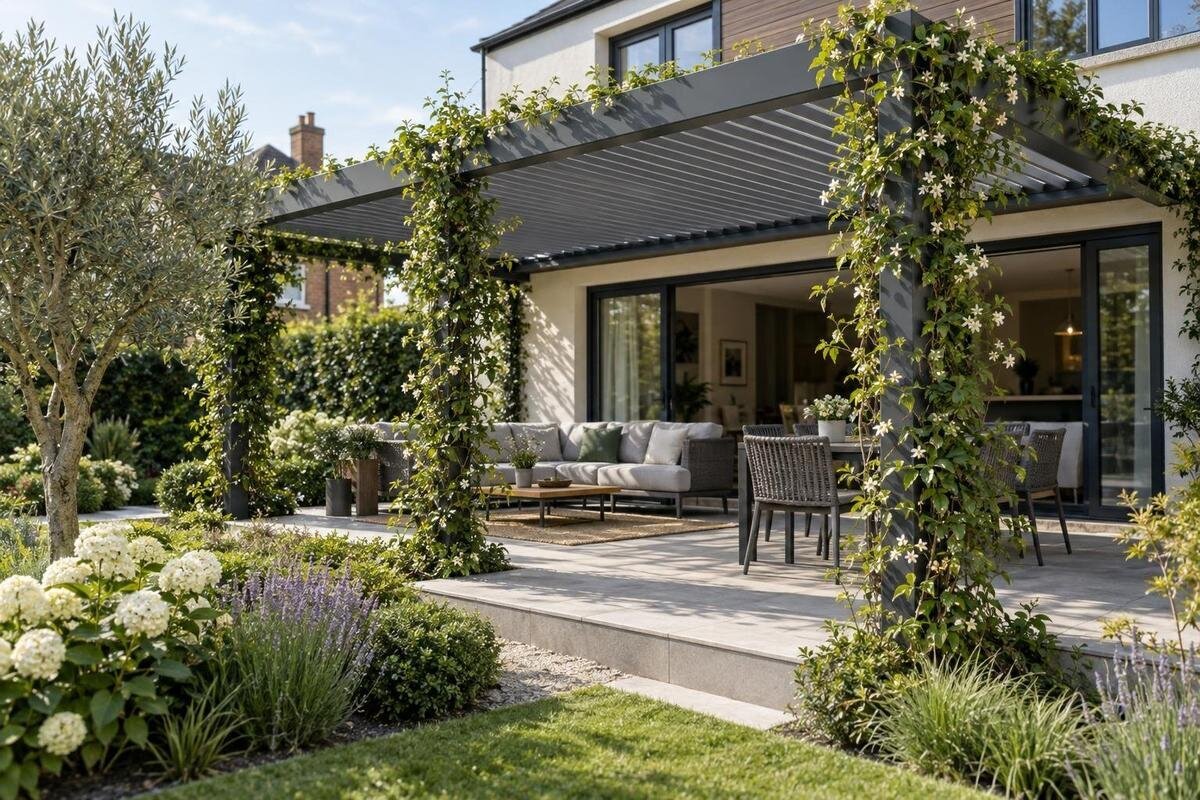
Pergola planting guide
Climbing plants can soften an aluminium pergola, but mature stems and foliage add load and can reach fixings, drainage routes or moving roof parts. Before planting, check whether the exact frame, attachment method and roof mechanism are approved for the proposed growth. Written supplier guidance, a clear maintenance plan and—where required—a genuinely independent trellis are safer starting points than judging the frame by appearance.
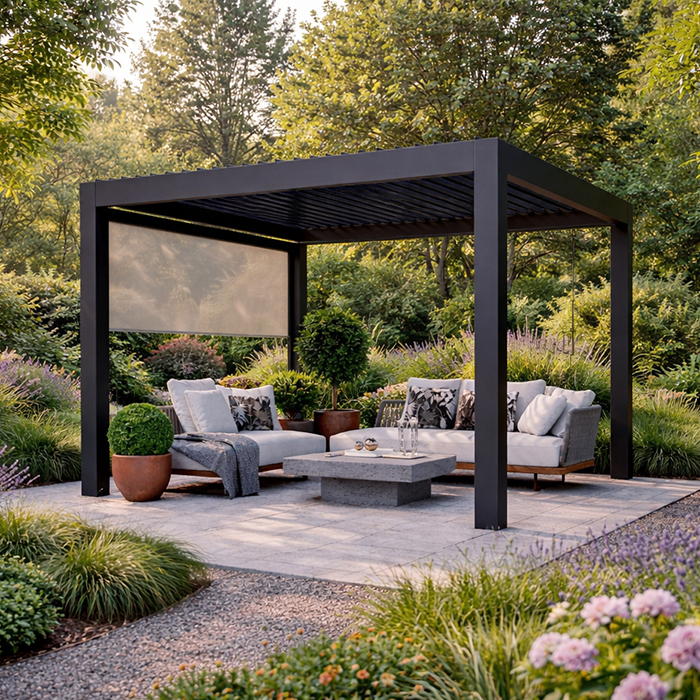
Approval must cover the exact pergola and plant
Approval should relate to a defined proposal, not a general assurance that an aluminium frame looks strong enough. Give the supplier the exact pergola model and configuration, the proposed climber and its expected mature size, how it will be supported, and where it will grow. If you are considering the Bloomcabin Bioclimatic Aluminum Pergola, identify the precise product and roof arrangement in your enquiry; its name alone does not establish whether a climber or particular fixing is permitted. Ask for the response in writing. It should state any allowed attachment points and conditions on plant reach, maintenance or roof operation, rather than simply saying that planting is possible.
Product approval and structural review are different questions. The supplier can confirm permitted uses and explain its terms; a qualified structural professional can assess a proposed load path where that is needed. The installer should also see the approved detail, particularly if a fitting is to be added during assembly or later. Ask who is responsible for each answer, what documents they need and whether approval depends on regular pruning or a particular accessory. Keep any conditions with the product information so installation and maintenance follow the same guidance. A verbal comment, a photograph of another planted pergola or approval for a different model is not confirmation for yours.
Mature growth changes the load
Plant load changes over time. Stems thicken, branches spread and foliage becomes denser; rain can leave a plant heavier than it appears when dry. The amount depends on species, maturity, pruning and local exposure, so a plant label or nursery-pot size is not a safe load estimate. Ask the nursery for likely mature height and spread, growth habit and routine pruning needs, then share them with the supplier. Note the species or cultivar and intended number of stems where known. A listing for the Bloomcabin Pergola identifies a model, not a planting-load allowance; request advice for the exact configuration rather than inferring capacity from its dimensions or appearance.
Wind is another part of the assessment. A leafy screen presents more surface than an uncovered frame, and stems tied to a support can pull as they move. A vigorous plant allowed to spread may behave differently from a regularly pruned specimen. This does not rule out climbers, but it makes a visual guess unreliable. Ask the supplier or an appropriately qualified engineer to consider the plant, its mature form, the support and the site together. Describe the actual position, including whether it is exposed or sheltered, rather than relying on a generic weight figure. That figure may say little about the combined effects of growth, wind and attachment in your garden.
Check every fixing before attaching a climber
An aluminium frame is not automatically a planting trellis. Drilling, screwing, clamping, tying or sticking a clip to a post, beam or roof member may damage a finish, obstruct a channel or concentrate force where the frame was not designed to take it. Even a soft tie can rub as stems move. Before attaching anything, ask whether the exact frame profile has approved fixing points and which method is allowed. If you are considering the Bloomcabin Lean-To Pergola, check separately what can be attached to the pergola and what belongs to the building; approval for one connection does not approve the other. Do not assume a fitting is acceptable because it seems light or temporary.
Apply the same rule to wire, mesh, hooks and decorative panels. They can gather foliage and transmit its pull to the structure, even if the accessory itself is light. Do not infer permission because a clip fits around a beam or an installer can make it fit. Ask for an approved detail that identifies the position and fixing method, and whether anything must be removed for service or cleaning. If the supplier does not allow attachments, do not substitute another fastener or tie. A separate support may be possible, but it must carry its own load and stay clear of the pergola.
Keep moving roof parts clear
If any roof section tilts, opens, slides or retracts, keep the climber and its support outside the full operating envelope unless the supplier explicitly approves another arrangement. Shoots can enter joints, cross a moving edge or become caught when the roof operates; ties and fallen leaves can interfere too. With the bioclimatic aluminium pergola option, confirm which parts move on the exact configuration, where they travel and what clearance must be maintained. Check every operating position, not just the closed one. Growth that clears the mechanism on planting day may reach it later, so the plan needs to account for the plant’s expected spread.
Ask for the movement zone in model-specific drawings or instructions, and include the plant’s growth envelope rather than measuring only bare stems. Agree how it will be pruned and who will keep it within the approved clearance; seasonal growth can undo an otherwise neat installation. If the supplier has not documented an allowance for vegetation near the mechanism, keep the plant and trellis clear of it. Do not test a tight gap by operating the roof against a stem or support. If an existing climber has entered a moving area, seek the supplier’s direction before trying to operate the roof or remove the plant.
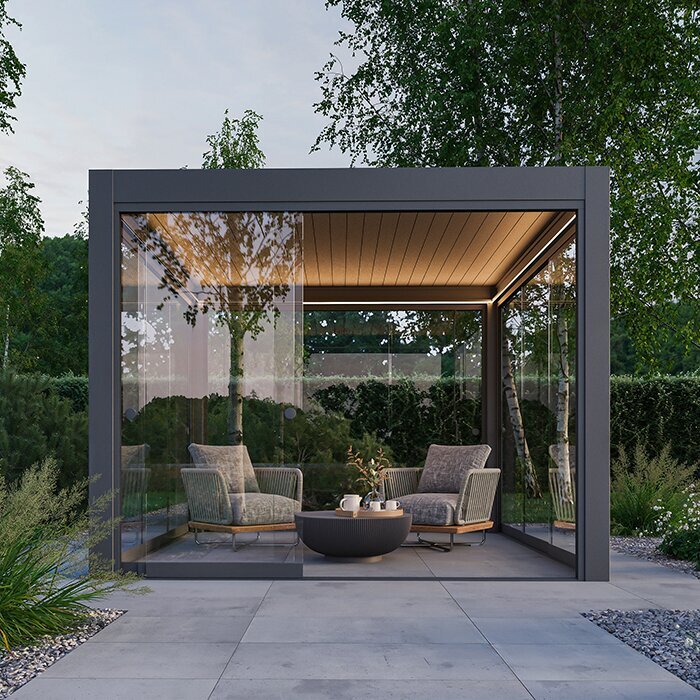
When a separate trellis is the better option
A freestanding trellis can avoid fastening a climber to the pergola, but it is independent only when it does not rely on the frame for support. Do not lean it against a beam, strap it to a post or run a wire back to the pergola and then call it separate. Its posts, ground supports and any wall connection need their own suitable design. Have the support assessed for the mature plant and its location by someone qualified for that work. The trellis itself can become a substantial surface once covered, so its suitability should not be assumed simply because it is described as freestanding.
Position it beyond the supplier’s stated clearance for roof movement, access, drainage and maintenance; do not invent a gap if there is no drawing. Plan where stems will spread and how they can be pruned from a safe working position without climbing on the pergola. For the regular Bloomcabin pergola model, treat a separate trellis as a separate garden structure unless a specific connection has been approved for that model. Leave room to inspect and maintain the trellis itself. An independent support can reduce load transfer to the pergola, but it does not make an inadequately secured trellis suitable.
Choose the climber for its mature growth habit
Choose a climber for its mature habit, not only its flowers or the size of the plant sold in a pot. Twining stems, tendrils, self-clinging growth and woody stems interact differently with supports; some need regular guiding, while others may spread well beyond a small panel. Check expected height and width, growth rate, stem development, pruning requirements and whether the plant can attach itself to nearby surfaces. Ask a nursery for documented requirements suited to your site, then pass them to the pergola supplier. Approval should refer to the likely mature plant, not just a young specimen that has yet to fill its support.
Decide whether growth is intended along one side, across a defined trellis panel or above a seating area, and show how it will reach that space without relying on moving roof parts. The proposed shape should leave access to controls, joints and surfaces that need inspection or cleaning. Consider who will prune it and how often: a plant that is easy to train at first can become difficult to reach as it thickens. Record a realistic maximum height and spread, including any planned overhang. If the supplier cannot approve that growth envelope on the frame itself, put training wires or the trellis on its own support.
Allow for cleaning, access and regular pruning
Leaves, flowers and loose stems can collect around roof edges or obscure parts that need inspection. Ask how the pergola should be cleaned and whether foliage must be kept away from particular joints, channels or drainage routes. Do not assume a plant can be routed behind a beam or over a gutter simply because it is less visible there. Pruning access also needs a place in the plan: allow room to work from the ground or use a safe, separate access method, rather than standing on the pergola or its roof. If growth blocks access to a service point, the maintenance arrangement needs changing.
Include upkeep in the approval request. Explain how often you can prune, clear fallen material and check that stems, ties or tendrils have not entered a moving part. For the Bloomcabin bioclimatic model, ask for model-specific cleaning and access instructions and compare them with the proposed plant route. A vine that hides connections or makes a roof edge difficult to inspect may be impractical even if its initial fixing is approved. Record who is responsible for routine maintenance and how the approved clearance will be kept. A climber needs ongoing control, not a one-off attachment decision.
Prepare drawings and planting details for approval
A dimensioned plan and elevation make a proposal easier to review than a description such as a vine near the pergola. Mark the frame outline, posts, wall line where relevant, roof movement area, access and intended plant position. Add the proposed trellis, support points, training wires and intended maximum height and spread. For Bloomcabin's wall-mounted pergola, distinguish clearly between the pergola’s building fixings and any separate plant support fixed to the house. Show the relevant clearances and label each component, so a reviewer does not have to infer from a sketch which element will carry the climber.
Attach documented planting requirements from the nursery: likely mature size, growth habit, pruning frequency and any specific support needs. Note relevant site constraints, such as exposure or limited access, without attempting your own structural calculation. Ask the supplier to mark what is approved, what must remain clear, which fixings are allowed and whether a qualified review is still needed. If a detail is unknown, label it as a question rather than guessing. Keep the written response with the drawing and installation information, then give the same set to the installer and future maintainer. Clear documents help prevent an assumption during installation from becoming a permanent, unapproved attachment.

Check property permission separately
Technical approval does not necessarily give permission to alter a wall or shared property. If you rent, share ownership or live under lease or building-management rules, ask the relevant owner or manager before drilling, attaching a trellis or changing an external surface. A wall-mounted pergola and a plant support can involve different fixings, so describe both rather than seeking a vague approval for garden changes. Get any required consent in writing and clarify who will maintain the support and make good the surface if it is removed. Do not assume that permission to install the pergola also covers later additions.
Local planning or building requirements depend on the site and proposed work, so do not assume every pergola or trellis needs permission or that none does. If the proposal raises questions about planning, building work, heritage constraints or boundaries, check with the relevant local authority or a qualified professional before proceeding. Take the dimensioned drawing so the question is specific. Use the same care near a neighbour’s property or a shared route. These checks are separate from the supplier’s technical response: owner consent does not establish frame suitability, and technical approval does not settle property permissions.
Freestanding and wall-mounted layouts need different checks
Freestanding and wall-mounted layouts create different questions for a climber. Around a freestanding pergola, consider the trellis as a separate structure and keep it clear of posts, moving roof parts and access routes. With a wall-mounted design, identify which elements rely on the building and whether the plant’s own support would use the same wall; that can create separate checks about ownership, surfaces and access. Neither arrangement is automatically more suitable for vines. The model, permitted attachments, intended growth and maintenance plan—not the broad layout label—determine what needs approval.
Before planting, bring the decision together in a short record: the supplier’s written response, any structural advice, property consent, the approved attachment detail or independent trellis arrangement, roof clearance, mature plant envelope and pruning responsibility. If one point remains uncertain, pause that part of the plan and keep the plant off the pergola until the question is resolved. With a Bloomcabin lean-to design, treat the product identity as a starting point, not approval for a separate plant support or a new fixing into masonry. Revisit the recorded limits as the plant grows or the support arrangement changes.
Frequently asked questions
Can I tie a climbing plant directly to an aluminium pergola?
Only if the supplier approves the exact model, fixing method and plant in writing. The frame material or appearance does not establish that a particular attachment point is suitable. Ask whether the proposed fixing affects roof movement, cleaning or maintenance. If approval is not available, use a genuinely independent support that neither fastens to nor leans on the pergola.
How much does a mature climber weigh?
There is no single useful figure. Weight varies with the plant, its mature size, foliage density, moisture and pruning, while wind exposure affects the forces on the support. Ask a nursery for documented mature-growth details and give them to the pergola supplier or an appropriately qualified professional. Do not treat a plant label as a frame-load rating.
Can a climber grow over a moving or louvred roof?
Only if the manufacturer confirms that the specific arrangement and clearance are acceptable. Otherwise, keep stems, foliage and support outside the roof’s movement zone in every position. If growth has already reached a moving joint, do not force the roof through an obstruction; ask the supplier or installer how to proceed.
Does a freestanding trellis avoid the need for approval?
It can avoid attaching the plant to the pergola only if it is genuinely independent. The trellis still needs its own suitable support, and property permissions may apply. Keep it outside the supplier’s stated movement, access and drainage clearances, and make sure it cannot lean on or transfer its load to the pergola.
Do I need permission to put up a trellis in the UK?
That depends on the property, location and proposed work. Check relevant landlord, owner or building-management requirements, and ask the local authority or a qualified professional if planning, building, heritage or boundary questions arise. Property permission is separate from the supplier’s technical approval of the pergola.
A sound plan is one that has approval for the plant at maturity and stays clear of every moving part. If attaching a climber to the aluminium frame is not explicitly allowed, use a separately supported trellis and preserve the supplier’s stated clearance. Keep the drawings, written response and pruning plan together, then review them as the plant grows. Planning both the pergola’s operation and the climber’s long-term support makes it easier to keep the arrangement workable over time.
