
Buying a pergola on Black Friday: compare installed costs

Pergola buying guide
Black Friday can be a useful time to compare pergola options, but a low product price does not tell you what a finished project will cost. Delivery, fitting, ground preparation and any work needed at the installation location may sit outside the headline figure. Compare written totals using the same product and site assumptions, and check what each quote includes before deciding whether an offer makes the project more affordable.
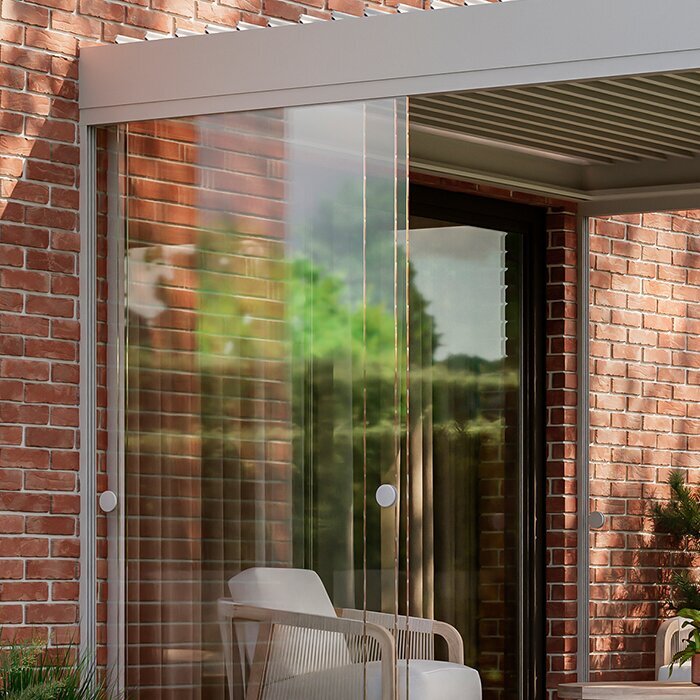
Compare the finished-project total, not the headline price
An advertised pergola price may cover the product alone, while an installation quote may assume that the site is already prepared. Put those figures next to each other without checking the scope and the cheaper option can simply leave more work for you to arrange. Make one project total for each choice: product, delivery, ground or wall preparation, fitting, and any separately contracted work needed for the agreed installation. Treat a promotion as one part of the arithmetic, not as proof that the whole project is cheaper. If you see a Black Friday offer, check its terms rather than assuming it includes fitting. The practical comparison is what you would pay to reach the same finished state, with the same items supplied and the same work completed.
Keep the product identity and installation scope tied together. For the Bloomcabin pergola listing, note the exact item and any options you are asking about, then ask the seller or installer to confirm that their figure covers that same choice. The page name alone does not establish whether delivery, assembly or site work is included, so record each as included, excluded or not yet priced. If separate businesses handle supply and fitting, ask who resolves a mismatch, such as a delivered item or prepared area not matching the agreed plan. Keep the written product description with each quote, and record when the price was issued. That makes it easier to spot whether a later revision changes the product, the work or both.
Fix the exact pergola specification before asking for prices
Quotes are only comparable when they cover the same pergola and arrangement. Before asking suppliers, decide where it is to go, whether you are considering a freestanding or building-attached design, what footprint and clearances fit, and which options matter to your intended use. These are purchasing choices, not assumptions about a particular model. Give every supplier the same brief, including constraints such as an existing paved area, a doorway or the route through the property. If one quote includes a different size, configuration or accessory, put it in a separate column rather than treating it as a cheaper version of the same job. Where a choice is undecided, ask for separate prices instead of leaving the description open-ended.
Record the exact page or model name for every option. If your shortlist includes the bioclimatic pergola listing, use that name when requesting a quote, but do not treat the title as confirmation of dimensions, inclusions or installation requirements. Ask the seller to identify the item and selected options on the written order, and ask the installer to price against that description. This prevents a supply-only package being compared with a different quote that includes add-ons, delivery or labour. If you have not settled on a format, keep each alternative distinct and ask providers to use the same assumptions about the site. You can then compare product choices without mixing them up with fitting costs.
Separate product, delivery and fitting charges
A product price, delivery charge and installer's labour are separate lines unless the paperwork clearly combines them. Ask how the pergola will be delivered, where the delivery ends, whether carrying it to the installation area is included, and whether an access condition changes the quote. These are questions, not assumed extras: one provider may include a service another excludes. Request a written schedule showing product, delivery, assembly or fitting, and any disposal or packaging removal separately. Ask whether delivery and fitting are booked together or separately, and who takes responsibility if the dates need to be rearranged. If you need to find an installer yourself, leave the labour line open until you have a quote; the product price alone is not an installed total.
Name the item accurately when seeking an installation price. A lean-to pergola listing can identify one candidate, but do not presume that its product price includes transport, assembly or work to the building or ground. Send the installer the same product description and any fitting information supplied with it, then ask them to state which parts of supply are their responsibility. If the installer expects the product to arrive before a visit, confirm how a delayed or incomplete delivery would affect labour charges. A clearly divided quote makes it easier to see whether a low total depends on an unpriced service. It also gives you a useful record if you later need to ask why an item was omitted.
Include ground preparation in the comparison
Site preparation depends on what is already there and on the proposed installation arrangement. A paved area might still need its level and condition assessed; bare ground, a change of level, nearby drainage or existing services can raise questions that the pergola's catalogue price cannot answer. Ask each provider to name any assumed base or prepared surface, whether checking and preparation are included, and what work is excluded. Do not take the word installation to mean that excavation, levelling, alteration of paving or making good is covered. A written scope should say what condition the installer expects on arrival and what happens if the actual site differs. Where the surface is not yet decided, ask how that uncertainty affects the quote.
Provide the same site information to each person pricing the work, including clear photographs or measurements where requested. A professional familiar with the proposed installation should determine whether the ground, existing surface or fixing location is suitable; a buying guide cannot make that assessment. If preparation needs a separate contractor, include that estimate, its delivery or disposal charges and any coordination between trades in the total. For a Bloomcabin pergola product page, the product identity does not tell you what base or site work may be needed. Ask the seller or installer to state the requirements for the specific order, and do not accept a price that leaves the site assumption vague. If a site visit is needed to clarify the work, ask whether its cost is included.
Make installation quotes cover the same work
Compare installation quotations against one scope document rather than relying on a single total. Check whether the price names the product, assembly, stated fixing or base work, access assumptions, travel, and removal of packaging or waste. Ask whether labour is a fixed sum or an estimate, what would count as extra work, and whether a survey or return visit has a separate charge. If work is split between the installer and another trade, make that split explicit and ask who coordinates it. A quote can be lower because it covers a narrower task, so a line-by-line review is more useful than trying to infer completeness from the price alone. Note any work you will arrange yourself so it is not mistakenly counted as included.
Ask for the total in a form you can compare: currency, VAT status, delivery, labour and other allowances shown distinctly, plus any conditions attached to the estimate. Do not infer from a total whether VAT is included; have each provider state it. Match the quote's validity period and payment arrangements to your purchase timetable, but do not let a Black Friday deadline prevent you from obtaining missing details. The Bloomcabin bioclimatic pergola page can help identify the product you are discussing, but only the order and fitting quote can say which work is priced. Keep written revisions so that a verbal change does not silently alter the comparison. If a figure is provisional, ask what information would turn it into a confirmed price.
Price the extra checks for a wall-attached design
A design that connects to a building can change the questions a fitting quote must answer, even if the advertised product price looks similar to a freestanding alternative. Ask whether the installer has included an assessment of the proposed wall or fixing location, what information they need about the building, and who confirms suitability before work is agreed. If access equipment, making good or a separate inspection could be needed, request an itemised allowance or a clear exclusion rather than assuming it is covered by the labour figure. Do not treat a general fitting fee as evidence that every wall or location is suitable; that judgement belongs with the relevant professional. Keep these checks in the cost comparison rather than treating them as optional once the price has been chosen.
Keep the comparison tied to the exact design. If a lean-to pergola page is on your shortlist, use the listing to name the candidate and ask for installation costs against the proposed position, not as a generic charge for any pergola. A building-attached arrangement may involve different site questions from a freestanding one, but the quote should explain the actual tasks rather than use a vague surcharge. Check whether work to the building, making good or decoration is included, excluded or priced by another contractor; do not assume any of it is needed or supplied. This gives you a fairer cost comparison without guessing what the product requires. If the proposed location changes, ask whether the quoted work still applies.
Agree how unexpected work will be priced
An initial quote may rely on details that become clearer at a site visit. Before you accept, ask what could change the amount: difficult access, a surface that differs from the supplied description, an unexpected obstruction, additional preparation or a change to the agreed position. The point is not to predict every complication but to establish a process. A written estimate should state which assumptions it uses, what event triggers a revised price and whether the installer will pause and seek approval before carrying out chargeable extra work. If the provider will not define the boundary between included work and variations, the headline total is not a dependable comparison. Ask, too, whether a changed scope affects any other line in the quote.
Find out how a variation will be documented and whether it changes labour, materials, delivery arrangements or the schedule. Where a separate groundwork or building professional is involved, ask who reports a changed condition and who approves additional work; avoid paying twice for the same task across separate quotes. Revisit the supply price if a proposed change affects the selected product or options. For the pergola product listing, keep the item name attached to the revised estimate so the updated project total still refers to the same choice. A clear variation process does not guarantee that nothing will change, but it lets you compare a realistic baseline and understand how extra costs would be agreed. Keep any revised total with the original quote for reference.
Read the offer and contract terms together
An advertised offer and an installation agreement can cover different parts of the purchase. Read the promotion's actual terms, if one is shown, and establish whether the reduction applies to the pergola alone, selected options, delivery or fitting. Check eligibility, dates, exclusions and whether the price depends on buying more than one item; do not assume that a headline discount applies to the full project. Compare the final payable amount after any valid offer with the same delivery and fitting scope on the alternative quote. No offer details are established here, so the useful comparison is with the terms of the offer you actually see. Note any conditions that could change the price you have used in your cost table.
Keep commercial terms alongside the cost sheet. Ask each supplier to state VAT, deposit and balance arrangements, quote validity, delivery and fitting dates where available, and the terms for changing or cancelling an order. Check product and installation warranties separately: one does not automatically describe the other, and their scope must come from the written terms. If you are considering the bioclimatic pergola product page, identify the exact item when asking about any promotion, then request a written total with the offer applied and every excluded service listed. Read the returns policy before committing to a delivery or fitting arrangement, rather than treating a promotional label as a complete description of the applicable terms.
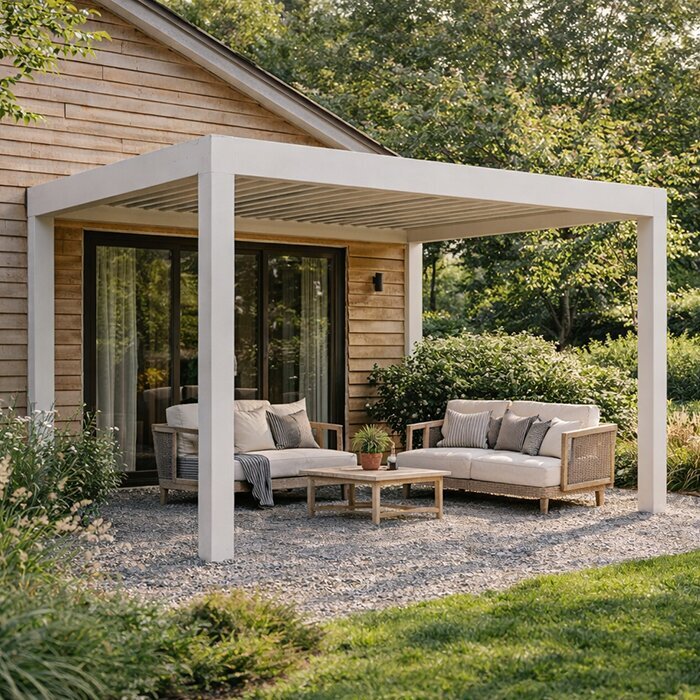
Build a like-for-like cost table
A simple comparison table prevents omissions from hiding behind a single total. Use one column per quote and rows for product, selected options, delivery, access or carrying, ground or wall preparation, fitting, waste removal, separate trades, VAT and any contingency or provisional allowance. Mark each line included, excluded, awaiting a price or not applicable; do not leave a blank that looks like a zero. Then total only the amounts that are genuinely included and add separately priced work needed for the same finished result. Use notes to record assumptions, such as the site being ready or an access route being clear, because these can explain why two totals differ. Add the quote date and validity period beside each column.
Compare both the confirmed amount and the uncertainty left around it. One estimate may include a survey and defined preparation; another may give a lower initial total but leave these as open items. Do not add an invented allowance simply to make the columns look complete. Instead, ask for a price or a stated basis before deciding, and mark whether the supplier or installer can revise it after a visit. Note the terms and dates beside the totals so an offer with different conditions does not appear directly equivalent to another quote. The table should show what you know, what remains unpriced and who would provide each missing part. That makes it easier to revisit the comparison if a quote or offer changes.
Choose the quote that leaves the fewest unanswered costs
Choose on the total for the work you actually want, not on the biggest percentage or boldest price label. A lower product figure may still be the less useful offer if delivery, preparation or fitting are unpriced; a higher quote may cover more, but should still be checked for exclusions and assumptions. Look for a clearly identified pergola, the same site scope, transparent charges and a workable plan for resolving unexpected work. If the scope is sound but a material item remains uncertain, ask for it to be priced before treating the comparison as complete. This is more informative than guessing which supplier is cheapest from the first number shown. Compare the resulting total with your own project budget before committing.
Allow enough time to read the documents, confirm that the installed total fits your budget and decide whether the proposed site work matches your plans. If the seller and installer are different, keep their written descriptions aligned and make sure neither assumes the other is covering delivery or preparation. You may decide to proceed, request a revision or wait for a clearer quote; none of those choices depends on an unverified Black Friday saving. For a pergola purchase, the best-supported decision is based on a known product, an explicit work scope and costs that are visible before you commit.
Frequently asked questions
Does Black Friday always make a pergola cheaper to install?
No. An offer may apply only to the product, and no specific promotion or saving is established here. Compare the same pergola and installation scope, then check whether delivery, preparation and fitting are included in the advertised total.
What should an installation quote include?
It should identify the pergola and describe the work being priced, including fitting, any agreed site preparation, delivery arrangements and relevant exclusions. Ask for VAT status, access assumptions and the process for approving extra work to be stated in writing.
Should I assume site preparation is included in the fitting price?
No. Ask what condition the site is expected to be in and whether checks or preparation are included. Work such as altering an existing surface or arranging a separate trade may be outside the fitting quote, so have each provider state the boundary.
How can I compare attached and freestanding pergola costs?
Ask for quotes based on the same product, position and work scope. If a design attaches to a building, ask what checks and fixing-related work are included and who confirms the location is suitable. Do not assume either format is cheaper without comparable written prices.
What should I do if the installer finds extra work?
Check the quote's variation process before accepting it. Ask the installer to describe the changed work, price and any effect on the schedule, and to get your agreement before proceeding with chargeable extras. Keep the revised scope and total in writing.
The meaningful figure is the cost of the same pergola, delivered and fitted to an agreed scope, with site preparation and exclusions made clear. When each quote separates confirmed charges from work still to be priced, you can judge a Black Friday offer on its effect on the whole project—not on a headline price alone.
